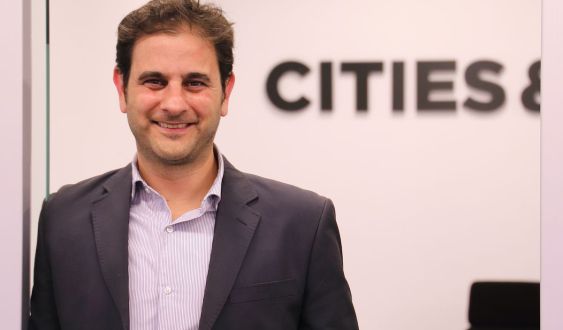
Smart City Expo World Congress (SCEWC), the main exhibition on smart cities, is warming up for a record edition with the participation of more than 1,000 exhibitors and 25,000 attendees, leaving behind the figures of 2019 and recovering from the impact the pandemic has had on fair activity. What is also affecting its celebration in recent editions are the wars. If last year was marked by the war in Ukraine, with the participation of its mayor, Vitali Klitschko, this year the great absentee will be Israel, one of the main exhibitors of the show.
Organized by Fira de Barcelona for 12 years, this edition of the congress will bring together more than 800 cities, with the participation of the mayor of Paris, Anne Hidalgo, the mayor of Athens, Kostas Bakoyannis, and the mayor of Dublin, Daithí De Róiste, among others. "The whole world gathers here," summarizes the director of the show, Ugo Valenti, in an interview with The New Barcelona Post.
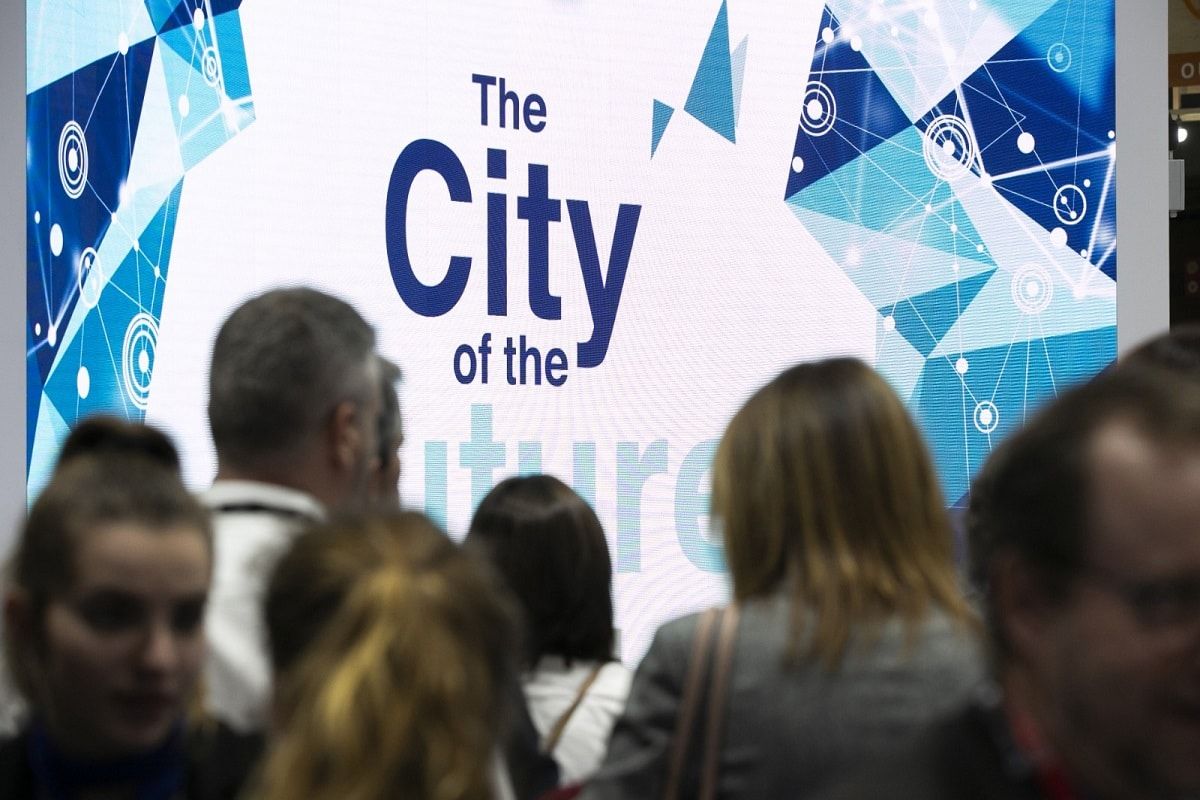
From Tuesday, November 7 to Thursday, November 9, the congress will talk about technology, without forgetting the possibilities of artificial intelligence (AI), mobility, sustainability, and blue economy. In this sense, Smart City Expo will coexist in the Gran Via venue with other parallel events with which it will expand its scope, such as Tomorrow.Mobility, Tomorrow.Blue Economy and Puzzle X. The novelty will be Tomorrow.Building, created to address the transformation in the construction industry.
--- When talking about smart cities, one often thinks of autonomous cars, even flying ones, or robots. But what are smart cities really?
--- It is one that constantly innovates to improve the quality of life of its citizens. If you watch the movie Blade Runner, we are supposed to all be flying with cars in a dystopian city, but the reality is very different, smart city solutions are very simple. For example, now we have gotten used to being at the bus stop and seeing how long it takes for the next one to arrive. This is a smart city solution that makes our lives much easier and we already enjoy it today, without having to see robots in the streets.
--- Therefore, what will these cities of the future be like?
--- Green spaces will be expanded because we have realized that they are healthy for the environment, help lower temperatures, and improve our quality of life because we prefer to walk through a green city than a gray one. We will also see much more integration of public services on mobile phones to access them, just as I can now pay for the blue zone with my phone. These are simple solutions that greatly simplify our lives.
--- This year, precisely, one of the new focuses of the Smart City Expo is construction. How does where we live influence cities?
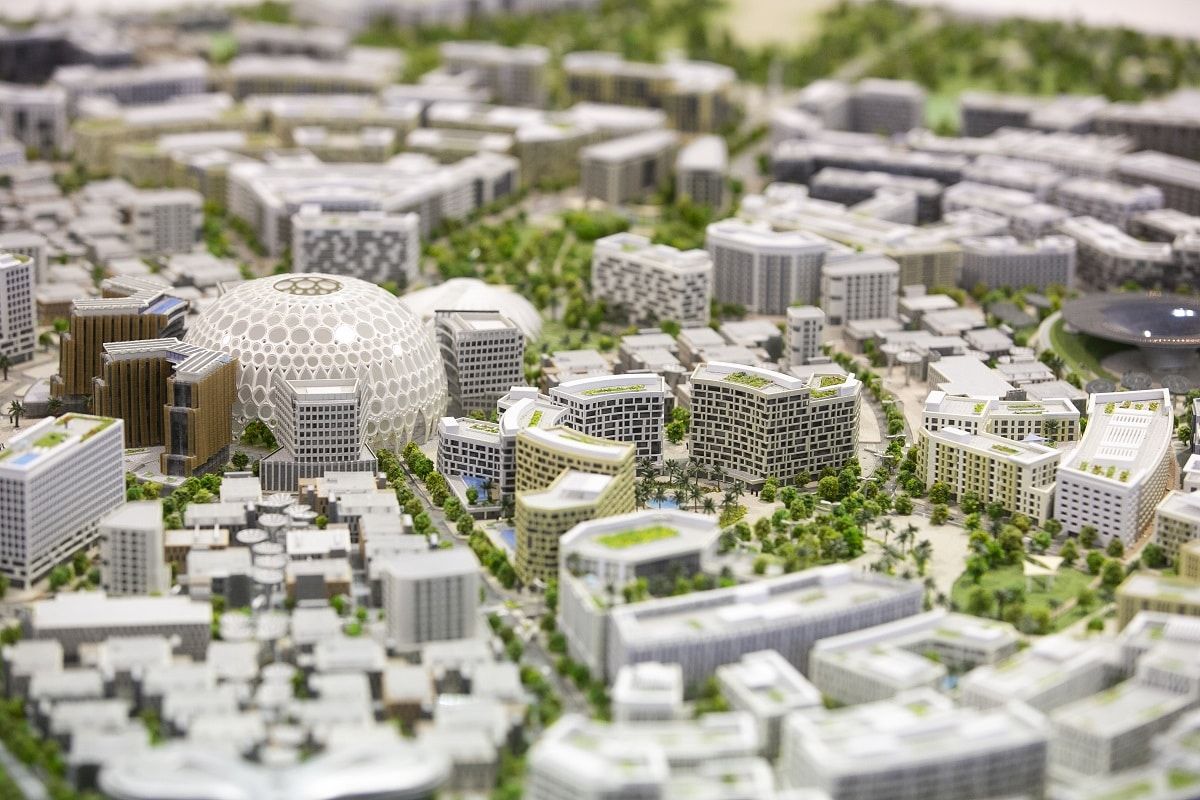
--- Here we have to think that every day more people are coming to live in cities and the world population is growing, while we are faced with infrastructures that, for the most part, are outdated. Specifically, by 2050, 70% of the infrastructures that will need to exist are not yet built, or existing ones need to be modified, or new ones need to be built. Therefore, we are faced with a very serious opportunity to help our environment, energy efficiency, and quality of life by making buildings that are infinitely more sustainable, connected, and different from current ones.
"Every day more people are coming to live in cities and the world population is growing, while we are faced with infrastructures that, for the most part, are outdated"--- How?
--- First of all, they have to be buildings that are technologically prepared, ensuring that all the infrastructures they require now or in the future are established or foreseen. On the other hand, energy efficiency and the use of different materials must be included. But there is also urban planning, that is, how we design these new areas and how we modify existing ones. We have to think that there are many cities in the world that were designed for car use, this has to change because we know it is not sustainable and not good for living.
--- We still don't talk about flying cars or robots...
--- These are very basic things. For example, for a few years now in Barcelona, all new buildings have had to have solar panels to heat water, which we now see as natural but this did not exist before. The next step has to be that we build in a way that we don't spend so much electricity and gas to heat or cool our home because we know it is an enormous waste. With all the climate change we are experiencing, it has to happen no matter what.
--- All this, without forgetting mobility, another of your focuses in recent shows.
--- It is a key theme, one of the most important, if not the most important of all. First, because it is a very visible area for citizens and, second, because it is one of those that has the most impact on our daily lives. We are very happy with how Tomorrow.Mobility is going, almost doubling the exhibition area compared to last year. There will be solutions for last-mile logistics and goods, but also for transport, both of goods and people, with autonomous minibuses. A practical example of what these can mean: we all know neighborhood buses, which pass every half hour and there are times when they are very full and others when they are quite empty. With autonomous vehicles, the same level of service could be offered, but it would be much easier because you can know when they are going to arrive or you can call automatically for them to come sooner.
--- And you also bet on the blue economy, a sector that is increasingly talked about in Barcelona.
--- It is a very broad topic. We focus on coastal cities. It must be taken into account that 65% of the world's cities are coastal, so we live a lot from the maritime economy and we need it. There is an opportunity for development in sustainability, with logistics and cruises, where there is a long way to go with the implementation of technologies to facilitate management.
"We are very happy with how Tomorrow.Mobility is going, almost doubling the exhibition area compared to last year"--- How can coastal cities adapt to increasingly frequent storms and a future rise in sea level?
--- Cities have to be more resilient in many areas. There are easy measures, such as mobile alerts so that the entire population is warned of an extreme event and can prepare in time. But they can also take precautions in other ways. In Japan, they have learned a lot after Fukushima and since there are many electric cars, these are prepared to provide energy for 48 hours if necessary.
--- How does the Catalan capital position itself in the league of smart cities?
--- Although Barcelona probably isn't the number 1 in the world in anything specific, it does have a multitude of solutions that give us a very good quality of life. Furthermore, due to its culture, way of being, and location, it is an example for everyone. That is to say, in Copenhagen or Stockholm, energy efficiency or renewable solutions are more advanced than in Barcelona, but what they do is very related to the type of culture and life they have. And it is very difficult to transfer it to Medellín or New Delhi. In contrast, what we do in Barcelona is something that cities like Medellín or New Delhi, even New York, can emulate. For example, here we have the superblocks and New York has created a mega superblock in Times Square, being infinitely more pleasant than before, with all the cars in between. Barcelona is a very good example of how to modify a city with centuries of history and how to improve the quality of life.
--- Focusing now more on this edition of the Smart City Expo, how is this year shaping up?
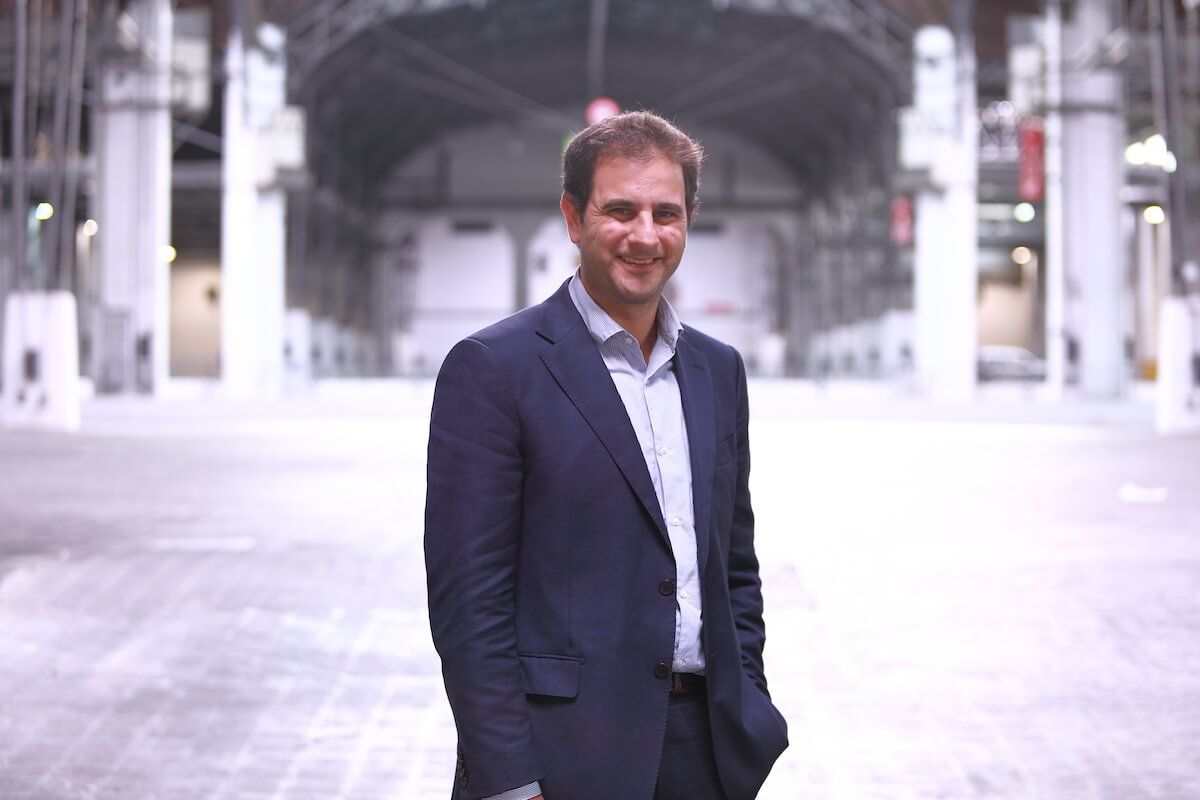
--- We are going to celebrate the best and largest edition in history. More and more cities in the world are committed to integrating innovation processes to improve the quality of life of their inhabitants. The exhibition grows in square meters, with 50% more in the exhibition area, completely filling pavilions 1 and 2. Exhibitors also increase, with more than 1,000, a 25% increase compared to 2022; speakers, going from 400 to more than 600, a 50% increase, and the number of represented cities, with more than 800, a 20% increase. All in all, we estimate that we will reach 25,000 visitors, a 20% increase over last year.
--- A record-breaking edition.
--- We face very strong growth, but without losing quality. This year has to be key for the adoption of smart city solutions and products. The Smart City Expo 2023 has to be a call to action, not just to meet, exchange ideas and discuss. For this reason, the congress talks, which previously had a specific space, this edition will be distributed throughout the exhibition area so that there is a very strong exchange between solutions and discursive elements.
"The Smart City Expo 2023 has to be a call to action, not just to meet, exchange ideas and discuss"--- The pandemic is considered overcome, with figures above those of 2019. The participants that are proving most difficult to recover at all fairs are Chinese congress attendees. Are they already fully returning to Smart City Expo?
--- They are coming quite strong, but still not as much as in 2019, it is noticeable that they are coming out again. Even so, there will be a strong presence from China, a country that is implementing many technological solutions on a very large scale, many of them related to artificial intelligence. On the other hand, since the pandemic, Korea and Japan, as well as the United States, have gained more strength.
--- Covid affected the fairs and now wars do.
--- Exactly. Those regions that are in military conflicts will also be missing. We had a very important Israeli presence, with a brutal degree of innovation, and this year it will not be possible. We will miss them very much.
Add The New Barcelona Post as your preferred Google source for free
Stay informed with the latest news.