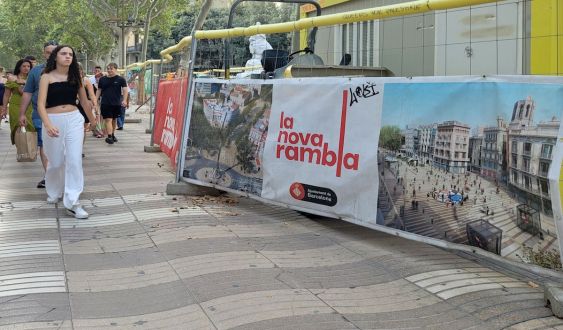
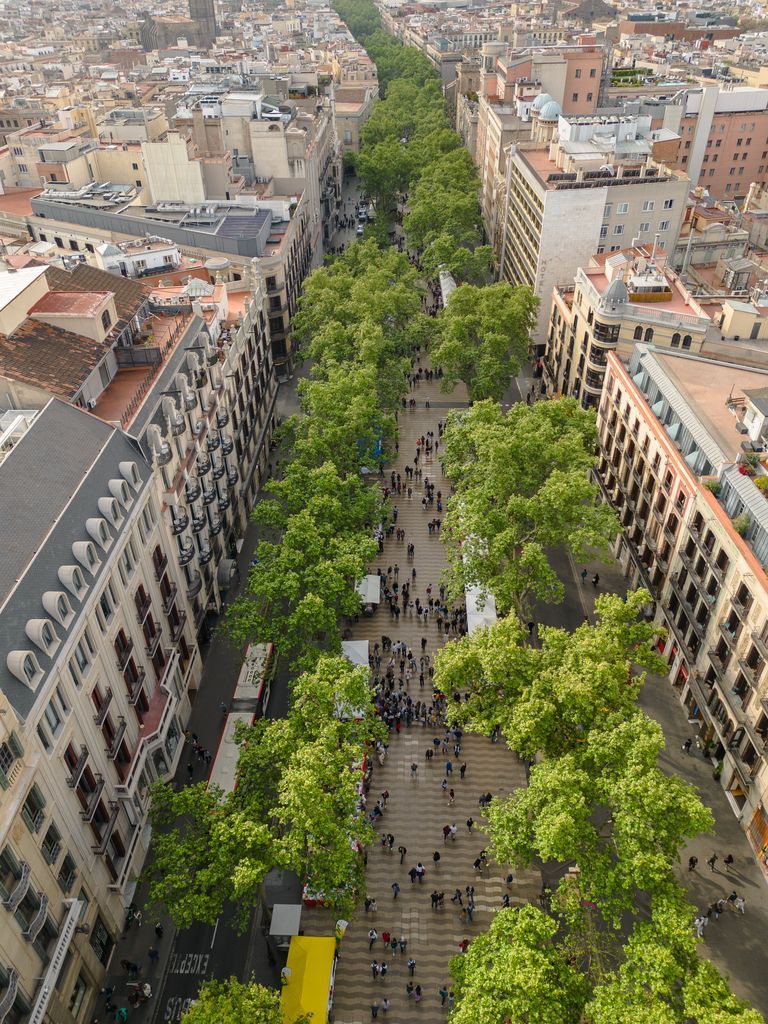
La Rambla currently looks like a war zone. Although the uphill lane (Besós side) has already been opened to traffic, the entire downhill lane (Llobregat side) remains dug up. Trenches, accumulated material, sand mounds… These are the consequences of long-term works that aim to be the first step for the emblematic promenade to change its face, renew its commercial offer of souvenirs and fast food chains, and cease to be the exclusive heritage of tourists. If all goes as planned, La Rambla will change its landscape in the not-too-distant future.
A wax Forrest Gump sitting in front of the Banca passage with his Buba Gump shrimp hat guards the final stretch of La Rambla, just before reaching Colom. It is the only completed section, with a few details still missing, and serves as a sample to see what the future promenade will be like. The Forrest Gump is an attraction for the nearby Wax Museum next to the ticket booth, although some initially think it is one of the famous living statues that until recently populated this artery separating the Gothic Quarter from El Raval. Today, due to the works, you can find at most a couple of them, which are still the object of selfies.
One of the drivers of La Rambla's new cultural offer will be the new FNAC, which has already closed its headquarters in El Triangle in Plaza Catalunya and is expected to reopen in a building next to Canaletes before the end of the year. A few meters away, the historic advertising sign of Musical Emporium remains, now converted into a currency exchange business. Fortunately, another historic music business, Casa Beethoven, resists like a Gaulish village next to the Palau de la Virreina, oblivious to the siren calls of offers for its transfer.
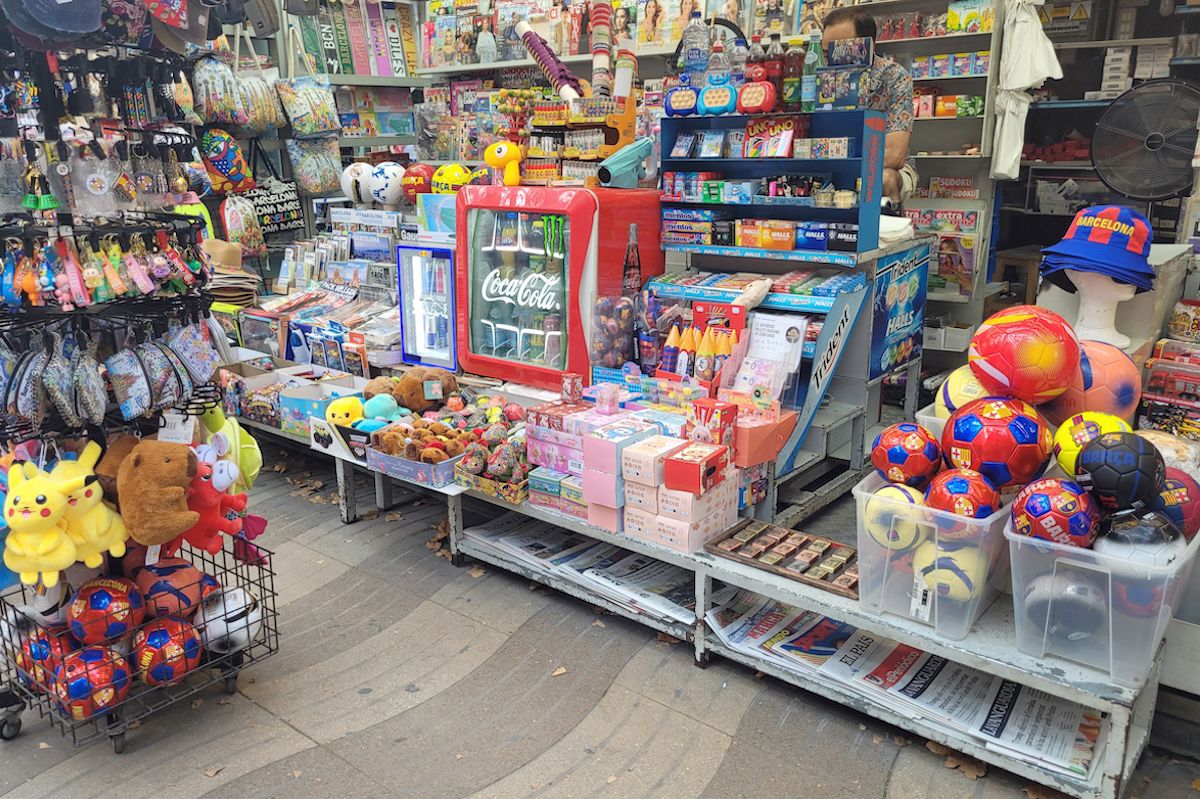
This Rambla bears no resemblance to that of a few decades ago. The old newsstands now look like Chinese bazaars where buying a newspaper is almost a feat, as they are a residual product, camouflaged among magnets, bags, figures, and other elements of the tourist souvenir economy. What times those were when one would pass through La Rambla in the early morning to buy the first editions of the newspapers.
In recent years, the rental chairs of Canaletes and the bird selling stalls have disappeared. Although their disappearance was inevitable —the privatization of public seating and the sale of animals are not characteristic of these times—, it is also true that they have diminished the promenade's personality.
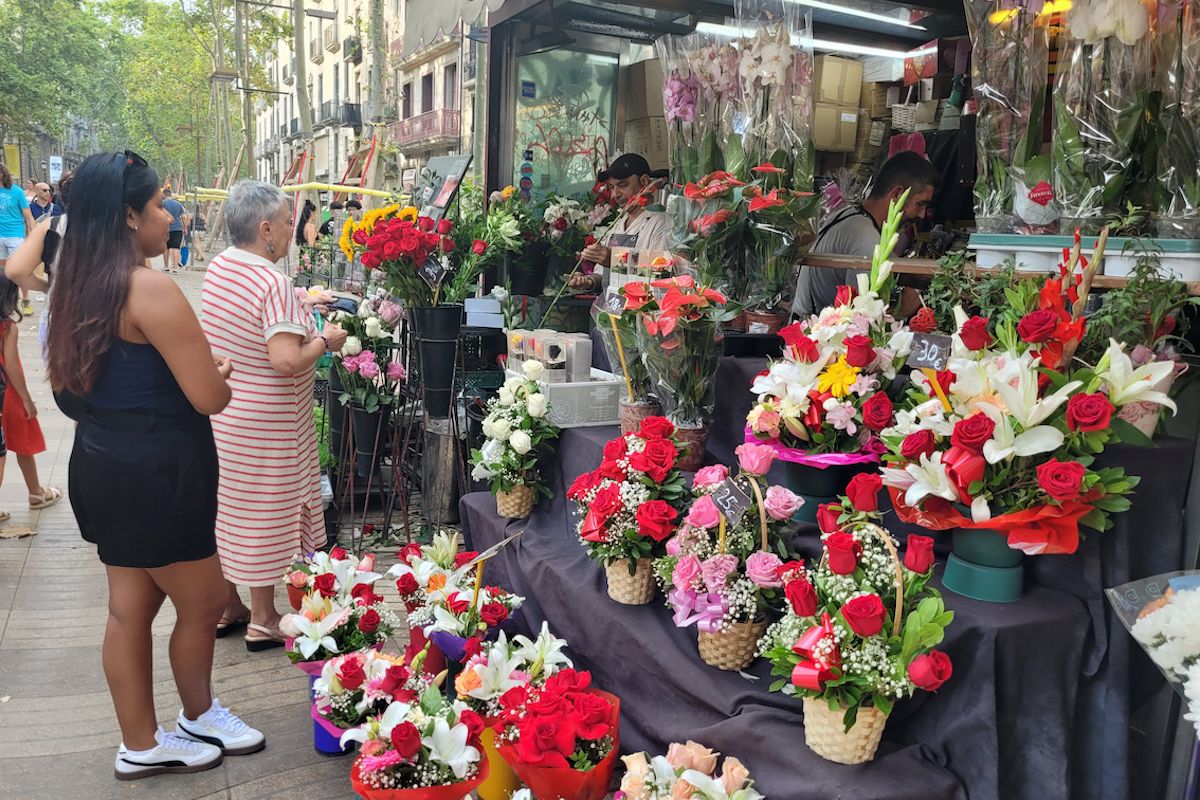
Only a few flower shops remain. Three, because the rest have switched to selling seeds, especially those that grow peppers and eggplants in the shape of genitals. Due to construction, the popular stalls will be exiled for a year starting in January to Plaça Catalunya, on the Zurich sidewalk, between Pelai and Bergara. They will return when the works are finished.
In this metamorphosis that La Rambla has experienced in recent years, some witnesses of its glorious past remain. For example, the Canaletes fountain, from which people who wish to return to Barcelona one day still drink. When I was a child, my mother always carried a fascinating folding cup in her purse with which she would give me water from the fountain whenever we passed by, in a kind of magical ritual that she completed by inviting me to a round chorizo sandwich served at the Sepu bar. It was something exceptional that I did without complaining, never quite understanding what was so special about that tap water and that small Vienna bread sandwich that was never one of the best I've eaten in my life. But back then, what had to be done, was done. And that's it.
At least, in addition to the aforementioned Casa Beethoven where I used to go for guitar sheet music as a young man, there remains the official time on the facade of the Acadèmia de Ciències, above the Poliorama, the dragon and umbrellas of the old Casa Bruno Cuadras factory —currently, a bank branch— and the marble doorways with the fascinating holes produced by the tapping heels of prostitutes who thus tried to combat the cold when there were still prostitutes on La Rambla. Today, the doorways are no longer on the street, but displayed in the dining room of the Amaya restaurant, one of the few that remains faithful to the history and tradition of La Rambla.
In this lower part of the promenade, a kind of show floor of the future Rambla, one of the original Wallace fountains also remains, one of the 12 that an English philanthropist with that surname donated to Barcelona. These are fountains that this man had financed throughout Paris for the safe supply of drinking water to the population and that he also distributed to other European cities. Of the dozen originals that arrived in the Catalan capital at the end of the 19th century, only the one in the lower part of the Rambla and a second one at the intersection of Gran Via and Passeig de Gràcia, in front of the Comèdia, remain. A third one is located in Cornellà, at the headquarters of Aigües de Barcelona.
Also remaining on the Rambla is La Boqueria, although every day further away from the concept of a fresh market to become a theme park of juice and fried foods. And opposite, the so-called Erotic Museum, whose attraction in the form of Marilyn from a balcony or on the promenade itself gathers hundreds of curious tourists.
Further down, a real museum, the Marítim, has more problems attracting visitors. The renovation of the Rambla in this area has allowed for improved access to the museum which houses an architectural gem such as the Drassanes, a unique building in the world, a spectacular civil Gothic building that housed the medieval shipyards of the Crown of Aragon and which should be one of the highlights of the promenade's cultural offerings.
Meanwhile, we will have to continue waiting for the endless works to finally reveal the new Rambla.
Add The New Barcelona Post as your preferred Google source for free
Stay informed with the latest news.
