It is said that, when Alonso de Ojeda and Amerigo Vespucci arrived in 1499 in the waters near Lake Maracaibo, the stilt houses built over the water reminded them of Venice. From that image, Veneziola, the small Venice, would have been born, and later, Venezuela. The history of the name has other theories, but this one has always interested me: a country baptized from a resemblance, from the human need to look at a new place and seek in it something we already know.
Perhaps, when a country is far away, we do the inverse. We look for it in an arepa, in a papelón, or even in a tequeño. The latter is almost an infallible detector. A restaurant may not present itself as Venezuelan, and its chef may do creative, French, or completely free cuisine, but if a tequeño appears on the menu, it's easy to suspect that in some corner of the kitchen there is someone from the country. Gastronomic memory has these discreet ways of making itself visible.
Since the earthquakes that shook Venezuela on June 24, that memory seems to have gained strength. In Barcelona and other parts of Spain, several chefs, many of them Venezuelan, though not exclusively, have begun to organize dinners, create dishes, open restaurants on days off, or transform projects they already had underway into tools to raise funds. Meanwhile, in Venezuela, restaurants, cooking schools, and volunteers have kept the stoves lit to prepare food.
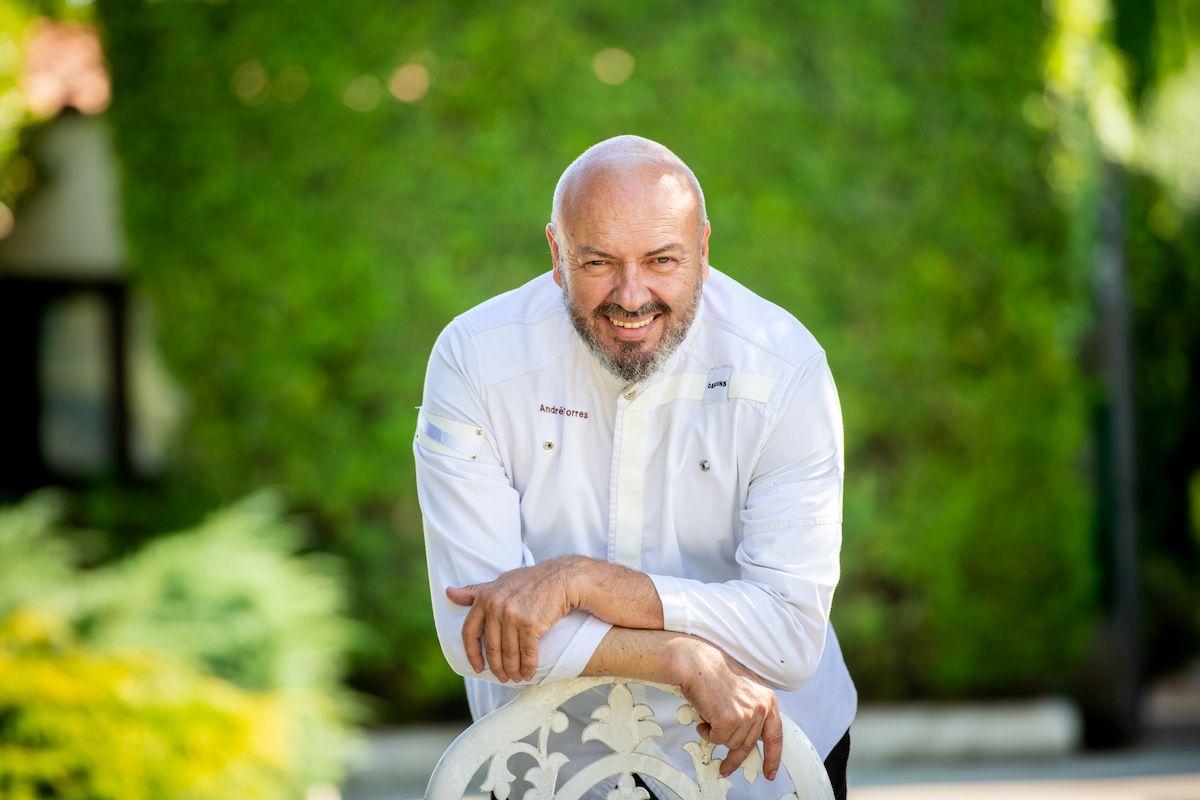
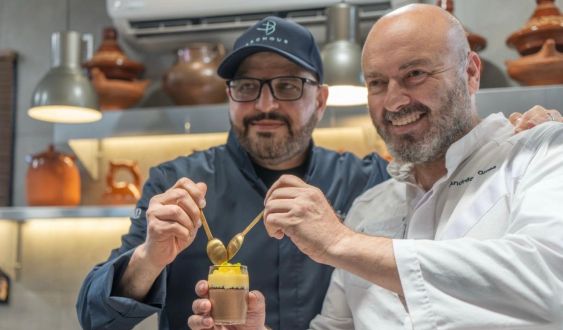
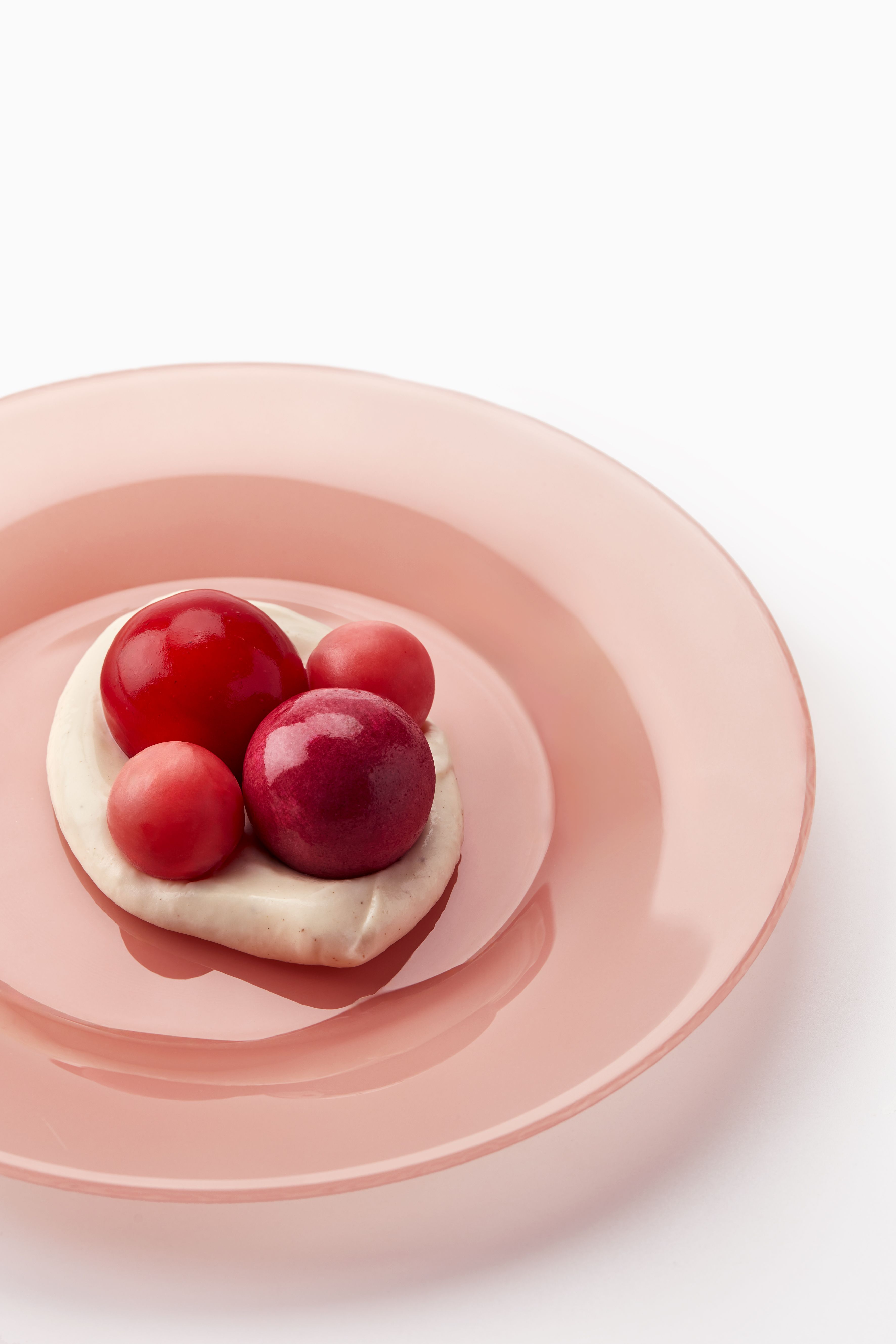
Andrés Torres, from Casa Nova restaurant, in Penedès, is currently in Venezuela directly participating in humanitarian actions. Before leaving, he worked with Antonio Bachour, a renowned international pastry chef, on a solidarity dessert made with cocoa, passion fruit, and mango. It will soon be available at Forn Enrich, Pastisseria Xarel·lo, and Pastisseria Hofmann, among other establishments. Beyond its composition, what matters is the initiative: to convert an ingredient linked to Venezuelan territory into a concrete way to help it from a distance.
Bachour also participates in a proposal that extends this network beyond a single elaboration: a digital recipe book with formulas altruistically donated by chefs and pastry chefs such as Jordi Roca, Miquel Guarro, Saray Ruiz, and Andrea Dopico. To obtain it, one must make a donation to one of the NGOs working in Venezuela and send a screenshot of the receipt via direct message to pastry chef Ester Roelas, who manages the sending of the book.
At the Franca restaurant, the response from chefs Joshua McCarty, Fran Baixas, and Gianmarco Greci, the latter Venezuelan, has taken the form of an arepa. The establishment, which usually closes on Sundays, has decided to open its doors to serve arepas and papelón and dedicate one hundred percent of the proceeds to Venezuela. There is something especially powerful in that image: a kitchen that opens precisely on the day it should be closed because, across the Atlantic, there are people who need help.
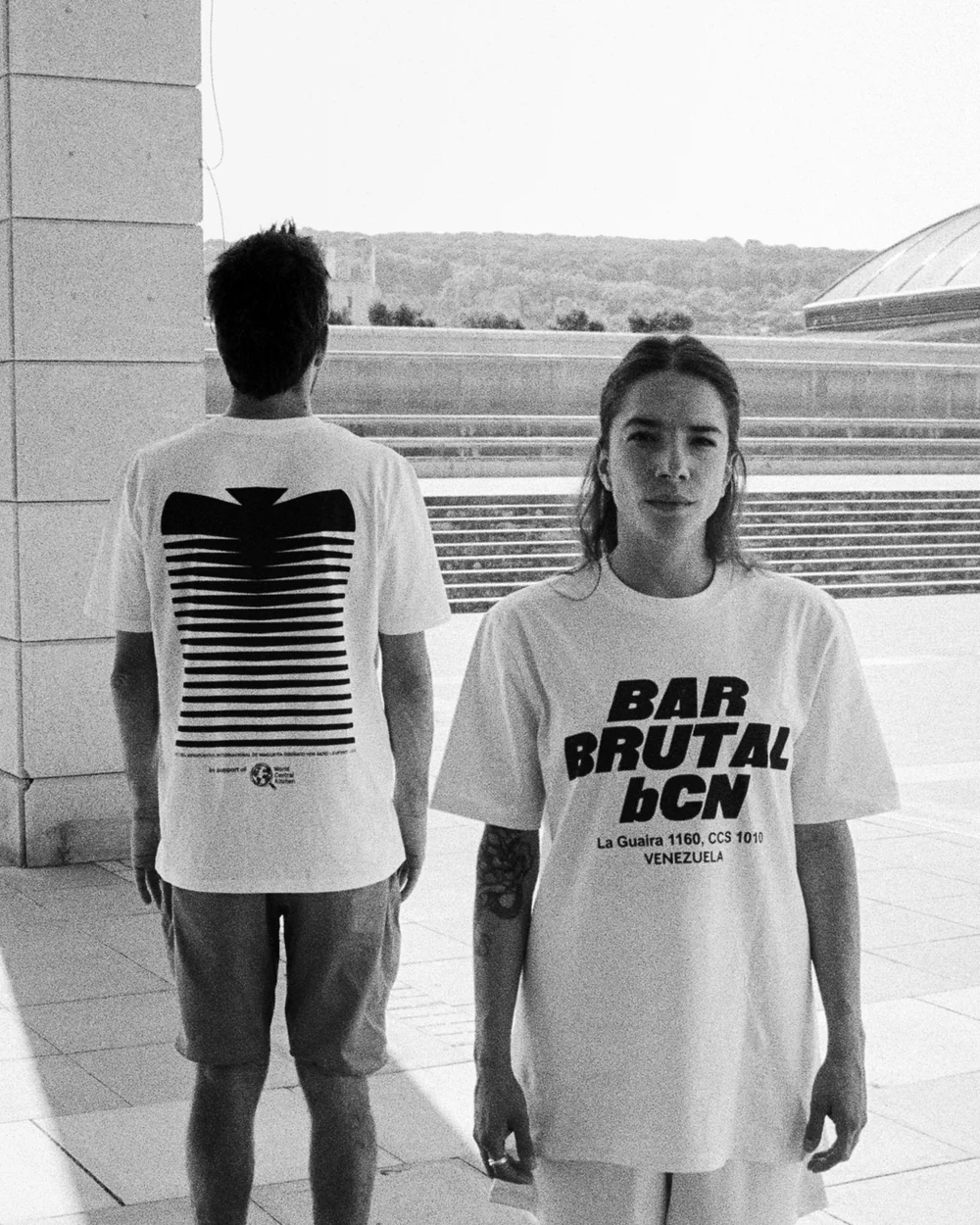
Junior Martínez has chosen another language. He has created a limited edition t-shirt that pays homage to Venezuelan painter Gerd Leufert through the visual identity of Maiquetía International Airport. Located in La Guaira, one of the territories most affected by the earthquakes, the airport is also one of the main gateways for the departure and return of the Venezuelan diaspora. The profits will go to World Central Kitchen and, on July 15, Bar Brutal will bring together wine, music, and these t-shirts in a solidarity event.
Chef Alejandro Serrano has also given a solidarity dimension to the birth of Nexo Rosa, a platform conceived to connect gastronomy, art, fashion, music, design, and other disciplines. The first guest will be Venezuelan chef Santiago Fernández, with whom he will share a creative residency that will pass through different cities in Spain. The project will culminate on July 19 and 20 in Miranda de Ebro with a solidarity menu whose profits will go to those affected by the earthquakes.
And there will be more. This week, Juntos por Venezuela has brought together musicians, comedians, DJs, cooks, and artists in a solidarity event with empanadas from La Poderosa and arepas from Ïnta. Next week, Aula Canal will host a pastry sale by Anna Katherina, with all proceeds going to World Central Kitchen. Faced with the emergency, everyone has sought how to help from what they do best: cooking, baking, designing, convening, or mobilizing their community.
This response also makes visible a Venezuelan presence in Barcelona much deeper than what we often know how to see. In quiet moments, cooks can afford to move away from their original cuisine, deconstruct it, mix it, or even leave it behind for a while. When things go wrong, however, it seems the body remembers before we do. We return to the dish we know how to make, to the flavor everyone recognizes, to the recipe capable of bringing a community together in a few hours.
These days, community is not an abstract idea, but a chain of concrete actions: cooking, opening, selling, and fundraising. An arepa cannot rebuild a country, but it can bring together the people who are still looking for ways to help it. Perhaps the llanera soul is not only the one born "on the vibrating bank of the Arauca." It is also the one that, when that bank is far away or wounded, lights the fire so that distance does not occupy everything.
Add The New Barcelona Post as your preferred Google source for free
Stay informed with the latest news.