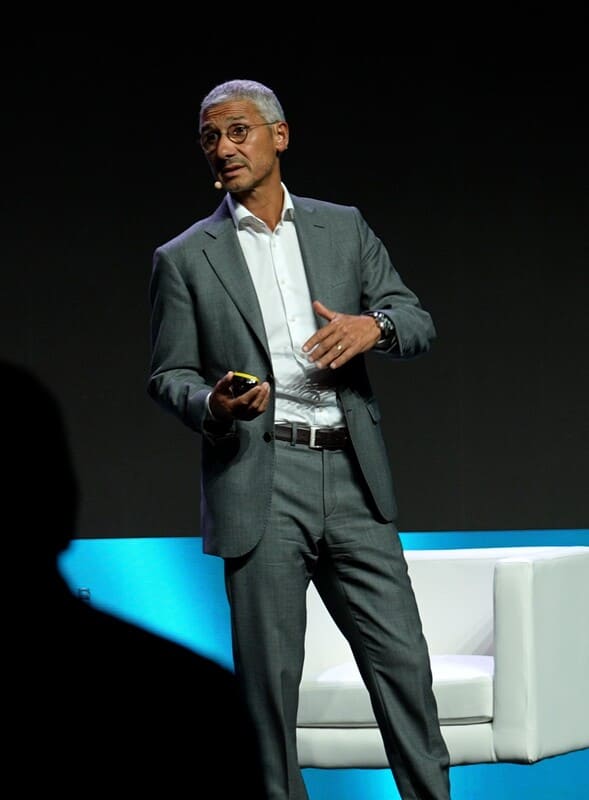
Born in Barcelona 56 years ago, Óscar Vela landed at Areas in 2009, after receiving a call from Emilio Cuatrecasas that triggered a process of "falling in love" with the leading company in restaurant concessions in passenger transport infrastructures, with more than 2,000 restaurants and stores in airports, train stations and highway service areas. Almost fifteen years later, he holds the position of global CEO of the group, which is headquartered in the Il·lumina building in Esplugues de Llobregat (Barcelona). Since 2019, Areas belongs to the French private equity fund PAI Partners, also owner in Spain of Tendam (Cortefiel and Springfield), Angulas Aguinaga and Uvesco.
Vela began his professional career as a controller at the former Nutrexpa and also worked at the Italian snack company San Carlo (Unichips). He returned to Barcelona when Gian Franco Santoni hired him to manage Lizarrán, the tapas chain born in Sitges that he had just bought. He successfully led the growth of the chain until it was sold to Nazca Capital and, subsequently, in 2007, to Comess Group. He joined Areas as director for the Spanish market and today he is the global head of a group that has a turnover of more than 2,000 million euros and whose workforce exceeds 20,000 people, with a presence in ten countries in Europe and America.
--- PAI Partners bought Areas from the French group Elior for 1,500 million euros half a year before the pandemic broke out. After the operation, it was agreed that the company's headquarters and decision-making center would move from Paris to Barcelona, the city where the company was born in 1968. Was it difficult to convince PAI Partners of this move?
--- No, not at all. PAI was 100% in agreement with this decision from the first moment, the conversation did not last even a minute, because they saw it as a perfect destination. For us, returning home was a very big incentive, we were very excited and convinced that we were contributing to enhancing the value of Barcelona, which is a very good city for business and for accessing talent. We are a company from here, but our vocation is to be a global super-player.
--- In 2020 you opened a new 3,000 square meter corporate headquarters in Esplugues. How many people work here now? What services and departments have been relocated?
--- In Esplugues, we are already more than 300 people, from thirteen nationalities. In addition to the teams that manage the Spanish market, all global corporate services and the entire administrative and financial area that serves our operational headquarters in France, Italy, Germany, the United States, and Latin America are located here. Throughout this process, we have realized that the decision to bet on Barcelona was the correct one, because we have been able to find the right people and recruit the necessary talent, without any problems. We have truly managed to fulfill a dream.
--- Pedro Fontana, whom you succeeded as CEO, is currently the president of Areas. What is the relationship with PAI Partners? Is the fund already thinking about divesting?
--- I can only speak wonders of the PAI managers, as they are exemplary and understanding, professionals who add value and help us in our daily lives. They are committed not only to Areas, but to people. It must be taken into account that they made the purchase just before the pandemic and that, therefore, the investment cycle has been totally altered, since the world stopped, and even more so in the mobility sector, where we experienced traffic drops of up to 95% in some countries. We are following our roadmap, super-focused on growth, and we are very happy, because things are going well for us.
"PAI Partners' comfort with Areas is absolute. There is no divestment process underway, quite the opposite"--- Did PAI regret having closed the purchase when seeing the halt caused by covid?
--- No, never. I have never heard a complaint in this regard. I have only received support and help from them; it has been admirable. PAI Partners' comfort with Areas is absolute. There is no divestment process underway; quite the opposite, they believe that global airport traffic will not recover until this year. They have also seen that Areas has a team very committed to the company, a team that loves this company in a very special way, and that makes it, in difficult times like those we have experienced, incredibly valuable. We have been able to turn the situation around, we were able to renegotiate concession rents, we talked to suppliers... everyone helped us, and that has allowed us to emerge now with great strength, because we have made good use of our time during this interval.
--- What do you mean by making good use of your time?
--- We adopted internal measures that have allowed us to increase productivity, but we have also made two or three key moves that have helped us a lot. The first was to buy in 2020 the business that Autogrill had in Spain when it decided to withdraw from the country, which has allowed us to strengthen ourselves on motorways (AP-7 south) and has given us an incredible presence in train stations, such as Atocha or Sants. It was a key decision for our business in Iberia, just as the acquisition of the Vyta coffee shop chain, established in the best train stations in Italy, has been for Italy, which allowed us to enter a highly coveted market where we are now very well positioned. Finally, the third move that has consolidated us and helped us to be flying so high now, was the acquisition in 2023 of the French company Sighor, a competitor that operated 23 service and catering areas and which has also reaffirmed our leadership in France.
--- In parallel to these acquisitions, since the pandemic, Areas has been awarded important contracts, especially in the United States, right?
--- Indeed, to these three inorganic movements we must add the fact of having won eight macro-tenders totaling a business volume of more than 2.7 billion euros, half of it in the United States. We were awarded the catering service for ten establishments at Houston Airport, three service areas on the West Virginia highway, five restaurants in Terminal 1 of San Diego Airport, a contract at Guadalajara Mexican airport and, very importantly, we won the Dresden station in Germany. But it didn't end there, as we took over 75% of the catering establishments at Madrid-Barajas Airport ---a contract valued at more than one billion--- and 100% of Ifema. In addition, we extended our joint venture with SEA Group, the manager of Milan Malpensa, Milan Linate and Bergamo airports, until 2033, another very important milestone.
"Between January and June we will open a minimum of 55 establishments worldwide; the investment in openings this year will be around 100 million"--- Are there new awards in sight?
--- Currently, we are preparing many contracts for the US, where tenders will be launched at Dallas, Chicago, and Atlanta airports. We are also awaiting Tijuana, in Mexico, and in Spain, Aena has to launch the Canary Islands.
--- Thanks to all these tenders, the number of establishments will substantially multiply in the coming years. They now have about 2,000, how many more will open this year and what investment will they entail?
--- Of course, after winning a tender, the next step is to open. Between January and June, we will inaugurate a minimum of 55 establishments worldwide. The approximate annual investment we allocate to openings is around 100 million euros, between 4% and 5% of sales, the usual ratio in our sector.
--- Does Areas also plan to grow in the airport retail business or only in restaurant premises?
--- 90% of our establishments are restaurants. Years ago, we decided to focus on what we truly master, which is the in-transit catering business. We do have convenience stores, with the Divers brand, for example, but what we certainly won't have are single-brand or specialized stores. We are a company dedicated to restaurant concessions in airports, highways, and train stations, a diversification that served us well during COVID because highways proved to be much more resilient.
--- I see that your assessment of the pandemic management is very positive.
--- Absolutely, it is a balance of success and pride, because we experienced an exceptional situation that our team knew how to handle very well, adjusting the company, managing ERTEs, and preparing it for its relaunch and reinvention. Furthermore, it must be taken into account that it has been demonstrated that we operate in a very resilient market, as it fell a lot, true, but today it has practically recovered 2019 traffic levels. We have turned the page on the pandemic. We are happy, it has made us a little better and we have learned to work with greater productivity.
"The balance of COVID management is one of success and pride, because we experienced an exceptional situation that our team knew how to handle very well, adjusting the company and preparing it for its relaunch and reinvention"--- What economic impact did this crisis have on the company's accounts? Was there any bailout by the shareholder?
--- No, we managed everything internally; we applied for the corresponding ICO credits and renegotiated with our landlords. We did, however, close the 2020 and 2021 accounts with losses.
--- Do you already have the results for the 2023 fiscal year, which closed on September 30? The group's turnover was expected to reach 2,000 million.
--- Yes, indeed, in 2023 we have already surpassed 2019 sales, even though traffic had not yet fully recovered. We are finishing the audit process, but I can confirm that turnover has reached close to 2,100 million euros, compared to 1,698 million in 2022.
--- Where is the strategic plan you have defined for this relaunch phase heading?
--- We want to be a global company. Today, 80% of our business is already outside of Spain, meaning we have been working hard for many years. Our commitment is to have a very significant presence in airports, which is the largest market segment, but we want to maintain diversity, that is, we will continue in motorways ---the activity that saw us born on the Maresme motorway--- and we strongly believe in train stations, a business that has a promising future for sustainability reasons. With this premise, our goal is to consolidate our extraordinary position in Europe, where we are leaders in Spain, France, and Portugal, and we want to continue gaining market share in Italy and Germany, and accelerate significantly in the American market, which is enormous and full of opportunities.
--- What are the objectives in America?
--- We will continue to grow in Mexico and Chile, but the acceleration in America must come from the United States, where we want to be much larger and become a very important player. In four or five years, we clearly want to double our presence in the country, where we already have more than 150 points of sale, a figure that will grow rapidly thanks to the new contracts we have won.
--- And what turnover does Areas aspire to achieve with this plan you have outlined?
--- There is no clearly defined figure, but we will easily jump to 2,500 million in three or four years.
--- Do you plan to enter new countries? Will we see Areas enter Asia?
--- In Areas, we feel comfortable in those markets where we manage to achieve density and generate synergies. In the United States, we have already achieved good implementation, but we are still small, so now we must focus on this country. The rest of the world? For now, we do not plan to enter new countries.
--- What position does Areas currently hold in the global travel catering market?
--- We are the third largest operator, behind the duty-free group Dufry (which bought Autogrill) and the British SSP. We are a company from Barcelona fighting against two very large listed monsters in a very competitive market; we must value that.
--- And what weapons do you use to win tenders against these giants?
--- First, credibility. We are a company founded in 1968 that has demonstrated that we deliver on what we promise in our bids. Another key factor is the commercial proposal we offer, which is very broad, as we work with our own brands, with international and national restaurant franchises, with high-level restaurateurs and chefs, such as Alain Ducasse, Ben Ford or Dani García, and also with local heroes or brands wherever we establish ourselves, such as Boldú, in Barcelona, or La Ancha, in Madrid.
"What is needed right now is to develop the business plan as quickly as we can; we have never talked about the Stock Exchange, when the time comes to evaluate a divestment we will see what the best option is"--- Isn't the fee they offer the airport operator important?
--- Of course, the economic element is also important, but it is not the only one. If you are not credible and if you are not able to offer a diversified offer, you don't win. I must say that we have a very high success rate in tenders and I believe that this is thanks to the balance we offer between these three factors.
--- How is your relationship with Aena?
--- Good, Aena is our main client and has helped us a lot to be what we are. The relationship is great. Spanish airports have a very good level, they have done very well, and we, as the main operator, contribute to that good image with the gastronomic offer we provide.
--- What brands would you highlight from your current portfolio?
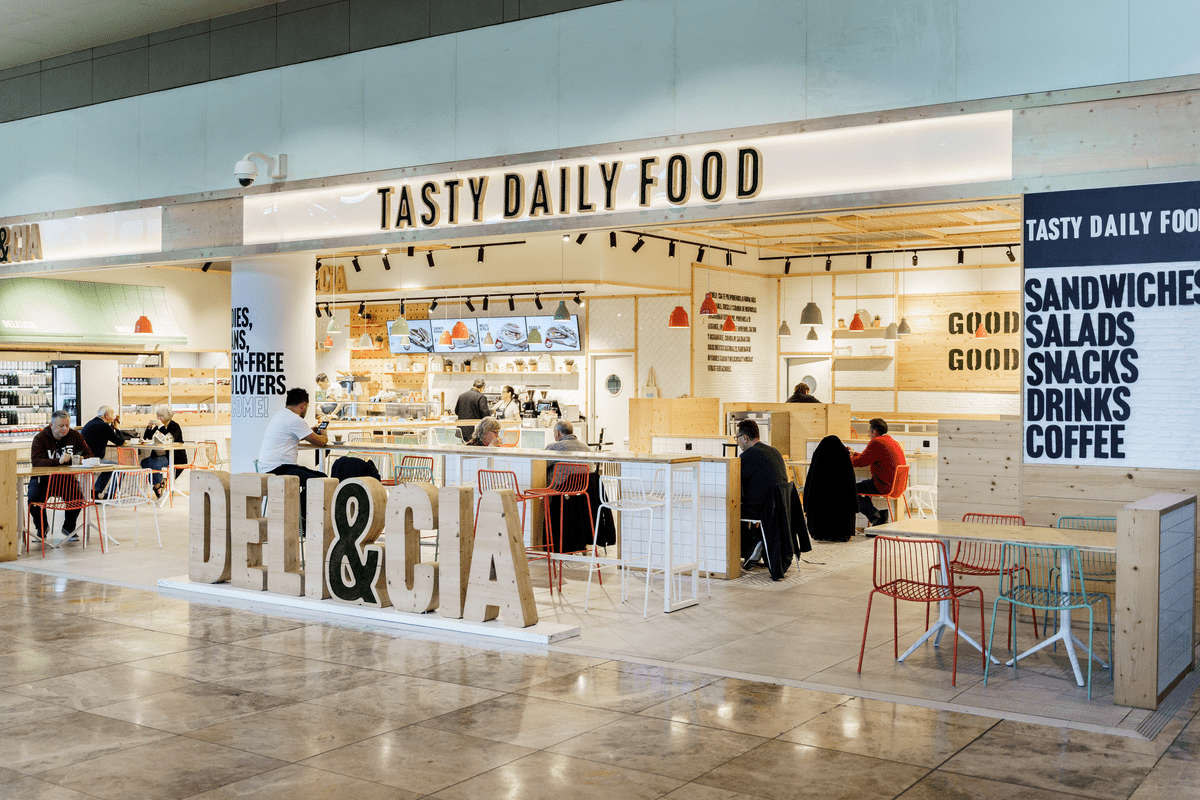
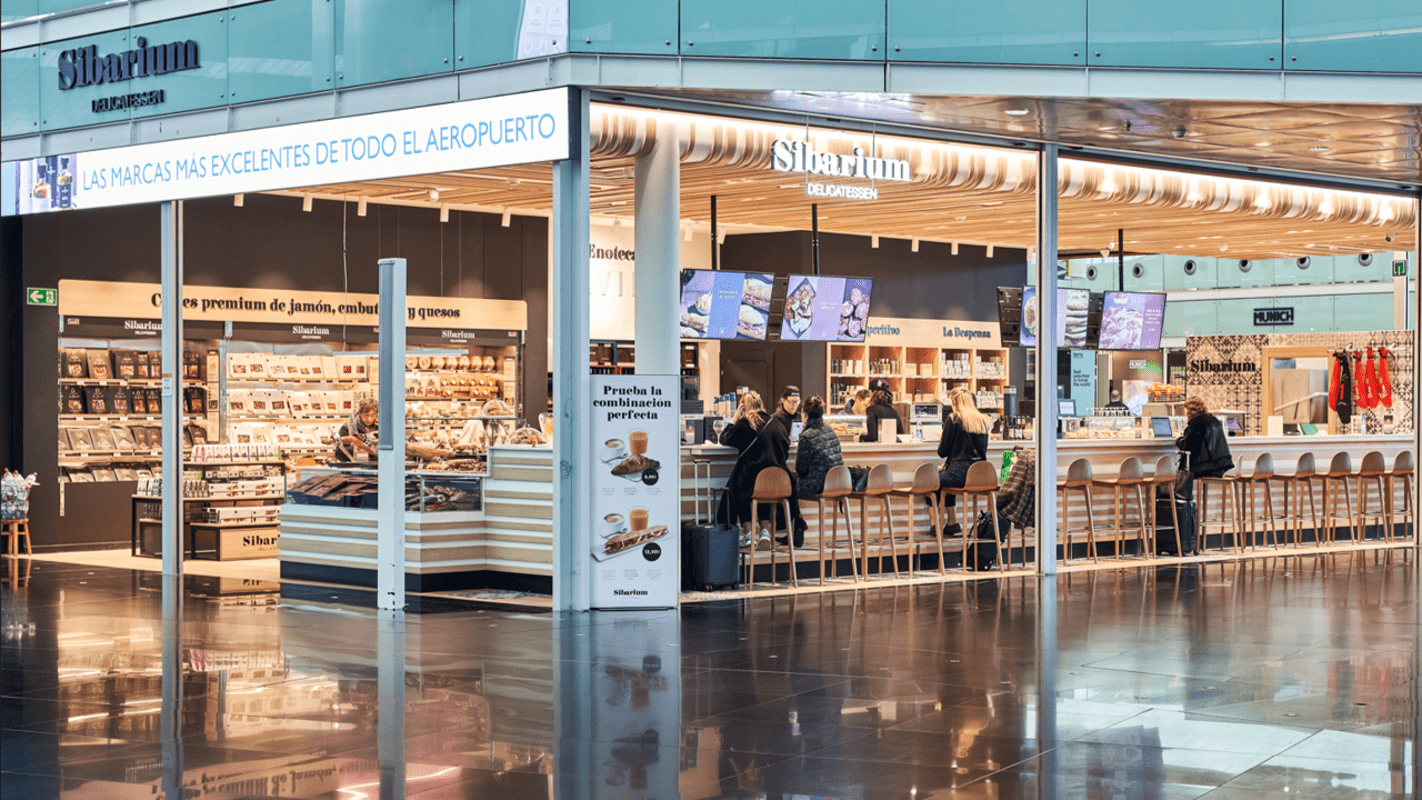
--- As own brands, Deli&Cia and Sibarium, and in franchises we are one of the largest franchisees of Burger King or Starbucks, and the number one in the world of Paul, a brand with which we have more than one hundred establishments.
--- And what are the trends in this sector?
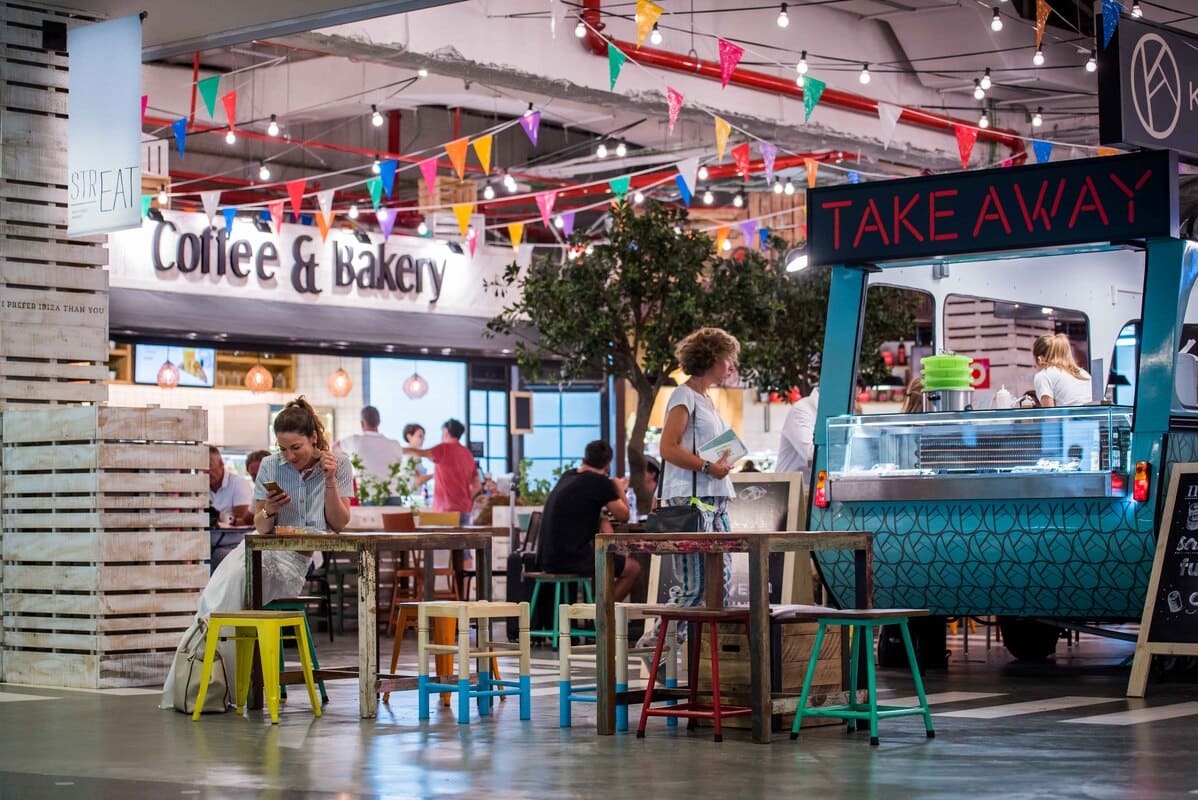
--- We are at the service of what our landlords ask us for, but we are seeing more and more healthy concepts and there is also a growing tendency to bet on local heroes and everything that is closer.
--- Many users consider eating at an airport to be expensive. Do you share this idea?
--- Precisely, we offer this diversity of concepts to be able to adapt to all targets and budgets. But I believe that what has happened in recent years is that the gap with respect to the prices you can find on the street has been reduced, now the differential is smaller.
--- Will PAI Partners propose Areas' IPO?
--- This issue is not on the table. After the COVID interval, what we are now achieving is reaching historical milestones every day, such as the record sales of 2023 or all the tenders won in the United States. What we need to do at this moment is to develop the business plan as quickly as we can; we have never talked about the stock market, when the time comes to evaluate a divestment we will see what the best option is. For now, what we are thinking about is accelerating and winning tenders and, if we are now third, being able to become second. That is the goal.
"Above all, I ask my team for commitment. Whoever is at Areas must fall in love with the company and the project"--- Areas' management committee is made up of nine executives of six nationalities and has English as its official language. What kind of executive profile have you looked for? What do you ask of your collaborators?
--- First and foremost, commitment. Whoever is in Areas must fall in love with the company and the project. Despite the magnitudes we operate in, I look for them to have an entrepreneurial touch, which is extremely important. And what I also ask for is generous leadership, to feel like a family. The relationship we have among all of us is exceptional, we share everything and have absolute transparency, which allows us to have a lot of agility in decision-making. This is about speed, and we need it to be that way, because we manage a very intense business, with many brands and a team of 20,000 people in ten countries that have different time zones.
--- Are you in favor of the expansion of Barcelona Airport?
--- Yes, a great city like Barcelona must have the best possible airport, respecting everything that is necessary from an environmental point of view, because there are technicians who will know how to do it. As a Barcelonian, I think it is in our interest for the city to be as well connected as possible. Barcelona must have a good airport, I believe they will be able to resolve it, I hope so.
--- And how do you currently see the city? How do you think it is perceived from outside?
--- I believe we have a wonderful city, with incredible potential. In Areas, we are demonstrating that from Barcelona you can lead a major global player and that we find the talent we need when we look for it. With a very important element: it is talent that feels happy to live in this city, which is magnificent.
--- Some people call for economic degrowth and urge, for example, the population to stop flying. Do you not see a future threat to Areas' business?
--- We have not considered the scenario of people stopping using planes; all traffic forecasts are very positive. We do know that if electric cars become widespread in our service areas, stops will be longer, so we will have to offer more services, and we also anticipate that trains will gain passengers.
--- Has the disappearance of tolls on highways affected you?
--- Yes, traffic has grown and our target or profile of travelers has changed, as we now have a much higher presence of transporters, which has forced us to rethink some things and adapt our offer. Another change is that before our landlord was Abertis and now it is the Ministry of Transport.
Add The New Barcelona Post as your preferred Google source for free
Stay informed with the latest news.