
The word fear is the most repeated in William Shakespeare's Macbeth. Not only Macbeth and Lady Macbeth's fear of being discovered for their crime, but also of not knowing how to see it through, of losing what they have or could have. Many insecurities that make them attack and self-destruct, delving into an ambition and misfortune that ends up poisoning them. They are not the only ones who are afraid; all the characters in the tragedy are, wounded after a war, whatever it may be.
"Fear is one of the great drivers of Macbeth," defends Pau Carrió, responsible for adapting and directing the version that can be seen these days at the Teatre Lliure, until March 17. He knows the British playwright's text very well: he first read it as a teenager, accompanied by watching Orson Welles' adaptation. "At 14, I became obsessed with Shakespeare," admits the director, who has already staged three other of his texts, Twelfth Night, Hamlet, and Henry V.
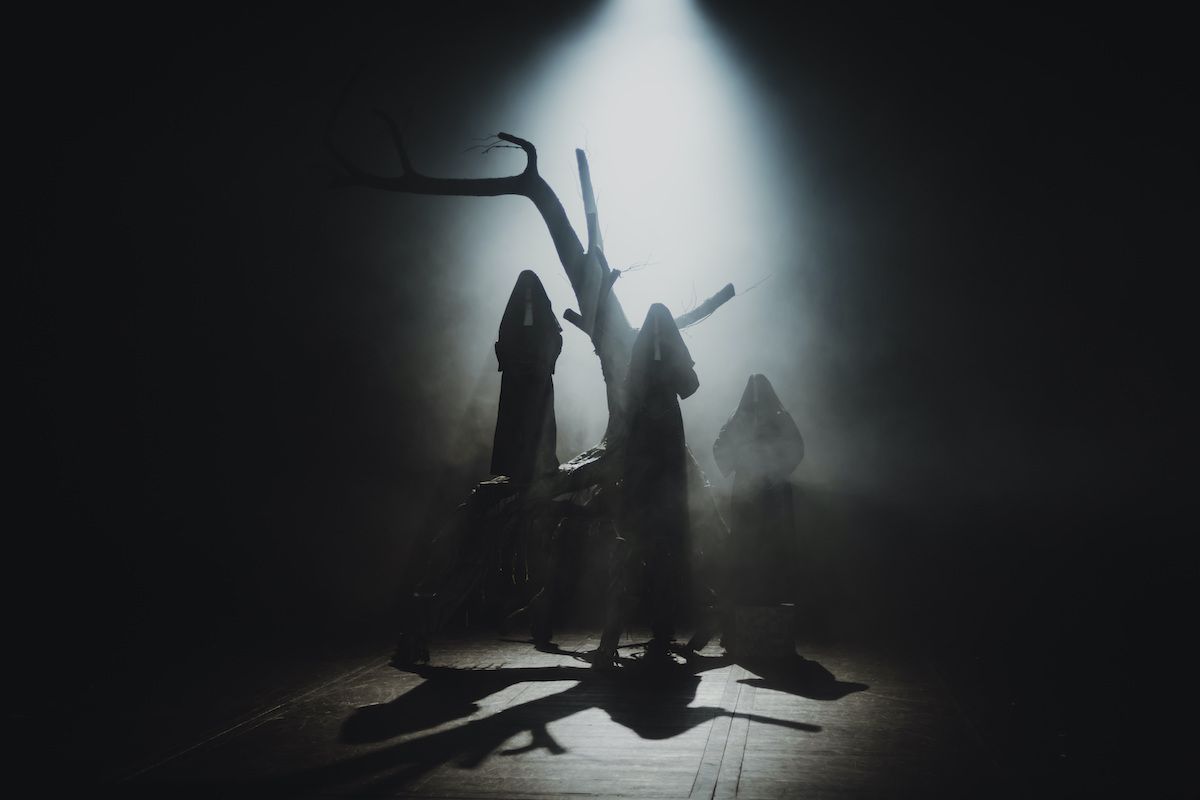
Knowing even which word is repeated the most, Carrió has measured every decision in his Macbeth to make it faithful, risking it even aesthetically being excessively suffocating. In the text, fear is present in scenes that take place in castle corners, at night, so Carrió was clear that the staging should accompany that feeling one gets reading Shakespeare, where the most frequent adjectives are dark and strange. The stage is tinged with black and fog, with its protagonists also dressed in black, but with a military aesthetic that recalls where they come from and what they are like. Even the blood that flows from the wounded and stains the evildoers is black.
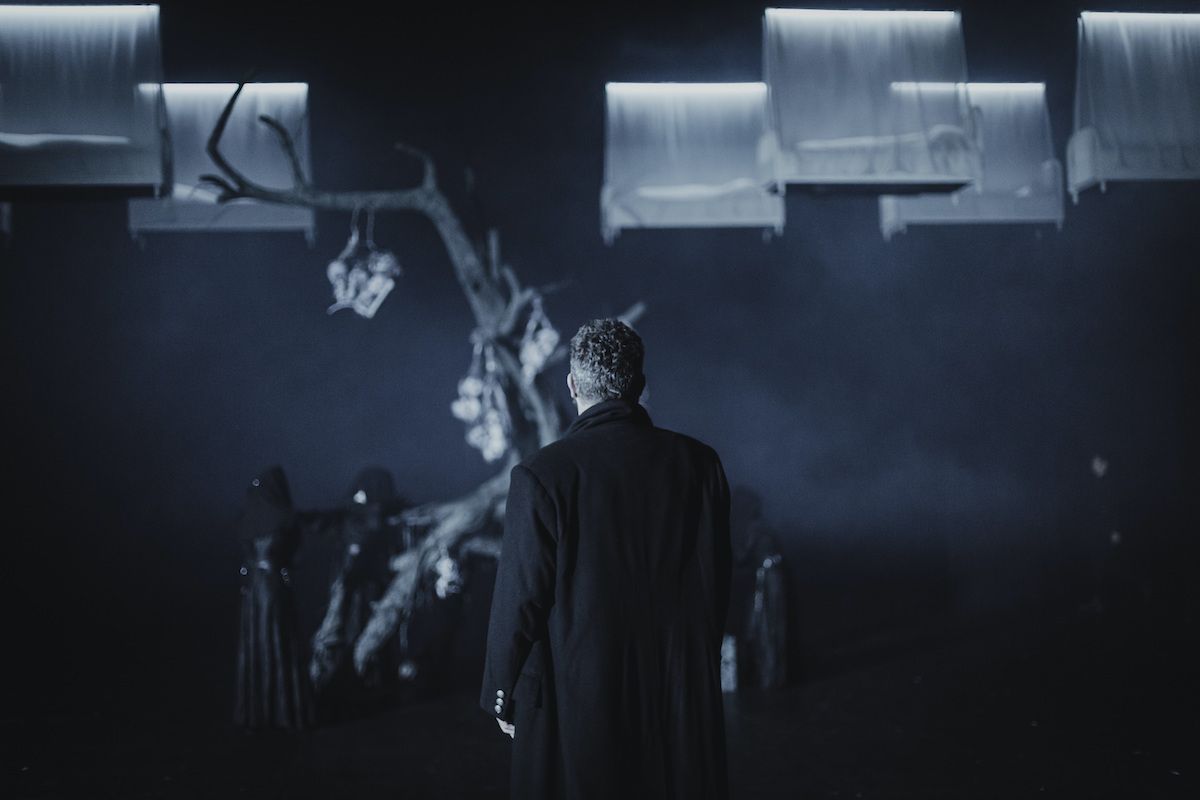
The only point of light is given by gravitating beds, where the victims of the war lie. "Evil floats and the air is infected, one cannot breathe, everything is corrupted by mortality," says its director, who was inspired by images of the First World War and the misnamed Spanish flu. In addition, they reinforce the punishment received by the protagonist couple, with Lady Macbeth (Laia Marull) turned into a sleepwalker and Macbeth (Ernest Villegas) never again able to sleep, an issue that particularly obsessed Jaume Plensa in his proposal for the Shakespearean tragedy a year ago for the Liceu.
Beds and lack of sleep that are almost another character in Carrió's production, in which a varied cast of 14 actors is seen again. For a long time, it was difficult to find such productions on Barcelona stages, accustomed to monologues or pieces with two or three actors after the crisis. "Public theaters have this obligation. We are starting to have a numerous talent from all generations. For spectators, it's a pleasure," says the director, calling for this to be done in contemporary productions and not only in adaptations of classic texts. As a symbol of this commitment from the Lliure, Carrió points out that one of the actors in this Macbeth, Pep Cruz, probably one of the most well-known faces, plays a brief role, being the unfortunate King Duncan, showing that even small characters have weight in a choral production. A proposal that coincides in time with The Watsons at the Teatre Nacional de Catalunya (TNC), also rich in actors.
In this Macbeth a varied cast is seen again, something that for a long time was difficult to find on Barcelona stages, accustomed to monologues or pieces with two or three actorsNot everything is fear in Macbeth, with other concerns that assault the spectators, or readers, seeing its protagonists, a reflection of what anyone is capable of doing to get what they want or not spoil what they believe they deserve. "How far can we destroy our surroundings to preserve our privileges?" asks Carrió, knowing that questions like this are still present today, regardless of the text being written at the beginning of the 17th century.
Here we must not forget those characters of tragedy known as witches, although they are never called as such, Carrió remarks, but as "strange sisters." "They are the ones who say the right words, like oracles, entering into that game between prediction and provocation, since, without them, would what ends up happening have happened?" reflects the director, who has characterized them as nurses, making a nod to the persecution many of them suffered as if they were witches for applying alternative knowledge that was considered dangerous.
By the way, Carrió already has a couple more Shakespeare plays in mind that he would like to do.
Add The New Barcelona Post as your preferred Google source for free
Stay informed with the latest news.
