
There was a team that had to come to Barcelona early because, basically, it had no sea where it could train. It was the Swiss team, Alinghi Red Bull Racing, with its sailors already in the city's sea since mid-2022, a few months after it was announced that the regatta organizers had chosen the Catalan capital as the venue for its new edition. Progressively, the 150 members that make up the team arrived. "We were the first and we have everything here. We are used to the wind, the waves, and the environment. For our daily life, it's good for us to know the city and not have arrived late. We feel, basically, at home," says one of the design team members, Joseph Maguet, "hopefully, there will be another America's Cup here, we really like Barcelona."
Perhaps that is the secret that has allowed them to overcome the problems they have had with their mast, which broke in June and suffered a breakdown a few days before the preliminary regatta began. That translates into many hours of tireless work, even sleepless nights, for the design team, made up of about 40 workers, always with the goal of getting the boat back in the water as soon as possible. It has also helped them get used to a climate that is tough for those coming from Switzerland or, in Maguet's case, from French Brittany. A matter that is also present on board, having to ensure that no electronic system overheats and everything stays sufficiently cool during the races. Nor should this be forgotten when thinking about the cyclists who move a boat that has no engine, with a constant force that achieves breathtaking speeds.
Maguet already knew Spain and its quality of life after having come as an Erasmus student years ago to Valencia. In Alinghi for three years now, he now lives in Poblenou and when he has some free time on the weekend, he takes the opportunity to go to the beach to practice windsurfing or wing foil. During the week, when he finishes work around seven, he prefers to go practice boxing. But, for that, he first has to start working at 8 in the morning, with meetings and encounters with the sailors to resolve doubts about their AC75 boat, a name given by its length, about 75 feet, which is equivalent to about 23 meters. Then, when they go into the water and the Swiss flag is raised ---a rule that must be complied with every time the boat is not at the base---, he stays glued to the computer to see how the boat works and analyze all the information it generates in real time. When they return, around five in the afternoon, it's time to go see them in case something has failed or needs to be repaired.
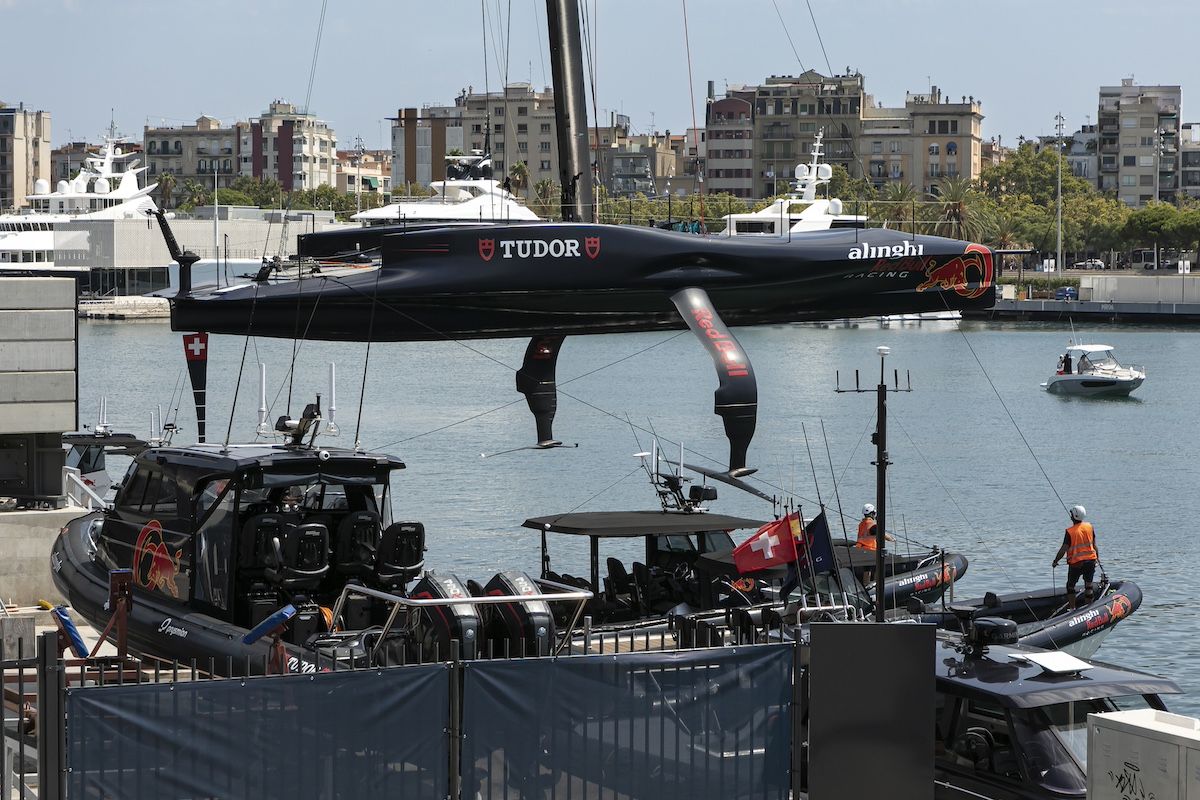
Before the boat finished its construction in Switzerland, Maguet, a structural engineer, dedicated himself to calculating how much carbon fiber he could put in each part of the boat, to ensure it was light but also strong. When the AC75 arrived in Barcelona last March, his main task has been to improve its performance as much as possible, adding new functionalities or making it even lighter. Working for sailing teams like Alinghi was the way Maguet found to combine his childhood passion for sailing with technology, immersing himself in the world of maritime engineering. Not only does he clearly understand how America's Cup boats work, but he also manages to simplify the reasons for something that seems so impossible, as much as it is seen these days, like boats flying: "The question is not, why do they fly, but, why do we want them to fly. They fly because what prevents the boat from going faster is friction with the water, so we just want to be in the air to avoid it."
The daily life of Alinghi's designers partly coincides with that of the sailors, but they wake up a little earlier. This is according to one of the members of the youth team, Joshua Richner, who is experiencing his first America's Cup this year, a completely new world for him, accustomed to more classic, and more active, sailing, now having to concentrate on pressing buttons to steer the boat well in his helmsman position. He comes from the small town of Murten, in the canton of Fribourg, with a lake where he started sailing when he was six years old. He recounts how Alinghi's first victories, in 2003 and 2007, awakened nautical fervor in Switzerland, which became the first European country to win the historic trophy. "I am part of that generation. It was a very big deal, everyone was talking about it," he points out.
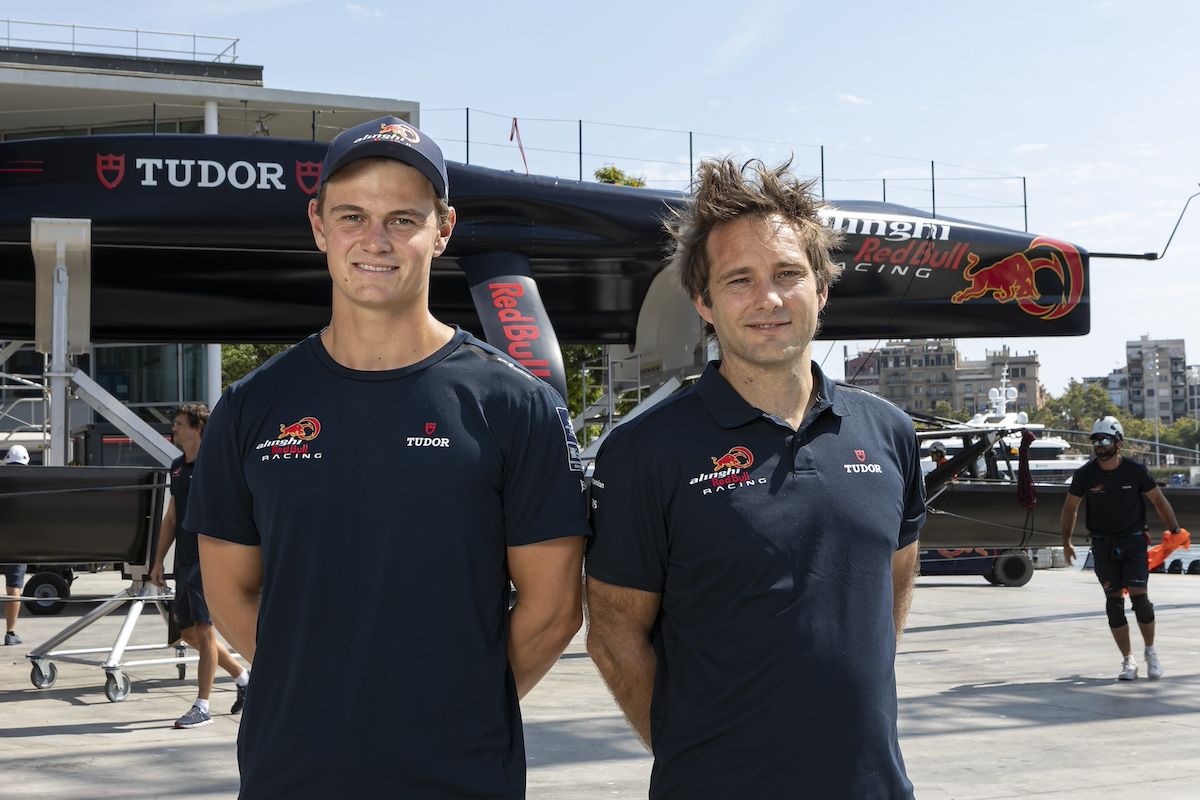
He is not on his own like Maguet in Poblenou, but shares a flat with his teammates in an apartment in Plaza Catalunya. With ages ranging from 21 to 24, he admits that he feels like he is in a student flat, although he assures that they do not have time for parties. Their focus is on the competition, which, in the case of the youth team, will start on September 17 and end on September 26. "Maybe we'll have parties when we achieve our goals. Now we are too tired and we stay at home," he explains.
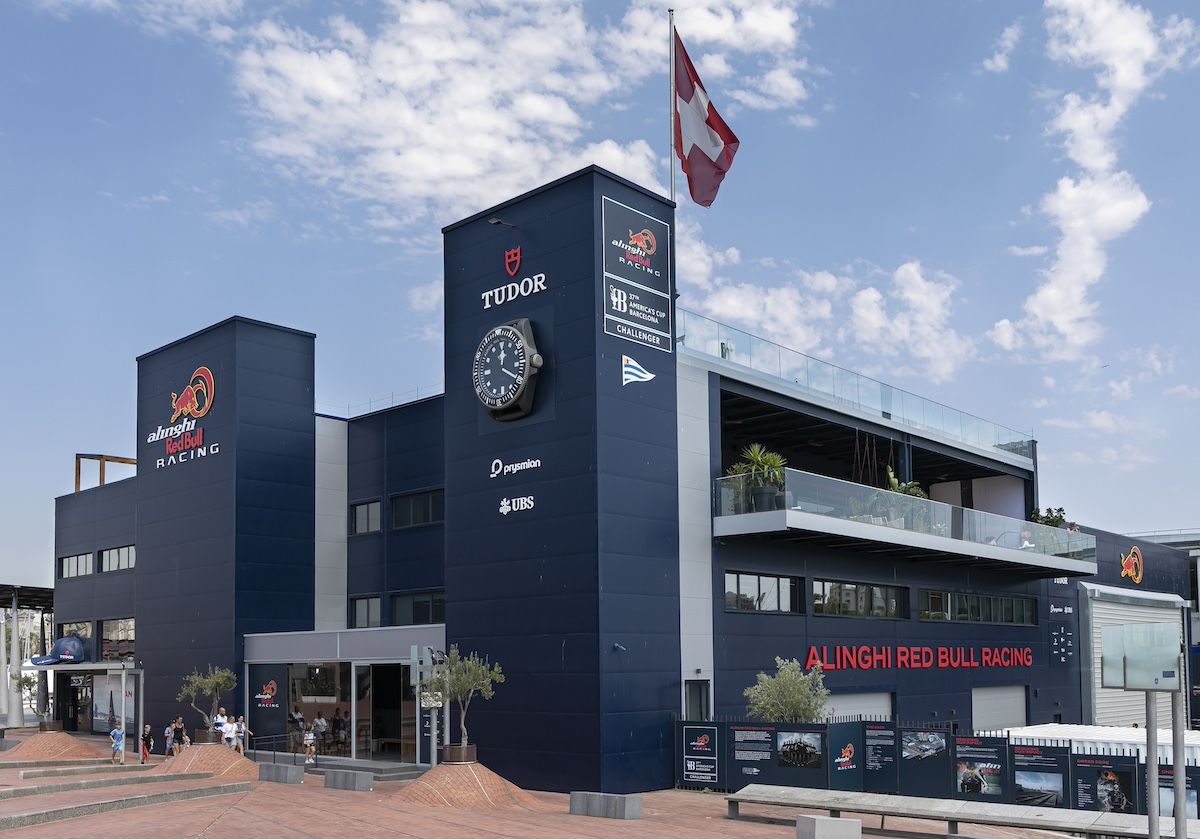
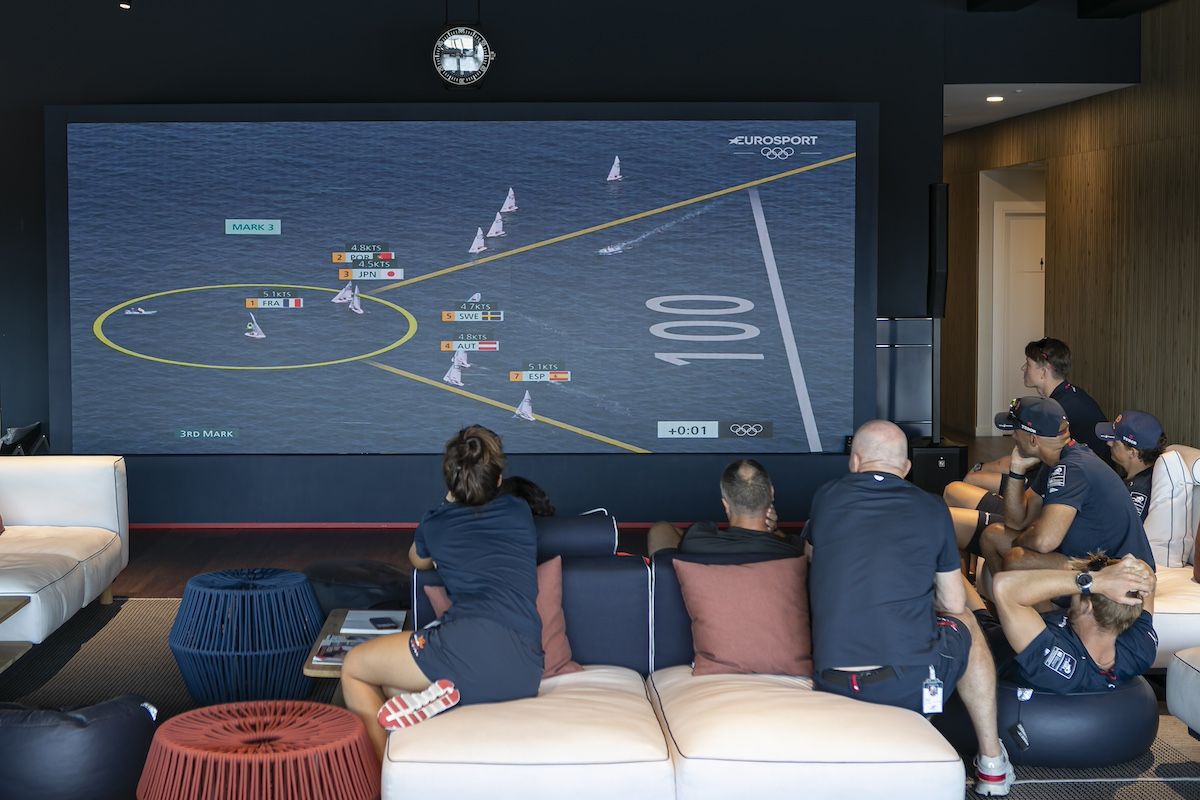
Richner and the other eight members of the youth team, six boys and three girls, arrive at the Alinghi base around seven-thirty in the morning, located where the Cinesa del Maremagnum used to be. They have breakfast in the canteen, where they meet the older sailors, whom they do not hesitate to approach to ask them anything. The canteen is just behind the hospitality area that has been set up on the first floor of the building, with a cafeteria included, where a few weeks ago some Alinghi members gathered to watch the Olympic sailing trials and lamented when they saw their compatriots fall. On that first floor there is also the gym, while, on the ground floor, are the offices, locked up tight for external visitors.
After breakfast, meetings with the coaches take place to prepare for the day. To go out on the water at noon, one must first help prepare the boat, an AC40, with a length of 40 feet (about 12 meters), smaller for youth and women's teams compared to men's. It is taken out of the shed where it is stored, the mast is placed, and it is maneuvered to get it into the water. Then, four hours at sea on good days, not only with sunscreen and helmet, but with long sleeves to avoid getting too hot and losing energy. Because the wind is deceiving and gives the sensation that it is at fewer degrees, but the sun stings. Upon return, the boat is stored, and what was done well and what was done wrong is analyzed, with an eye already on what to do the next day.
Settled in Barcelona since early June, the first thing Richner did when he arrived was to buy a second-hand bike to get around the city. Many times they have problems solving routine issues like going to the hairdresser. That's why it helps to be right in front of the Maremagnum, from where members of Alinghi are often seen leaving, uniformed and loaded with something to eat. "It's very practical to be here to buy things because the days at the America's Cup are long and it's difficult to get what you need," says the sailor. As he assures that they are not much for parties, like good athletes, the few free moments they have they train, either in the gym at the base itself or playing padel in Barceloneta. Also on a tennis court they have found in Montjuïc: "Although I don't need it for the competition, I train because I am convinced that being in good physical shape is also good for the mind."
Add The New Barcelona Post as your preferred Google source for free
Stay informed with the latest news.
