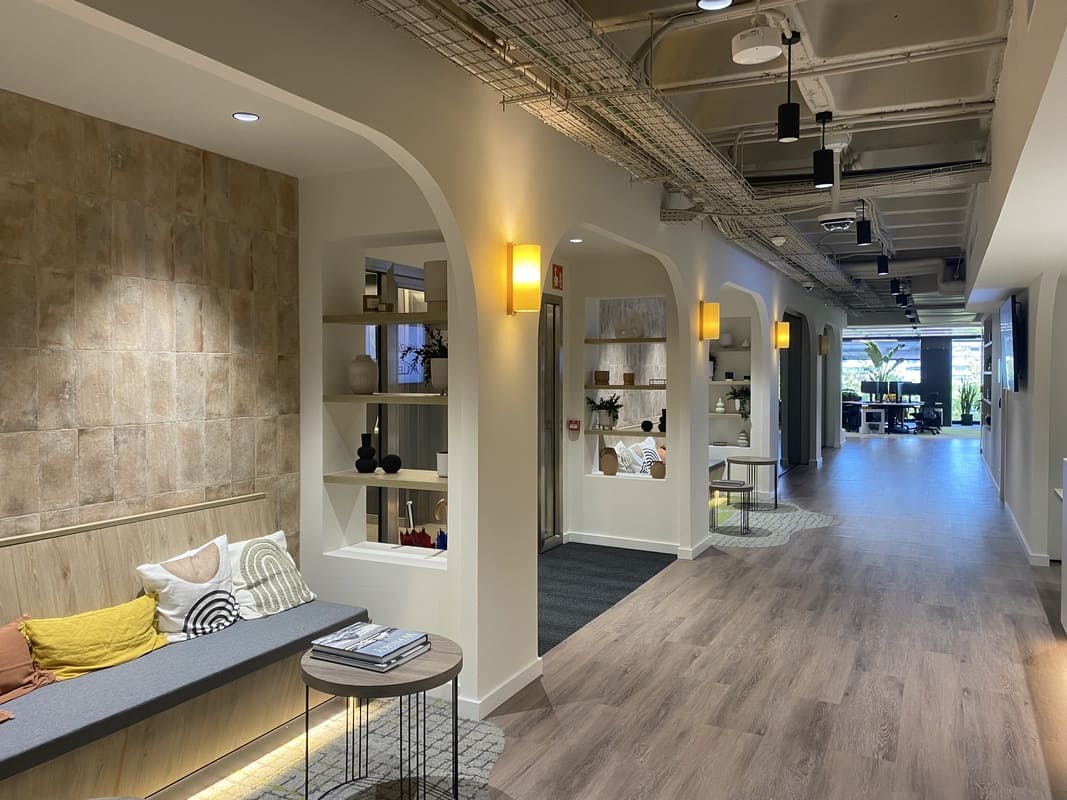
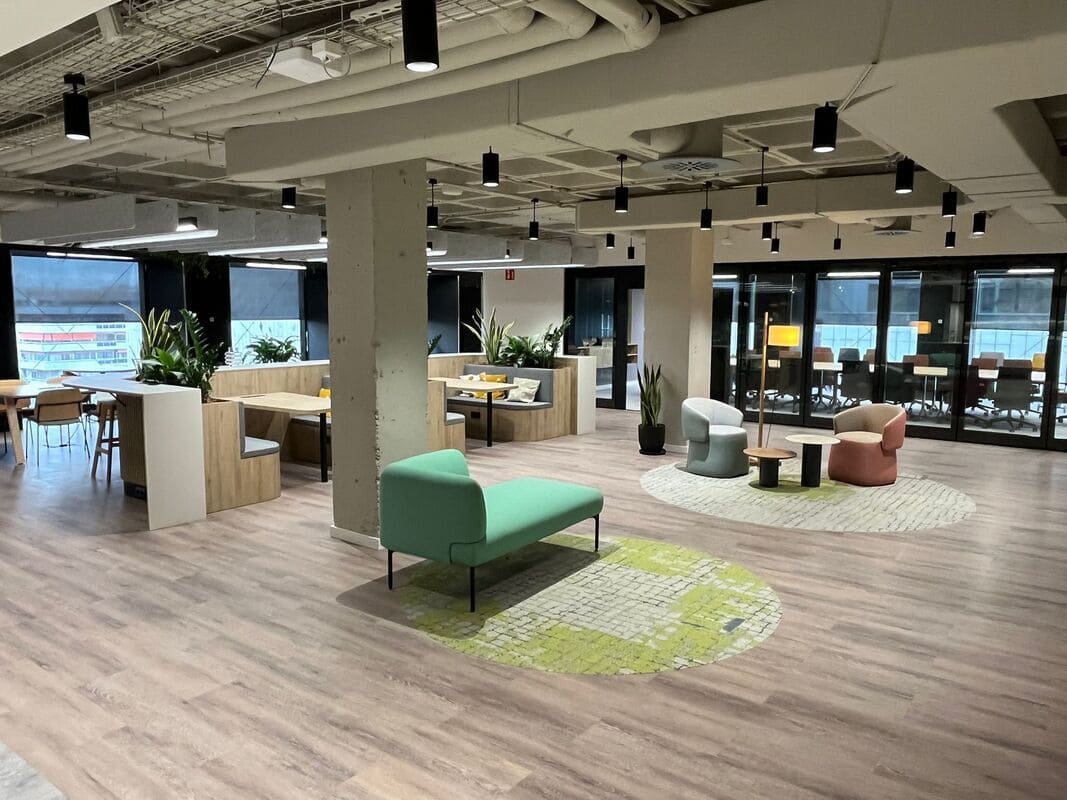
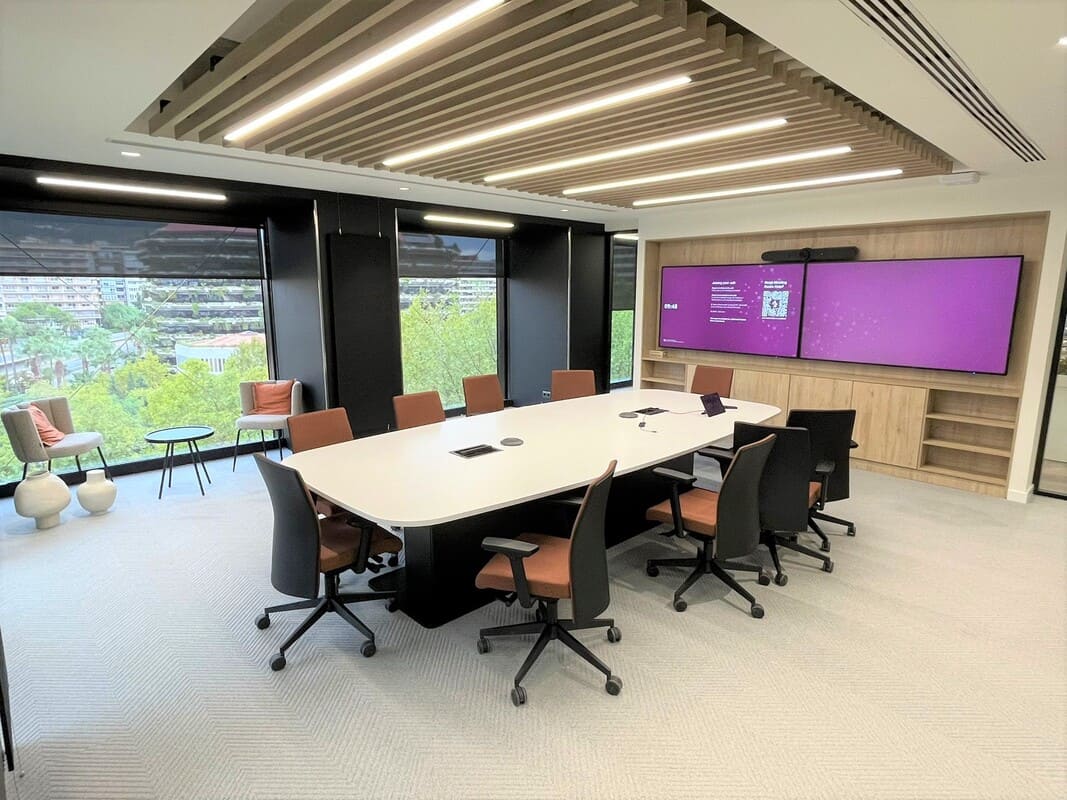
Crossing the doors of the hub that Alexion and AstraZeneca have installed at Avenida Diagonal 609-615 in Barcelona is like entering an Ibizan hotel. The entrance of the new offices, located in the building known as El Dau, has been decorated in a style reminiscent of a boutique hotel, a declaration of intent to indicate to employees that in their workplace "they will be in luxury, better than at home," explains Dr. Gonzalo de Miquel, director of the R&D center that the British pharmaceutical multinational has installed in the Catalan capital, with a planned investment of 800 million euros over five years.
These state-of-the-art offices, designed by CBRE, are another tool in the hub's talent acquisition strategy, along with the attractiveness of Barcelona and the powerful professional development program that the pharmaceutical company offers to scientists and professionals from different disciplines who accept the job offer made by AstraZeneca and its subsidiary dedicated to rare disease research, Alexion. Their goal is to incorporate 1,000 people by 2025, a major challenge in a global environment of high competitiveness for qualified talent, so having an ideal workplace and having located the hub in Barcelona are key factors in the process of attracting these professionals. Two-thirds of this staff will work in the research lines and clinical trials led by AstraZeneca, while the remaining third will join the Alexion hub.
"Barcelona has a very important health and pharmaceutical ecosystem. The Catalan family pharmaceutical companies are a very solid base that provides local talent, but, in addition, Barcelona as a city offers us an incredible response in attracting international talent, it is easier for us to attract talent from here," says De Miquel after opening the doors of the hub to The New Barcelona Post. According to the executive, 25% of the new employees are foreigners and they already comprise 24 nationalities. Another interesting fact: 70% of the staff is made up of women, a figure that reaches 75% in positions of highest responsibility.
But, how many people has the hub already hired within the goal of 1,000 positions to be filled? In just six months, a total of 250 have joined, although each month this figure grows with between twelve and fifteen new employees. Of this figure, 130 work in the Alexion hub, while 120 have joined AstraZeneca's. For now, El Dau only houses Alexion's staff, which reaches 170 people if you add the employees who are not associated with the R&D team, but with the commercial subsidiary functions of the pharmaceutical company in Spain.
In the case of AstraZeneca, which has its headquarters for Spain in Madrid, the 120 professionals have fully joined the hub but, temporarily, work from offices located in another building, at Diagonal 601. "As of September, we will all be together here," says Gonzalo de Miquel, referring to the fact that the multinational has already rented two more floors in El Dau to cope with the strong growth expected in the workforce.
Specifically, in September a second floor will be enabled, adding 1,800 square meters to the research complex, and, in January 2024, a third floor will be opened, totaling 5,400 m². Now, Alexion occupies the sixth floor of the building, while AstraZeneca will occupy the second and fourth floors. De Miquel acknowledges that the company is already in talks with Colonial, the company that owns the property, to have options to increase the surface area of the hub in the future. "For now we have three floors, and the idea is to be able to continue being all together in the same building when we reach a thousand employees," explains the executive.
95% of the 250 professionals hired by Alexion and AstraZeneca for their new research base in Barcelona have a scientific profile, with people graduated in medicine, biology, pharmacy, and engineering. Many are also PhDs or have completed a master's degree. According to the director of the hub, in most cases it is not their first job, but rather professionals who come from other pharmaceutical companies, other research centers, or consulting firms, although now, in a second phase, the focus will also be on attracting and training recent graduates to train them from scratch.
What led the multinational to bet on Barcelona twice?
Gonzalo de Miquel was working at AstraZeneca's headquarters in Cambridge when, in early 2022, he received a call from Marc Dunoyer, global CEO of Alexion Pharmaceuticals, a Massachusetts (Boston)-based company that had been acquired by the British multinational a few months earlier, in the summer of 2021. "Until that moment, Alexion's presence in Europe was very limited. Marc wanted to expand the company on the continent and after analyzing different cities, he chose Barcelona, where the company already had a small office, and called me, because he knew I was from here," recalls De Miquel.
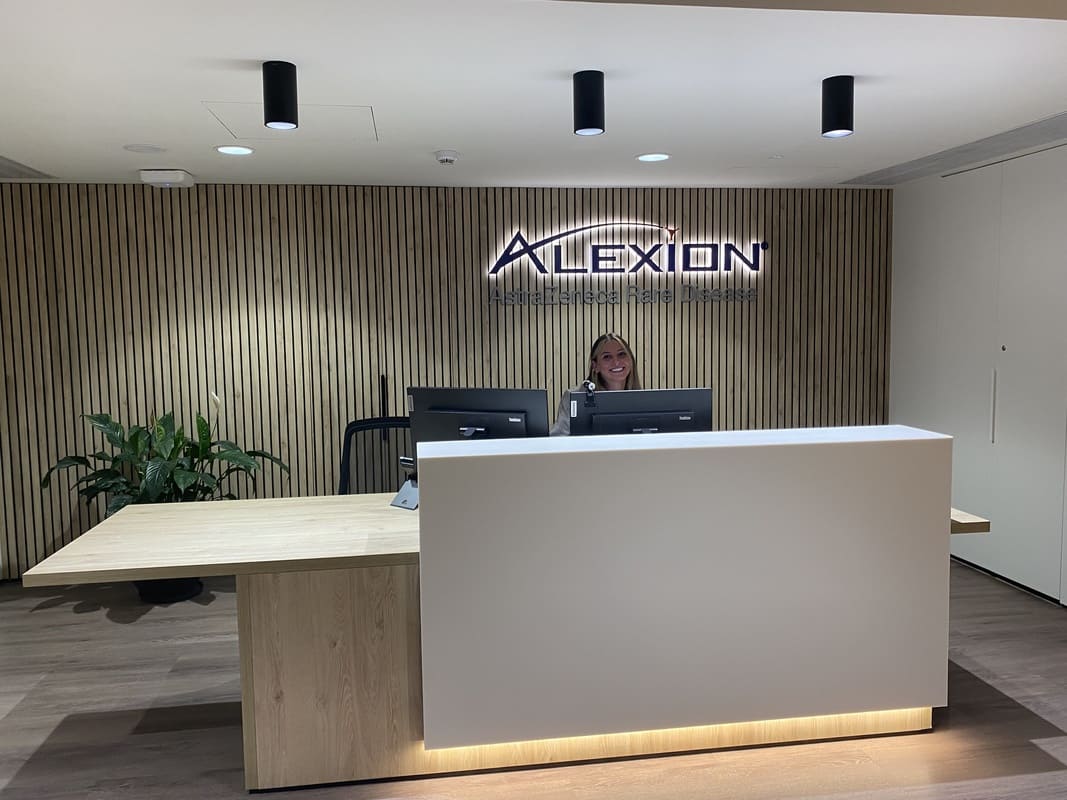
Alexion's commitment to locating a center of excellence in Barcelona to accelerate the development of new-generation drugs in the field of rare diseases was announced in March 2022, with an initial forecast of creating one hundred jobs. This magnitude has already been surpassed, because in May 2023 Alexion had already recruited its 100th employee and now the figure reaches 130.
Shortly after this subsidiary's commitment to the Catalan capital became known, it was the parent company itself, AstraZeneca, that decided to redouble the group's presence in the city with the announcement that it would also install a new European R&D center in Barcelona that would cover all its main therapeutic areas, developing new therapies for cancer or respiratory diseases. "AstraZeneca was interested in growing outside the United Kingdom and, after seeing the high speed of development of the Alexion hub ---which was launched last October---, it decided to also come to Barcelona because they saw that from here they could access the scientific profile and qualified management that their research lines require," highlights De Miquel.
De Miquel, who has now become responsible for the two Barcelona hubs, assures that the job positions they are offering "are very attractive," as they allow professionals to manage and participate in global research projects. "Just a few days ago, from this very room, we had a meeting with the FDA, the US regulatory agency," he exemplifies. "The scientists we are hiring have the opportunity to lead important projects for their careers from here," he emphasizes, adding that their significant business commitment will also make it possible for "local talent that had gone abroad to return."
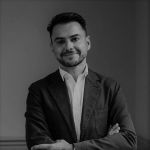
Quite a few people have already been able to return; I myself am an example," he adds, recalling that he had been living in Cambridge for six years. A rheumatologist, De Miquel did his residency at Hospital de Sant Pau and then worked at pharmaceutical companies Boehringer Ingelheim and Almirall, and, from Cambridge, for Vectura and AstraZeneca.
More effort to promote scientific Barcelona
De Miquel, however, calls for greater effort from Barcelona to internationally publicize this powerful scientific and research aspect, since, externally, the city is still not perceived as a health and biotechnology ecosystem. "We must strive to better convey that Barcelona is not just a postcard city; science can be done from here. There are many people who had never considered being able to come and live here, but thanks to projects like AstraZeneca's and Alexion's, they are now considering it. More scientific promotion is needed," he asserts. "A Swede we hired told me the other day that living in Barcelona allows him to work, but with the feeling of being permanently on vacation," the executive explains amusedly.
Gonzalo de Miquel: "We must strive to better convey that Barcelona is not just a postcard city; science can be done from here"Gonzalo de Miquel announces that the hubalso will benefit from Barcelona's powerful digital ecosystem, as it plans to hosta hundred people expert in information technologies and in digital healthfor the development of technology and computer applications necessary to optimize clinical programs, with a prominent role in everything related to patient recruitment, remote monitoring of trials, and data analysis and visualization for decision-making.
What does this center do?
In Alexion's modern offices in Barcelona, there are no test tubes or laboratories. It is a hub specialized in management, meaning it is a center dedicated to the implementation, monitoring, and control of the clinical trials necessary for the development of new drugs researched by the company. Thus, before a new drug can be launched on the market, it must first pass the so-called phases 1, 2, and 3 of research and obtain approval from regulatory agencies. Thus, the employees of the R&D center are responsible for monitoring this entire research phase and drafting clinical protocols to demonstrate the drug's efficacy. They also seek and coordinate hospitals worldwide that participate in the various clinical trials and monitor the patients participating in each project, with an exhaustive process of data collection and monitoring of all clinical parameters. Pharmacovigilance and all interaction with regulatory agencies such as the EMA and the FDA are other major responsibilities of this type of hub, in a process that can take between three and four years for each line of research.
According to Gonzalo de Miquel, Alexion and AstraZeneca are currently coordinating 130 clinical trials from Barcelona. In the area of rare diseases, for example, a new therapeutic area linked to bone metabolism and neurofibromatosis has been launched, led by De Miquel himself. Specifically, the adult indication for Koselugo (selumetinib) is being studied, the first and only therapy indicated for pediatric patients with Neurofibromatosis type 1 who present plexiform neurofibromas; the drug was launched last June. In the case of AstraZeneca, its main specialty in Barcelona is oncology ---a legacy of Dr. Josep Baselga---, but also other therapeutic areas such as cardiovascular, renal and metabolism; respiratory diseases and immunology; vaccines and immunotherapies.
Add The New Barcelona Post as your preferred Google source for free
Stay informed with the latest news.