
A hundred years ago, Montjuïc was a hive of construction work to erect the facilities that would host the 1929 International Exposition. A century later, the mountain will recover this image and will once again be filled with workers and cranes, precisely with the aim of remodeling the space that then projected the city to the world. The renovation of the pavilions will be designed through four international architecture competitions, with one aim: to have an exhibition center with "iconic buildings."
"We will do it with the vocation and ambition of being benchmarks in new architecture and in new iconic buildings," proclaimed the mayor, Jaume Collboni, when presenting the commemoration of the 1929 International Exposition. The centenary will be celebrated with a program of events yet to be specified, which will culminate in a "great international event," also yet to be defined. The activities will be designed through a commission formed by representatives of the City Council, Fira de Barcelona, and the Generalitat, who have closed a protocol to promote the celebration of the anniversary. The protocol, which has been signed at the Palau de Congressos de Montjuïc, also contemplates that the three administrations promote and monitor the remodeling of the exhibition center.
This great event to commemorate the centenary will have an international vocation and will be linked to fair activity, culture, and sports. This event will be the culmination of a program that will be designed together with other actors in the city and that will foreseeably open next year. "We want the commemoration to go beyond the Fira," declared the general director of the fair institution, Constantí Serrallonga. Fira's objective is for the celebration to be experienced throughout the city, with cultural, civic activities and also those linked to the institution, according to the president of its board of directors, Pau Relat. And this will be an "active commemoration," because it will not only commemorate the International Exposition and its legacy, but it will do so within the framework of the renovation and improvement of the exhibition space. The objective? To update the environment and the pavilions built a hundred years ago and turn them into a 21st-century venue.
The transformation of the exhibition center will include new pavilions, a permanent economy space, and an Avenida Maria Cristina without private vehicle trafficThe reform is promoted with this objective, and also with a commitment from the three administrations: that it be mostly finished by 2029, coinciding with the centenary anniversary. To this end, Fira de Barcelona will launch four international competitions in spring, hand in hand with the City Council. This process will select the projects that will shape the future of the fairgrounds. The venue will include a new congress palace with a hall for 2,500 people where the Alfons XIII Pavilion is currently located, on the left side of the Magic Fountain, which will be defined in one of the four competitions to be launched.
The building that houses the Palau de Congressos where the protocol was signed will become a two-story multifunctional pavilion, which will be addressed in a project alongside its adjacent pavilion. Another of the competitions will focus on the remodeling of the building located on the right side of the Torres Venecianes, in Plaza España, which will house a permanent space for economic activity. For its part, the fourth competition will deal with the reconversion of the Palau de la Metal·lúrgia, also known as Pavelló 8 and located in front of the current Palau de Congressos. Its renovation will include the opening of a passage that will connect the surrounding neighborhoods with Avenida Maria Cristina, which will also be transformed. It will become a space where only public transport can circulate, eliminating private vehicles from a road with a surface area equivalent to three football fields.
A fairground in an urban fabric
The action will be carried out by the Fira 2000 company. The three administrations participate in it, as well as the Barcelona Metropolitan Area (AMB), the Provincial Council, the Barcelona Chamber of Commerce, and the L'Hospitalet City Council, whose mayor, Núria Marín, attended the event. The entity has reserved 174 million euros for the reform, but the final investment required will depend on the projects selected through these four competitions. The works will last about three years and, during the reform, Fira de Barcelona will maintain its activity in the Gran Via pavilions. The L'Hospitalet de Llobregat venue will host events displaced by the works due to its own expansion, which will culminate in 2026 after an investment of 320 million euros.
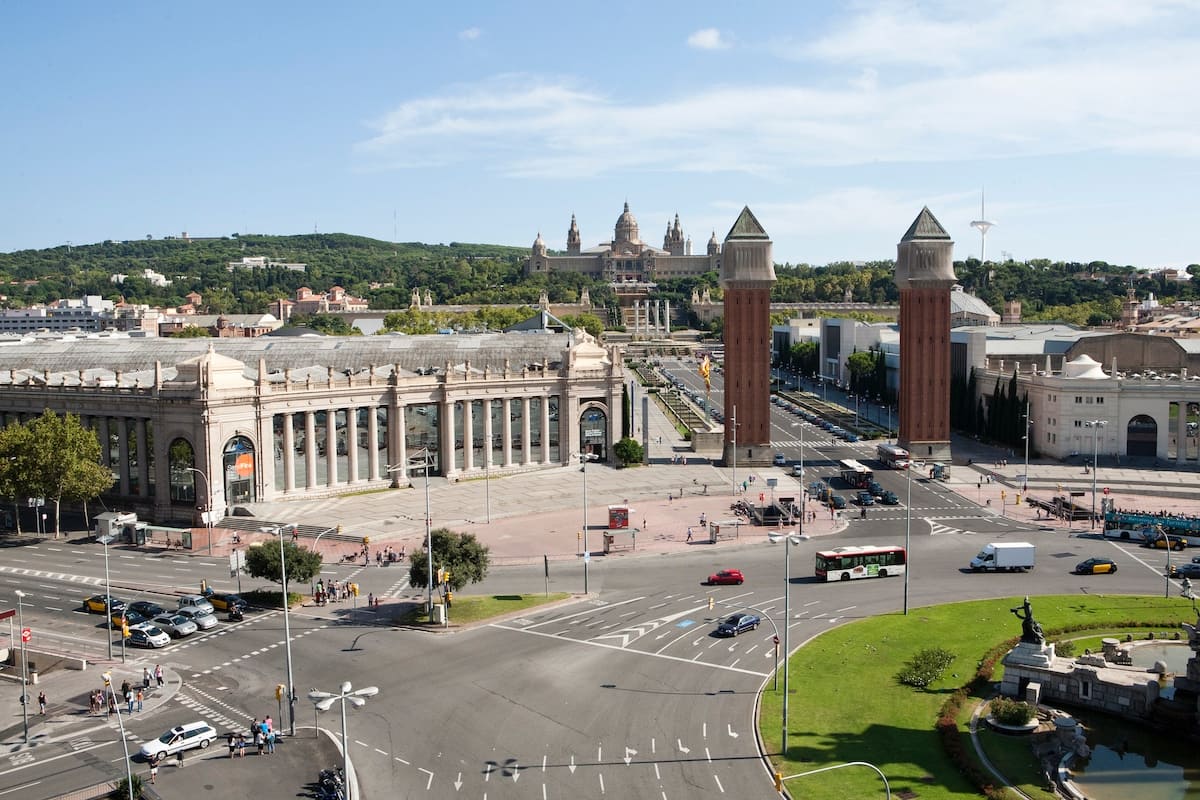
The remodeling of the Montjuïc venue is carried out taking into account a notable peculiarity: it is located within the city's urban fabric. In this context, and through a participatory process in 2022, the remodeling of the venue will include the construction of 500 homes and facilities, in areas such as education and health, excluded from the Fira 2000 budget. It will also have a sports area, although it will not be located where it was initially planned: the Pavelló d'Itàlia, which will finally be demolished. Barcelona's chief architect, Maria Buhigas, recalled that its demolition will create a green space for the city, and also restore symmetry between the Alfons XIII and Maria Cristina pavilions, on both sides of the avenue.
Recovering the "spirit of 1929"
The 1929 International Exhibition represented a turning point for the city and for its international projection, which "changed the history of Barcelona forever" and its vision of itself, according to its mayor. For him, as for many citizens, its impact went beyond the city sphere, acquiring a personal dimension: Collboni's great-grandfather arrived in Barcelona from Andalusia precisely to work on the projects promoted within the framework of the International Exhibition. The mayor's family connection to the event does not end there: his great-uncle was in charge of the Font Màgica de Montjuïc. And it is that "the history of part of the city has to do with the transformation and what the 1929 fair meant."
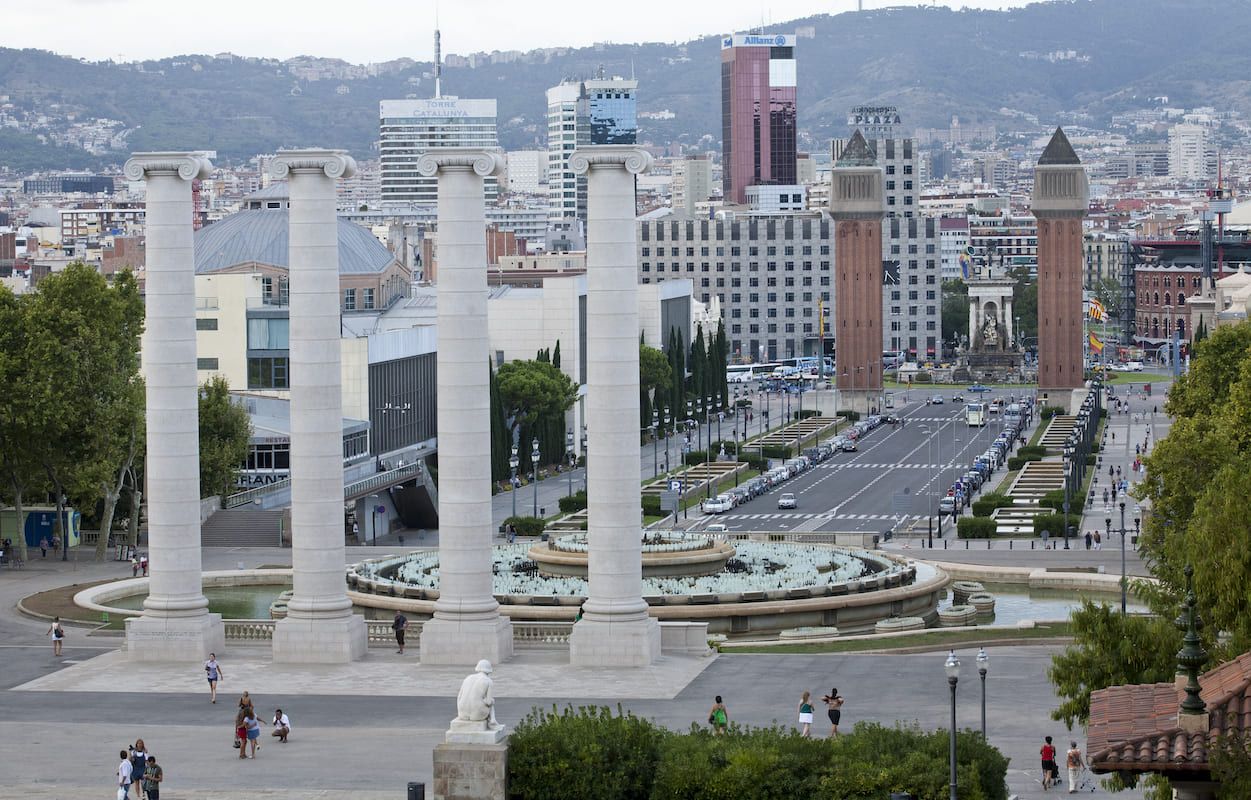
Now, one hundred years later, Collboni has opted to "reclaim the spirit of 1929, update it and project it into the future," from a collective ambition for the city. "The spirit of 1929 is to believe in ourselves again," he added in an event where art historian Pilar Vélez reviewed the legacy of the 1929 event. The Minister of Business and Labor of the Generalitat, Roger Torrent, remarked that the international exhibition represented a "leap into the future" for Barcelona, which had the Montjuïc mountain as its epicenter and whose transformative wave reached the entire city. And it did so from multiple perspectives: from the urbanistic to the technological and cultural, also passing through the demographic, as in the case of the great-grandfather of the current mayor. A century later, the city prepares to commemorate this international encounter, looking to the past to project itself more firmly into the future.
Add The New Barcelona Post as your preferred Google source for free
Stay informed with the latest news.
