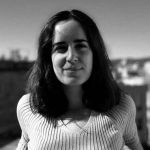
After 14 years under the direction of Esteve Riambau, the Filmoteca de Catalunya begins a new stage with Pablo La Parra Pérez (Gandia, 1987), a graduate in Art History from the University of Valencia and a doctor in Film and Cultural Studies from New York University. La Parra won the international competition called to renew the direction of the facility located in the Raval among some thirty candidacies, with a proposal that includes a residency program and an online catalog of the entire Filmo archive. In office since the beginning of July, for a period of four years renewable for four more, he returns to a city where he lived more than ten years ago when he was studying a master's degree at the Pompeu Fabra University (UPF), in Comparative Studies of Literature, Art and Thought.
It was not the only time he set foot in Barcelona. His doctoral thesis research focused on militant and clandestine cinema made in Catalonia during the last years of the Franco dictatorship and the Transition, the only clue he gives about his tastes on the big screen. That is why he kept coming to the city and knew the Filmoteca very well, where he spent many hours consulting its archive. After New York and the Barcelona interlude, he moved to the Basque Country, where he led the Research and Teaching department of the Elías Querejeta Zine Eskola international center, in San Sebastián, from 2018 until this 2024. In the Basque city, he has also worked at the San Sebastián International Film Festival.
--- This summer, will you have a vacation?
--- These have been very intense weeks, but also very rewarding. I will have a few days towards the end of August. I want to catch up on all the activity of the house. I am visiting unit by unit, getting to know the teams, taking notes, listening to the interests and demands of all the people who make up the team and also configuring my general photograph of the Filmoteca.
--- What is cinema for you?
--- Films are cinema, but so are the ways in which we make them, the words we write about them, the social relationships they generate, and the economic and technological relationships they develop. And, I add, an image may come from the past, but it always conjugates with the present; the moment you show it and talk about it, it is already part of today. I don't care if it's a nitrate film from the early 20th century; when we discuss it and think about it, it is contemporary.
--- And a film library, how would you define it?
--- Film libraries are institutions that preserve, disseminate, and reflect on cinematographic culture. This has to do with preserving its traces throughout history, which are, obviously, the films, to which a series of documents in other formats that complete the cinematographic heritage must be added. Film libraries have a second responsibility, which is to disseminate all this through screens and projection, but also through exhibitions and research. In addition, they treasure the most specialized knowledge about cinema, from preservation to the most aesthetic, humanistic, and critical aspects. Our heritage is not only the films and documents we have, but also the skills of the human team. We are an archive of gestures and knowledge, and we must guarantee its transfer. Since their appearance in the 1930s, film libraries have evolved to become the most sophisticated centers for the protection and understanding of cinematographic culture.
"Films are cinema, but so are the social relationships they generate and the economic and technological relationships they develop"--- Sounds complicated.
--- It's not an easy question at all. One of the fascinating things about a film library is the difficulty of defining it. A film library is and is not a museum, is and is not a cinema, is and is not an archive, is and is not a training center, is and is not a research center. It is all of this and much more than this. A film library not only programs films, not only preserves titles, not only provides access to documents, it does all of this together. And the sum of these parts generates a unique whole, which is a film library.
--- How do you imagine the Filmoteca de Catalunya in a few years?
--- More open, more diverse, and more flexible, in the sense that it collaborates with a multiplicity of agents and does so in all units of the facility. It is a film library that programs in a diverse but coherent way, very attentive to its social and political responsibility with the present. It also does so with sensitivity on a micro scale, with the Raval neighborhood; with a scope of action that reaches the entire country, collaborating with institutions throughout Catalonia, and with an international impact.
--- Give me some examples.
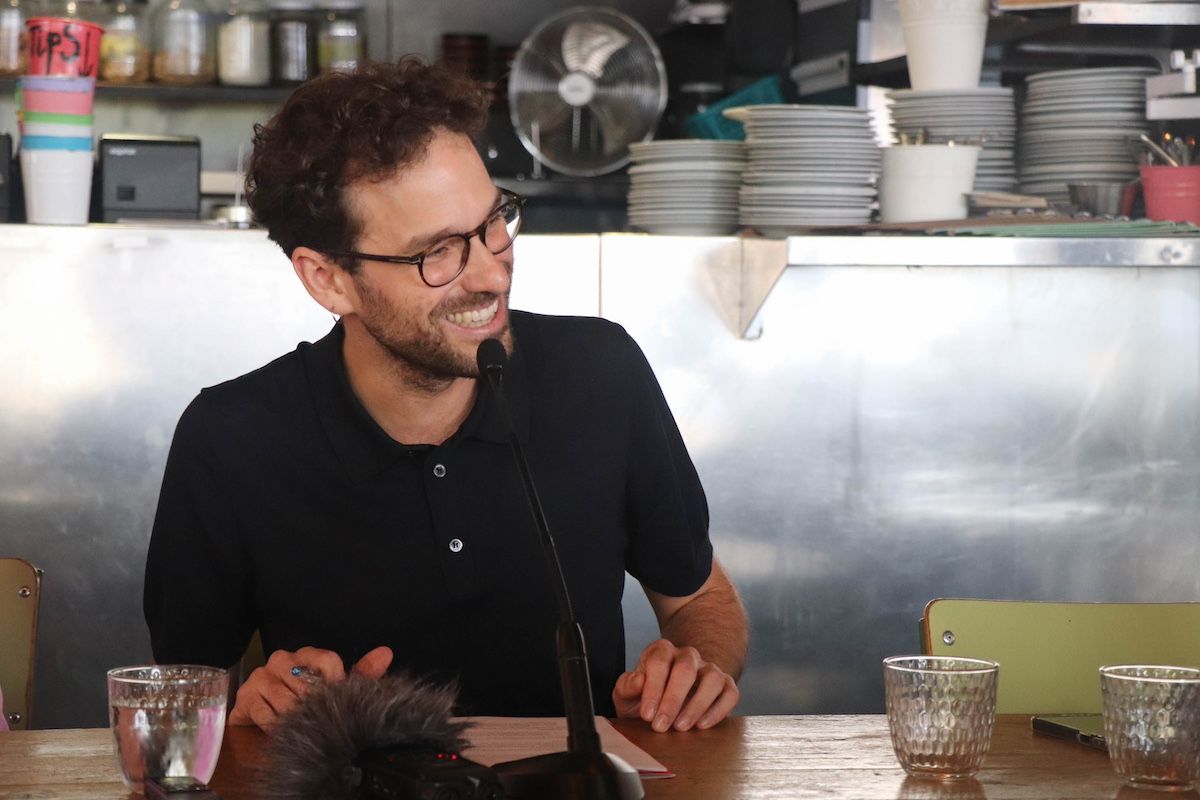
--- We will launch a residency program based on the rotation of profiles. The Filmoteca does very diverse things, ranging from a highly specialized task of preserving cinematographic heritage to screening films or curating exhibitions. There is a set of intermediate processes that have to do with mediation, documentation... a whole series of functions that the residencies must reflect. I imagine a program that changes from call to call and seeks to attract talent to the different areas where we work. We can host experts in preservation, mediators, curators, or creators who work with archive images, and these figures will perform functions for delimited periods in different units of the facility with a dual objective. On the one hand, to generate innovative public programs and, on the other, to leave an imprint on our internal ways of working and, thus, improve them.
--- Do you find it difficult to find talent?
--- No, quite the opposite. For many of the things we do, there are no specific training programs in Catalonia, and this is an issue we will have to consider in the medium and long term and assess what responsibility the Filmoteca has. Despite this, we have a program to support younger talent, paid scholarships to work in our institution. Every year we receive a high number of high-level applications. One of the first things I have seen is that many candidates apply who want to be with us. That is to say, there is a very well-trained, very valuable young generation, with a first-rate cinematographic interest that does not correspond at all with these discourses that speak to us of cinema as a dead, decadent discipline, almost in palliative care.
--- What else do you want to do?
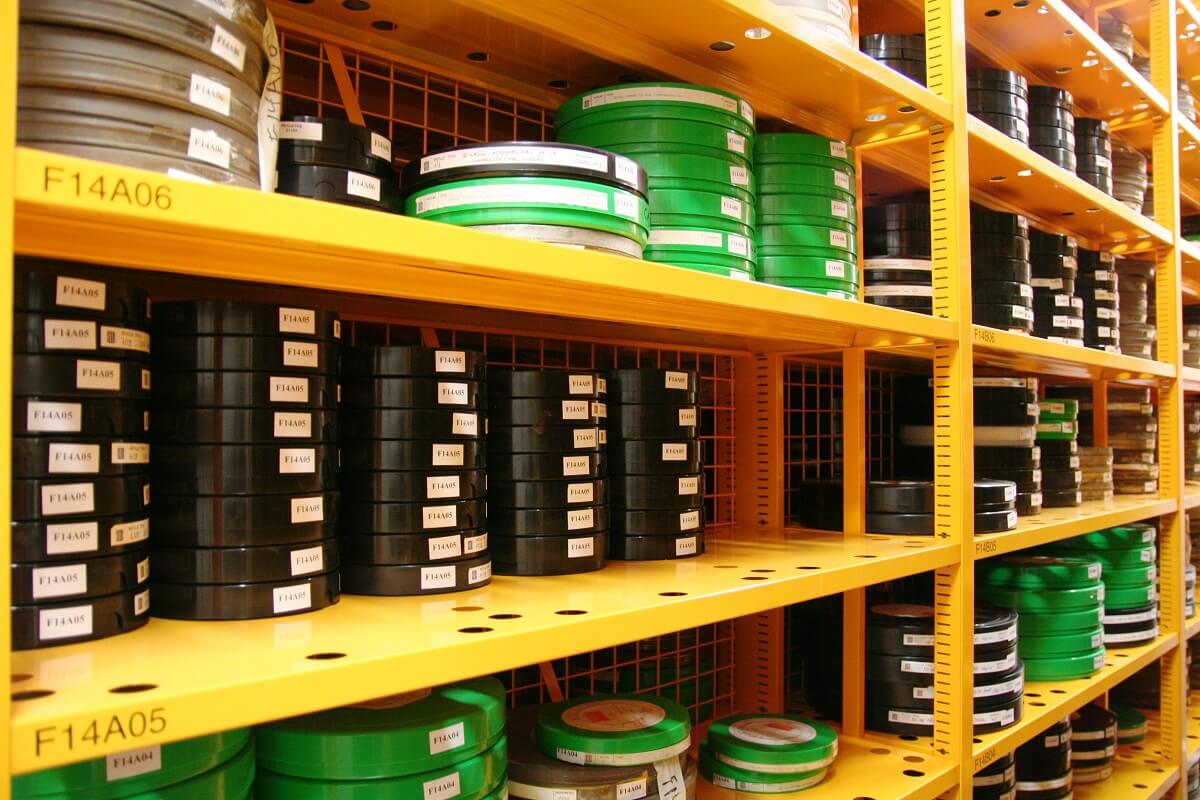
--- The digitization of the archive is a concern of the Filmoteca and of any equivalent international institution. On the one hand, we have to face how we continue to strengthen our capacity to digitize and how we manage the exponential growth of digital materials that our archive must safeguard from now on. But we can do all this because we have the photochemical material well preserved. That is to say, there is an inseparable connection between the availability of negatives and the digital copy. The problem is that digitization causes a negative externality: the scarcity of machinery to continue carrying out photochemical processes.
"We can digitize our archive because we have the photochemical material well preserved"--- What does this imply?
--- The market has determined that this technology is obsolete and specialized laboratories are disappearing, there is a shortage of spare parts and supplies, there is business concentration, everything has become more expensive. Also, very importantly, knowledge is being lost. In this sense, it may seem counterintuitive, but an intelligent digital policy does not have to abandon investment in photochemical material. I would like us to, in the coming years, strengthen our technological sovereignty and gain autonomy to maintain these processes without which we cannot preserve cinema.
--- Now, how is it being done?
--- Outsourcing services with a giant expense. We work mainly with a laboratory in Madrid and another in Lisbon. The last laboratory with the capacity to do these tasks in Catalonia closed in 2014. At that time, an attempt was made to internalize its machinery in the Filmoteca, and it was not possible due to the enormous technical difficulties it entailed. With all the prudence in the world, we are analyzing the viability of acquiring machinery. If it materializes, it will be linked to initiatives such as the training of our team. It is truly a very large and very complex operation, but I believe it is urgent and that time is against us.
Add The New Barcelona Post as your preferred Google source for free
Stay informed with the latest news.