Transforming a neighborhood not only improves the city, but also the world. This is the motto that Barcelona wants to reclaim during the celebration of the World Capital of Architecture in 2026. Reminding, thus, that the Catalan capital, in addition to a city rich in architectural heritage and full of imposing buildings, is also a living city and currently faces small ---and large--- urban transformations in its districts. These transformations aim to respond to present and future challenges, such as housing shortages or the climate crisis, and at the same time, manage to transform the environment of citizens and the world in which they live.
Barcelona will explain this past, present, and future of its urban planning through an extensive program that will span ten months with more than 1,500 activities across its ten districts. A varied program of exhibitions, conference series and debates, guided tours of the city, and workshops for children that aim to reconnect citizens with architecture and urban planning and make them aware of the impact of these disciplines on their daily lives.
"In the collective imagination, probably the great transformation of Barcelona dates back to 1992, coinciding with the celebration of the Olympic Games. But this is neither the only nor the last great urban transformation that the city will face. In fact, on its horizon, the city does not contemplate the celebration of any major event, but in the next decade, it does project major changes in the urban fabric," summarized Mayor Jaume Collboni.
Transformations such as those of the Sagrera station and the creation of the new neighborhood with more than 3,000 homes around it, the future Ciutadella del Coneixement ---a scientific initiative that also aims to be a catalyst for changing this area of the city---, in addition to the package of actions from Plaça Espanya to the Anella Olímpica, and the construction of apartments in the Marina del Prat Vermell neighborhood. These changes in the urban fabric show Barcelona looking to the future without forgetting its architectural and urban legacy, featuring names like Antoni Gaudí, coinciding with the celebration of the centenary of the architect's death in 2026, or Ildefons Cerdà, whose 150th anniversary of his death will also be celebrated next year.
It is this mix between past and future, which occurs within the urban fabric of Barcelona, that Barcelona wants to project to the world. "The Capital will serve to rethink how we want to live and inhabit our cities in the future, but without forgetting the beautiful architectural legacy of this city," emphasized Iñaqui Carnicero, Secretary General of Urban Agenda, Housing and Architecture. The Ministry of Housing and Urban Agenda of the central Government has been, precisely, one of the promoters of Barcelona's candidacy for the World Capital of Architecture, together with the Barcelona City Council and the Generalitat, a candidacy that prevailed over that of Beijing, the Chinese capital. The three institutions will contribute, together, 11 million euros for the celebration of this great global event.
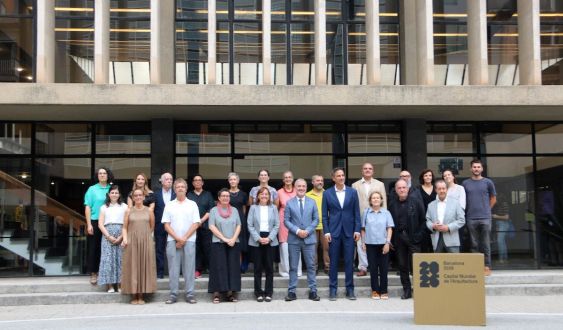
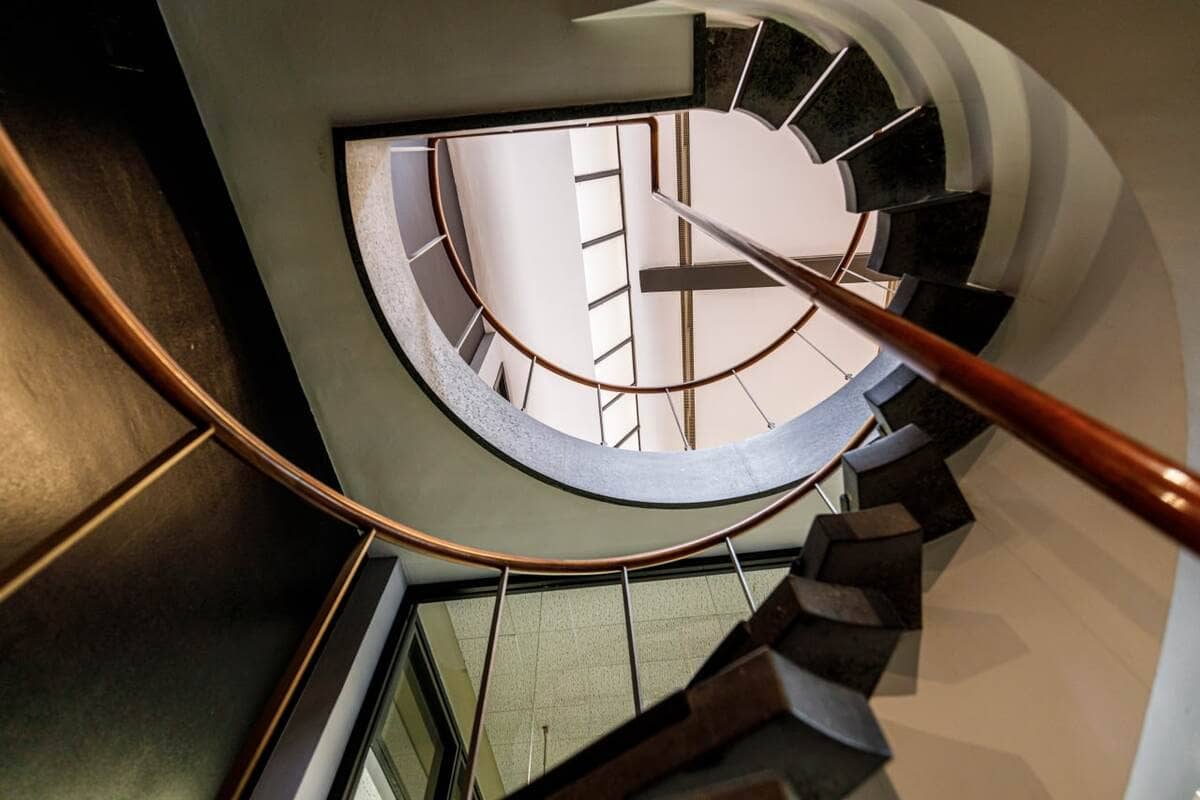
Precisely, the organization has chosen to kick off the preparations for this Capital in a building that is, in itself, a connection between this past, present and future: the old headquarters of Gustavo Gili. An icon of Catalan rationalism, which until 2016 served as the headquarters of the Gustavo Gili publishing house ---a publishing house specialized, precisely, in architecture, design and art---, which was acquired by the City Council four years ago for its preservation. Open to the public for the first time as one of the main venues of the Manifesta art biennial ---in addition to acting as technical offices for the biennial organization---, it will also occupy a central space in the 2026 program, in addition to becoming, again, the working headquarters of the organizational technical team.
The building will be one of the 21 spaces where fifty exhibitions will be installed, lasting between three and six months, so that a new one will be inaugurated each month. These exhibitions will reflect on the relationship of this discipline with art, sustainability or the lack of housing in the city of Barcelona. In addition to exhibitions, the program, which will run from Santa Eulàlia (February 12) to Santa Llúcia (December 13), will also include 185 debates and conference series, such as the Novíssims series promoted by the COAC (Col·legi d'Arquitectes de Catalunya) to highlight studies led by architects under 40 years of age.
As it could not be otherwise, the program will also include guided visits and routes through the different city districts. Routes such as those proposed by 48h Open House Barcelona which, in addition to its usual autumn proposal to open unprecedented architectural spaces, will organize three Open Barri, one in each season of the year to focus on three districts of the city (Nou Barris, Sants-Montjuïc and Sarrià-Sant Gervasi) that do not usually appear in the most common architectural tours.

And, it even includes the creation of an extracurricular program of free workshops aimed at children between 8 and 12 years old on how they imagine Barcelona in 2035. All in all, more than 1,500 activities are part of this program, developed in an "open and choral way, from top to bottom," with the collaboration of 170 entities, professional associations, museums or libraries to "manage to explain ourselves to the world," as Maria Buhigas, chief architect of the Barcelona City Council and in charge of leading the programming of this international event, has remarked.
The other side of this informative program, open to the public, will be a more professional event: the celebration of the Congress of the International Union of Architects (UIA), from June 28 to July 3, 2026, making it the only city to have hosted this event twice, returning to the city three decades later, after the 19th edition in 1996. A debate forum aimed at a more professional audience ---with the expectation of gathering more than 10,000 attendees---, to jointly rethink the contribution to the future of this discipline. Under the motto Becoming. Architectures for a Planet in Transition, the activities of this debate forum will be distributed throughout the city, but will have the Disseny Hub and the Tres Xemeneies as main poles.
However, the celebration of this global event not only wants to leave an immaterial imprint on the city, through dissemination and debate, but also a physical one. It will do so through a large model of the city of Barcelona, which will show how the city is physically transformed and will also be installed in the former headquarters of Gustavo Gili, and through the transformation of ten party walls ---those walls located between two buildings to support them--- into new facades.

Based on the winning proposals of the International Ideas Competition for young architects, promoted by the City Council and the Mies van der Rohe Foundation ---which received more than 400 proposals from architects from about fifty countries---, these transformations will not only serve to beautify these walls, but also to improve the quality of life of the residents. "The legacy of these events usually consists of large pavilions, but in Barcelona we do not want pavilions, but to transform the quality of life of citizens in all districts and, therefore, also their world," Collboni concluded.
Add The New Barcelona Post as your preferred Google source for free
Stay informed with the latest news.
