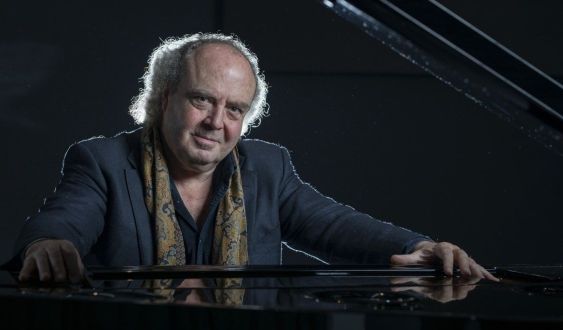
"I approach the novel in the same way I conduct an orchestra: words have to sound, as notes in a score do, and literature turns them into music." Xavier Güell (Barcelona, 1956), great-great-grandson of Count Güell who, together with Gaudí, set out and succeeded in transforming the city of Barcelona (1878-1918), was a musician by vocation and profession, an orchestra conductor, a disciple of masters such as Celibidache or Bernstein. He has conducted orchestras such as the London Philharmonic, the Royal Philharmonic, and the National Orchestra of Spain. He is also a music promoter, deeply committed to contemporary music, creator of festivals such as Promúsica or the one dedicated to John Cage, and companies such as Musicadhoy and Operadhoy.
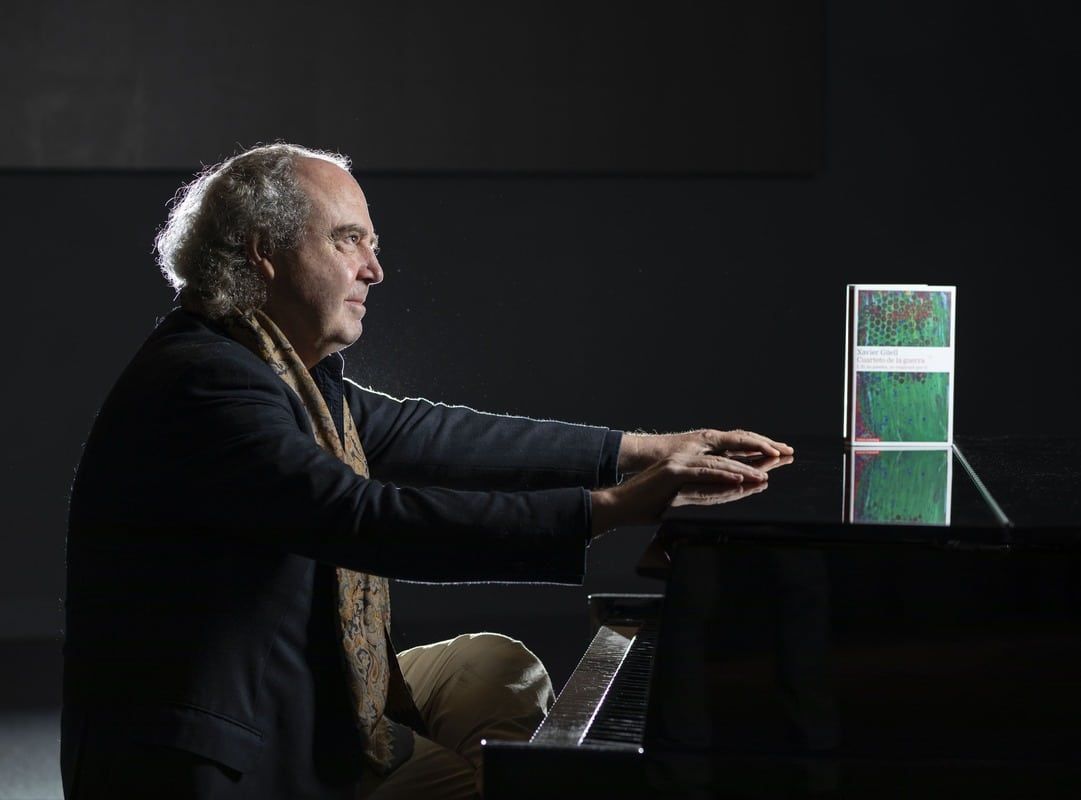
He says it was due to the editor of Galaxia Gutenberg, Joan Tarrida, and his friend, the philosopher and musicologist Eugenio Trías. Or perhaps his highly structured world had become too small for his protean figure. One day he took up the word and from his hand came a first novel, in 2015, followed by two other titles between fiction and biopic. He now publishes the first part of a tetralogy; a quartet, Cuarteto de la guerra (from the same publisher), where he brings to life four artists who suffered in very different ways the internal and external exile caused by the nationalist cataclysm in Europe in the late 20s and 30s, which led to "the worst season in hell that human beings have endured."
In this first novel, I. Si no puedes, yo respiraré por ti (If you can't, I will breathe for you), one hears the exile (only seemingly voluntary) and the death of Béla Bartók, which occurred in the United States on September 2, 1945. Outside, the horror ceased, and his last measures are read without periods or commas.
--Your profile is curious, Mr. Güell. How do you manage to maintain two such demanding vocations at once?
--I try to do with literature the same as with music. The leap from one to the other has been natural; I haven't had to force anything. Look, all my reference writers were extraordinarily musical people, Joyce, Proust, Tolstoy, Beckett, Thomas Mann, all of them music lovers. One can write with music very much in mind, and bring the word closer to sound.
It is true that his pages are read with the concerts of the Hungarian master playing in the background. "When I write, I am like an actor who plays his characters —he continues—; first I have known and loved them, then I interpret them. And when I conduct, I also interpret a score that I have made my own, like the nature of the character. And then there are the rhythm, the patterns, and the structure of a novel, which must be musical."
To his way of narrating, one would have to add a peculiar way of fictionalizing that he has turned into a kind of "own garden," a personal genre. Perhaps only a scholar can unravel the seams between reality and fiction: such is his symbiosis with history and genius. On solid documentary pillars ("letters, testimonies, stories, biographies…"), how, where, when, in what way does he cross the threshold of fiction? "My creation is especially in the inner world of the character. But for something like that, it is necessary to forget all real knowledge and become the character. The documentation cannot be seen, you have made the character your own, and the identification has to be absolute." He also allows himself to fabulate with the ancillary characters.
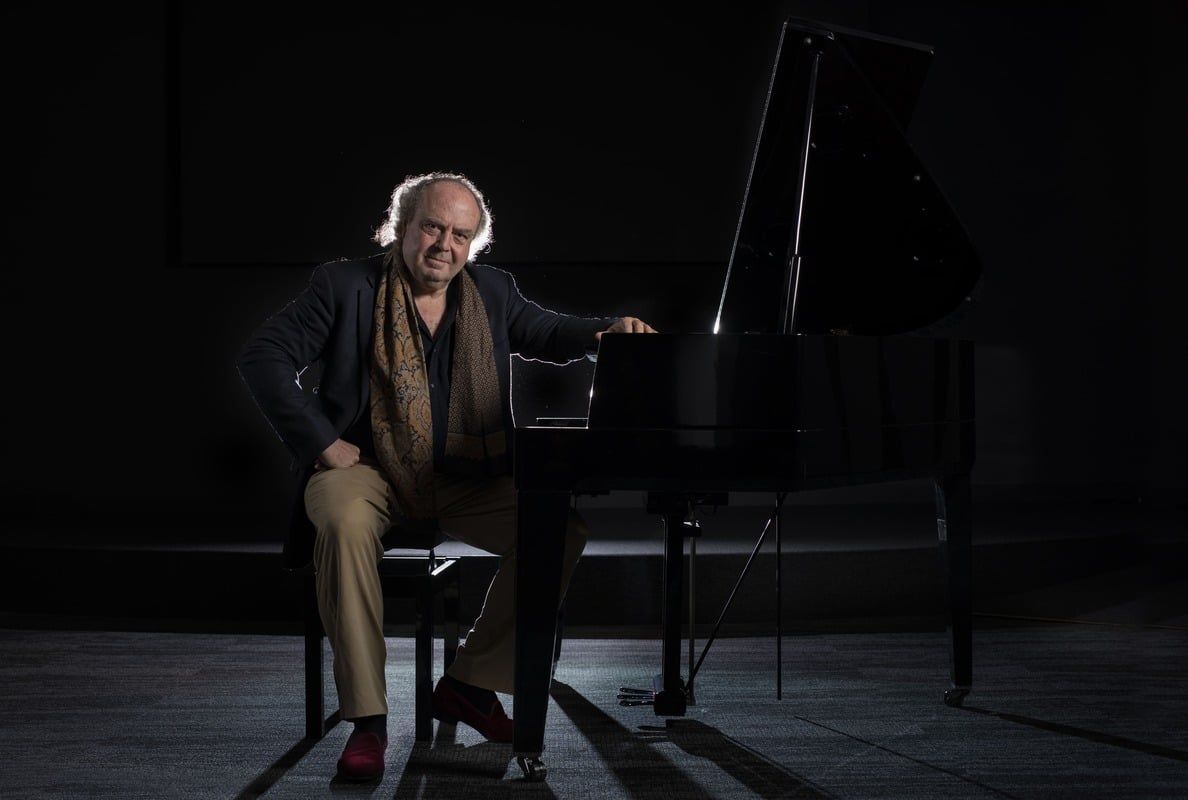
Bartók will be followed by Strauss and the contradiction of the genius who had to remain in Germany in Hitler's service; Shostakovich and his forced duplicity in front of Stalin, and Schoenberg, again the forced exile to silence, in the United States. What came first, the characters or the issue that unites them? "I am interested in extreme situations and the anguish this provokes in the creator: their equally extreme artistic reaction. The impact of the first post-war period causes such social transformation and suffering in Europe, leading to great conflicts and inequalities, which in turn are the serpent's egg of totalitarianism that hatches in the late 20s and during the 30s, giving way to the worst hell. And there I find my four characters, so disparate, and their reaction to war and pain." Here Güell makes a reference to the musical structure of another famous literary quartet, that of Lawrence Durrell.
The musician writer or vice versa places them before death. "Yes, Bartok does fear death. Every human being fears their death: the opposite is not human. What is important is not that fear but how you face it." The author thus denies what his own narrator writes: He did not fear death; he had never feared it. Turning around and looking at the sky was all he asked. "Bartok was fundamentally agnostic, and was obsessed with giving content to each present moment and shedding all melancholy towards the past and all anguish for the future. Yes, in a way this brings him closer to Eastern philosophies and religions, but he confessed to being a Unitarian: a very minority religion influenced by the concept of pantheism and Spinoza, where nature is the whole or god and the human being, just another link that must understand their role in that totality and strive to be so."
Every human being fears their death: the opposite is not human. What is important is not that fear but how you face it--He maintains that music, in the history of humanity, "is the compendium between the human and divine dimension," but aren't all arts or don't they claim to be?
--Music doesn't say or pretend anything, it just makes you intuit, but it leads you to dimensions of the spirit different from those reached by other arts; places of consciousness, spaces of perception and intuition that are not accessed except through music. It's like a dream, where the time before and after death is not so different. In fact, these are the last faculties that human beings lose, even in conditions like Alzheimer's. More than knowledge, music is an instinct, and the important thing is to let oneself go and reach sometimes strange places that one cannot rationalize.
--Güell, isn't it paradoxical that you are precisely one of the few who dare to speak loudly and reasonably against the Sagrada Familia, something like the sacred cow of Christian Catalanism?
--I don't know if there are many or few of us, but it's impossible to emulate Gaudí and make something good out of it. He was aware that a great cathedral is a work of centuries that no single architect has ever been able to undertake, but what those who succeeded him have done is a bad copy of something brilliant and inimitable. Gaudí's great mistake was not leaving Jujol, another genius, as the heir to his work. He wanted to do it but jealousy betrayed him, the idea created a certain anxiety for him, and from then on what happened is an unfortunate story.
Gaudí's great mistake was not leaving Jujol, another genius, as the heir to his work--Would Gaudí have been considered a crazy visionary if he hadn't been backed by his great-great-grandfather, Eusebi Güell?
--I don't like the idea that Count Güell was a very rich man who commissioned his works from the great architect of the moment, the patron who discovered Gaudí's talent. No, both were two young visionaries and a bit crazy, yes, who together set out to transform the city of Barcelona.
--Is his work in promoting and producing music not patronage either?
--I really like to organize and defend areas of musical production that are not promoted: the great works created from the second half of the 20th century, contemporary music that should be better known by the public. Art is life and I believe we should be more committed to defending the art of our time, and that is what occupies me: my commitment to music and contemporary art in general.
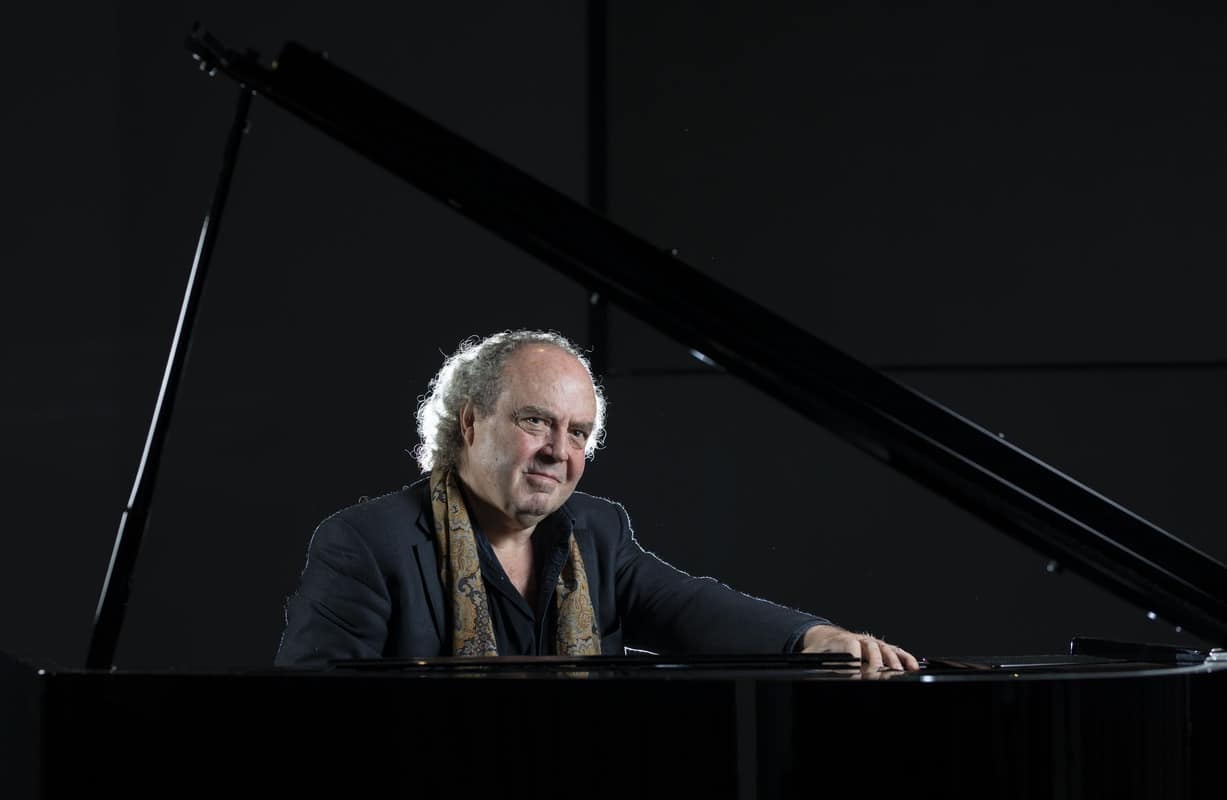
--To finish, I return a question that one of the characters asks the Hungarian master: "What is the use of creating in a disastrous world?"
--It's useless. I don't believe that the artist creates to improve society, nor for ethical or moral reasons. I don't even believe that they are aware of others when they create, nor should they do it for personal ambition. It is a physical necessity: if the artist does not create, they die, they need to expel the bug that grows inside them. Cases of artists lacking all moral principles are well known, and if we refer to music, it has been part of the lives of the greatest criminals in history, like Hitler, who used Strauss, Wagner, and other great masters to stimulate the most atrocious events of the Second Great War. We all carry a good melody and a bad one inside, attending to one or the other is a personal decision. The end of the Ninth Symphony, with which Beethoven wanted to send a message of brotherhood, of humanity's common destiny, was used by Hitler as a banner to extol evil. To say that the artist creates to improve their time seems frivolous to me. They create because they need to, and their creation will always be independent of them.
Add The New Barcelona Post as your preferred Google source for free
Stay informed with the latest news.