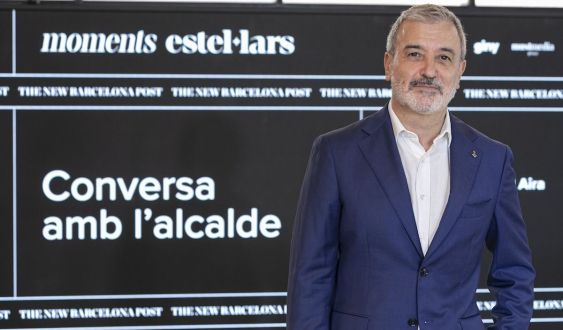
The voice of Barcelona resonates internationally, and not only in terms of innovation, entrepreneurship, gastronomy or even leisure, but also in rights. "When Barcelona speaks, the world listens, and that is a responsibility," defended the mayor, Jaume Collboni. And even more: "It is a responsibility in a time in which we have had to live through a hurricane and involution throughout the world."
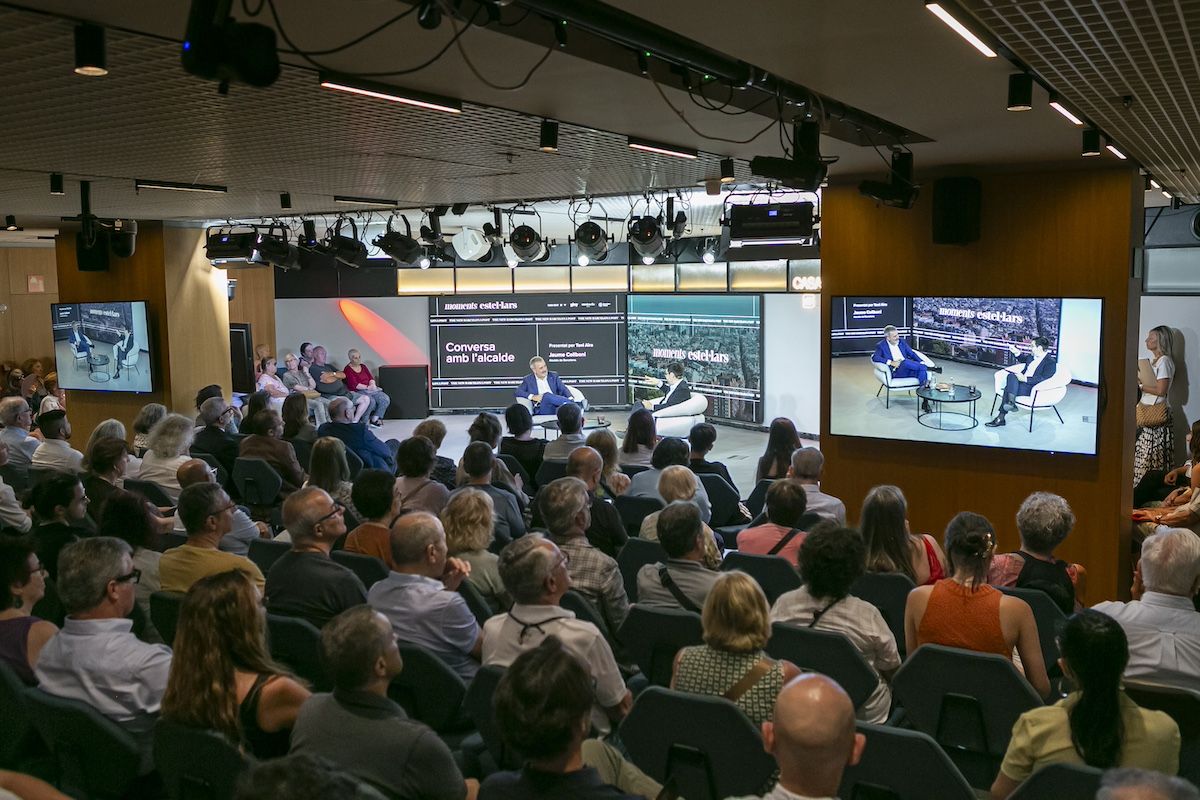
And this voice of Barcelona emanates not only from the City Council, but also from its civil society, from its professionals or from third sector entities, as Collboni resolved in a new session of the Moments Estel·lars cycle, organized by The New Barcelona Post with the collaboration of Casa Seat, Barcelona Global and Must Media Group, coinciding with the halfway point of the mayor's term.
In a situation where freedom of expression, respect for democracy or LGTBI rights are at risk, according to the mayor, cities have emerged as a "bulwark in defense of democratic rights and freedoms and of foundational European values," he proclaimed in a session conducted, as usual, by journalist and UPF-BSM professor Toni Aira.
In fact, Collboni is acquiring an international dimension that he had no intention of playing, according to him. So much so that in August he will lead a delegation of mayors who will visit the mayor of Istanbul, Ekrem Imamoglu, imprisoned accused of corruption by the regime of Recep Tayyip Erdogan. "What we have before us, and already within Europe, is not a cyclical political relay in which right and left take turns; what we have before us is a real risk of involution, and we already have it within Europe, Spain, Catalonia and Barcelona."
In this context, cities raise their voice, and Barcelona's does not go unnoticed. The policies of the Catalan capital are observed from other cities with similar problems. In fact, some are "the envy of half the world," Collboni assured, referring to the future elimination of tourist apartments. This measure, planned for 2028, will have effects on both tourism and housing, two of the city's priorities.
"We still suffer from a model of mass tourism that, although it partly brings us benefits, has consequences that we have to reverse, and we are doing it," the mayor added. And to "demassify and deconcentrate" tourism in certain areas of the city, measures must be taken, such as the one he assures will be closed in the coming days in reference to cruise passengers who stop over in the city: "We have to make decisions that begin to restrict and limit the arrival of stopover cruise passengers."
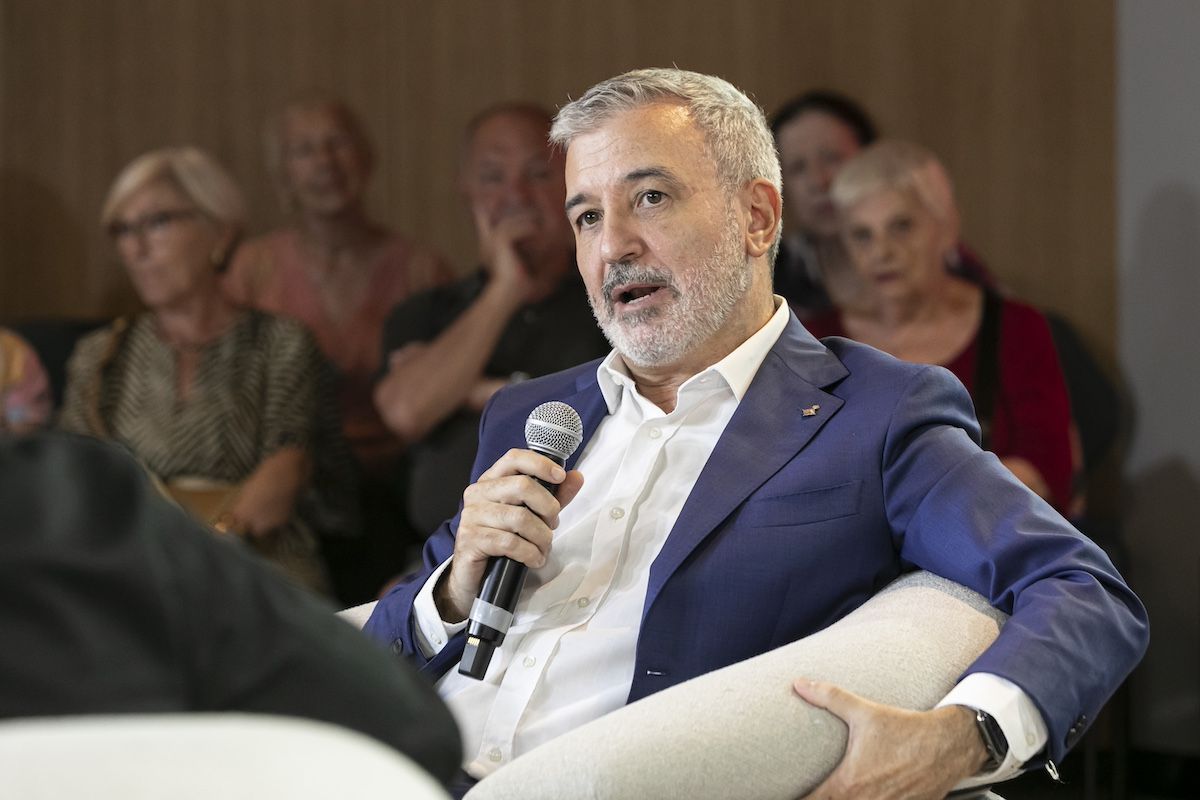
"We will begin to make decisions agreed with the Port to start limiting and reducing the number of stopover cruise passengers," the mayor insisted, in reference to those visitors who arrive at the port, disembark for a few hours, and set sail again. And, as he defended last year in a session also organized by TheNBP, Collboni is committed to prioritizing cruises in which Barcelona acts as a base, since stopover cruises imply a more intensive use of public space and less return for the city.
Apart from this tourism management and economic diversification, Barcelona has a priority: guaranteeing access to housing. Collboni, whose municipal government has postponed the reform of the 30% social housing reserve for the next term, has highlighted that rental prices have stopped rising, after a decade of constant increase: "We are applying rental regulation and the elimination of tourist flats by 2028, and that contributes to less speculation and rental prices starting to fall."
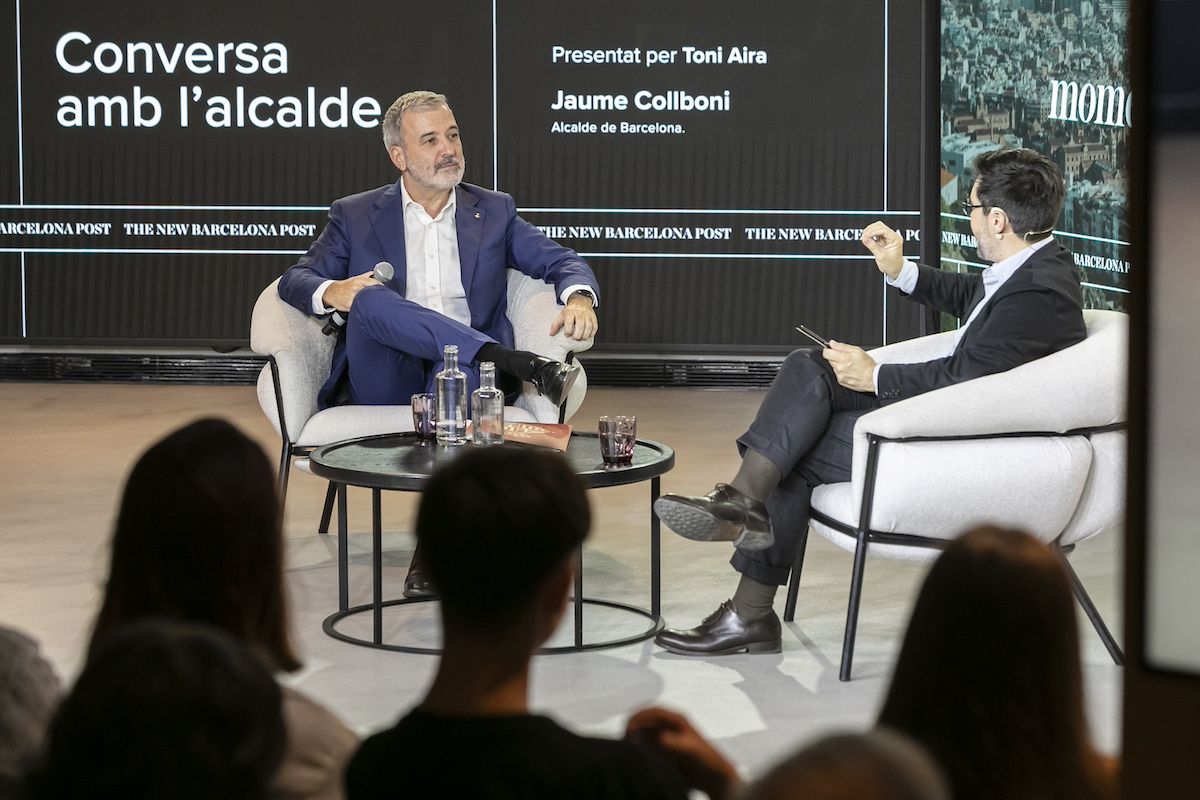
Access to affordable housing is one of the elements that make up the city of the future that Collboni projects. The Barcelona of 2035 —because "a city must have a project and know where it is going"— must offer opportunities and housing so that no citizen is forced to leave; it must be a city of culture and economically balanced. "Behind everything there is an idea, which is to make an affordable city; that would be the greatest success for me."
This Barcelona of the future is also drawn through urban transformations, such as Sagrera, Sants, the Marina del Prat Vermell and the works on the Mar Bella promenade. "This is the best job in the world, in the best city in the world, and that also means seeing that projects that were a dream for many now have machines working," he said in reference to the Mar Bella.
Within these transformation projects, the one for Montjuïc is included, which has just made its first move: the city will transform the Sant Jordi Club so that it can host up to 9,000 spectators. With an investment of 70 million euros, the works are expected to be ready in 2029, almost tripling its current capacity of 3,500 spectators. "Today we have announced an international tender to remake the Sant Jordi Club, to make it bigger and more technological," Collboni remarked.
"Never has such a small municipal government done so much in so little time," Collboni proclaimed, leading a minority and single-color team. Despite this minority, he has support on the other side of Sant Jaume square, with Salvador Illa as president of the Generalitat. In fact, the mayor enumerated the three requests he made to Illa when he assumed the presidency: more Mossos to improve security; more public housing, and more metro; "Of the three things I asked the president, all three are underway."
From the international voice to the seagulls
To move forward, according to Collboni, "the first thing a mayor has to do is recognize that there is a problem and not deny it," and he must do so by listening to the citizens. And it is that the concerns of the citizenry often move beyond Barcelona's international projection or the geopolitical panorama. A round of questions to the session attendees was enough to corroborate it: interventions on works, mobility and, even, pigeons and seagulls. "Indeed, the seagulls have changed their behavior, and we are seeing what is happening. We have to insist on telling people not to feed the city's animals."
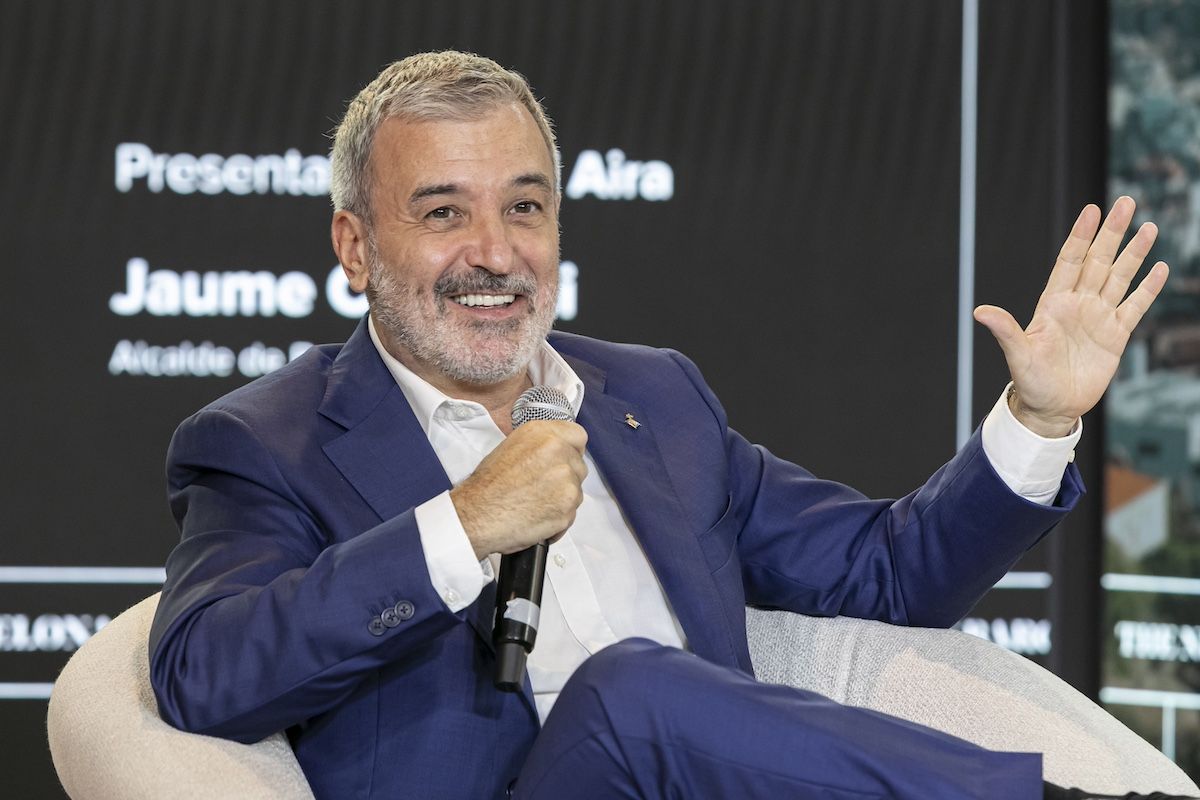
As a result of this listening to the citizens, Collboni's Government began its mandate "taking a broom," in response to complaints about the state of public space, and launching the Pla Endreça. "I am a mayor who walks, and that gives you a perspective of the city," allowing him to talk with citizens, see the development of works and projects, and detect problems. Collboni focused on one of them: incivility, which he aspires to combat with the reform of the well-known Civility Ordinance. "We have it ready, and I hope that the municipal groups will process it, because what it does is increase sanctions and typify new behaviors that were not previously contemplated."
"In the coming months we will talk a lot about civility," the mayor anticipated. And Collboni guaranteed that "Barcelona is better than two years ago; we have challenges, we have problems, but we are better" compared to when he took office. But he went further: "It will be even better in another two years."
Add The New Barcelona Post as your preferred Google source for free
Stay informed with the latest news.
