"Artificial intelligence is like crossing the street: if you don't look left and right, you can get run over," explained Mike Blackman this weekend in an interview in The New Barcelona Post. And at the congress he leads, the Integrated Systems Europe (ISE), it's not enough to look left and right. The audiovisual technology on display these days at more than 1,700 exhibitors at Fira Gran Via in Barcelona forces you to look in all directions or, sometimes, even forces you to close your eyes and just listen. To feel.
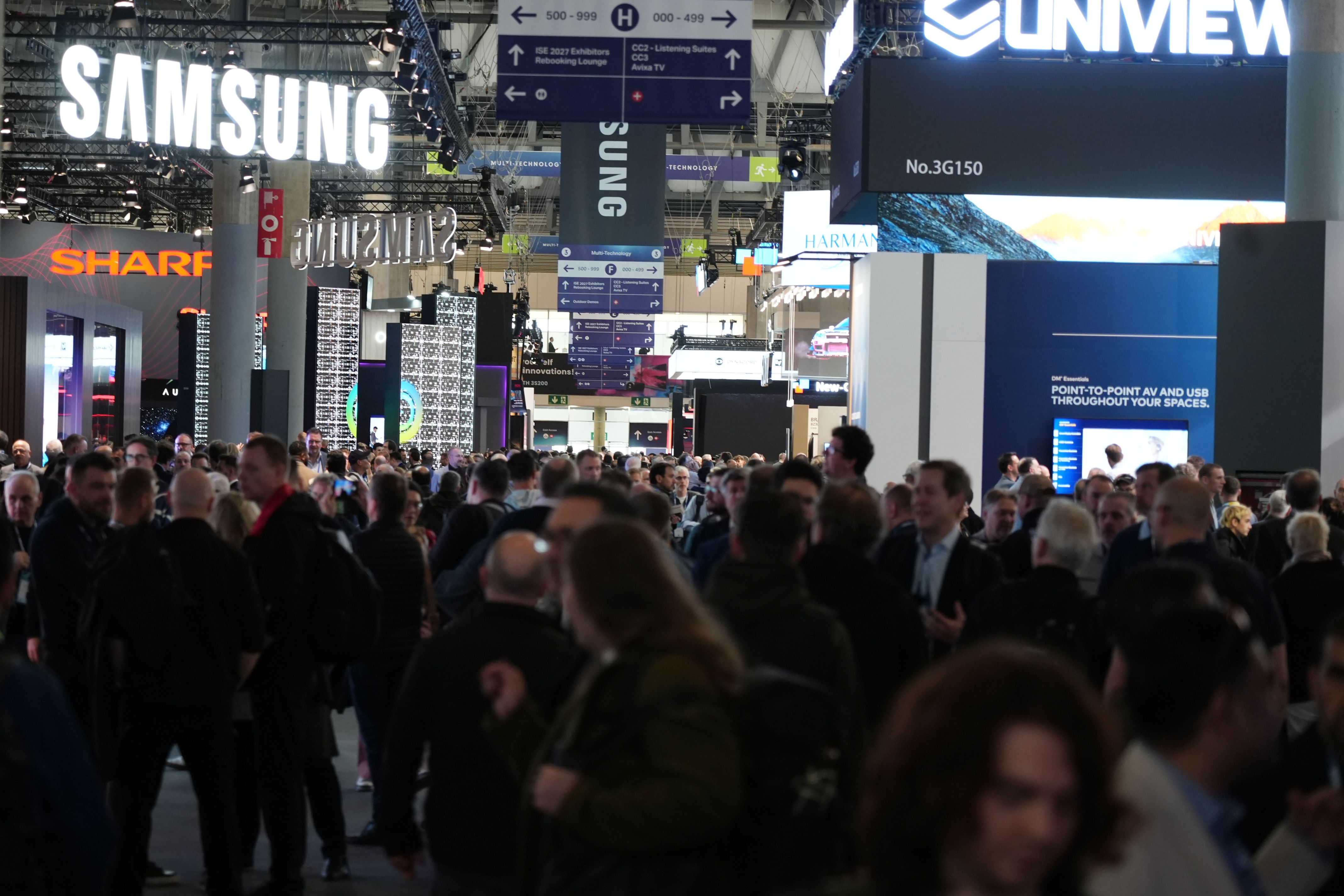
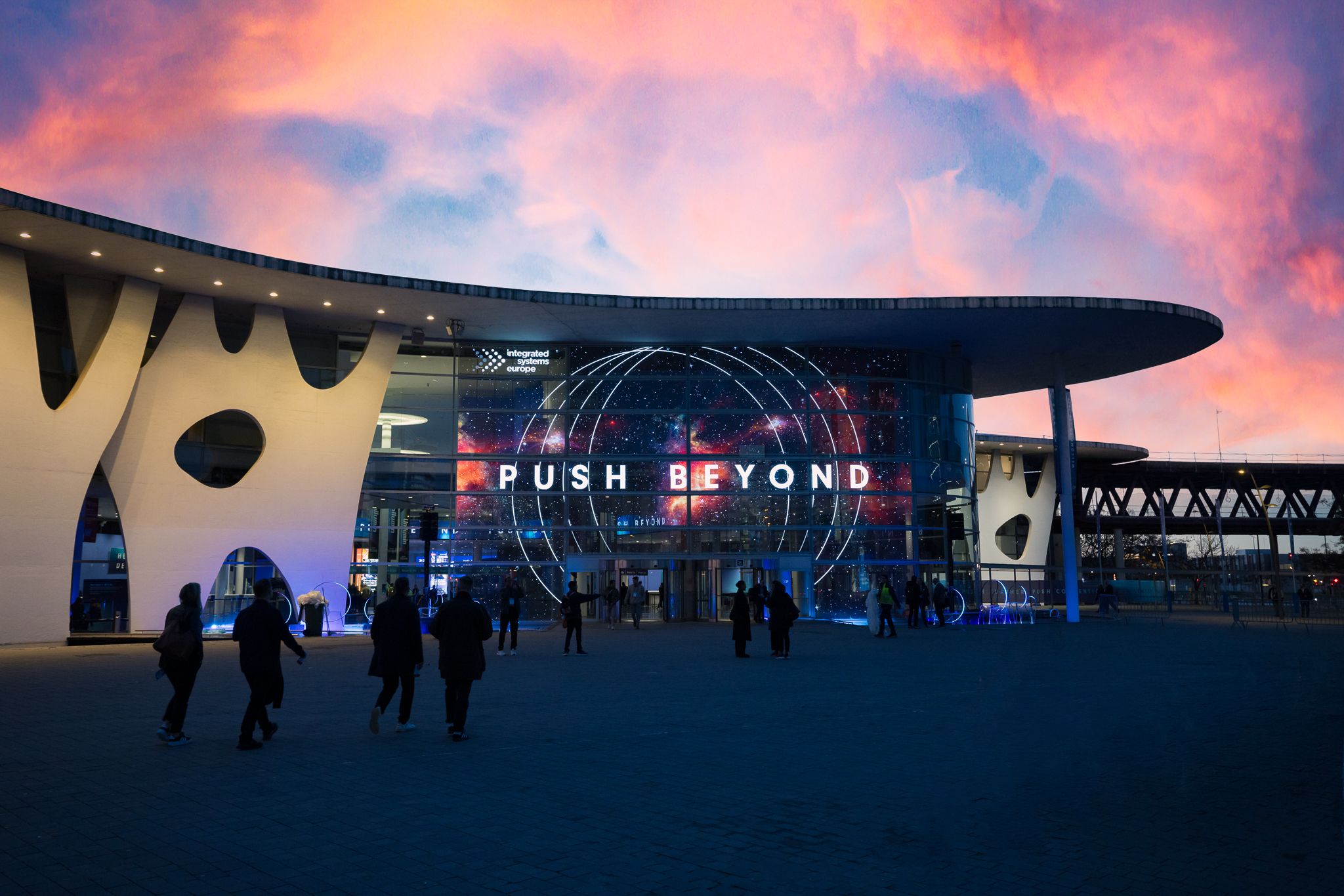
This is the audiovisual sector's bet this year at ISE, the world's largest audiovisual fair and one of the most important international congresses held in Barcelona. Under the motto Push Beyond, there is a sector that, from February 3 to 6, is materializing its ambition to go beyond screens, overcome limits, go further, and connect with emotions.
The audiovisual sector has ceased to be a small specialized sector and has become fully integrated into most spheres of our daily lives. And the sector's growth figures prove it: compared to the previous year, the number of companies dedicated to audiovisuals in Catalonia has grown by 7%, to 4,500 companies—half of them, by the way, located in Barcelona. Global turnover has also grown, to 9,120 million euros, 6% more than the previous year. And jobs have followed the same path: with an 8% increase, the sector now generates 45,000 jobs. Overall, the audiovisual sector contributes 2.9% of Catalan GDP.
But its impact goes far beyond macroeconomic figures. Audiovisual has shaken "the way we work, how we learn, and how we interact with the world around us," according to Blackman. And this is reflected in the congress: behind the visual impact that overwhelms most eyes, there is a wide range of solutions and new developments designed for business, education, health, retail, tourism, advertising, immersive experiences, housing, or smart buildings. And some of these solutions are made in Barcelona.
From hybrid meeting rooms to immersive classrooms, from technology-assisted operating theaters to experiential retail spaces, audiovisual acts as a facilitating layer for a new way of doing, communicating, and relating. And ISE is, for a few days, the place where all these layers meet, dialogue, and project themselves into the future.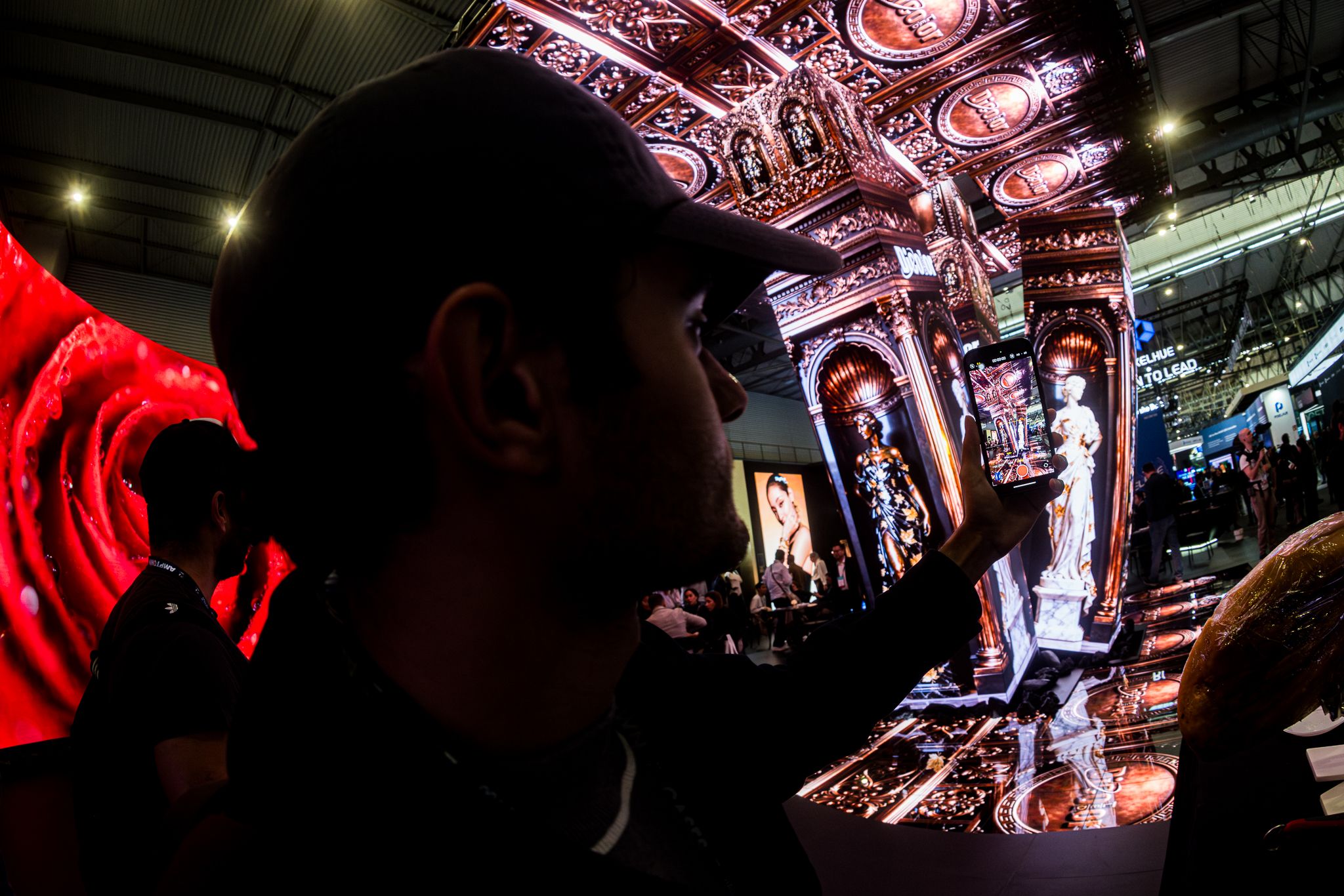
From touch-and-feel to real impact in Barcelona and Catalonia
ISE has consolidated itself as a key showcase for the Catalan and Barcelona audiovisual sector. This year, a total of 89 Catalan companies are exhibiting their technology there, 5% more than last year and the highest figure recorded in all editions. In fact, Catalonia is already the sixth territory with the most exhibitors at the fair, only behind China, Germany, the United States, the United Kingdom, and the Netherlands. This data not only speaks of the strength of the local audiovisual sector but also of Barcelona's capacity to attract, retain, and project talent and innovation in an increasingly transversal field.
Good examples are the Barcelona companies present at the Barcelona City Council and Barcelona Activa stand: Estudio Gurugú and its immersive experience to transform the way we attend musical events; Framemov and its interactive proposals for retail; Into Reality and the possibility of being in two places at once; Emogg and real-time emotion analysis; Produktia and solutions for designing interiors with mixed reality, or Flopwork with blit.Studio and an experience that combines live gestures and artificial intelligence.
"The touch-and-feel generates an immediate wow effect, but a congress like ISE cannot be reduced to fascination"
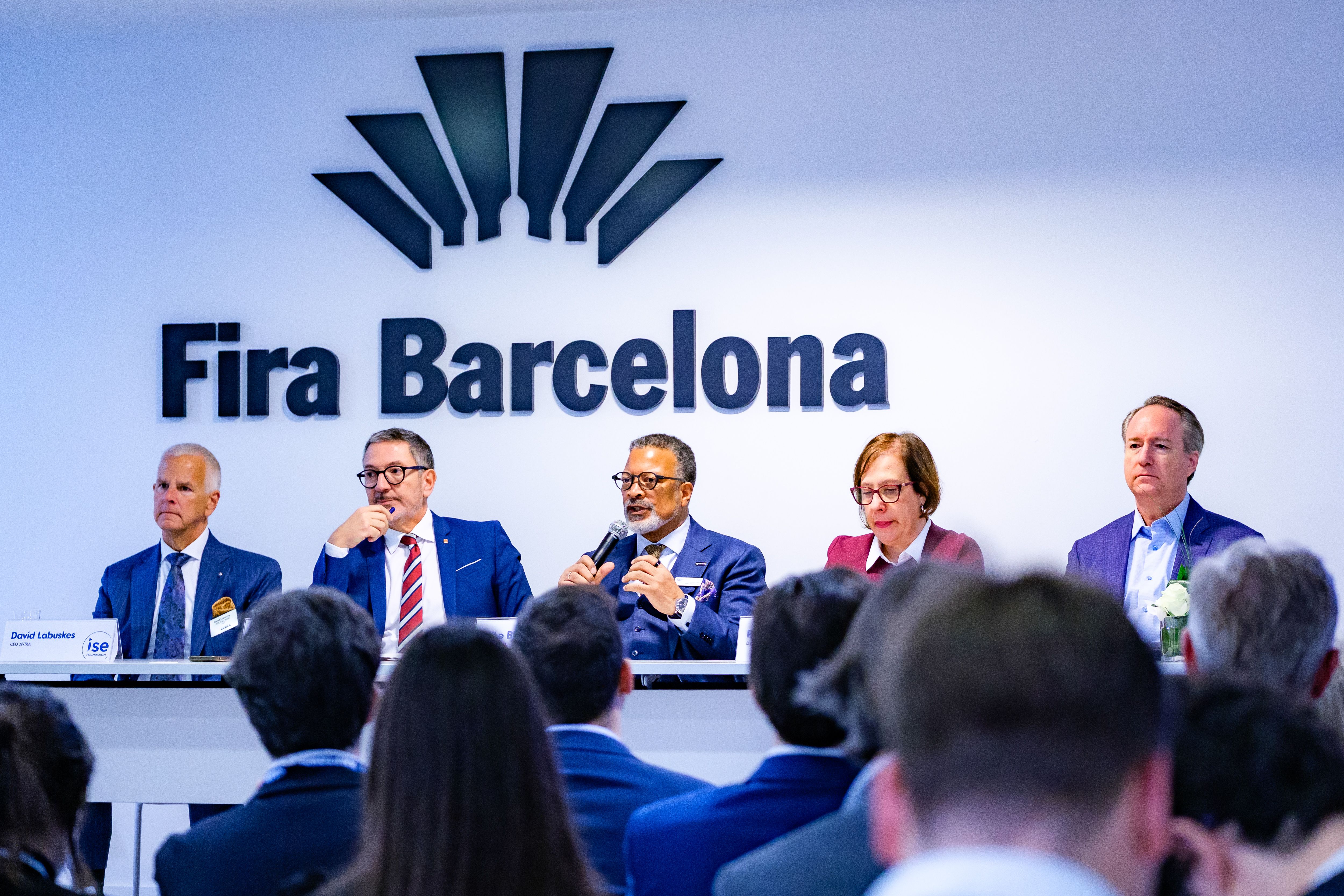
Driven by ISE together with its co-owners, AVIXA and CEDIA, and with the support of the Barcelona City Council and the Generalitat de Catalunya, the ISE Foundation is structured around three main areas of action: talent, innovation, and social responsibility. The objective is clear: to make the value generated by audiovisual translate into real opportunities for people, companies, and institutions.
For those who may see parallels with the Mobile World Capital Barcelona, there are relevant differences. The main one is that the ISE Foundation is completely private, while MWCapital is public-private. It also stands out that its main focus is on training and talent development to reduce the deficit of qualified professionals in the sector. Programs such as Training the Trainers or the AV Career Days are the first examples.
When audiovisual transcends screens (and is felt)
If until now ISE has forced us to look —screens, projections, impossible scenarios—, in this edition it also invites us to go a step further: to feel. To let audiovisual technology act on the physical and emotional experience that connects us with spaces and, ultimately, with the city.
This idea takes shape in experiences such as Eurecat's immersive demonstration, which allows one to delve, with virtual reality and binaural sound, into a digital reconstruction of the Salón del Vigatà of the Palau Moja, in Barcelona. Through an acoustic digital twin, the experience shows how sound is perceived and transformed within the space according to the visitor's position.
Beyond the technological demonstrator, the proposal points to a key idea: technology can also help us feel spaces in a different way, to reconnect with heritage and with the memory of places. A new way of relating to Barcelona.
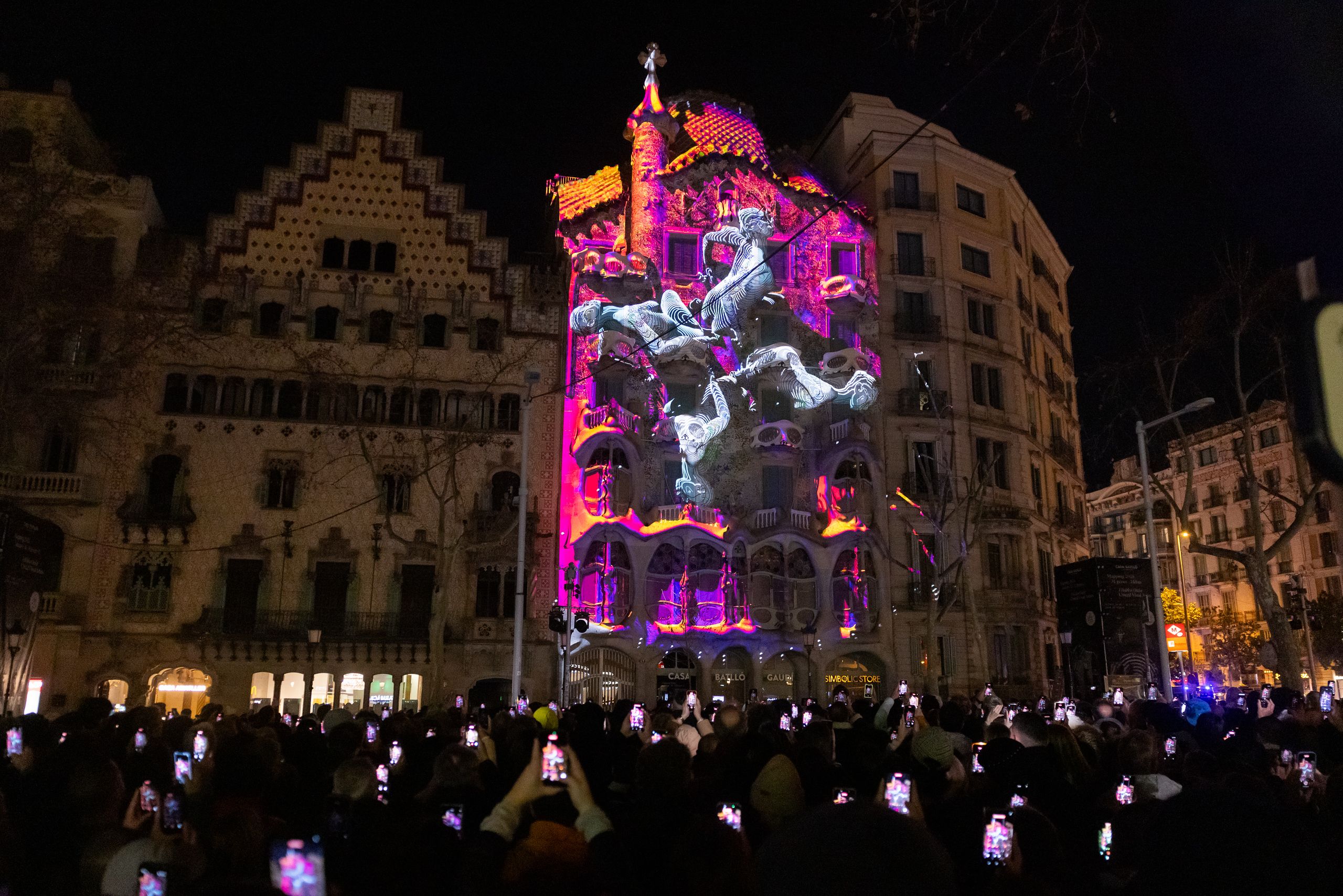
It is this same thread —that of making technology felt and making the city felt— that explains the next step of the ISE. For the first time, the congress leaves the pavilions and brings its proposal to the public space with a show open to the public that combines 600 synchronized drones, digital visual creations, LED screens, and live music, with an opera recital included.
During the afternoons of February 3, 4, and 5, the sky of L'Hospitalet transforms into a canvas of light, sound, and movement, without entry or invitation. Two very different proposals —one intimate, the other collective— that share the same will: to make people feel. And to demonstrate that audiovisuals, when they go beyond screens and exhibition halls, can also become a tool to reconnect us with Barcelona and with the way we inhabit it.
Add The New Barcelona Post as your preferred Google source for free
Stay informed with the latest news.