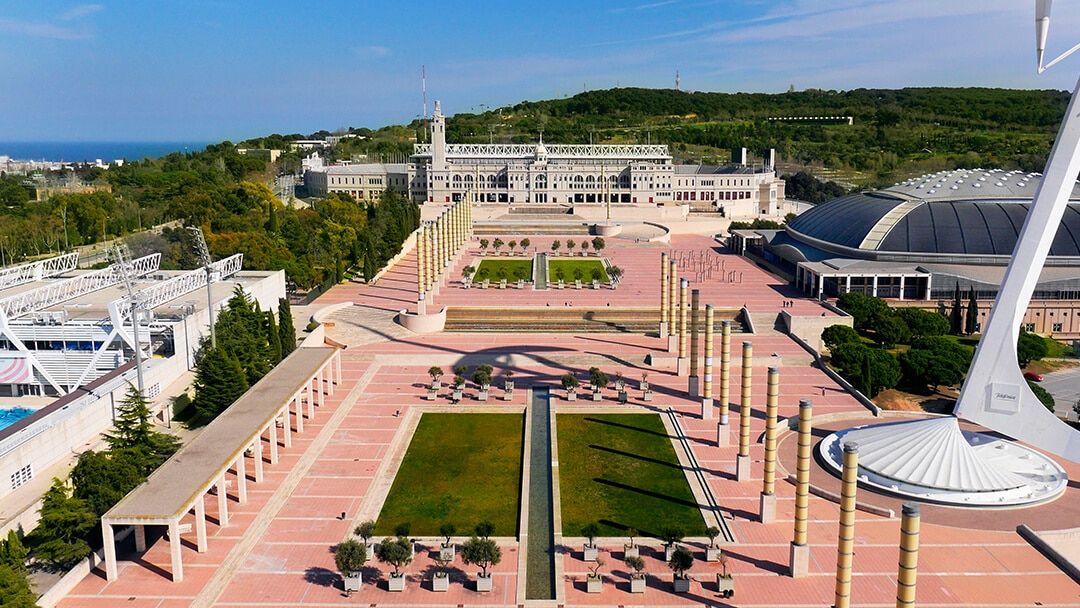
Barcelona lives in transformation. La Sagrera, Glòries, Montjuïc, the Ciutadella del Coneixement or the Front Marítim are just some of the scenarios that are mutating in the city and, although they mark the daily life of today's Barcelona, their roots come from afar, and often lie in another moment of profound transformation that the city experienced, which has its own name: Pasqual Maragall.
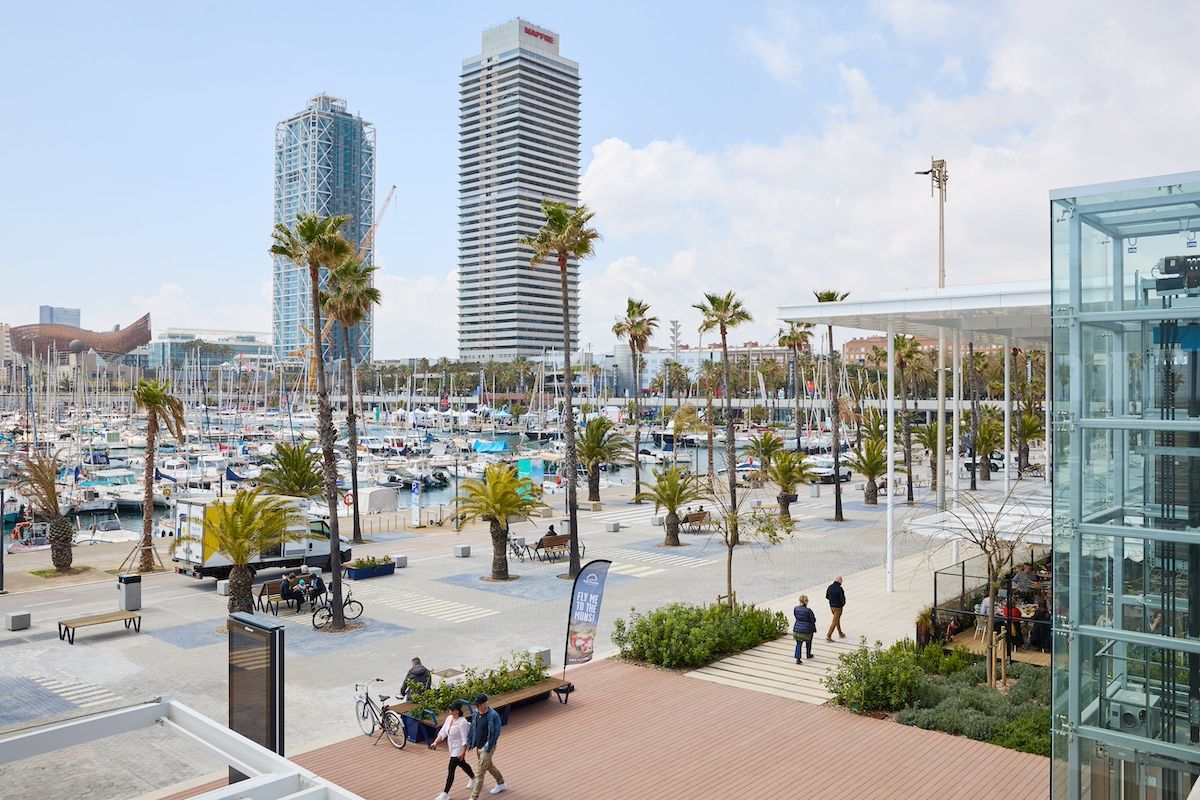
And the legacy of the former mayor and Olympic Barcelona filters through to the present day, also taking forms that are not so obvious and that connect with the great projects of the current city, such as the reform of a Front Marítim that until then was made of shacks or a Glòries where the road ring, now demolished, emerged.
But Maragall's legacy goes far beyond urban planning and reaches layers that include the city's economic model itself, with policies that were later materialized in concepts such as the city of knowledge and projects as basic for the city as 22@, the seed of today's innovative and entrepreneurial Barcelona. All framed within a European, and also metropolitan, perspective, which at the same time focused on the neighborhoods and their connection, with the concept of sewing neighborhoods that the former mayor championed.
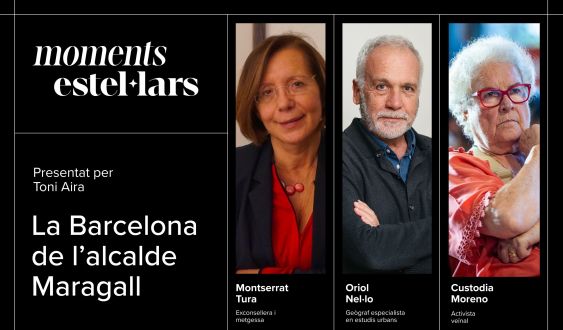
How has this legacy reached today's Barcelona? Do its great projects still respond to this logic? How are neighborhoods sewn together in a metropolitan city that has acquired an international scale, partly boosted by those 92 Olympics? Does that legacy still mark the course of Barcelona? These are some of the questions that will be addressed in a session of Moments Estel·lars that will focus on the legacy of Pasqual Maragall and how it continues to be a protagonist in the city. The session will take place on Monday, July 6 at 6:30 p.m. at Casa Cupra Raval, and on this occasion it has the collaboration of the Fundació Catalunya Europa, responsible for disseminating the legacy of Pasqual Maragall through debate on European construction, global challenges and democratic culture
To revisit this legacy still alive in the city, this new session of the cycle organized by The New Barcelona Post will feature three profiles that will address Maragall's imprint from three very different angles: former minister and doctor Montserrat Tura; urban geography specialist Oriol Nel·lo, and neighborhood activist Custodia Moreno. Journalist and UPF-BSM professor Toni Aira will lead the debate to delve into Maragall's legacy, in an event organized with the collaboration of CASA CUPRA Raval, Must Media Group and Barcelona Global, in addition to the Fundació Catalunya Europa. To attend as an audience and be able to ask questions to the speakers, free prior reservation is required.
Under the title The Barcelona of Mayor Maragall, the session will address the different facets of Maragall and his legacy, from the transformation of the city to its impact on its neighborhoods and his leadership style. Montserrat Tura will be able to approach this facet of leader, of a mayor —and later president of the Generalitat— who introduced coalition politics from a perspective of doing politics unprecedented in Catalonia until then. As a former PSC leader, Tura was Minister of Interior with Maragall throughout his time at the head of the Generalitat, between 2003 and 2006, and then was Minister of Justice with José Montilla, until 2010. Tura, who left active politics in 2012 to return to the practice of medicine, joined the Government after 16 years in the Mayor's Office of Mollet del Vallès, becoming a benchmark for municipalism and public policies in favor of social cohesion and progress, with a vision that she has expressed in various books. Thus, Tura arrived at the Government with a municipalist perspective that she shared with Maragall, who had been mayor of the Catalan capital for 15 years.
During that period at the head of the city, Maragall promoted transformations that will be analyzed in the session together with Oriol Nel·lo, as a geographer expert in urban studies and spatial planning. Trained at the UAB and the American Johns Hopkins University, Nel·lo was director of the Institut d'Estudis Metropolitans between 1988 and 1999, after which he was a deputy in the Parlament until 2004. Then, and already with the Maragall Government, he became secretary for Territorial Planning of the Government of the Generalitat until 2011, a position from which he promoted the Llei de Barris, among other regulations that have transformed cities in recent decades.
Thus, Nel·lo has emerged as one of the main voices in the analysis of urban transformations in Catalonia, now from responsibilities such as professor at the Universitat Autònoma de Barcelona (UAB) and president of the Consell Assessor del Pla de Barris de Barcelona. This plan aims to improve the conditions of the same neighborhoods from which neighborhood activists such as Custodia Moreno push, an icon for demands from the neighborhoods already active during Maragall's Mayoralty.
A nurse and former president of the Associació de Veïns del Carmel, Moreno has been a key figure in the neighborhood movement and civic commitment to the city, ever since she lived in the shacks of Raimon Casellas, one of the nuclei that was built around Carmel and Can Baró. Years later, it was precisely Maragall who gave a symbolic blow with a mallet to one of the last shacks in the nearby nucleus of Francesc Alegre in 1990, the traces of which can still be seen at the top of the street. Moreno continued to demand improvements for the neighborhood, with a feminist perspective, which led her to be commissioned for the integral development of the northern area of Horta-Guinardó and to receive the Medal of Honor of the City in 2009, in addition to being the town crier of La Mercè in 2021. Now, Moreno's trajectory, along with Tura's and Nel·lo's, will allow a choral journey through the different layers of Maragall's legacy that continues to shape Barcelona.
Add The New Barcelona Post as your preferred Google source for free
Stay informed with the latest news.