
In 1961, Robert Wise and Jerome Robbins began their film adaptation of the musical West Side Story with leisurely bird's-eye views of a splendid Manhattan, from Battery Park to the northwest of the city, passing by the Empire State Building, in a jaw-dropping portico that traveled from the sky to the earth of the world's capital. The philosopher Peter Sloterdijk has explained to us that one of the many consequences of the 9/11 attacks was the conversion of the New York sky (and, by iconographic contagion, of most horizons contemplated from any city) from a paradise of tranquility to a source of deadly danger. Watching the first West Side Story again, and however naive our eyes may be, we cannot help but think that this ideal panorama and the illusion of that perfect (though conflictive) city are the same images that Mohamed Atta contemplated before crashing American Airlines Flight 11 into the North Tower of the World Trade Center.
It is no coincidence that two geniuses like Steven Spielberg and his clinical eye Tony Kushner have consciously avoided the New York sky and begin their adaptation of the masterpiece by Bernstein, Sondheim, and Laurents from the ground, specifically from the brick rubble piled up in the skeleton of a poverty-stricken neighborhood under demolition where the future and glamorous Lincoln Center is to be built (for those of us who are New Yorkers and Bernstein fans, the irony is evident; in the future square in question, the Avery Fisher Hall will be built, home of the New York Philharmonic that Bernstein turned into one of the best orchestras on the planet). From the first tracking shot, which is the most important in the film, Spielberg informs us that the struggle between the Jets and the Sharks will be filtered within the framework of the implicit violence in an urban transformation that expels the most unfortunate people from the squalid neighborhoods where they were born.
For those looking for anachronistic comparisons, this urban reconversion (which in New York bears the name of the prophet Robert Moses and reached its peak just after the Second Great War) has equivalences in the radical pre-Olympic transformation of Barcelona promoted by Oriol Bohigas, which razed, often with an excess of Stalinist rationalism, the entire seafront of our city. It's ironic, I insist, that a capitalist icon like Spielberg intentionally reads West Side Story from a practically Marxist perspective, because beyond the racial tension that exists among the poorest citizens of New York, which still exists, the subtext of this new version is that the struggles between factions that survive in a ghost city are even more unrestrained and ridiculous because all the gang members are a group of unfortunates who are about to face an urban exodus.
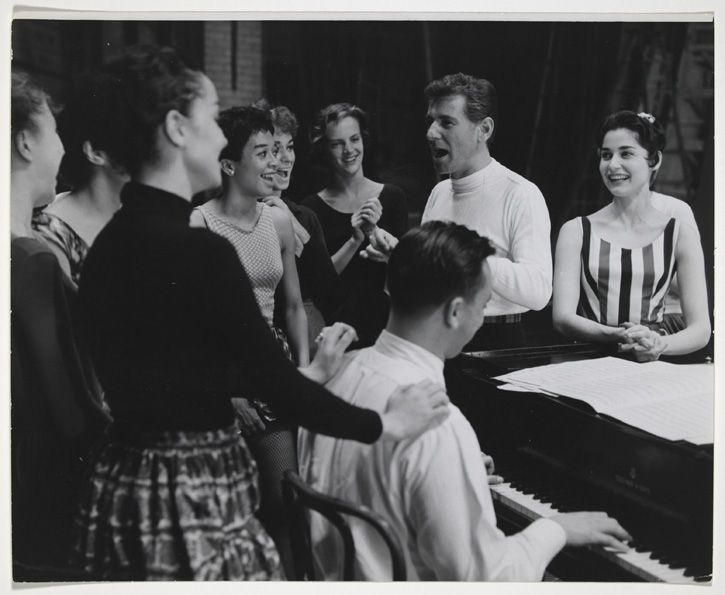
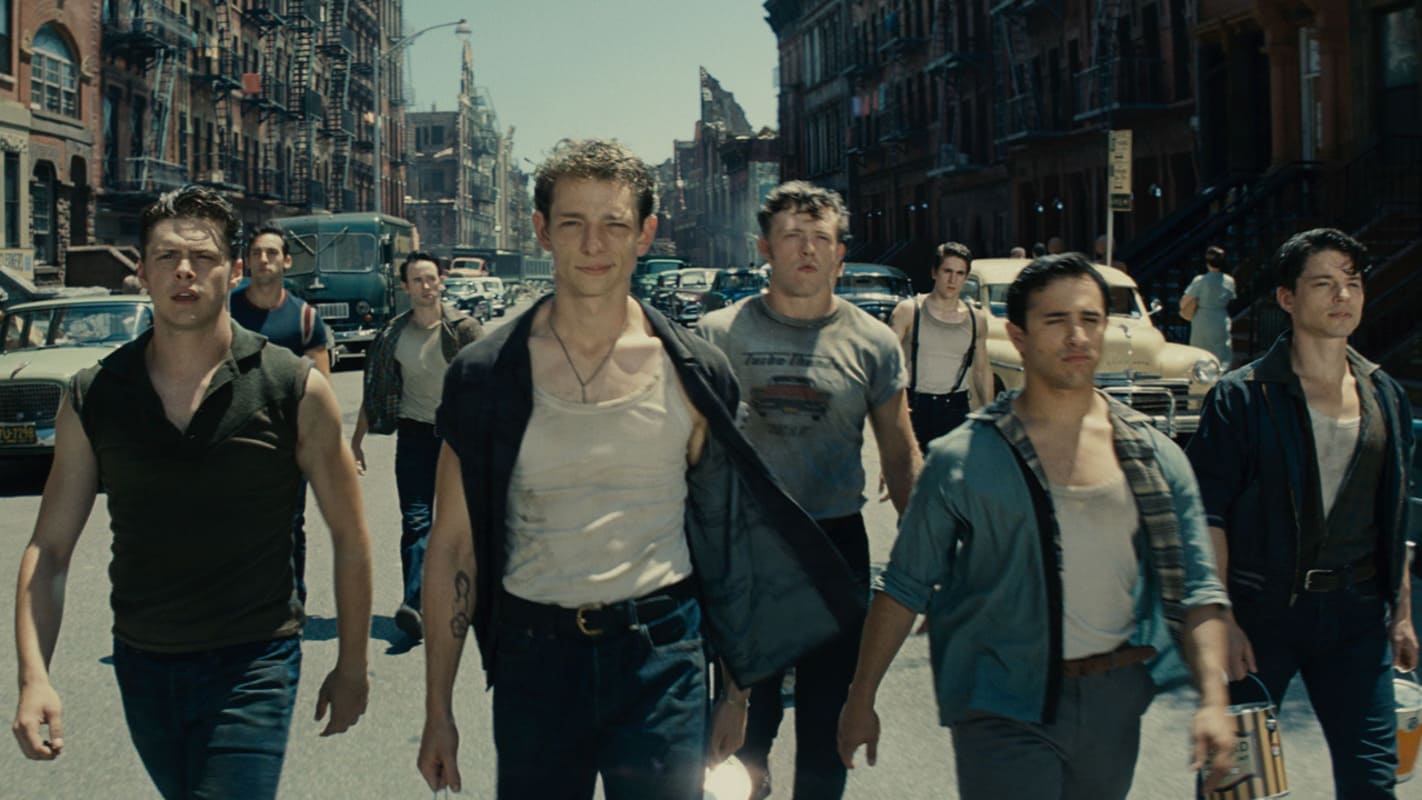
It is ironic, in short, that Spielberg has tinged Bernstein's masterpiece with a scholastic left-wing scent, envisioning a city and a country that foreshadows the disappearance of the middle class and a world in which cities will be the place where the separation between the very, very rich and the very, very poor will be most evident. If you are true nostalgics, you will be surprised that the protagonists of the fight, Mike Feist and David Alvarez, have a much more thuggish and less stylized air than their respective fathers Russ Tamblyn and George Chakiris, and you will also soon see how, in the fight scenes, the actor-dancers practically beat each other up seriously, unlike in previous ballets. The underlying thesis, I insist on the irony, is the framework of an agonizing violence that has much more to do with the frustration of having little money in one's pocket than with any kind of racial animosity between factions.
Spielberg remains a genius of cheesiness. It's a shame he overshoots and over-sugars with a One Hand, One Heart shot in a Cloisters chapel and an America that transitions too artificially from Anita's house to a street party overstuffed with choreography. It's a crying shame that the magnificent work the director does with Rachel Zegler as Maria is so poorly matched by Ansel Elgort's Tony, a dullard who would put stones to sleep, more harmless than a process politician. But the main – and inexplicable – flaw of the new Spielbergian version is that, generally speaking, it's quite poorly sung. I write inexplicable because, at this point in the movie, West Side Story is a classic in music history that even my aunt can sing. That wonderfully shot scenes like those in the police station or the final fight enter our eardrums poorly is unforgivable.
Spielberg remains a genius of cheesiness. But the main – and inexplicable – flaw of the new Spielbergian version is that, generally speaking, it's quite poorly sung.It's a shame, I insist because this new version has goosebump scenes, like the very sexyTonight shot on a typical New York fire escape (in which Spielberg brilliantly saves the physical height difference between the two actors) and also the very original perversion of making them singSomewhere (an expansive number thought for the protagonist couple) to Rita Moreno, who turns it into an intimate aria of extreme sensibility, also conceived as a consolation for those who live the city from below.How funny, I insist, that film directors raised during the US economic expansion of the 80s/90s are now becoming pseudo-Marxist spirits.Philosophizing aside, rush to the cinema to see this new version ofWest Side Story. The spirit of my idol, of the musician who made me a musician, of my particular god, survives, albeit with a lack of vibrato and fretboard,my dearest Lenny.
Add The New Barcelona Post as your preferred Google source for free
Stay informed with the latest news.