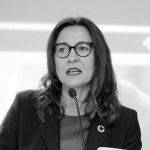
I attended the United Nations World Urban Forum in the Polish city of Katowice, 752 kilometers from Kyiv (Ukraine). In the last week of June 2022, mayors, experts, academics, specialists in city diplomacy, etc., gathered to reflect on improving urban environments and quality of life. We were located a few kilometers from the border with Ukraine, but we worked with complete normality. According to UNHCR data, Poland has hosted more than two million people from Ukraine fleeing the war, the vast majority women and children. It is the largest wave of refugees the country has hosted since World War II.
Speaking with a mayor from the town of Kielce, who, incidentally, spoke Catalan and Castilian, since he was a handball player for Barça, he told me that Polish cities and towns and their neighbors, organized into entities or associations, are acting as a safeguard for European States to manage the situation. Neighbors provide shelter, solidarity organizations provide food, and municipalities provide schooling, healthcare, and care to those who have had to leave everything.
Cities and towns that provide care from proximity have limits to manage situations as complex and massive as this, and States, at times, are too slow and not close enough. When we talk about multi-level governance, we talk about shared responsibility and alignment in the application of public policies, especially in emergency situations. Given the need to host Ukrainian citizens, all administrations must be aligned, since, otherwise, the weakest suffer.
We saw it in Lampedusa, but also in Lesbos, where in 2017 I was able to visit several refugee camps. UNHCR managed one of the most important camps with the support of many NGOs to guarantee services and care, mainly, to families. A fundamental issue is the engineering and planning involved in a settlement of these characteristics (even if it is provisional, it must guarantee the dignity of those who are there). Just as we plan a city, we must foresee the supply of water and energy, the evacuation of sewage and waste. A coherent structure that promotes a dignified ordering of the environment, however simple, is also important. Educational, leisure, or meeting spaces must be indicated and respected by everyone. We did not see this basic planning in the Moria camp, despite the great work of the NGOs. The Moria camp, controlled in this case by the Greek state, looked like a prison, unstructured and overcrowded. It denoted a certain improvisation, few resources, and many difficulties for the provision of services, which led to insufficient sanitation.
The mayor of Mitilene, the capital of Lesbos, with whom I personally met, was clear that the island acted as a buffer or shield to retain the entry of refugees into the European continent. Ceuta and Melilla are also a buffer that should concern us.
I was in Katowice when the Nador tragedy had just happened, which, in my opinion, we cannot simply dismiss. States cannot continue to use cities and towns that are isolated from the continent as a buffer. Poland is Europe and Europe with Ukraine has no buffer, there is territorial continuity. Cities have opened their hands, now governments need to support them, since multi-level responsibility is not only to approve economic sanctions against Russia but also to participate in maintaining the European welfare state, and cities alone cannot do it.
Add The New Barcelona Post as your preferred Google source for free
Stay informed with the latest news.