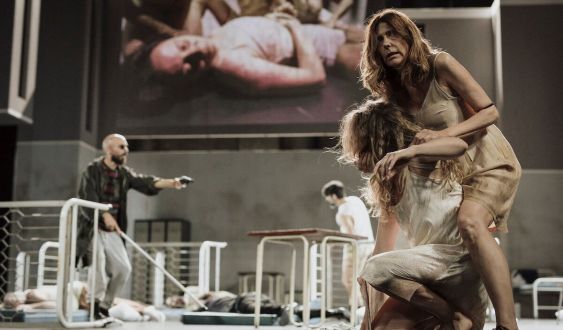
It was risky to propose a theatrical adaptation of that Essay on Blindness written premonitorily by José Saramago as the Teatre Nacional de Catalunya (TNC) and the Teatro Nacional São João have done. Mixing Catalan with Portuguese continuously, despite having the help of subtitles, and doing so for more than three hours could seem daring, even reckless, especially with a plot that is not easy to digest either. But taking risks is sometimes worth it. Carme Portaceli and Nuno Cardoso, with the dramaturgy by Clàudia Cedó, have proven it. Those who want to check it for themselves by going to see the play, programmed as one of the main of the season, have until Sunday, October 30. If it doesn't work out for them, the play will continue its tour in Braga, Aveiro, and Porto.
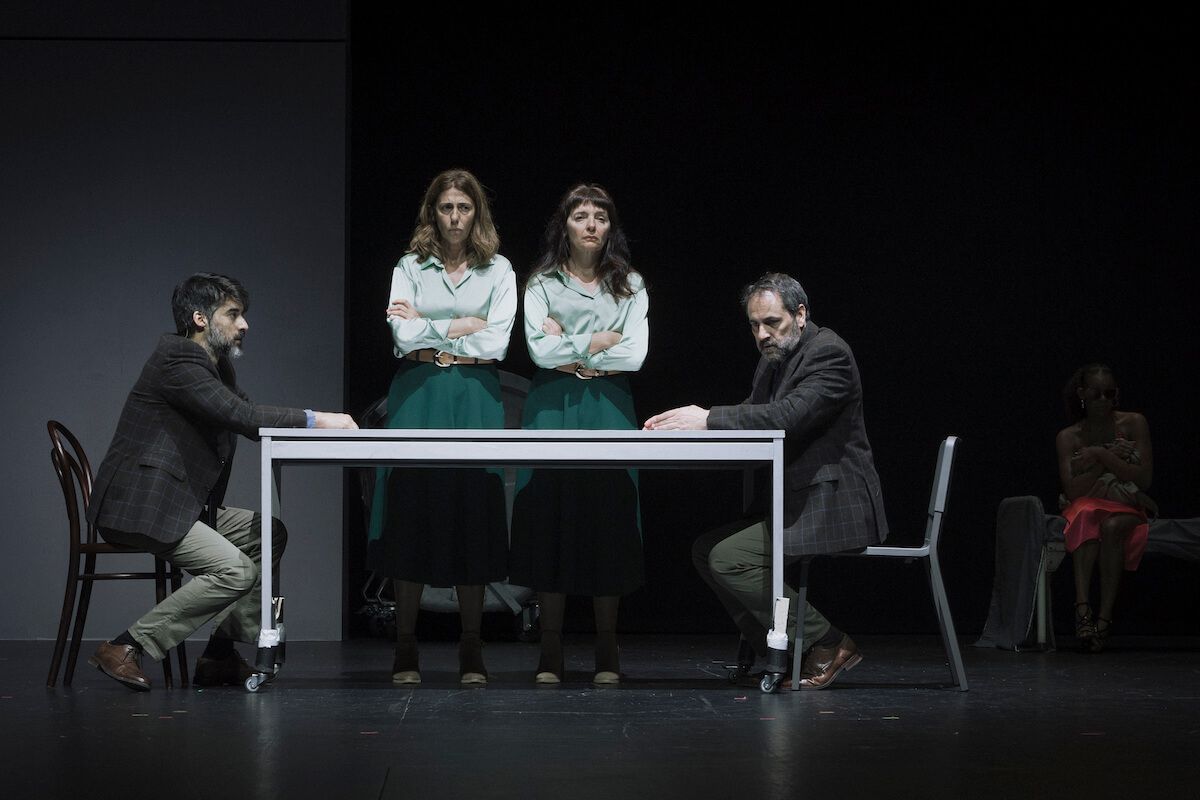
With a mixed cast, made up of Catalan and Portuguese actors, the show has achieved that narrative ambiguity of the Portuguese writer, who dispenses with traditional punctuation symbols and confuses the reader with pages and pages without periods and dialogues in which he does not make it clear who is speaking. Each character has a double, who expresses themselves in the other language and with whom they exchange scenes, which generates that feeling of helplessness so Saramago-esque. Thinking about it, it doesn't matter who plays each character, after all, their stories could be anyone's.
In this game of doubles, it is surprising to hear Portuguese and realize that it is not so far from Catalan or Spanish, that there are expressions that are the same, words that you intuit even if they sound different. Always with its back to Portugal, that great unknown defeated by France, the co-production of the TNC and the Porto theater has managed to bring the two cultures a little closer, hoping that they will recognize each other at the level they should. Carme Portaceli pursues with co-productions like this to continue internationalizing the Catalan venue and has probably achieved much more. And it is not surprising that one finds many Portuguese among the audience who go to see Assaig sobre la ceguesa and continues to hear their language when the curtain has already fallen, making visible neighbors that perhaps we did not think we had.
All this without delving into the plot of Saramago's novel, already written from his exile in Lanzarote, where he lived the last 20 years of his life, which led many, including Portaceli, to think he was Spanish. The writer wove in Blindness a universal story in which a society sees its citizens infected by an unknown and inexplicable ailment, called by the authorities as white blindness. The government improvises measures, punishing and abandoning the sick to their fate, preferring them to die as soon as possible and thus solve what becomes just another formality, always protected by technicalities. One wonders how the real politicians, who sometimes find themselves seated in the TNC seats, like some brand new conseller, will feel, what they will think of the apathy and distrust towards those of their class that Saramago thought.
In the pages of Blindness and these days at the TNC, chaos ends up taking over and those who were once orderly and compliant citizens let themselves be carried away by their most primary instincts and their most selfish, even cruel, needs. Most of the scenes of out-of-control and bitter survival experienced in the asylum where, ironically, the government decides to lock up the first patients, are shocking. The weak are always them, those who care, worry and with whom anything can be done. Because, even in disorder, those who believe themselves strong end up deceiving and abusing those they consider to be below them. Fortunately, they are also the ones who always see more and, in a blind society, that always helps.
Analyzing all this with post-COVID glasses, thinking about pandemics, lockdowns, or states of alarm, everything Saramago described in the 90s, sounds, with due distance, familiar and not alien to anyone. Reading his book years before the coronavirus seemed like science fiction, impossible that it could happen, a good story with which to reflect calmly and without shocks on how dangerous human beings can become, but Saramago has proven to have something of a visionary sorcerer. It's striking to see the scenes he wrote, especially for those who go to the theater without having read the novel, and to notice their relevance. This creates the sensation that permeates the entire adaptation made by the TNC and the Teatro Nacional São João: the protagonists of the play could be ourselves, and if we don't realize it, it's perhaps because we are just as blind.
If we are lucky, Saramago was wrong in some projection. Worry if the blank vote wins in the next elections. The pandemic has already passed, but Ensayo sobre la lucidez, the continuation of the novel that has ceased to be so dystopian, is the next screen. And, unfortunately, we come out badly again.
Add The New Barcelona Post as your preferred Google source for free
Stay informed with the latest news.
