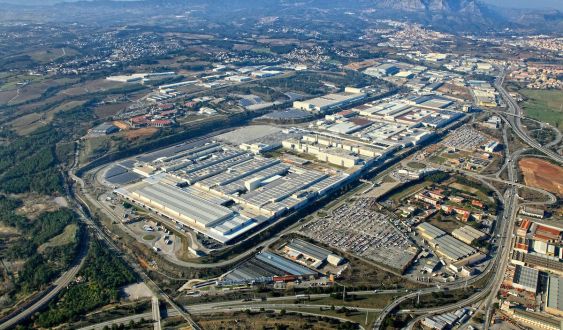
The battery plant that Volkswagen will locate in Spain will be in the town of Sagunto. Catalonia has not been able to compete to attract this investment because it was late to the race to convince the German group. The Valencian factory will begin construction this very 2022, at the end of the year, with the aim of being able to make it operational by 2026. It will be responsible for providing the cells that the Martorell factory will need to produce 500,000 small electric cars within three years, as well as those that will go to Pamplona.
The Sagunto plant will be the second that Volkswagen will have in Europe and will be part of an investment plan of more than 7,000 million euros that the group will allocate to convert the country into an electromobility hub with the help of European funds. "It represents the largest industrial investment ever made in the history of Spain," defends the president of Seat, Wayne Griffiths. The manufacture of batteries will mean the creation of 3,000 jobs in Valencia, where an entire value chain will have to be articulated to accompany it.
The factors that have played in favor of Valencia, compared to Aragon and Extremadura, the other options that were on Volkswagen's table, have been economic, but also its logistical capacity and existing infrastructure, the presence of qualified personnel and the possibility of starting works quickly. The need to distribute the investment throughout Spain, to favor territorial balance, has also influenced, explains Griffiths.
The factors that have played in favor of Valencia have been its logistical capacity and existing infrastructure, the presence of qualified personnel and the possibility of starting works quicklyRegarding this issue, the president of the works council, Matías Carnero, has been very critical of the Government."It arrived late," Carnero laments. The proposals that the executive presented to the multinational to locate the battery plant in Tarragona and Lleida were not analyzed in depth because there were already three more solid ones with more advanced contacts.
The investment planned by the group will also include the electrification of the factories it already has in Spain, those in Martorell and Pamplona. The Barcelona plant will receive 3,000 million euros. All these figures still have to be confirmed when the Government determines the final allocations of the PERTE for the automotive industry, endowed with some 3,000 million euros. "It is a historic opportunity," Griffiths emphasizes.
This investment will not only have to be accompanied by the resources that Pedro Sánchez's executive allocates to Volkswagen's plans, but it also requires intensifying the deployment of electric charging infrastructure in Spain and increasing electric car sales throughout the country, with demand currently at 8%. "We cannot do it alone," the executive insists.
Likewise, the president of Seat recognizes that the electrification of the Baix Llobregat plant will result in a surplus of between 2,000 and 2,800 workers, taking into account that the electric car requires fewer production hours. The automaker's plant in El Prat de Llobregat, dedicated to manufacturing gearboxes, will be the most affected. Despite this, Griffiths stresses that reconversion is the only possible future for the industry.
The electrification of Martorell will result in a surplus of between 2,000 and 2,800 workers, taking into account that the electric car requires fewer production hoursAccording to Carnero, the 500,000 electric cars that are intended to be manufactured in Barcelona are equivalent to 350,000 combustion vehicles."Martorell will not survive solely with the small electric car," he warns, claiming that the Catalan factory should produce larger vehicles to guarantee profitability, such as the electric versions of the Cupra Formentor and the Seat Leon.
The electrification of Martorell, as it is planned today, also threatens the future of Seat. "Our priority is electric vehicles and Cupra takes on electric," explains Griffiths. This concentration on Cupra of the company's new direction has also drawn criticism from Carnero. "He is announcing the death of the Seat brand starting in 2028-2029. It must be said loud and clear," he emphasizes.
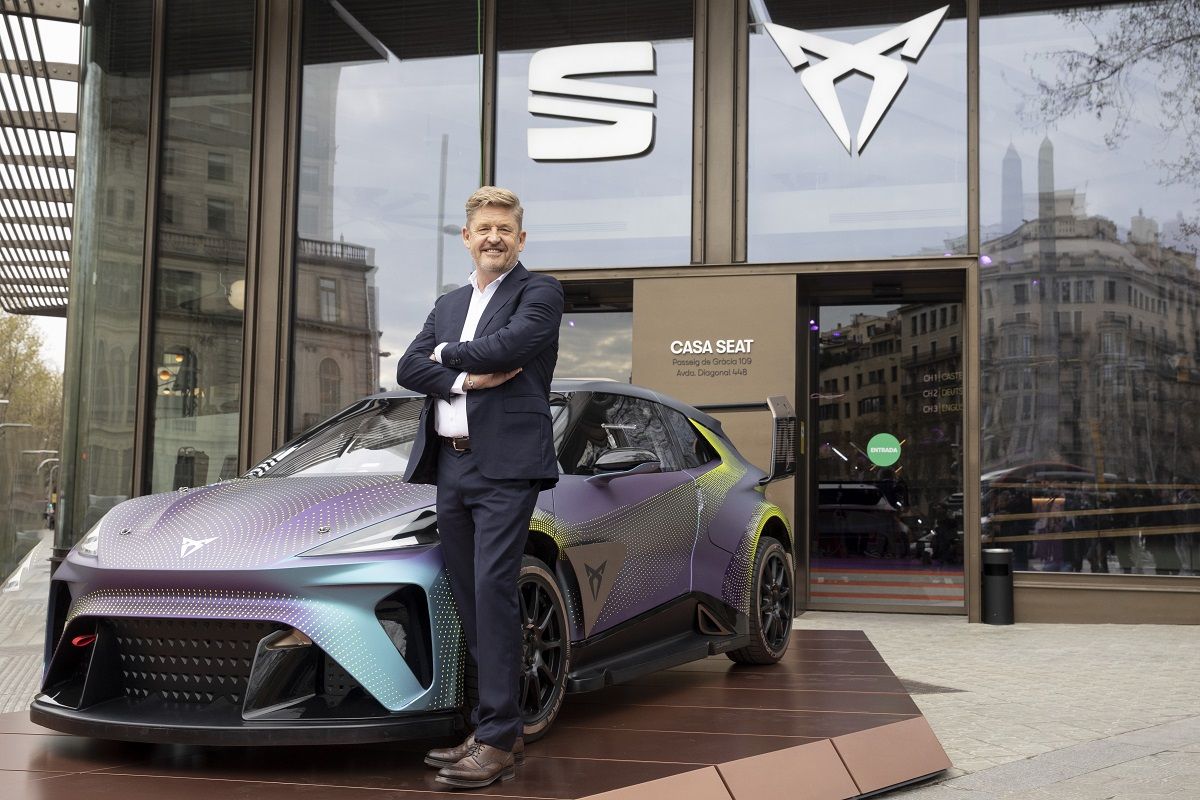
2021, a complicated year that has delayed post-coronavirus recovery
The presentation of Volkswagen's future plans for Seat has coincided with the publication of the results obtained in 2021, "a difficult year" marked by the post-coronavirus crisis, the lack of semiconductors, the increase in raw material costs, and ever-growing uncertainty, indicates Seat's Vice President of Finance and IT, David Powels. Given all this, the automaker has registered losses of 256 million euros in 2021, 32% more than the previous year.
Although the demand for Seat and Cupra cars returned to pre-pandemic levels, production was limited by the international context, with 25% fewer cars manufactured than planned. Specifically, 391,000 Seat brand vehicles were sold, 2% less than in 2020, and almost 80,000 Cupra vehicles, a figure that triples that of the previous year.
To overcome the slump and the generalization of successive crises, the company will boost Cupra's growth, with a higher margin compared to Seat, and demands more flexibility from the workforce. It expects to return to profitability by 2022.
Add The New Barcelona Post as your preferred Google source for free
Stay informed with the latest news.
