There are things that cannot be rushed. A stitch that requires the precision of a technique honed over years. A piece of silk that, after passing through expert hands, becomes the petal of a flower. Knowledge that cannot be acquired in a matter of seconds, but only through repetition, mistakes, and patience. Craftsmanship is built on everything the modern world seems to have lost: time.
Outside the workshop, life moves at a relentless pace. Trends appear and disappear on social media, fashion collections are renewed at a dizzying speed, and artificial intelligence can generate images in seconds that would once have taken hours of work. We have learned to expect immediate answers, consume without waiting, and replace things before they wear out. Speed has become a virtue, and low prices almost an entitlement.
Yet amid this acceleration, there are crafts that continue to follow a different logic. Crafts where having a good idea is not enough: you also need to know how to bring it to life. Where quality depends not only on the end result, but also on the accumulated knowledge that makes it possible. Where hands need time to master what, once learned, seems simple.
Craftsmanship is not just a way of manufacturing objects. It is a form of knowledge.
The time that cannot be recovered
A craftsman does not begin to create a piece the day they start working on it. In a way, that piece begins many years before, with the first time they learned to hold a tool, to recognize a material, or to repeat a movement until mastering it.
Behind an embroidery, a ceramic piece, a fabric, or a silk flower, there are visible hours of work, but also hundreds of invisible hours. Those of learning, failed attempts, corrected errors, and the experience that allows one to know what to do even when something doesn't go as planned.
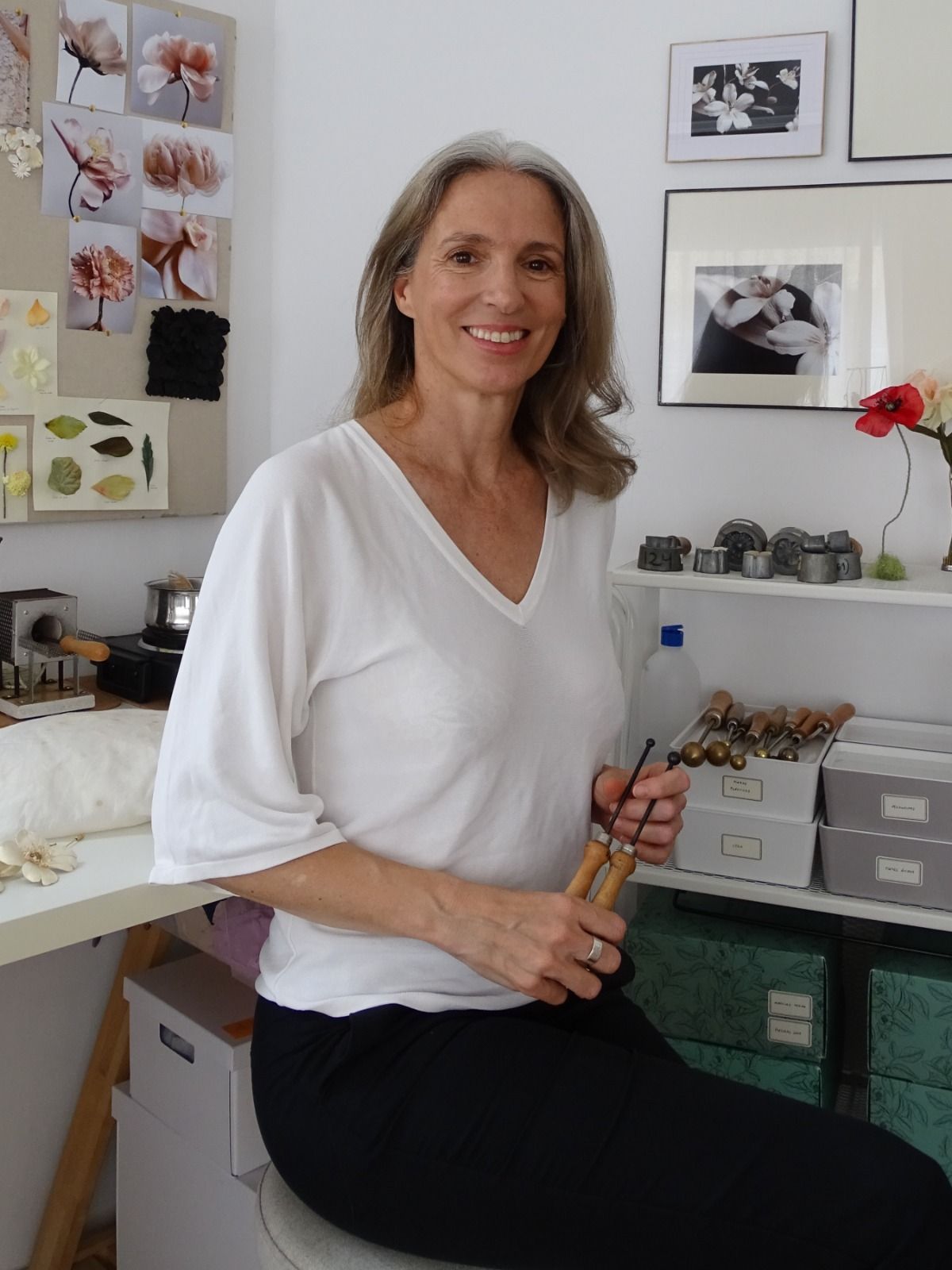
In the case of Beatriz Natmar, creator of handmade flowers, this relationship with time has an almost intimate dimension. When she works with petals, she can spend hours concentrated and feel that only a few minutes have passed. This perception, however, does not correspond to the real hours each commission needs. That is why she explains the phases of the process to clients: the patience of the creator must also be understood by the buyer. "It happens to me that I get so engrossed that many hours can pass and I perceive them as minutes," explains Beatriz Natmar.
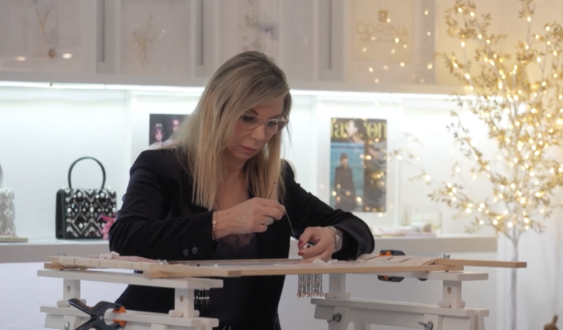
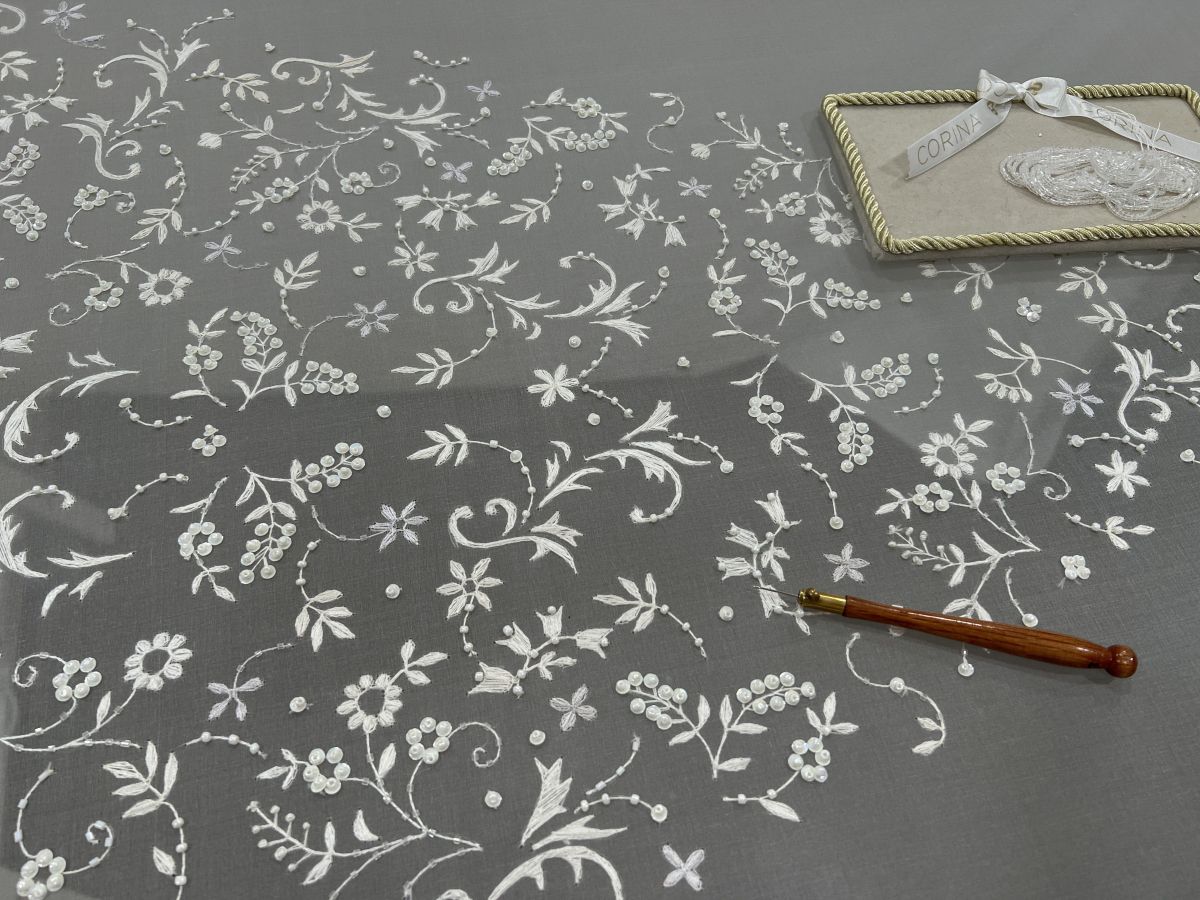
The embroiderer and Master Artisan Corina Roselló, specialist in the Lunéville embroidery technique, expresses it with a revealing distinction: experience allows one to work with more fluidity, but this does not necessarily mean having to rush more. Skill consists of finding the right rhythm, one in which the hands can work with precision and naturalness.

"True skill consists of finding the right rhythm for the hands to work with precision and naturalness," points out Corina Roselló. It is an idea that contradicts one of the great obsessions of our time: doing more things in fewer hours.
Technology has allowed processes to be reduced, tasks to be automated, and productivity to be multiplied. But not all times are dispensable. In certain trades, trying to accelerate work can mean losing quality, precision, or sensitivity. Time is not an obstacle to achieving the result. It is a part of the result itself.
Perhaps the problem is that we have become accustomed to valuing things by the time they save us and have stopped valuing them by the time someone has dedicated to them.

Knowledge that passes from one hand to another
Craftsmanship also has another peculiarity: it does not start from scratch with each generation. It is an inheritance. For centuries, trades have been kept alive because someone has taught another person what they knew how to do. A gesture learned from a master, a technique perfected over the years, a way of working a material that can hardly be explained only with words.
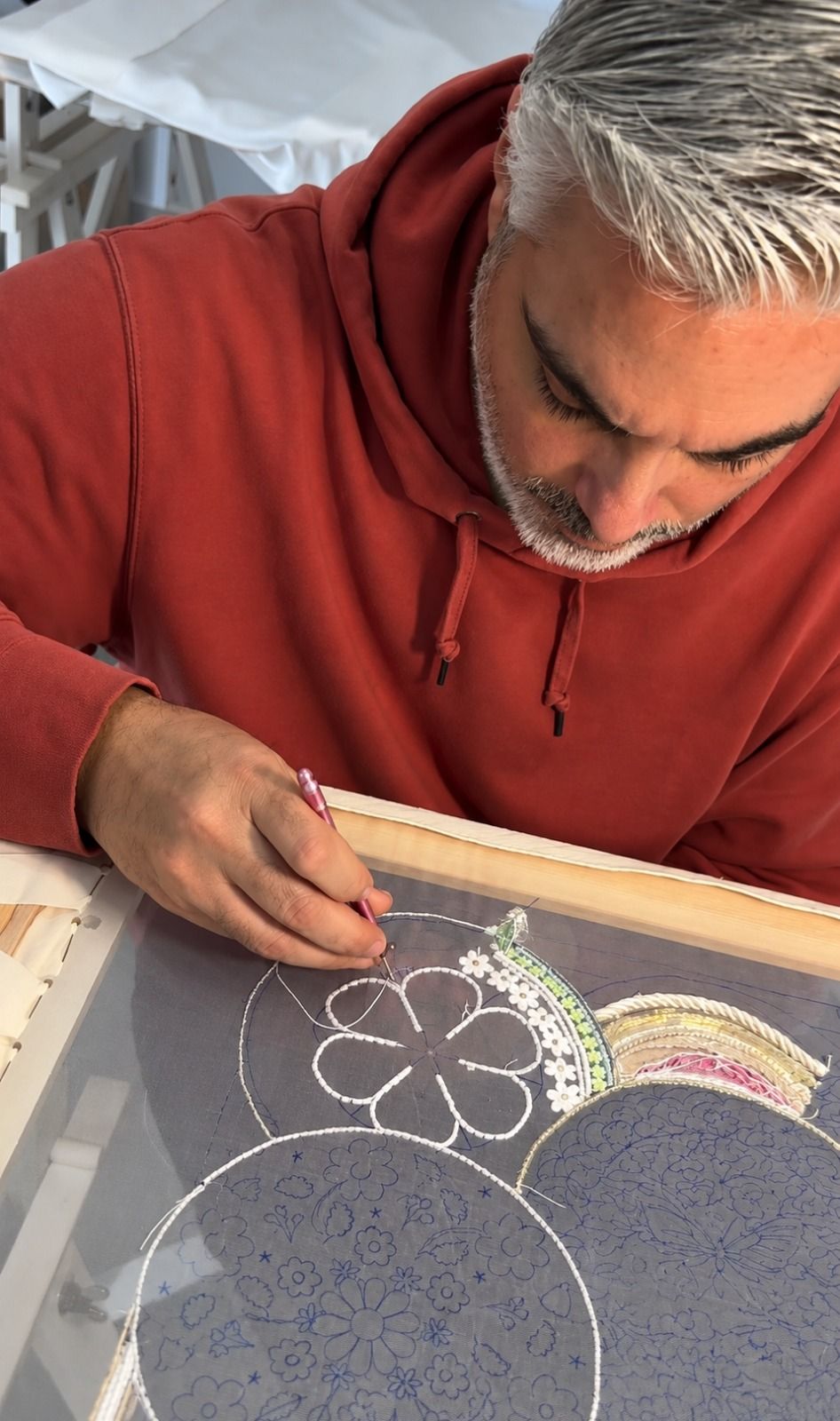
This knowledge is not always found in books. It lives in the hands, in the gaze, and in experience. It is transmitted by observing, practicing, and making mistakes. There are movements that are only understood when seen being done and that are only mastered when the body has repeated them enough times.
"When a craft disappears, not only is an economic activity lost. A part of our collective memory can also be lost"
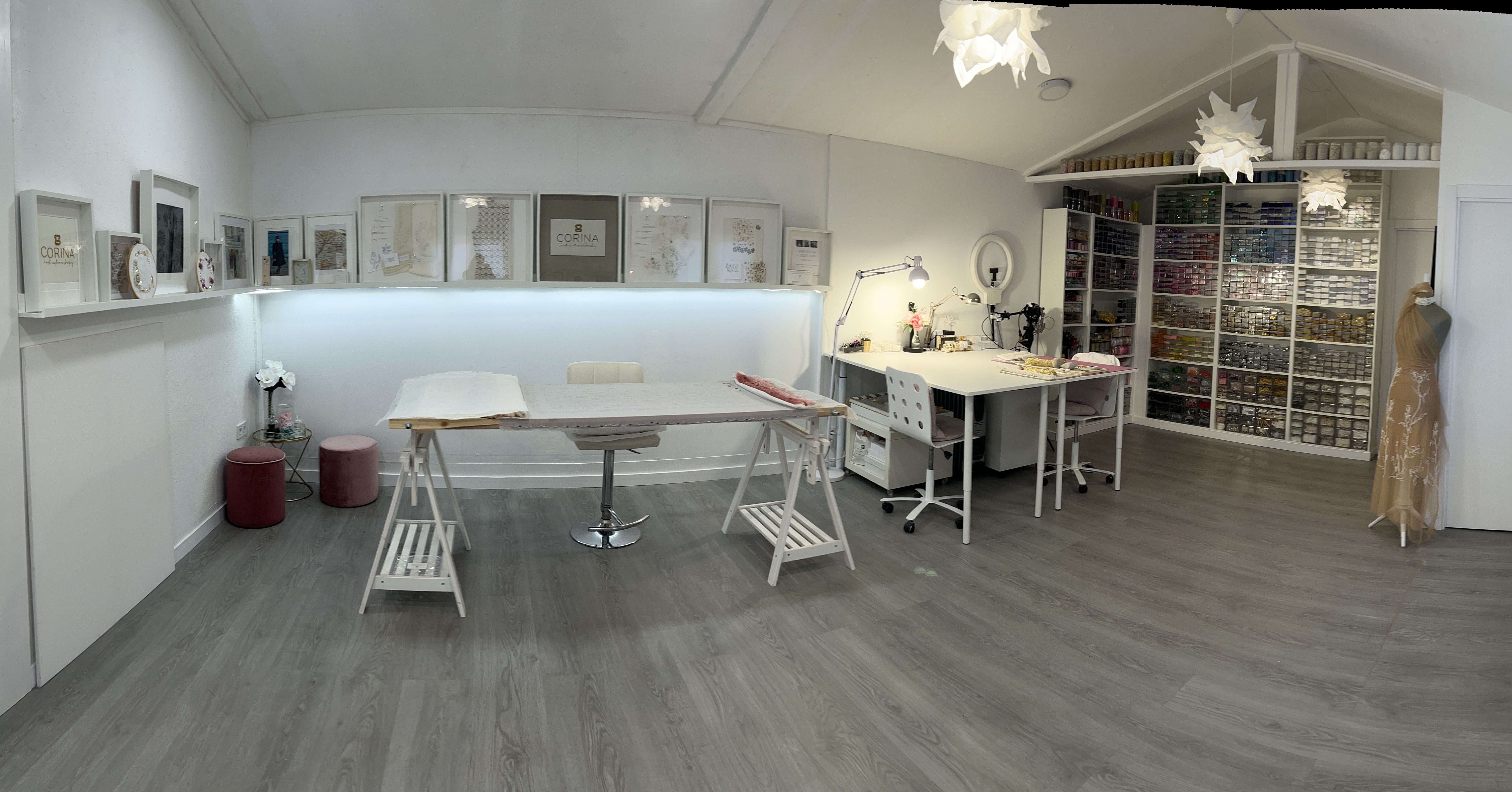
Corina, who teaches Lunéville embroidery at the 1st Professional School of Haute Couture Embroidery in Spain, identifies a difficulty that no manual alone solves: transmitting the coordination of both hands. The master can explain how to hold the hook, but the student only internalizes the movement when observing, trying, making mistakes, and repeating it. Artisan heritage is not only what is preserved in a museum; it is what someone still knows how to teach.
Therefore, when a craft disappears, not only is an economic activity lost. A part of our collective memory can also be lost. And this is one of the great risks of the 21st century. Not because artisanal techniques have ceased to have value, but because it is increasingly difficult to find the necessary conditions to learn them, practice them, and live from them.
The paradox is evident: we admire handmade objects, we reclaim tradition, and we celebrate uniqueness, but we do not always guarantee that the people who preserve this knowledge can transmit it to subsequent generations.
A technique does not survive just because it is beautiful. It survives because someone continues to practice it and because another person considers it worth learning.
Corina warns that the loss of a craft is not sudden: it arrives when it stops being practiced, when there are no people to transmit it, and when learning it no longer offers a professional outlet. Natmar, for her part, considers that the creation of artisanal flowers is today a craft in danger of extinction, because very few professionals dedicate themselves exclusively to it.
When a machine can imagine everything
The irruption of artificial intelligence has added a new dimension to this contradiction. Today it is possible to generate in a few seconds the image of a dress covered with impossible embroideries, an extraordinary jewel or a silk flower that does not exist. Technology can multiply ideas, explore combinations and accelerate certain phases of design.
For Natmar, the difference begins even before cutting the first petal. She works mainly with silk and other natural fabrics; she prepares them with sizing so that they maintain their shape without fraying and regulates their stiffness according to the movement she wants to achieve. When she heats the fabric and applies the burin (tool for shaping petals), the pressure and turn of the hand determine a curvature that had not been fully fixed in the initial idea.
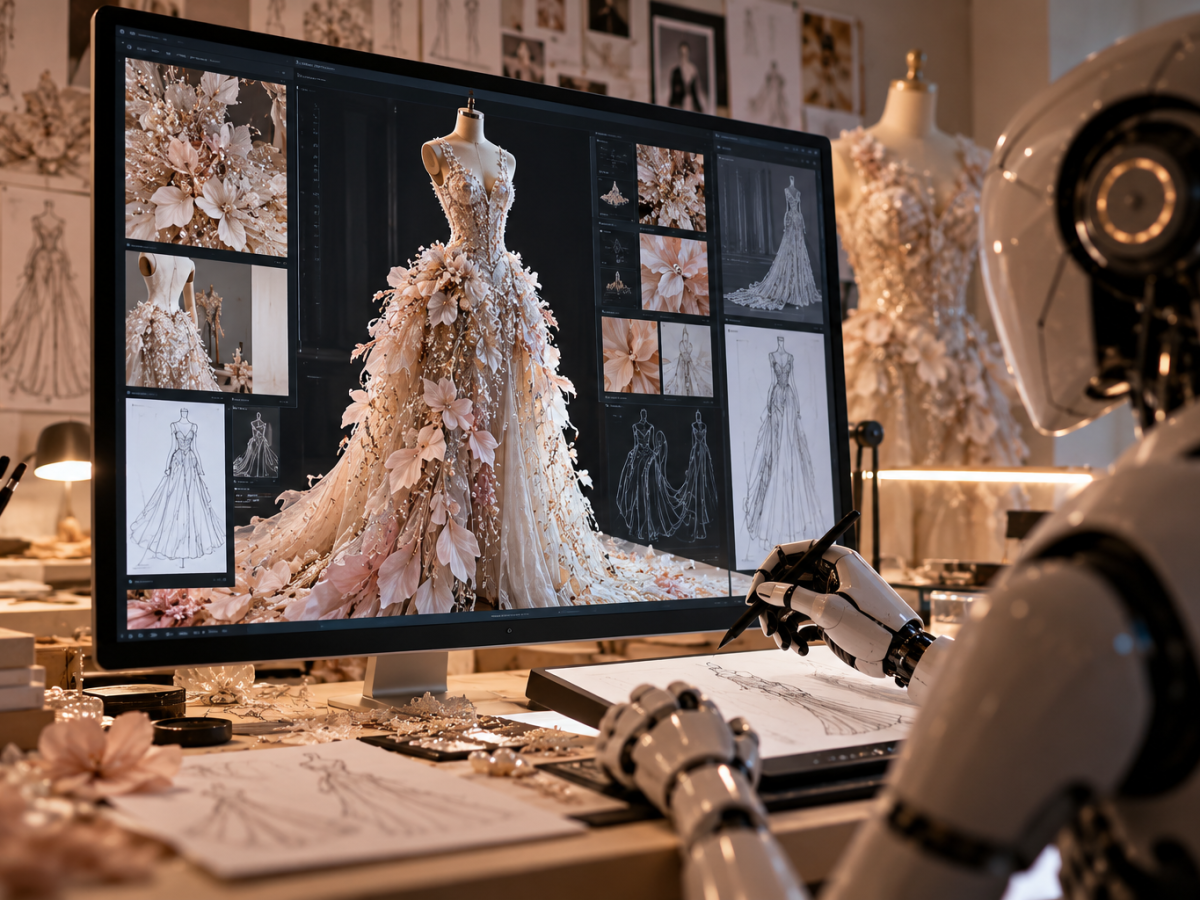
But an image is not an object. A digitally created flower does not need to support its own weight. An embroidery imagined by an algorithm does not have to respect the tension of the fabric or adapt to the movement of the body. The screen offers no resistance, does not break and does not force a stitch to be corrected.
Handicraft, on the other hand, is built from a direct relationship with matter. Silk has a texture and a behavior; thread, a tension; ceramics, limits. The artisan must learn to listen to these materials, to understand what they allow to do and what not.
"The most magical or most special moment for me is when with the burin I give shape to a petal, it is at that instant, when the intensity of the pressure, the preparation of the silk and the movement of the hand make each flower different" expresses Beatriz.
This does not mean that technology is the enemy of craftsmanship. It can be an extraordinary ally to experiment, design, communicate and give visibility to trades that, without digital tools, would hardly reach new audiences.
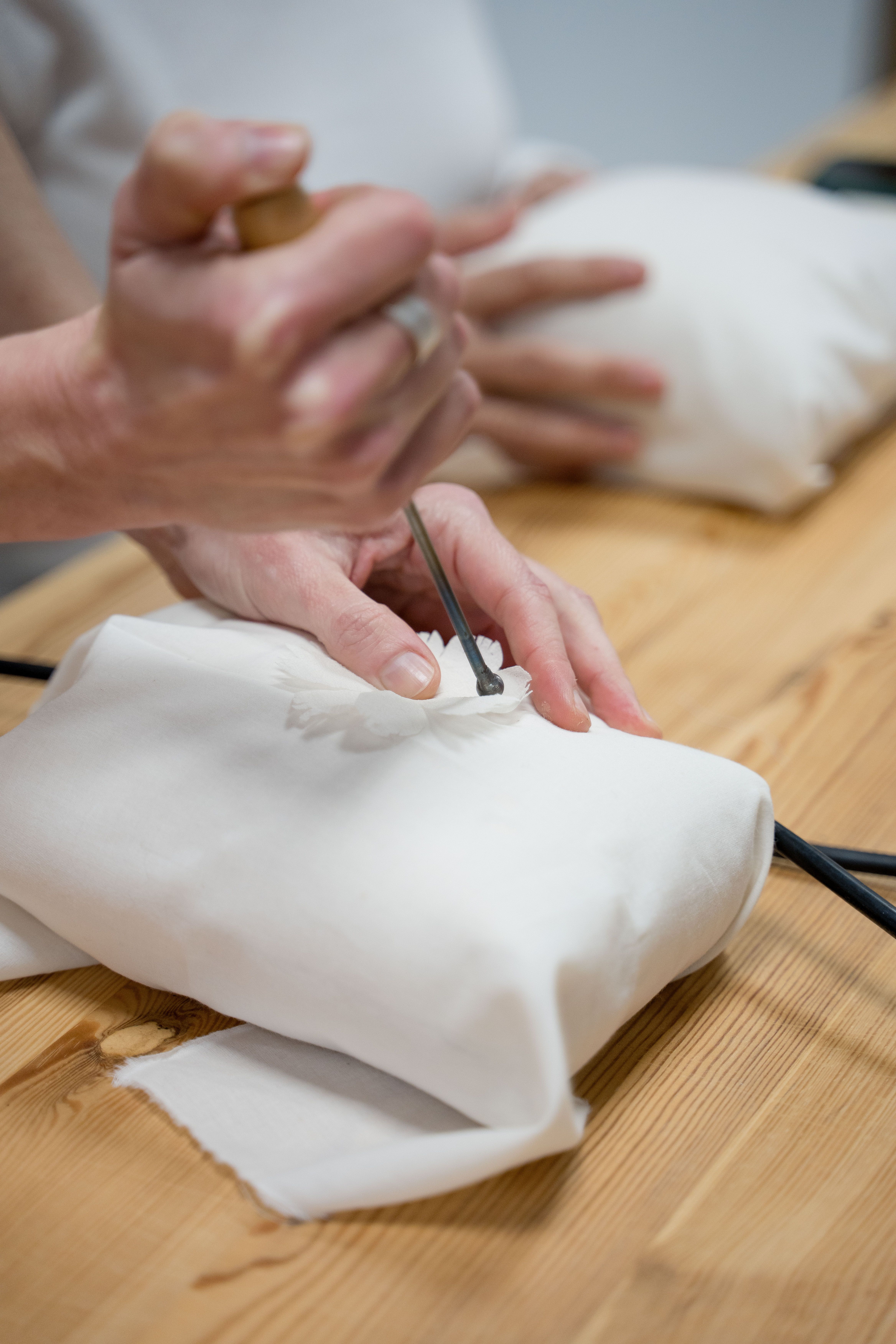
The two artisans avoid reducing the debate to a war between tradition and technology. Corina believes that digital tools can help develop designs and give visibility to trades. Beatriz recognizes the inspiring potential of images generated with AI, although she assures that for now she does not use it in her creative process. Her reservation is not a denial of the future: it is the conviction that the definitive flower is decided when hands come into contact with matter.
But there is an essential difference between being able to imagine anything and knowing how to do it. And perhaps, in a future where generating images will be increasingly easy, the knowledge necessary to turn them into real objects will acquire even more value.
How much does an hour of life cost?
There is, however, an even deeper contradiction. One that has to do not only with technology, but with money. We like unique things, objects crafted with care, and pieces that tell a story. We are thrilled to discover that a dress has been hand-embroidered or that a flower has been created petal by petal. But this admiration often fades when it comes time to pay.
We have grown up in a consumer culture that has accustomed us to comparing prices without comparing processes.
"When a handmade piece seems too expensive, is it because it really is, or because we have become accustomed to paying too little for the work of others?"
An industrial piece and a handmade piece may have a similar appearance, but behind them are very different realities. The price of a handmade creation must not only account for materials and hours of execution. It must also incorporate the years of learning, experience, technical knowledge, and problem-solving ability acquired throughout a professional life.
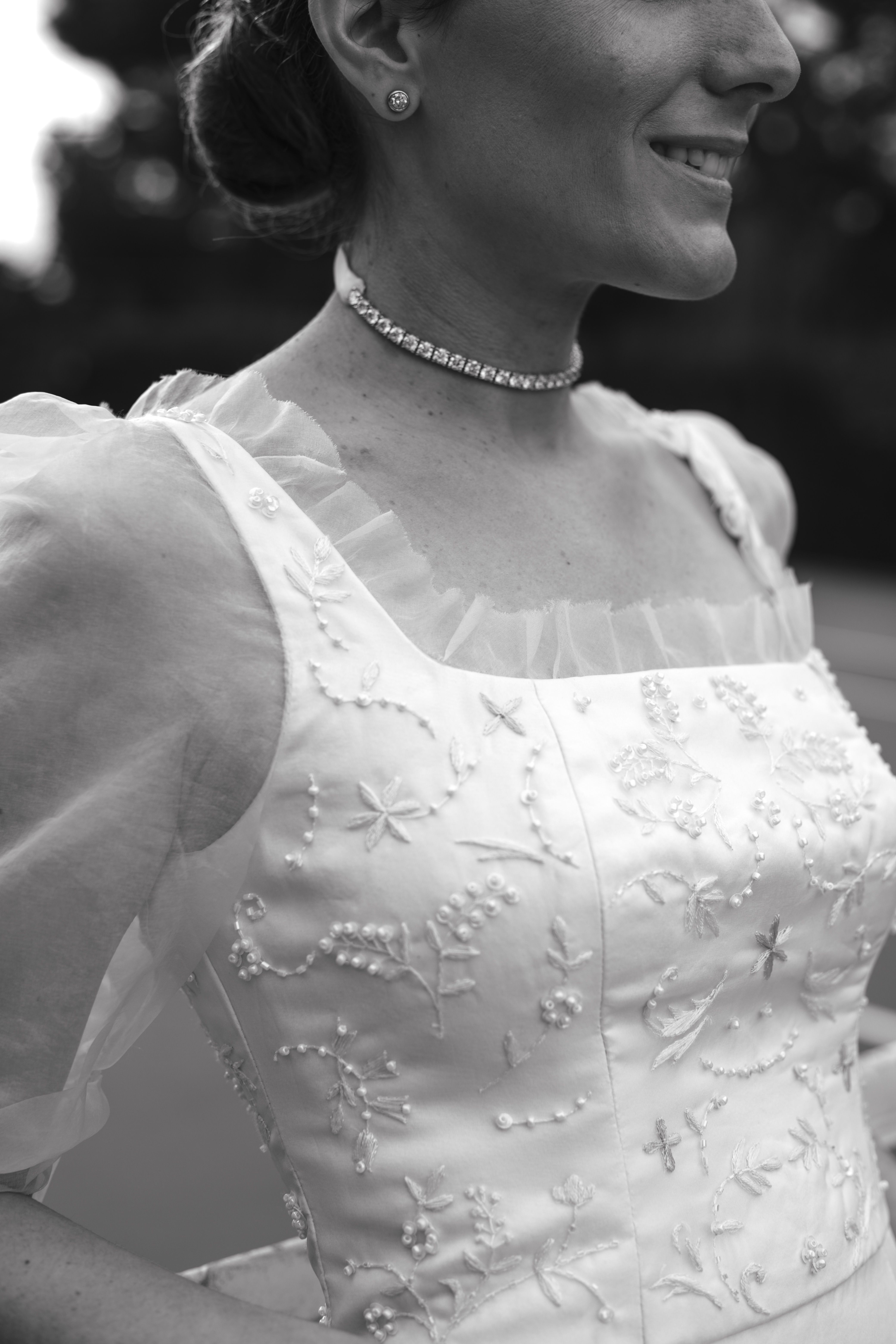
As Roselló explains, the fact that an experienced artisan needs less time to execute a piece does not mean that their work is worth less. That speed is, precisely, the result of years of practice. "Time has value, but the experience behind that time also has value," Roselló summarizes.
And here an uncomfortable question arises: when a handmade piece seems too expensive, is it because it really is, or because we have become accustomed to paying too little for the work of others?
Natmar experiences this tension from another side: when a job fascinates her to the point of losing track of hours, pricing it becomes especially difficult. She explains that she has had to learn to distance herself from the creator and also think as an entrepreneur; she has even trained in business management for fashion crafts. Artistic sensibility, by itself, does not resolve the viability of a workshop.

The low price is not an innocent reality. It often responds to production systems that allow reducing costs and multiplying quantities. Craftsmanship can hardly compete in this field without giving up what defines it.
But neither can we demand artisans to preserve their trades only for the love of tradition. Passion does not pay for materials, nor the rent of a workshop, nor the hours of work. If we want to preserve this knowledge, we must accept that it has an economic value and that the people who master it must be able to live decently from their profession.
"It is for me the most difficult part, the one that costs me the most," Beatriz acknowledges when she talks about putting economic value on her flowers. And she admits that more than once a client has considered an order too expensive because they were unaware of all the work behind it.
Because the risk is not just losing the beauty of an object. It is losing the hands capable of creating it.
The future is also made by hand
In an industry like fashion, which lives trapped between the need to constantly renew itself and the urgency to reduce its environmental impact, craftsmanship can offer a different perspective.
It is not an automatic solution to the sector's problems. A handmade piece is not necessarily sustainable simply because it is handmade. But the knowledge of materials, repair, reuse, and the will to create durable objects can contribute to transforming our relationship with what we consume.
"Perhaps the luxury of the future will not be to have more things, but to own fewer and know the value of each one. To know who made it, how it was made, and how long it took to exist"
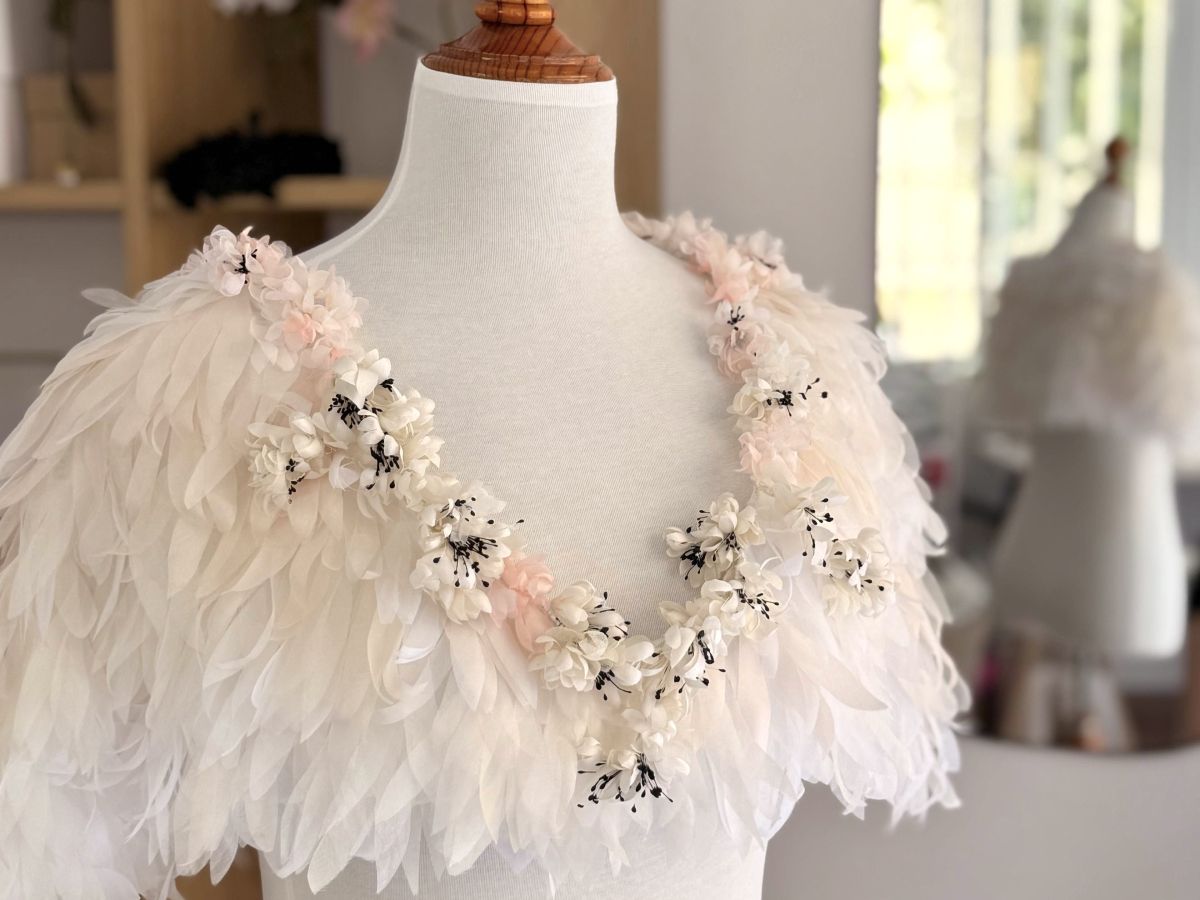
Reuse can take very concrete forms. Natmar recovers scraps that would otherwise be thrown away and has also made flowers with fabrics from dresses. She especially remembers a body of silk petals constructed with leftover scraps from previous creations; with the smallest fragments, she was still able to make tiny flowers. The discarded material thus became the starting point for another piece.
They can also offer a new way of understanding luxury. Perhaps the luxury of the future will not be to have more things, but to own fewer and know the value of each one. To know who made it, how it was made, and how long it took to exist.
Craftsmanship must not remain trapped in nostalgia. Trades can dialogue with new technologies, explore contemporary materials, and find forms of expression that we cannot yet imagine. Tradition is not incompatible with innovation. In fact, it only remains alive when it is capable of evolving.
This capacity for adaptation is also creative. Beatriz explains that she often starts by reproducing a real flower, but manual work pushes her to modify its curvatures or to invent others that do not exist in nature. When collaborating with designers, she can use the same fabrics and colors of the dress so that the flowers integrate into the universe of the piece. The inherited technique does not impose a single form: it opens up new possibilities.
Craftsmanship must not remain trapped in nostalgia
But for this to happen, something more than admiration is needed. It requires training, generational succession, professional recognition, and a society willing to understand that not everything can be produced immediately or sold at any price.
For Corina, preserving a technique demands schools, visibility, and a market capable of remunerating knowledge. Beatriz also calls for more recognition for the authorship of artisans in fashion: behind every collaboration, she says, there is always a part of whoever has worked with their hands.
While the world continues to accelerate, in some workshop, hands continue to repeat a gesture learned many years ago. A thread crosses a fabric. A piece of silk transforms into a flower. An apparently inert material acquires a form that previously only existed in someone's imagination.
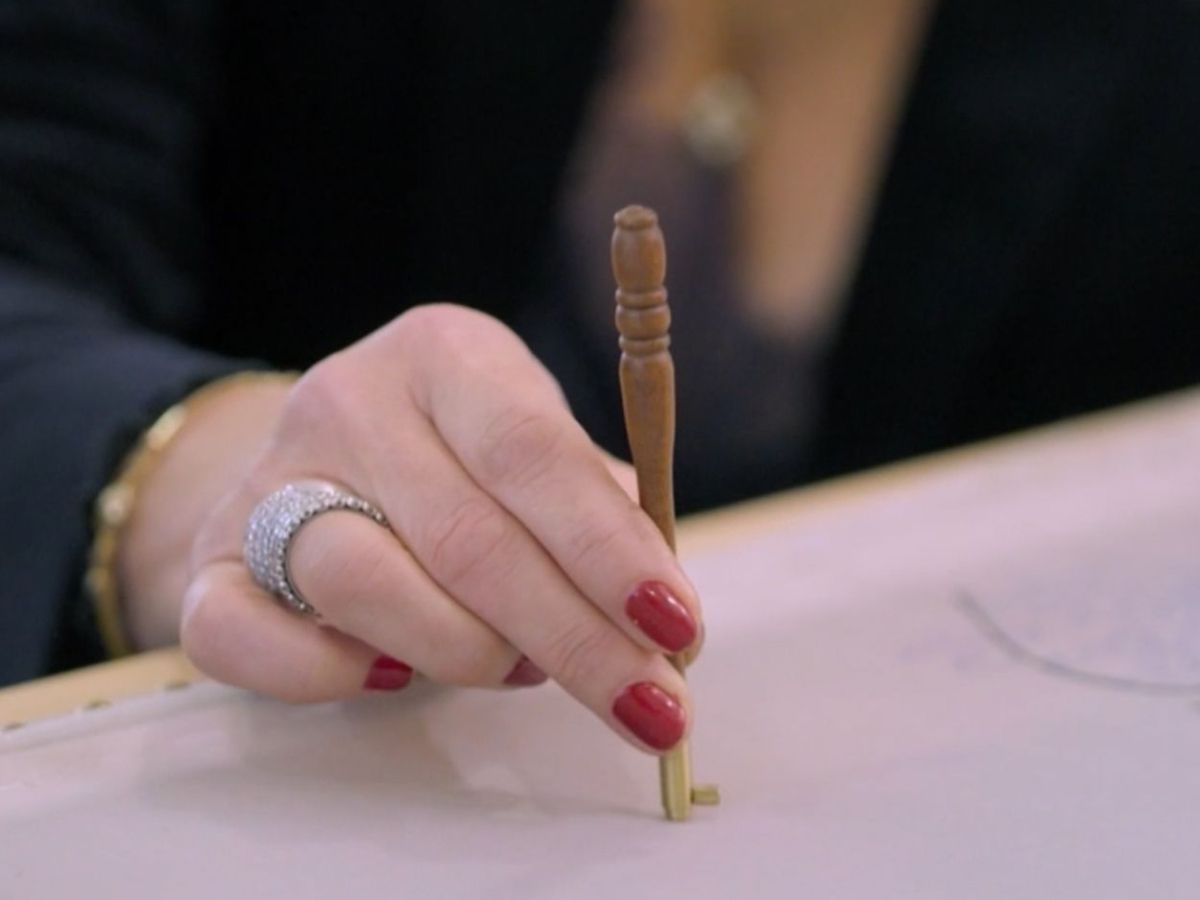
"For me, embroidering is also learning to be present. You cannot think only of the final result: you have to pay attention to every stitch," explains Corina. In Beatriz's flowers, this same present takes the form of a petal that changes under the burin. These are two ways of remembering that craftsmanship not only preserves techniques: it also preserves another way of experiencing time.
Perhaps the great challenge of the 21st century will not be to decide whether the future belongs to hands or machines, but to learn to recognize the value of each. To understand that technology can help us do many things faster, but that this does not make everything that needs time dispensable.
Because a stitch is not just a stitch. It is the gesture that someone learned from another, that they have perfected over the years and that can continue to live in other hands. And, in a world that no longer knows how to wait, perhaps preserving the thread of the stitch will be one of the most necessary forms of innovation.
There are threads that not only join the stitches of an embroidery. They join the past with the future. Every gesture contains time, knowledge, and memory.
Add The New Barcelona Post as your preferred Google source for free
Stay informed with the latest news.