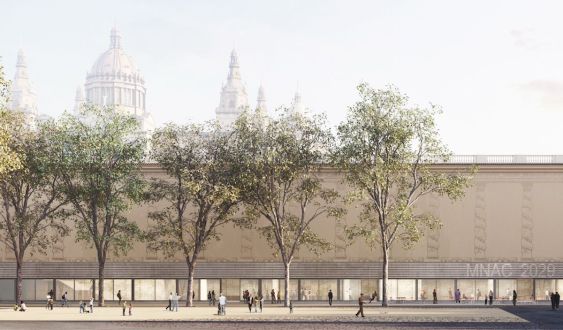
To put art in the light. This is the idea that guides the expansion project of the Museu Nacional d'Art de Catalunya (MNAC), conceived by the architecture studios HArquitectes and Christ & Gantenbein. A light that functions as a metaphor, but also as an architectural principle: it symbolizes transparency, open spaces, accessibility, and connection with the city. But it also expresses a deeper cultural ambition: to reveal the entirety of the museum's collection and, with it, to explain the complete journey of Catalan artistic history. A narrative that until now remained hidden in the shadows of the MNAC's warehouses, unable to see the light due to the exhibition limitations of the current museum.
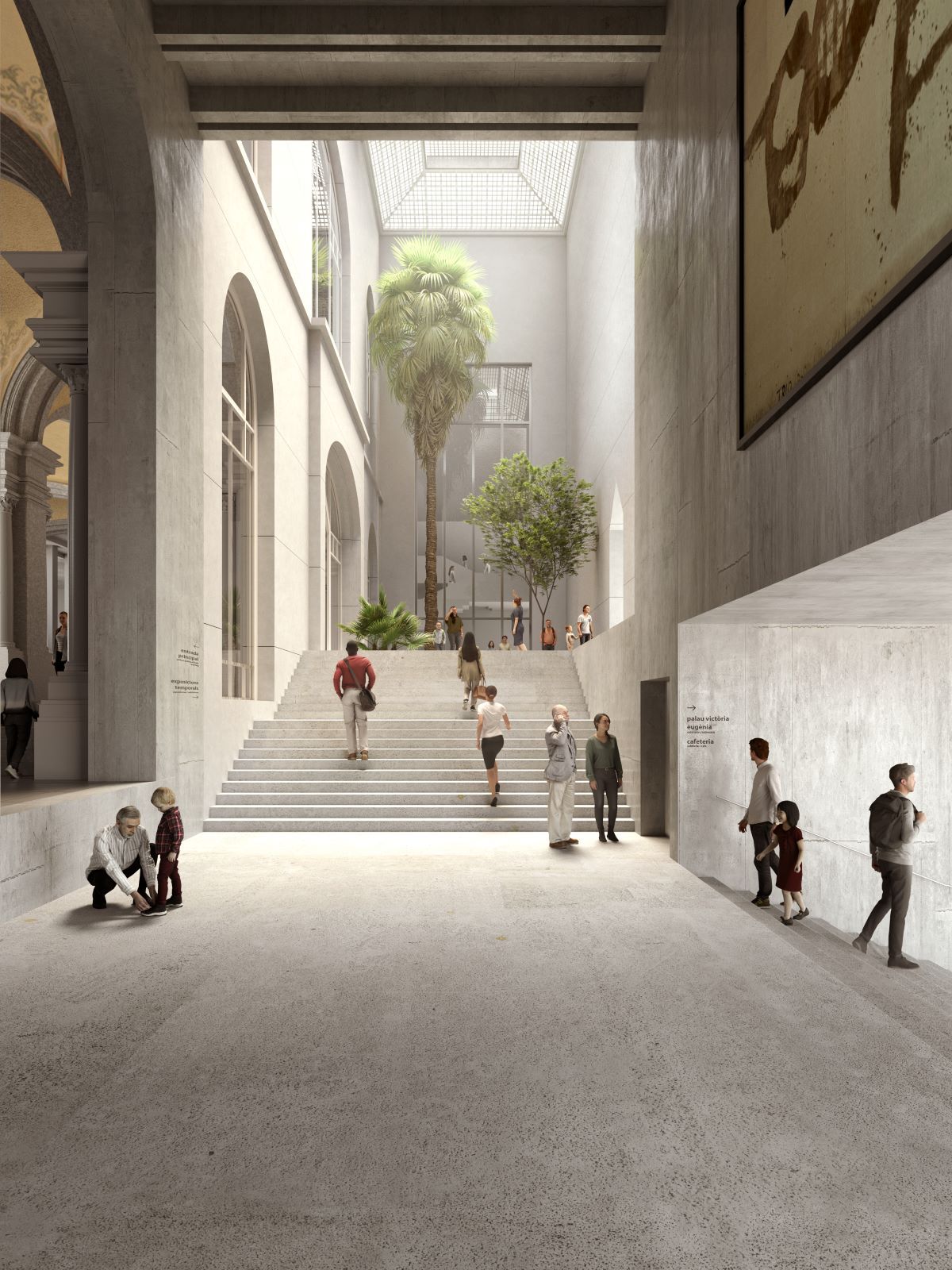
The change will not be minor: when the expansion project is finished, the MNAC will go from its current 49,000 square meters to more than 71,000. The key piece of this ambitious expansion will be the rehabilitation of the Palau Victòria Eugènia, a work by Josep Puig i Cadafalch, which will be integrated with the Palau Nacional through a covered passage that will turn both buildings into a single museum.
This new space will allow for the incorporation of more than 22,000 square meters of exhibition area. With an estimated budget of 112.6 million euros, the calendar sets 2029 —coinciding with the centenary of the Barcelona International Exposition of 1929— as the moment when the transformation should become a reality. The first phase of the works, scheduled to begin in the first quarter of 2028, should culminate in 2029.
"With the expansion, the MNAC will fill its almost 15,000 square meters with previously invisible Catalan art"
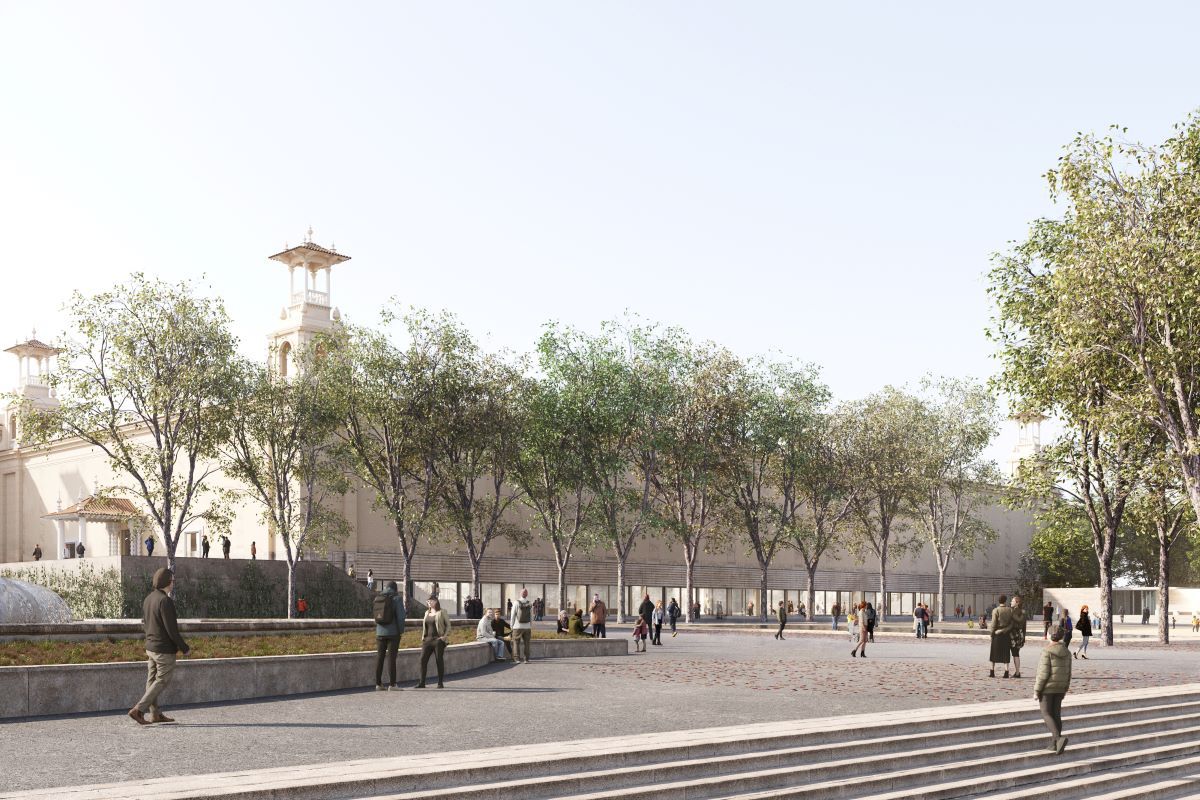
Preserving the past, adapting it to the present
Despite the magnitude of the expansion, the project responds to a clear premise: to intervene as little as necessary to preserve the heritage value of the Palau Victòria Eugènia, maintaining its original forms. A strategy that responds, according to Pepe Serra, to one of the four great values that define the project: sustainability. The director of the MNAC has also highlighted the other fundamental principles of the expansion: public service, a national project —though rooted in Barcelona— and international projection from a local perspective, as the museum's collections, especially those of Romanesque and Modernism, have a relevance that far exceeds the Catalan sphere.
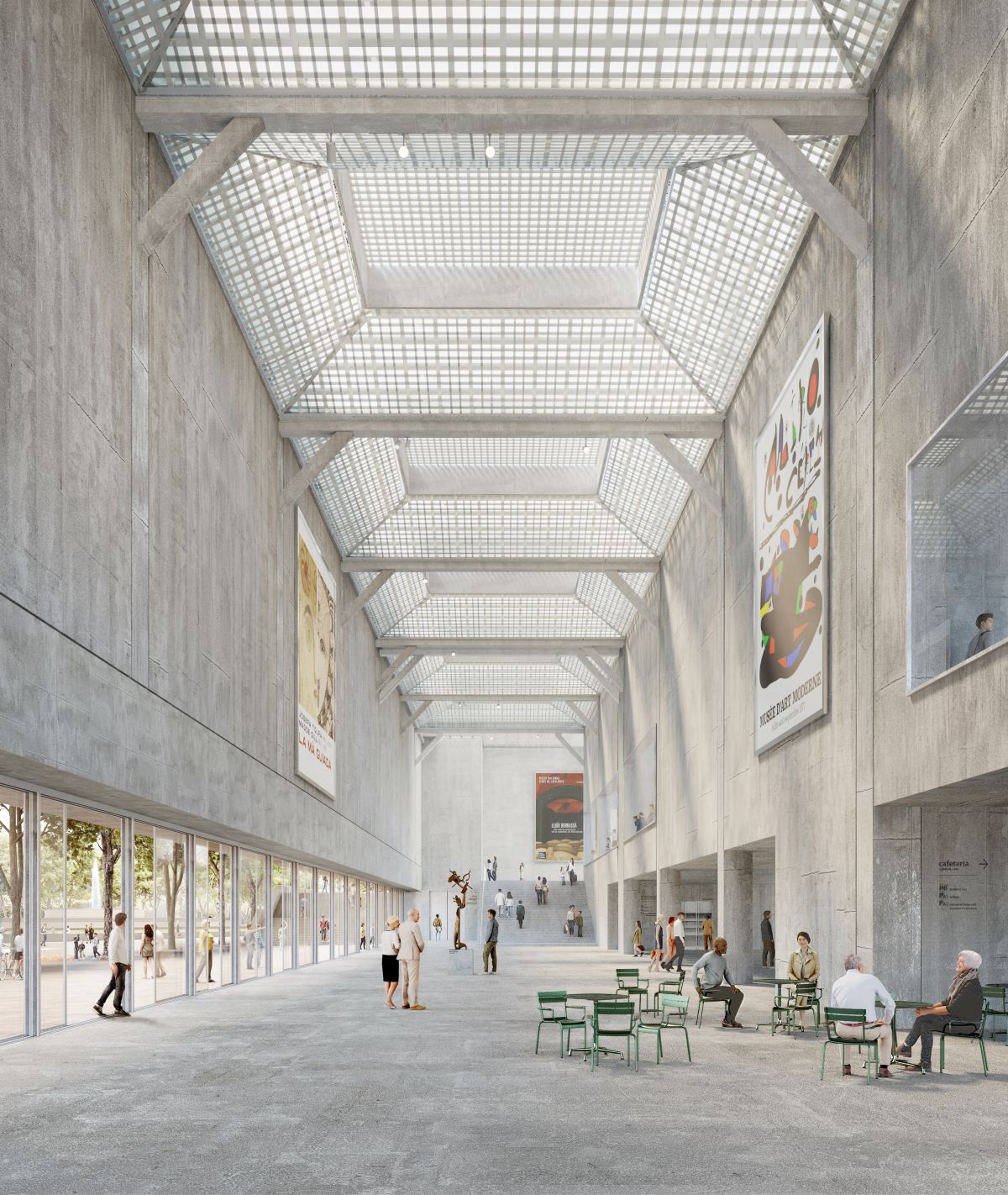
One of the central elements of the project will be natural light: the works will be exhibited under the skylights of the roof, while the tour will be reserved for the darker areas of the pavilion. In parallel, specific interventions will also be carried out in the Palau Nacional —current headquarters of the MNAC— to resolve existing deficiencies, especially in terms of accessibility between some of its levels, and to introduce functional improvements.
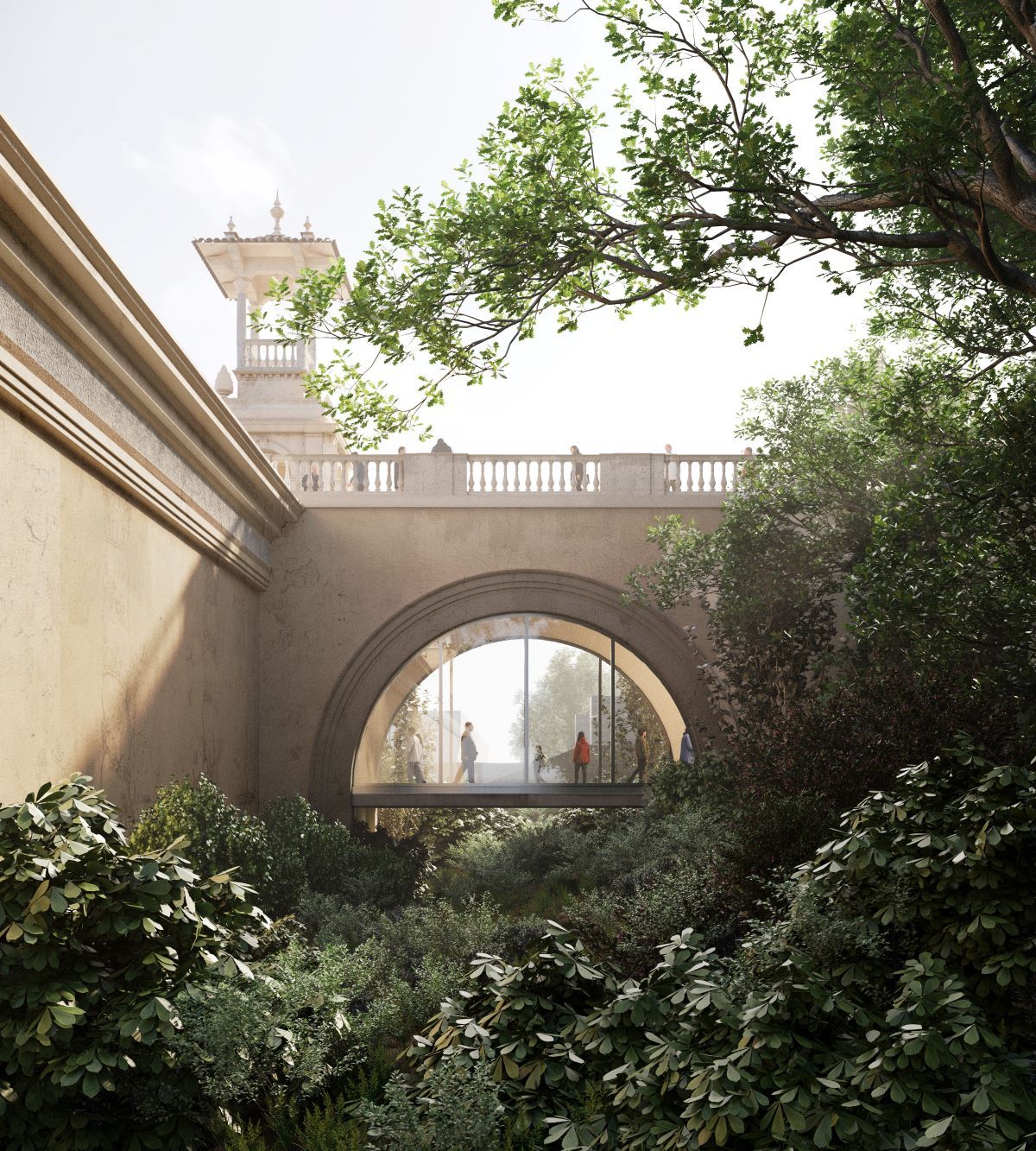
Exposing past centuries to rethink the 21st-century museum
The expansion will also entail a visible change in the museum's relationship with the city. The new main entrance of the Museu Nacional d'Art de Catalunya will be located next to the Palau Victòria Eugènia, with a large glass facade open to Plaça Carles Buïgas, next to the Font Màgica de Montjuïc and in front of the Barcelona Pavilion and CaixaForum Barcelona. "The ambition is to stretch the city into the museum", summarized Josep Ricart, founding partner of HArquitectes, during the project presentation. The idea is to turn the museum into an extension of public space: a civic square that connects more directly with urban life. In this way, the MNAC also faces a historical challenge: overcoming the feeling of distance often generated by crowning the Montjuïc mountain.
For this reason, the expansion is simultaneously past and future. Past because it culminates the foundational project that the museum's first director, Joaquim Folch i Torres, had already envisioned when in 1934 he conceived a great national art museum for the country. However, subsequent historical events —the Spanish Civil War and the dictatorship of Francisco Franco— interrupted that plan and the museum was divided into two buildings, with collections distributed between the Palau Nacional and the Parc de la Ciutadella. Although the reunification in the Palau Nacional in 2004 was an important step, space limitations left out of the narrative the latest generations of Catalan artists and creators, fundamental to explaining the country's cultural history.
Urtasun: "Culture is the journey that allows us to understand where we come from"
The Palau Victòria Eugènia will allow the exhibition of the large collection of 19th and 20th-century art that has usually been relegated to the background at the MNAC. In fact, one of the main novelties of the expansion will be the systematic incorporation of art from the second half of the 20th century, practically absent today in the museum's halls. With all this, the museum wants to become a "true home for artists", also approaching contemporary creators. As highlighted by the Minister of Culture, Ernest Urtasun, the function of museums is precisely that: to become meeting spaces between eras and artists. "Culture is the journey that allows us to understand where we come from, and museums are the spaces that allow us to delve into this journey."
A new museum for the third life of Montjuïc
The expansion of the Museu Nacional d'Art de Catalunya is part of a much broader project to transform Montjuïc for the centenary of the 1929 Barcelona International Exposition. The mountain faces its "third life", after the great urban transformation of 1929 and the 1992 Olympic Games, which revitalized a large part of the area.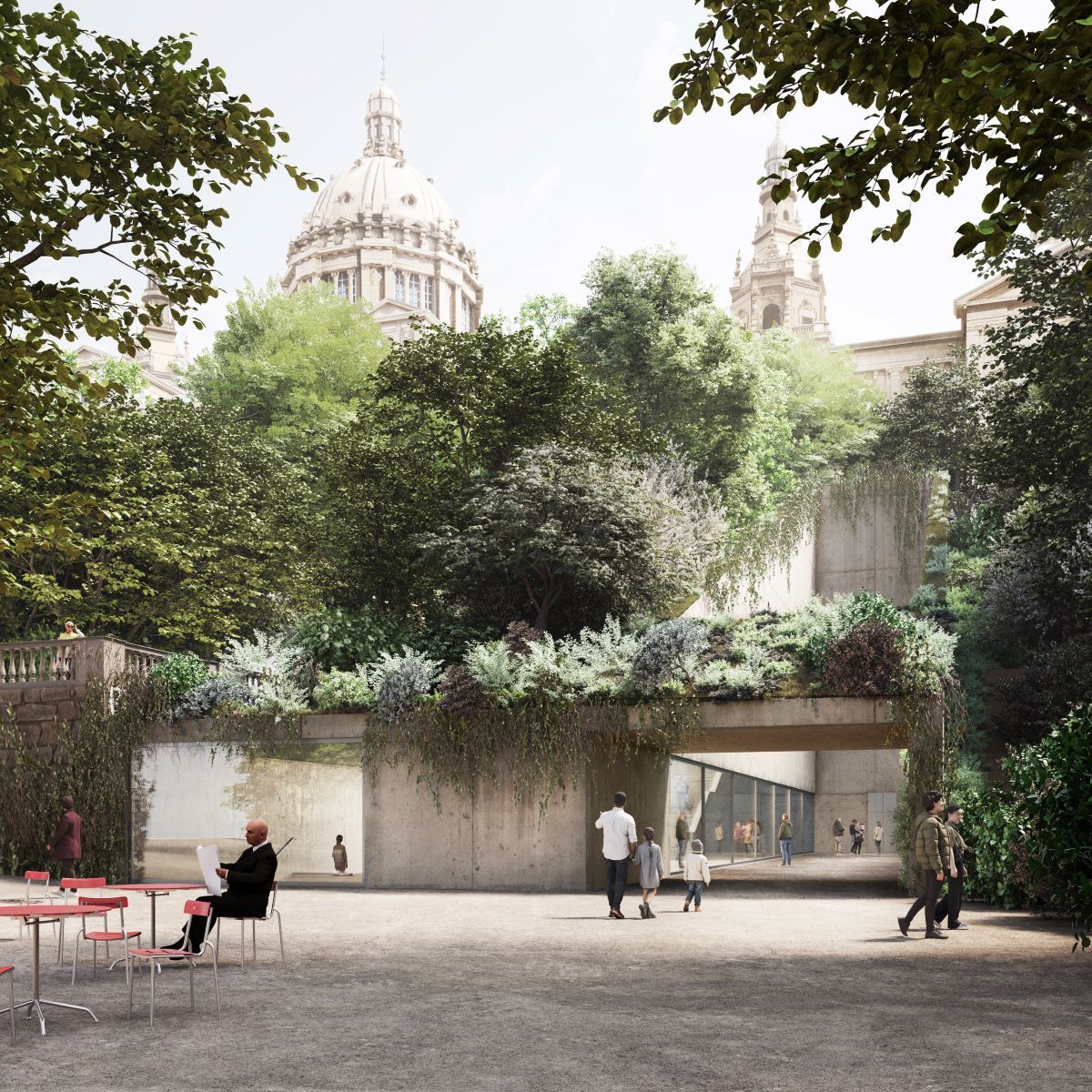
In this "third life", Barcelona wants to turn Montjuïc into a new metropolitan hub, renovating emblematic spaces, boosting surrounding neighborhoods, and improving connectivity with projects such as the extension of metro line L2. In total, the planned actions will involve an investment of nearly 2.8 billion euros until 2035.
In this new stage, the cultural pulse will play a central role: "a new MNAC for a new Montjuïc," summarized the mayor of Barcelona, Jaume Collboni. But the MNAC is not the only piece of this new cultural framework, as it shares its environment with institutions such as the Fundació Joan Miró, the Barcelona Pavilion, CaixaForum Barcelona, the Museu d'Arqueologia de Catalunya, the Teatre Lliure, and the Mercat de les Flors.
The relevance of the project is such that the president of the Generalitat de Catalunya, Salvador Illa, has placed the expansion of the MNAC at the level of other major strategic projects: "We are facing one of the great country projects, of the same importance as the Sagrada Família, the Catalunya Media City, the transformation of the Fira de Barcelona, or the La Sagrera station".
"Add The New Barcelona Post as your preferred Google source for free
Stay informed with the latest news.