
What is or what should cava be? A gastronomic wine of the highest category or a product designed for toasting and accompanying life's main celebrations? Does this dichotomy exist between gastronomic cava and cava for celebrating? Should current production volumes be defended or should the number of bottles be reduced and only cavas that can compete at the top of the international sparkling wine pyramid be bet on? There is no clear consensus in the sector on this point, although there is an awareness that cava is at a key moment in its history, as was evidenced this week in one of the round tables held at the Cava Meeting congress, organized by the Cava Regulatory Council in Barcelona.
Moderated by British master of wine Sarah Jane Evans, the session heard forceful messages about the future of cava and made visible the two souls that still persist among producers, despite recent changes in regulations, which have made historical demands such as zoning a reality, that is, the possibility of identifying the origin of each bottle of cava on the label. "Cava is at a totally decisive moment for what it can or cannot become in ten years. We need to reinvent ourselves, we are living a crucial moment," said Jaume Vial, commercial director of Caves Mestres.
In his opinion, the sector must think about the future and, especially, about being attractive to the new generations of Penedès winegrowers, "highly educated people, eager to do things well and who do not know if the wine they will make will be called cava or will be given any other name." "We need them to be here, with us, that's why the Cava Designation of Origin must choose where it wants to focus," said Vial. In his opinion, "the focus must be on gastronomy," but he criticized that, until now, all the communication that has been done in the sector "has been very dispersed," since what has been done "is to try to please everyone, something that is not good for the cava brand."
This diagnosis by the representative of Mestres was fully endorsed by the Barcelona-based master of wine Álvaro Ribalta who, after more than fifteen years living in London, lamented that cava is barely present on the menus of British restaurants because in the country this product was positioned in supermarkets as a low-priced sparkling wine and not as a high-quality wine. "If what is wanted is to pair cava with gastronomy, one must aim for excellence in every sense, even if going in that direction impacts volume," Ribalta reflected. "Cava should do less and better, and not want to compete with all the wines in the world. The current large volumes, I don't believe, will be sustainable in the long term. What needs to be done is to raise prices, not make more volume," he considered.
Another great expert, Juan Manuel Bellver, director of Lavinia, also expressed his concern "about how difficult it is to sell qualitative cava at its fair price," a situation that is a direct consequence of the fact that high-end cavas coexist in the market with very cheap cavas. "Cava is a wine that has suffered industrialization; the prices we see in supermarkets do not correspond to the quality of the product inside the bottle, it is sold too cheaply," he warned, after pointing out that "for cheap drinks we already have beers or soft drinks." "Cava should be a grandeur," Bellver emphasized.
Some of these opinions were countered by the CEO of Freixenet, Pedro Ferrer, who totally denied the existence of a dichotomy between celebratory cava and gastronomic cava. "There is no dichotomy. Gastronomy and celebration are two totally complementary elements, both can coexist in a bottle of cava," said Ferrer, who recalled an old group commercial that used the festive slogan of A party in every bottle.
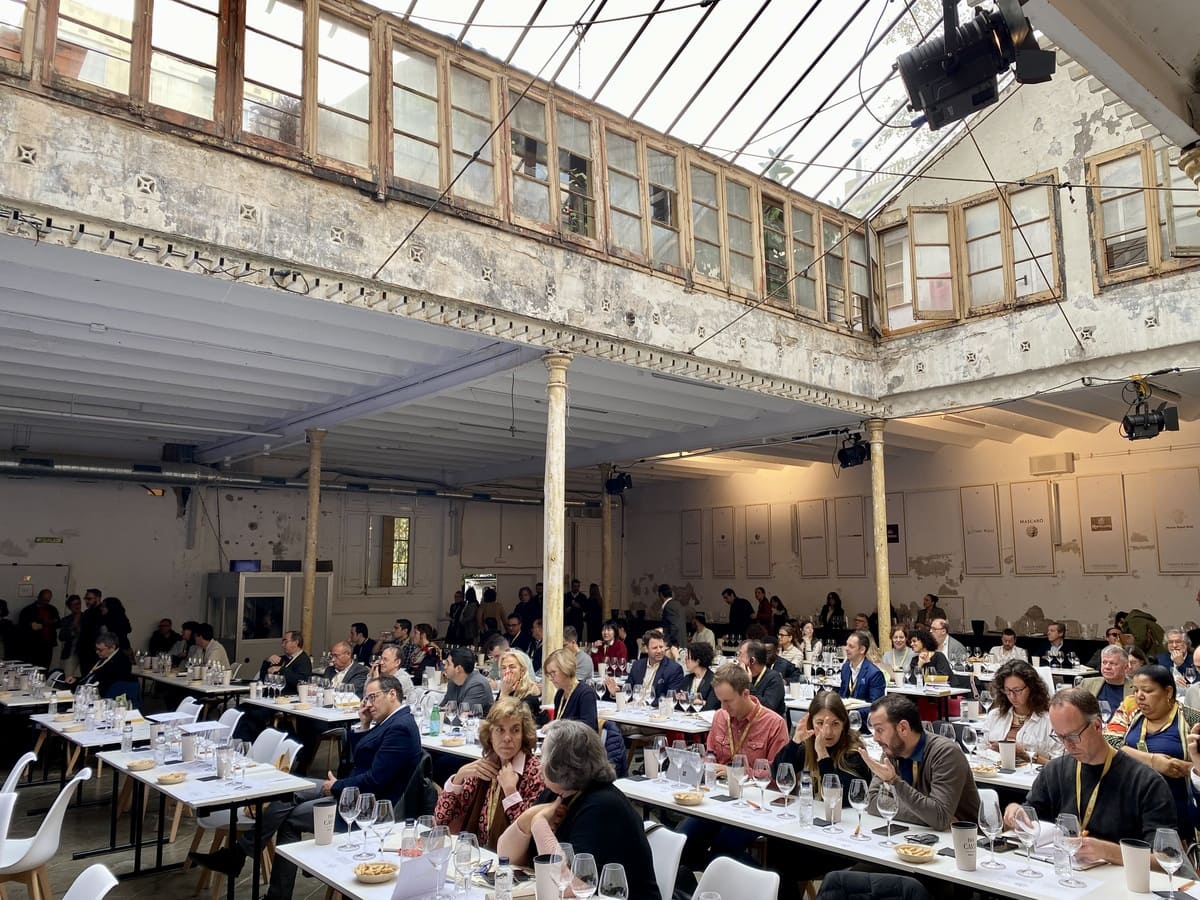
According to the representative of the largest company in the sector, one must think about the consumer. "Do we know what the consumer wants?" he asked, adding that if the consumer doesn't buy, everything else is of little importance. He also stressed that, as in other sectors, brand value is very important, in allusion to the permanent effort Freixenet has made to project and enhance its brand worldwide. "If you invest in brand, you get value. And we see how today, clearly, in the cava sector there are great brands. This is the way," he affirmed.
We need to believe in ourselves more: have more ambition
Precisely, at the round table there was also a great expert in brand building, Marc Morillas, CEO of the Morillas consultancy, who criticized the sector for not knowing how to sell itself enough and not truly believing in its potential. "The DO Cava does not believe in the potential it has in the world," he considered, after asking the sector for "more ambition and more communication" to explain the uniqueness of cava to the world. "There are many areas in the world that believe in it more than us. We have potential, but we don't believe in it; it's something very Catalan," he added.
Pedro Ferrer: "Gastronomy and celebration are two totally complementary elements, both can coexist in a bottle of cava"Morillas recommended focusing on the how and not so much on the what: "We are bad at selling. We tell few stories." The brand expert recommended asking before communicating what the consumer thinks of the cava brand, an opinion shared by the commercial director of Mestres. "The first question we should ask ourselves is whether we can all coexist or not. And, for that, we need to know who our consumer is, to delve deeper into knowing who buys from us," said Vial.
The CEO of Juvé & Camps, Meritxell Juvé, put on the table the need to "invest more resources and efforts in the upper part of the pyramid, as it is the best way for the world to know what we can do." Juvé was pleased that the Regulatory Council has put an end to historical pending issues, such as zoning and the new segmentation by categories (cava de guarda, de guarda superior reserva, de guarda superior gran reserva and cava de paraje calificado) and has also created the figure of the integral producer. "At Juvé & Camps we feel very comfortable with this new regulation, because it allows us to talk about the territory," she pointed out.
For his part, Pedro Ferrer was against the idea of putting all the sector's efforts into the highest ranges. "Very prestigious and high-priced cavas help pull the entire sector, but I do not agree with creating value only for the top of the pyramid," said the CEO of Freixenet, who recalled that in the Penedès there are more than 6,000 winegrowers and that it is necessary "to create value for everyone" to give viability to all the hectares of vineyard currently in production.
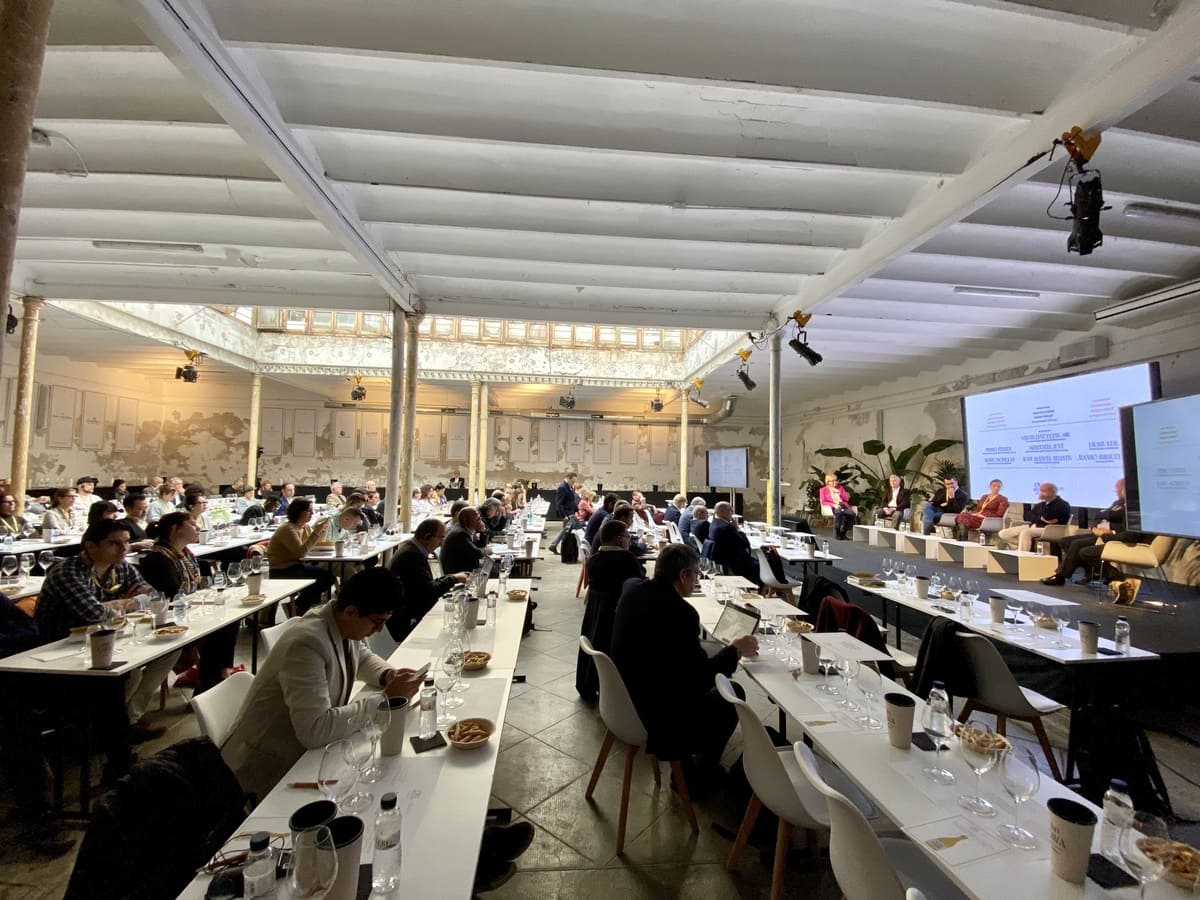
The director of Lavinia agreed with Ferrer, stating that he does not see "a dichotomy between gastronomy cava and celebration cava." "In champagne, both worlds also coexist, but we have to know what we are playing at," he pointed out. He also insisted on the need to communicate better. "How can it be that these days at the Cava Meeting we have discovered excellent brands that we didn't know?" he wondered. According to Bellver, new sommeliers "are eager to discover new wines that surprise them," so cava has enormous potential for growth.
Unity, key to the future of the sector
"It is a general feeling in the sector that cava is experiencing a moment of inflection," said Meritxell Juvé, who asked her cava colleagues to believe "that cava can do great things." "It is not just a matter of communicating better. There must be unity in the sector, a clear commitment from all wineries to work unanimously and highlight the potential of the terroir, grapes like xarel·lo, and long aging periods," she stated.
"At Juvé & Camps, our cavas take five years to reach the market. There aren't many wines in the world that take five years! Are we aware of this? The sector must clearly commit to moving upwards, to producing wines in the highest categories. The pyramid must be increasingly inverted. It is time to do it," Juvé asserted.
Meritxell Juvé: "The sector must clearly commit to moving upwards, to producing wines in the highest categories. The pyramid must be increasingly inverted"Where will the cava sector be in ten years? "It will depend on us and the work we do," said Pedro Ferrer, who claimed the need "to be brave, creative and innovative," as his father was in his day when he internationalized the Freixenet brand and "revolutionized the quality of cava" with the introduction of technology such as stainless steel tanks and pneumatic presses. "We can compare climate change with the phylloxera crisis. Cava appeared after phylloxera: we knew how to turn a problem into an opportunity. And then we had the great vision of turning a local product into one of the greatest export successes. In the future, we must again be brave, creative and innovative," concluded the CEO of Freixenet.
Add The New Barcelona Post as your preferred Google source for free
Stay informed with the latest news.
