[dropcap letter="N"]
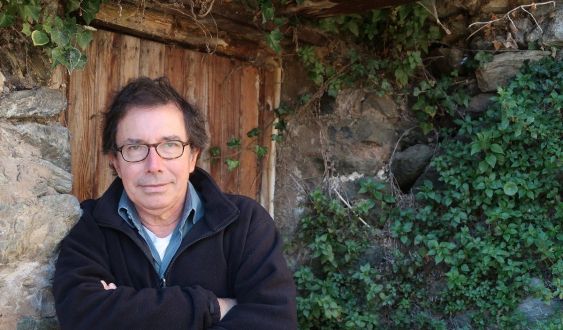
o quiere ser contemplado como poeta el nuevo director de arte de la Fundació Vila Casas, "solo soy poeta cuando escribo poesía". Àlex Susanna (Barcelona, septiembre del 57) ha sido (o sigue siendo) profesor, editor, empresario, curador de arte, gestor cultural, traductor, articulista, etcétera. No se siente cómodo con la pregunta (un poeta al frente de una colección de arte).
"Jamás he vivido la creación poética como una escisión de la gestión cultural, sino al contrario, son experiencias que se comunican. El sentido de la realidad que me ha dado ser empresario, al frente de una editorial (Columna), y gestor cultural (ha pasado por la Agència Catalana de Patrimoni Cultural, Institut Ramon Llull y Fundació La Caixa), ha afinado mi mirada poética. Estamos acostumbrados a una visión estereotipada y errónea del poeta. Gil de Biedma, por ejemplo, fue secretario de la Compañía de Tabacos de Filipinas. Yo solo soy poeta cuando escribo, algún poema a lo largo del año, aunque el resto del tiempo esté entrenando, y esto es leyendo, cultivando la mirada, el espíritu; y a veces los poemas son interpretaciones de lo que veo, leo o escucho, de una ópera, de una obra de arquitectura, una pintura… Desconfío de las parcelas y estoy en relación constante con todos los ámbitos de la creación artística".
[subscribe_newsletter_esp]
Primera y obligada cuestión en tiempos de pandemia: ¿es hoy el arte más urgente que nunca? "No seamos ilusos, por mucha razón que creamos tener, me temo que la cultura va a ser la gran damnificada, aunque esto hoy nos sorprenda más que nunca, porque durante el confinamiento se ha revelado como un refugio para todos. Ha jugado un papel muy generoso, ofreciendo todo su contenido gratuitamente de modo virtual. Pero o esto se consolida, porque los gobiernos entienden que es prioritario, o pronto nos encontraremos en un desierto cultural". Un lugar oscuro y desolador, el mundo sin arte, el mundo sin cultura. "Hace ya dos décadas que el pensamiento social admitió que la cultura es el cuarto pilar del bienestar social, comparable a la sanidad y la educación. La experiencia cultural es un espacio compartido, la cultura nos religa, es indispensable para construir una sociedad compacta. Pero no soy optimista respecto a nuestros gobiernos".
Let's not be deluded, no matter how much reason we think we have, I fear that culture is going to be the great victim, although this surprises us more than ever today, because during confinement it has revealed itself as a refuge for everyone.People, who came out of confinement eager for that cultural experience, did they notice it? "Yes, of course.These last months we have had record numbers of visitors. We had considered postponing the scheduled exhibitions, but we made an extra effort and have had a historic reception:people need cultural nourishment, shared cultural experience". That contributes to religare(which means to bind together, Latin origin of the word religion), even if one goes alone? "Yes, even if one goes alone."
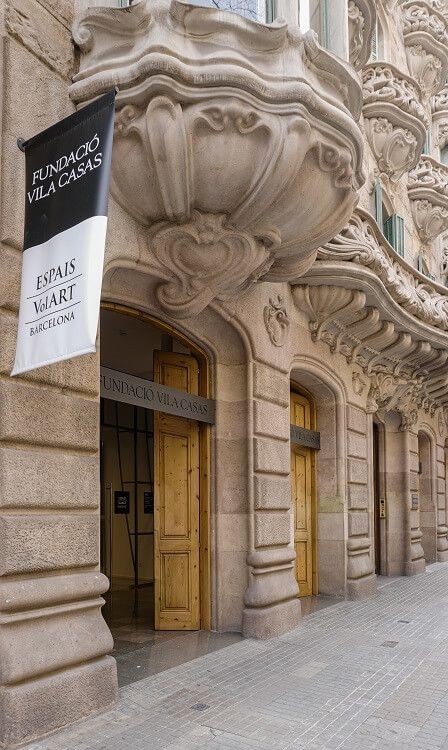
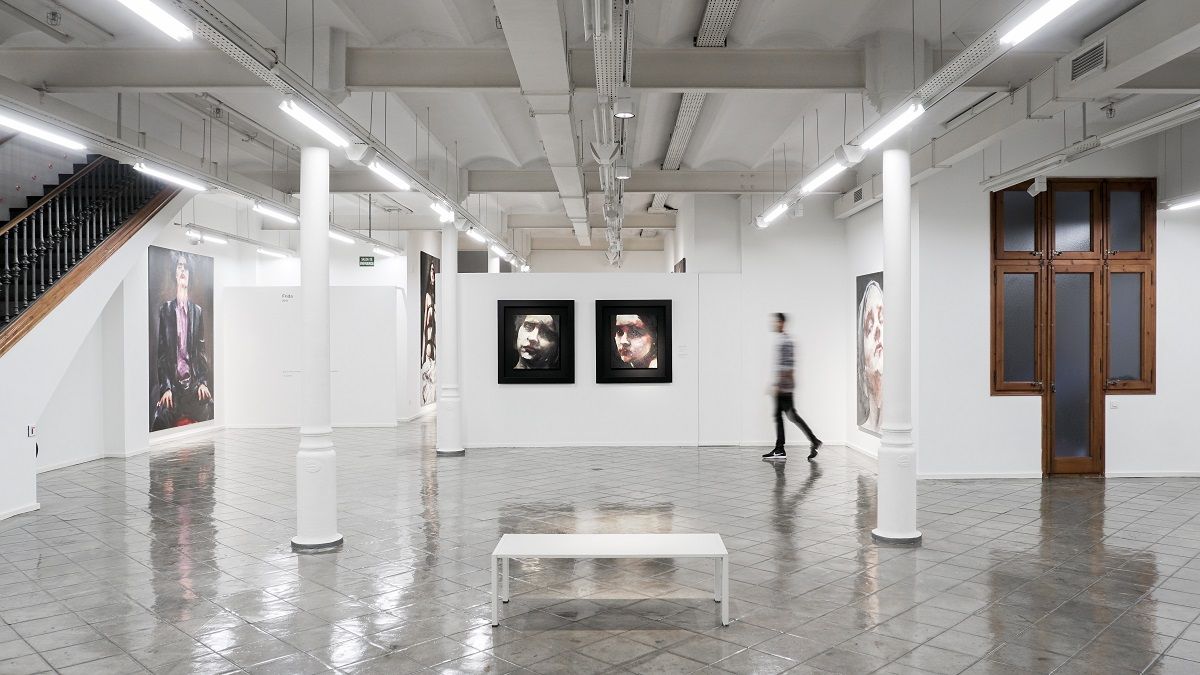
On October 5, the 20th anniversary of the Fundació Vila Casas, the exhibition Càpsules de confinament: art i pandèmia a Catalunya was inaugurated, which is the real embodiment of the project they carried out with 100 artists through social media during the three months of confinement.
Don't you think that such a brutal experience as this lockdown needs time for reflection, a distance, to be artistically interpreted? "This project is an X-ray of the first reaction to the onslaught, which left us in a state of shock. Later, with time, one begins to position oneself in front of reality, but during those first weeks we were all overwhelmed by the experience, like Fabrizio in The Charterhouse of Parma. We saw death but little or nothing else, and for culture and art to become a sounding board for that makes perfect sense. In these works we can rediscover and listen to ourselves. They are works created under the influence of a shared experience, which is part of all of us; symptomatic of something we still don't know what it is, and from which we are reconstructing ourselves. Without canonical intent, we reached 100 capsules from artists of all disciplines and aesthetics, ages and backgrounds. Behind each work there is a very lived story, like that of Pasqualotto, who began to draw his mother's tableware the day he ran out of paper, or artists who did unrecognizable things for themselves, like Gloria Muñoz who played with chance, or Daniel Berdala, who was sedated and intubated and sent a figurative work, something he had never done before, etcetera."
Something like this repositions us within our own limits: it is evident that we are very lost and incompetent to face something similar, but assuming it is to make a cure of humility that in principle can be useful for somethingWould you publish a poetry collection about the pandemic? I insist, don't you think everything that is being published as a conclusion about an event that is still happening, a present about which we know nothing, still hostages of a global blindness, is rushed? "I wrote every day, aware of living one of the most dramatic and global experiences of our lives. Something like this resituates us within our own limits: it is evident that we are very lost and incompetent to face something similar, but assuming it is a cure of humility that in principle can be useful. As Innerarity says: 'To learn or not, that is the question'."
Artists' studios, writers' desks, darkrooms are buzzing frantically, but will the fabric and collaboration work to get all this out after the viral devastation? How, for example, would you convince a public power or private capital, from your quality and experience as a manager, of what we were talking about before: the urgent need for the cultural event? "The sector is in a very worrying situation and everyone, in the private sphere, tries to elucidate how they will be able to get out of this. As for the public, right now it is urgent to provide resources to the health sector, it is indisputable, and therefore I doubt that governments will have an effective response capacity, that they consider it a priority. The system of public cultural facilities will enter a crisis from which it will be very difficult to get out. It is difficult to give a quick and effective response to the situation in which we will find ourselves."
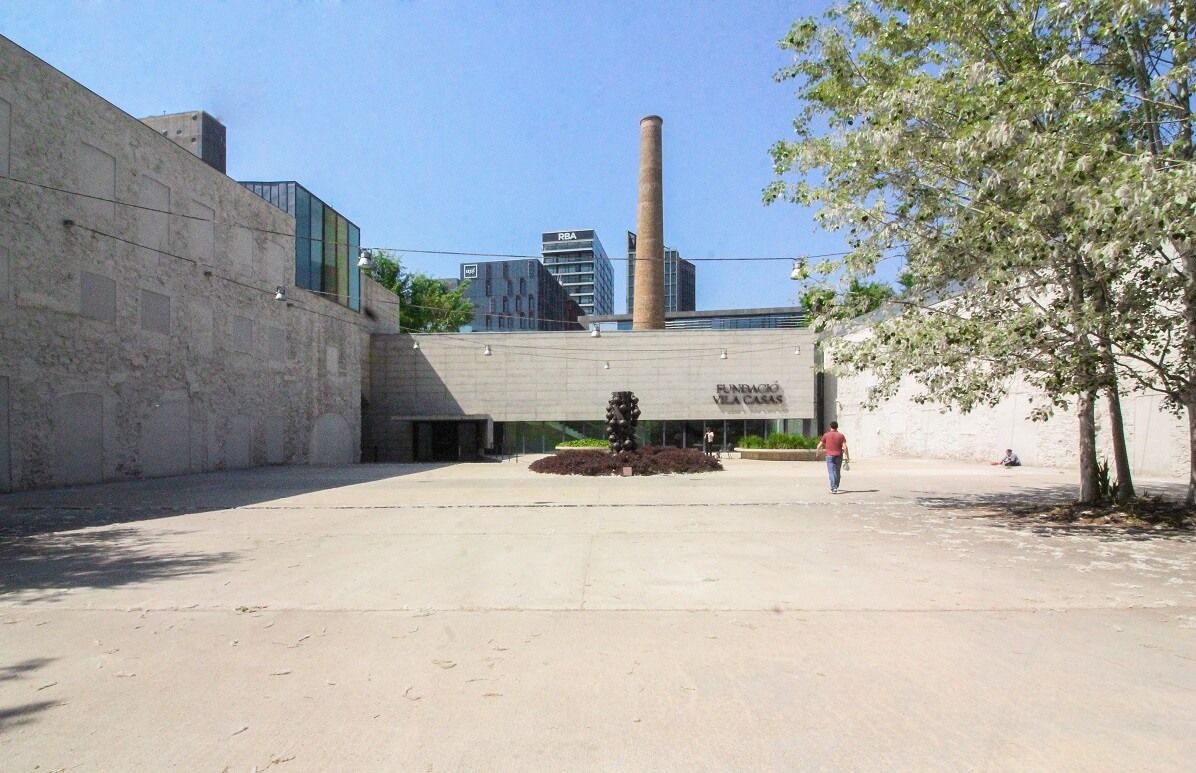
Àlex Susanna speaks aware of being at the head of a "privileged" institution, which has been able to celebrate its photography awards and its 20th anniversary, and to have maintained some 18 scheduled exhibitions. All around contemporary Catalan creation, exclusively. "This is a foundation that responds to the characteristics of a collection and the will of its collector, who is Antonio Vila Casas, and all its museums and actions pass through the sieve of this commitment. Only the photography collection escapes these premises (being exclusively Catalan), perhaps because it is a younger and more mobile artistic medium."
I ask him in his capacity as director and also a transversal artist, who advocates for the interaction of disciplines: isn't miscegenation synonymous with richness? "That will for miscegenation or exchange would require an expansion of resources. I believe that public museums are the ones that must contribute to the internationalization of Catalan artistic heritage. We supplement their resources in terms of art generated here. But Antonio, as a good businessman, does not want to disperse. He is interested in his great commitment to contemporary Catalan creation, which through the ItinerART program takes the collection to small exhibition spaces throughout Catalonia; and yes, once a year we exhibit at the Sorbonne."
Not only Barcelona, but quite a few cities that were cultural capitals will cease to be so if this is not a priority for governments. I am concerned about the short and medium-term future, but not only for Barcelona.And so we arrive in Paris. Barcelona, which notably did not happen in the rest of Spain, did have an important artistic avant-garde before the Civil War, "in the interwar period, Barcelona did not look towards Madrid, but towards Paris: Picasso, Picabia, Miró, Dalí, Torres García, Gargallo, Julio González, Rusiñol, Casas… And many of them preferred to stay there, of course."
Barcelona was an artistic reference, is it still?, is it still the beacon it once was? "Not only Barcelona, but quite a few cities that were cultural capitals will cease to be so if this is not a priority for governments. I am concerned about the short and medium-term future, but not only for Barcelona." What has happened in Barcelona, Àlex Susanna? "We continue to be a cultural capital in terms of theatrical programming, and a first-rate one in terms of music, from classical to the most innovative, from the new Palau to Sónar or Primavera Sound, and in terms of publishing, I don't think any city has snatched the publishing capital status from us."
And if we talk about art as transversal creation and refer to the last decade? "Yes, it has lost a lot as a result of the 2008 banking crisis, because the Catalan economic system was structured through savings banks, whose social works were the great mainstays. Yes, the exhibition offer of the last 10 years is not what it used to be, it is very limited. The exhibition fabric has been unraveling and today it is very fragile. But I am optimistic about the future promised by the network of Creation Factories. Creation continues to be produced, even if it is on the margins; there is a lot of creation of all kinds. What is in crisis is the official and systemic. Look at cinema, for example: there is no capacity for commercial cinema, but more auteur and documentary cinema is being made than ever before, we are witnessing an explosion and this is reason for hope. Or let's look at contemporary music: never before have there been such good composers with international projection, Héctor Parra, Raquel García Tomas (National Music Award 2020), Joan Magrané (Grammy nominee)… And poetry also runs through a series of venues, bookstores and festivals close to orality. There is a true creation being produced on the margins that is difficult to find in official channels, because it is disseminated through unexpected channels: it exists and is unstoppable".
Add The New Barcelona Post as your preferred Google source for free
Stay informed with the latest news.