Walking through the streets of the Eixample, on our beloved "panots" (pavement tiles), along the wide chamfers and through the new (and more than pleasant) superblocks, we find spaces that, day by day, raise their blinds to work for culture. These are the theaters of the Eixample. Cultural venues that work to contribute to increasing the creative and artistic fabric of our city with scenic proposals that move us, make us laugh, and make us reflect.
Today we will take a stroll through the Eixample, one of Barcelona's most representative neighborhoods, where we find great theatrical temples such as the Teatre Coliseum or the Teatre Tívoli that coexist perfectly with local and small-format venues like the Sala Atrium or the Teatre Eòlia.
Teatre Tívoli: the temple on the edge of Passeig de Gràcia
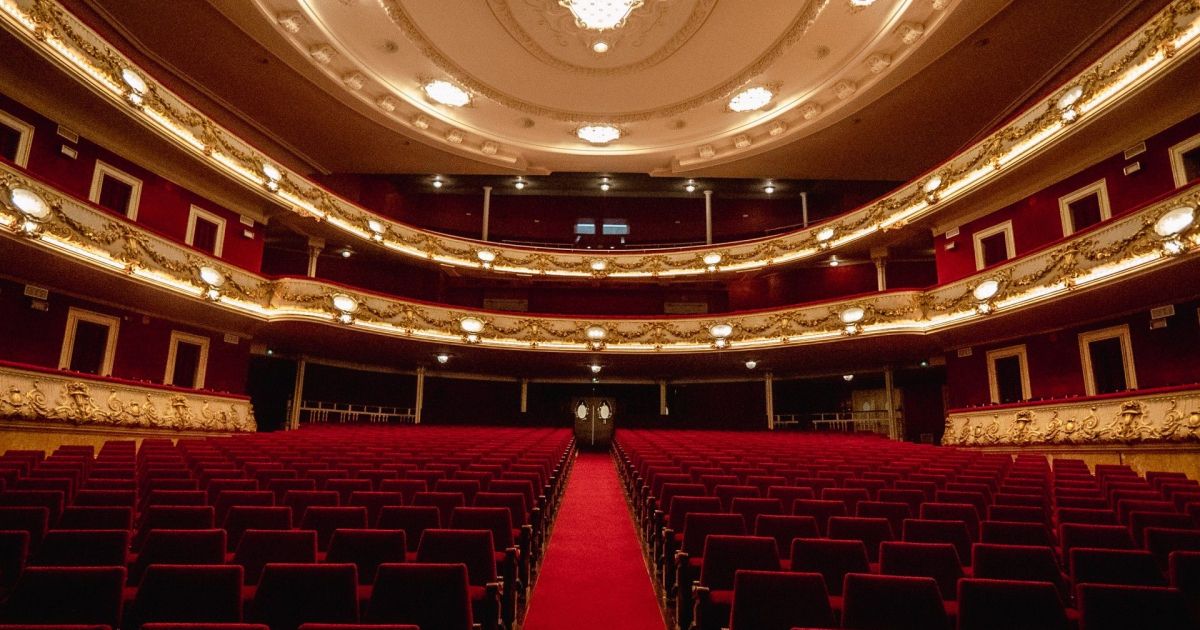
The Tívoli was inaugurated in 1919 and, although more than a century has passed, we are in front of a space that breathes theater, tradition, and elegance. For many years it was the home of cinema, zarzuela, and opera and, in fact, in its history we find milestones such as the debut of the Royal Shakespeare Company in Spain in 1984.

But since the nineties, it has become the stage par excellence for large international format musicals and text plays with a top-quality artistic team. From Ricardo Darín or Josep Maria Flotats to Bruce Springsteen have passed through its hall.
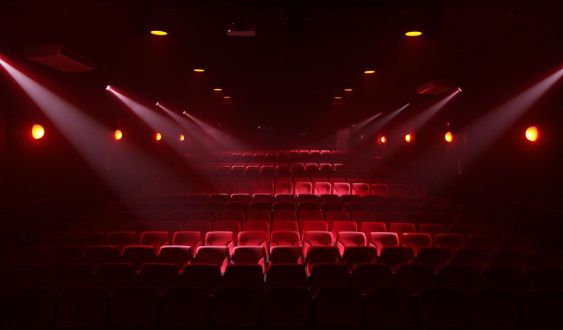
Even today, the Tívoli preserves that air of the last century: golden colors on the moldings, vegetal motifs, and an intense red on the seats that indicates that immense experiences take place inside. A curiosity that not everyone knows: lately its hall and bar host alternative small-format concerts in a most intimate atmosphere.
Coliseum: one hundred years of spectacle on the Gran Via
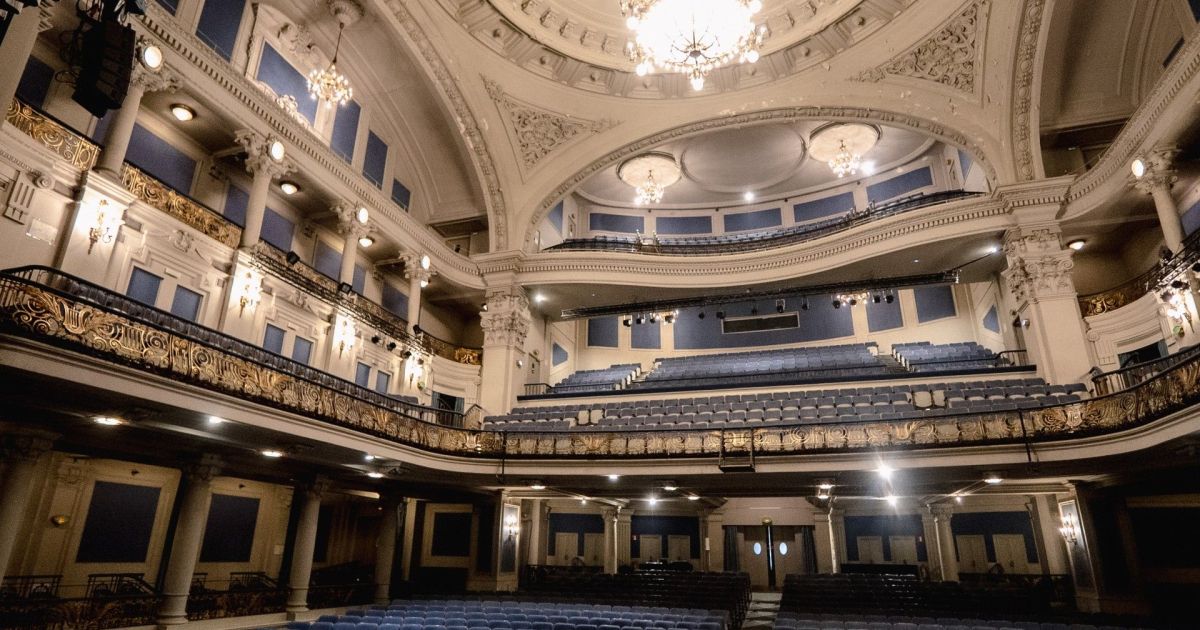
It is impossible to cross the Gran Via and not stop to look at the facade of the Coliseum. Inaugurated in 1923, this space was for decades one of the great cinema halls managed by Grup Balañá. Well-known artists such as George Clooney, Harrison Ford, or Pedro Almodóvar have passed through its halls, although from time to time theater was also exhibited, as is the case of Yerma by Núria Espert or the concerts of Joan Manuel Serrat.
When La Cubana stopped there with Cómeme el Coco, Negro in 2027, the Coliseum transformed and left cinema behind to become a full-time theater. Its auditorium seats up to 1,500 people who can enjoy a very varied program: from comedy monologues to great live shows. In addition, it keeps two very well-kept secrets: the bar on the first floor, located behind the famous light-bulb letters, and "La Cúpula," a space on the upper part.
La Villarroel: the stage for Catalan dramaturgy
If we talk about author's theater with capital letters, we must talk about La Villarroel. This venue was born in 1972 with a clearly working-class and committed vocation. Since then, the space has maintained its personality intact. Since 2005, it has been under the umbrella of the Focus Group and has the artistic direction of Tania Brenlle, who has worked to turn the venue into a great showcase for contemporary dramaturgy and, very especially, for Catalan creation.
Prominent names such as Ovidi Montllor, Raimon, Tricicle, Dagoll Dagom, Emma Vilarasau, or Clara Segura have passed through La Villarroel. Today, it boasts more than 250 premieres and a Critics' Award for best venue.
Sala Atrium: cult and proximity theater
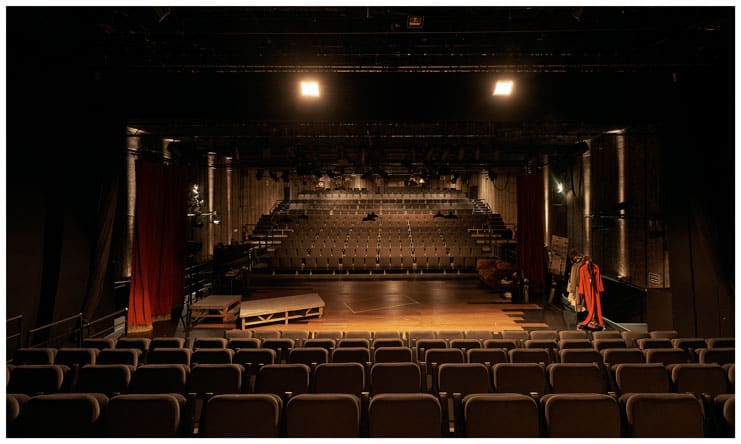
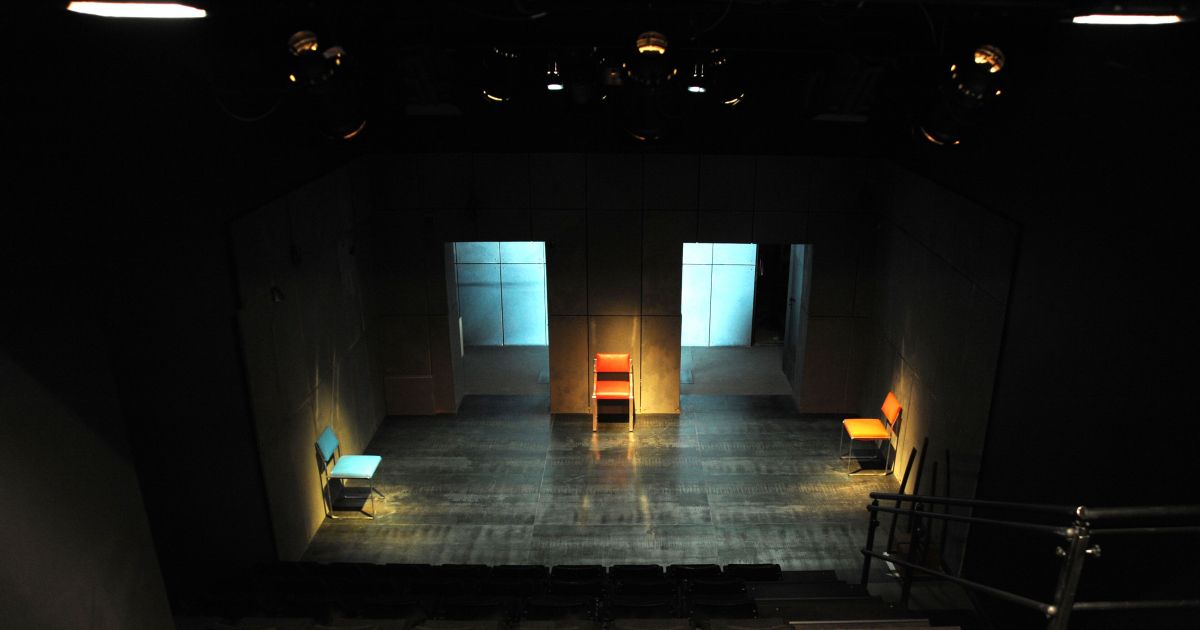
Founded in 2011 by Mireia Trias, Patricia Mendoza, Carlos Duran, and Raimon Molins, Sala Atrium is the perfect definition of proximity theater. The venue has only 54 seats, thus eliminating the distance between the audience and the stage, achieving an intimacy that few theaters can afford.
Furthermore, Atrium is not just a venue that rents its stage: it functions as its own laboratory. They have their training and rehearsal space for actors (l'Estudi) and produce their own shows, ensuring that everything they bring to the stage has a very carefully crafted and personal line. Its programming is committed to a type of author's theater, where debate and proximity to the artistic team are the main focus.
Teatre Gaudí: medium-format comedy and musicals
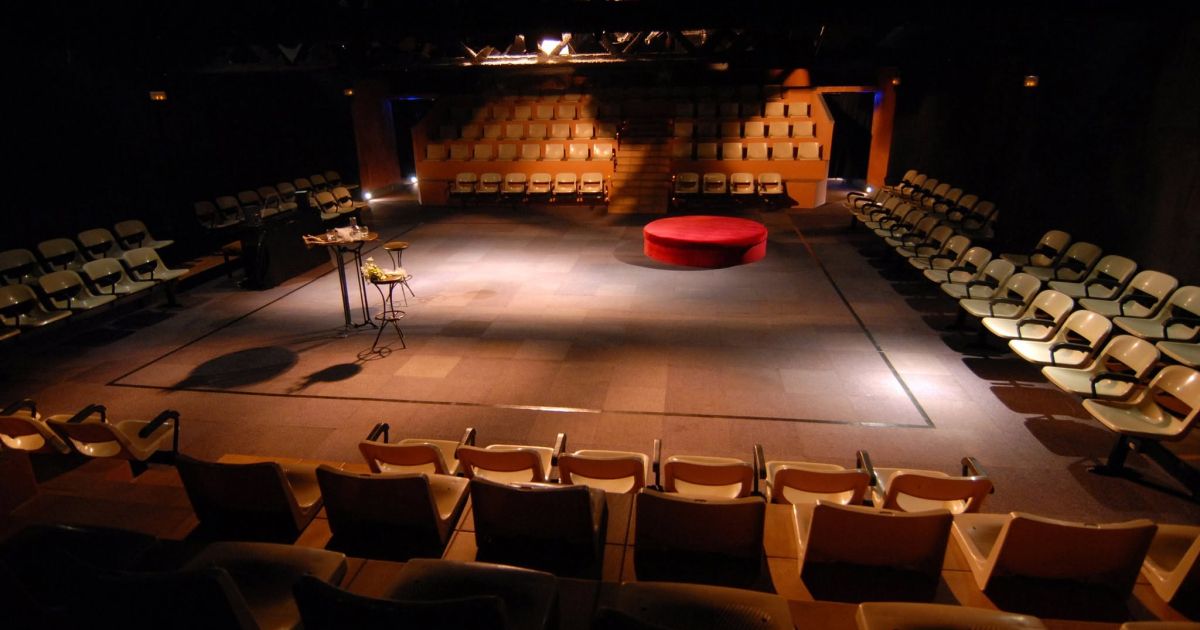
On Sant Antoni Maria Claret street is the Teatre Gaudí Barcelona (TGB), which has become an essential part of the billboard since it opened in 2008. The space has two halls: the Small one (Italian style, for about 40 people) and the Large one, which has the particularity of having a four-sided stage, which is unique in the city.
Gaudí has specialized in the production of quality musicals at competitive prices, without neglecting text theater or comedy. Since the autumn of 2024, the production company Buganvilia Creacions Artístiques (with Anna Carreño, Màrius Hernández, and Gemma Deusedas) has taken over the project to continue betting on fresh, Catalan, and committed programming.
Teatre Eòlia: the window to emerging talent
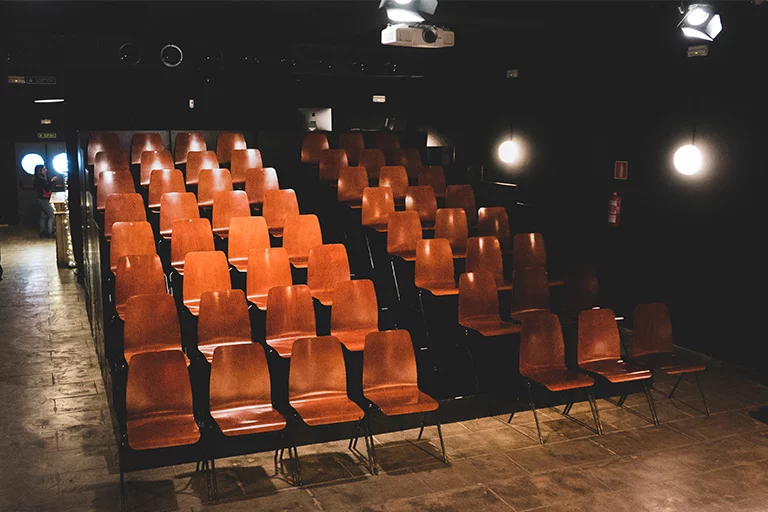
On Bailèn street, we find Teatre Eòlia, artistically directed by Rosa Galindo Solé. This venue has a direct connection with the Eòlia Higher School of Dramatic Art, one of Barcelona's most consolidated training centers. This completely defines its identity: the venue was created to be a showcase for this young talent.
The theater is a space designed for emerging creators and performers who are looking for a stage to try out new voices and different languages, outside the pressures of the commercial circuit. Its commitment goes beyond pure entertainment: it is a space designed to open debates on social inclusion, memory, and sustainability.
Eixample Teatre: comedy in the heart of the neighborhood
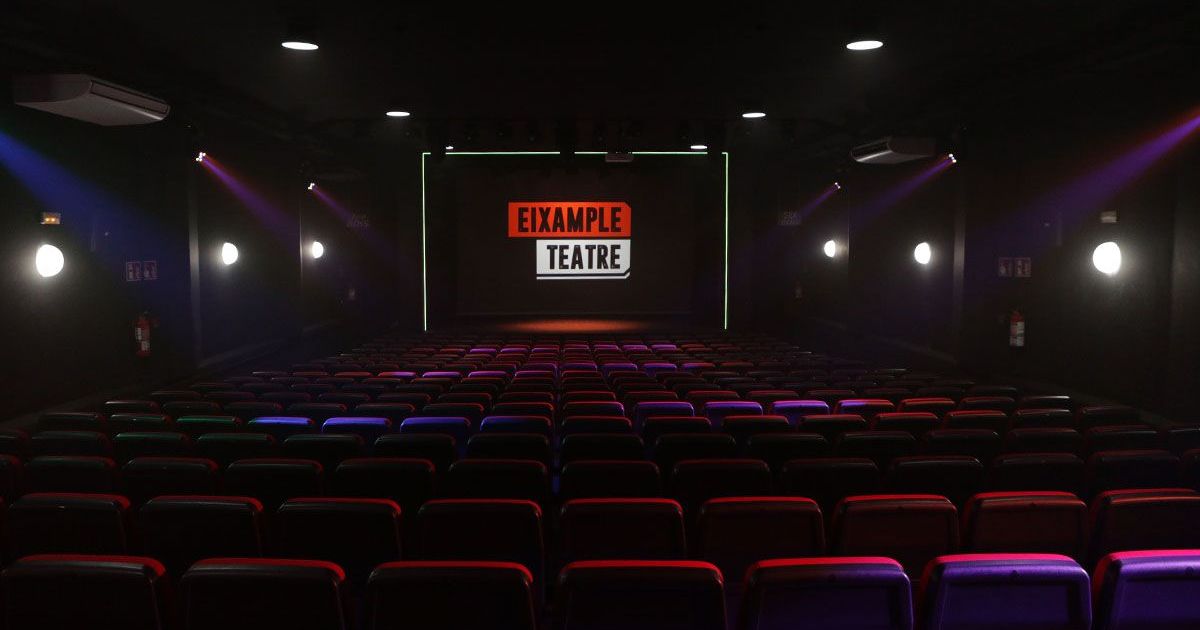
Eixample Teatre is the ideal place to unwind with humor. This space (the former Guasch Teatre), now led by Borja Rabanal, offers 300 seats designed so you don't miss a single detail from any seat.
Eixample Teatre programs more than 500 shows a year and has an average of 80,000 spectators, thus becoming a benchmark for comedy in Barcelona. Its billboard is very varied: it features monologues, improvisation, magic shows, musicals, and family theater.
Next time you walk through the neighborhood, don't just look at the building from the outside. The Eixample has a theater for every mood: you just have to choose the show, get your ticket, and let yourself go before the lights go out.
Add The New Barcelona Post as your preferred Google source for free
Stay informed with the latest news.