The Liceu unfolds the new season: 194 performances to question the operatic ritual

La nova temporada arrencarà el 25 de setembre amb l’òpera ‘Aida’ de Verdi. © Bernd Uhlig

With great voices like Anna Netrebko, Asmik Grigorian, Sondra Radvanovsky or Lise Davidsen, and with creators like Shirin Neshat, Marcos Morau, Àlex Ollé or Calixto Bieito, the 2026-2027 season is built on a record budget, the highest in the theater's history, with the aim of reaching 300,000 spectators

may 04, 2026
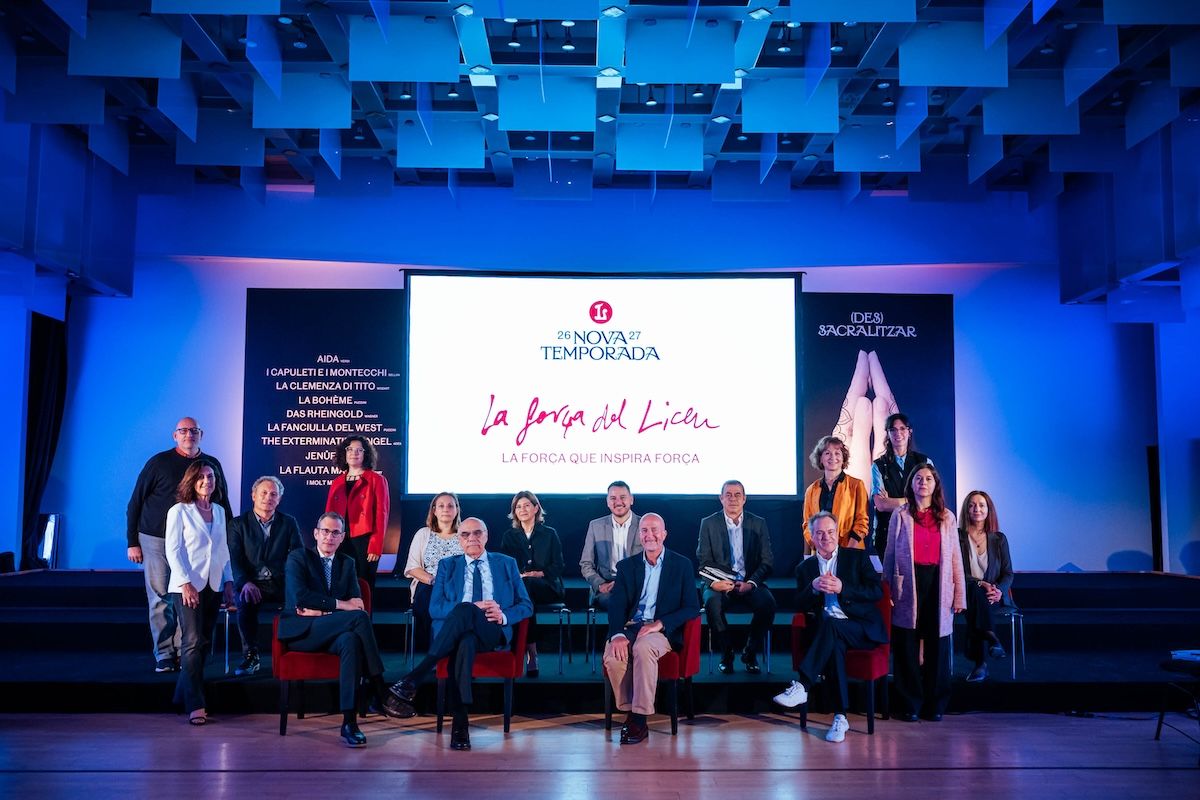
Before the curtain rises and the show begins, a silence spreads throughout the hall and seems to stop time for a few moments. At the Gran Teatre del Liceu, this moment has almost become a ritual: the lights go out, the hall is in semi-darkness, the orchestra finishes tuning, the conductor enters the pit and the baton is raised… everything is suspended before the first sound. Opera thus functions as a kind of daily liturgy. A ritual that, at the same time, breaks from within: the solemnity of the voices and notes—which often take the form of a prayer—coexists with unleashed passions, conflicts, and ruptures on stage. It is in this tension between ritual and rupture that the Liceu's new season is articulated, which, under the motto of Des(sacralize), will feature 194 performances and bring together great voices such as Anna Netrebko, Asmik Grigorian, and Sondra Radvanovsky. "Opera is, at once, temple and stage, liturgy and provocation, prayer and scream," expressed Víctor García de Gomar, artistic director of the Gran Teatre del Liceu, during the presentation of the 2026/2027 season. And he adds: "The Liceu is conceived as a temple of interrogations, where the conflict between the sacred and the profane runs through each work." From this constant tension between ritual and rupture, the common thread of the new season is articulated: the Liceu becomes a space that challenges the fanaticisms of any era and where each opera title —along with the disciplines that dialogue with it— becomes a tool to rethink the responsibility of art in the contemporary world and its capacity for resistance. This conceptual reflection materializes in 194 performances throughout the season, with 9 staged opera titles and 4 in concert version, in addition to 17 dance performances, with the ambition of reaching 300,000 spectators. The season starts from the great classical repertoire —with works such as La bohème, I Capuleti e i Montecchi, La clemenza di Tito or La fanciulla del West— and moves towards contemporary re-readings and new perspectives on the operatic genre, such as Thomas Adès's The Exterminating Angel, along with new productions such as Janáček's Jenůfa and Mozart's The Magic Flute, signed by Marcos Morau. This artistic program is built on a budget of 63.1 million euros, the highest to date in the history of the Liceu, which positions the 2026-2027 season as the most ambitious also in economic terms. It is a record budget, based on a model of balance between own revenues (52%) and public funding (48%), always under the premise of not generating debt or budget deviations. In just a decade, the Liceu's budget has grown by twenty million euros, but it has done so without giving up a key idea: artistic quality is non-negotiable. In fact, if artistic expenditure is added to the budget of the Liceu orchestra and choir, nearly half of the institution's budget is directly allocated to artistic activity.
Presentation of the Liceu season. © Sergi Panizo

The great titles of the season

The new season will kick off on September 25 with Aida by Giuseppe Verdi, one of the most monumental operas in the musical repertoire, with musical direction by Antonello Manacorda and Josep Gil. In the hands of Iranian artist Shirin Neshat ---who has also participated in the aesthetic conceptualization of the entire season's libretto---, this co-production of the Liceu with the Opéra national de Paris transforms the classic title into a narrative that dialogues with contemporary tensions such as identity, exile, oppression, and the fragility of power.

This interpretation is part of the season's guiding theme, in which opera ceases to be merely an alien ritual to assume a dimension of responsibility with the present, as a space for questioning the contemporary world. Aida thus becomes a mirror of current conflicts —reflecting on issues such as power and war, but also the fragility of displaced people and the struggle to preserve identity and dignity in these contexts—. The opera will feature a top-level cast with voices such as Anna Netrebko —one of the great sopranos of today, who had not performed in Barcelona since 2021— and Anna Pirozzi in the role of Aida, as well as Yusif Eyvazov and Piotr Beczała as Radamès.

Víctor García de Gomar, artistic director of the Liceu, and Jonathan Nott, musical director, during the press conference. © Sergi Panizo

During the season, the Liceu will present new productions that expand this artistic thread. This is the case of Jenůfa, by Leoš Janáček, which can be seen from May 8 to 22 in a new production by Àlex Ollé, which explores how tradition can end up becoming a form of moral control within the community. Asmik Grigorian and Nina Stemme lead the cast of this proposal, which will feature the musical direction of Jonathan Nott, who will assume the direction of the Liceu orchestra starting in the 2026/2027 season, replacing Josep Pons, after 14 years at the head of the ensemble.

The arrival of Jonathan Nott as musical director marks the beginning of a new stage for the Orchestra of the Gran Teatre del Liceu. "Making music is like skydiving: jumping into the void or trusting that [the orchestra] will open the parachute for you," Nott expressed during the press conference. To inaugurate this new artistic stage of the theater, the Liceu presents the concert Welcome Jonathan Nott. A new musical spring, on December 3, the first concert of the season under his musical direction, which is also part of the official program of the 150th anniversary of Pau Casals, in homage to his legacy.

Despite this new stage, the Liceu wants to maintain its link with Josep Pons, a key figure in the redefinition of the orchestra in recent years. Now, as honorary director, the will is that he can continue to conduct one title per season. In this case, Pons will be at the helm of another of the new productions presented by the Liceu: The Magic Flute, by Wolfgang A. Mozart, signed by Marcos Morau —choreographer and co-founder of La Veronal—, which can be seen from July 5 to 29.

Among the great titles of the season also stands out the new cycle dedicated to Wagner with the tetralogy of The Ring of the Nibelung, one of the most ambitious projects of the Liceu in recent years, in co-production with the Bayerische Staatsoper. It is not just a series of operas, but a project that will unfold over several seasons, until 2030, with one title per year, and that proposes an overall view on great issues such as power, religion and the idea of immortality. The starting point will be Das Rheingold, which can be seen from February 7 to 21, with stage direction by Tobias Kratzer and musical direction by Jonathan Nott.
Josep Pons will lead another of the new productions presented by the Liceu: The Magic Flute, by Mozart. © Daniel Escalé
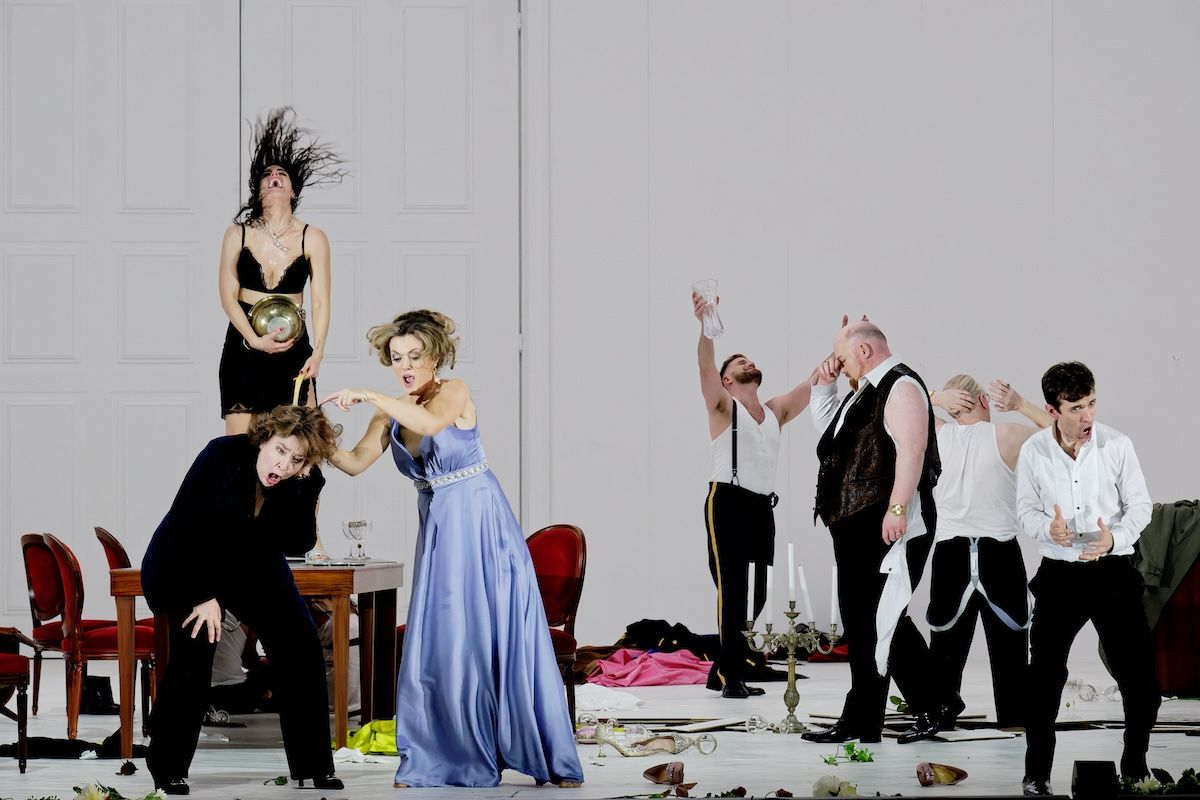
At the other extreme, The Exterminating Angel, by Thomas Adès —one of the season's major premieres, which can be seen from April 15 to 22—, offers a contemporary look at a society trapped in its own conventions. Based on the eponymous film by Luis Buñuel (1962) and premiered as an opera in 2016 at the Salzburg Festival, the work arrives at the Liceu with Calixto Bieito as stage director. Finally, the 2026/2027 season will also experience another of its peak moments with La rosa dels set pètals (from June 4 to 6), the Liceu's second community opera. All this in a season that also does not forget the great titles of the classical operatic repertoire, such as La fanciulla del West by Puccini —which returns to the Liceu stage after 43 years—, La Bohème or I Capuleti e i Montecchi by Bellini.
The Exterminating Angel, by Thomas Adès, is based on the eponymous film by Luis Buñuel. © Agathe Poupeney

While all this programming unfolds on stage, the Liceu also projects its future. A future that outlines the expansion of its temple —the space where this operatic ritual materializes— with a second venue: the Liceu Mar. With five finalist projects already selected, the institution expects to choose the winning proposal between September and October, with the horizon that the new facility could be a reality, at least, in 2032. As Salvador Alemany, president of the Liceu, has emphasized, the project "is not conceived only from the container, but also from the content", with the aim of opening spaces to disciplines that today have no place in the Rambla theater and promoting new formats for creation, training and reflection on opera and the arts of the 21st century.

Add The New Barcelona Post as your preferred Google source for free

Stay informed with the latest news.

Activate now
Tags