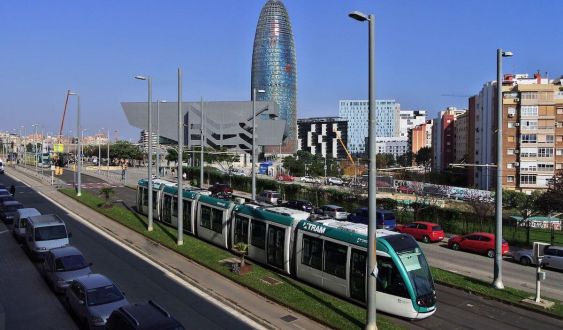
Week of important advances for Barcelona's infrastructures. The first Rodalies trains began to pass through La Sagrera on Tuesday. The Govern announced on Wednesday a new calendar for the completion of L9, with 2029 as the deadline, while the State presented on Friday the new Rodalies plan, with an investment of 6,346 million euros until 2030. And, on Saturday, the Barcelona City Council put on the table the start date for the works to connect the tram via Diagonal: autumn 2021.
[subscribe_newsletter_esp]
The future Diagonal tram will begin its connection with works on the section between Verdaguer and Glòries, with the aim of having them finished by the end of 2023. When it comes into operation, residents will be able to make this journey in just seven minutes and the views they will have of Diagonal will be different from now, with more space for pedestrians, bicycles and trees, in line with the city of superblocks that the City Council is promoting. "We want a Diagonal full of people, green and clean air," says the mayor of Barcelona, Ada Colau, who defines the new tram as a strategic infrastructure that will mark a before and after in the urban transformation of the city.
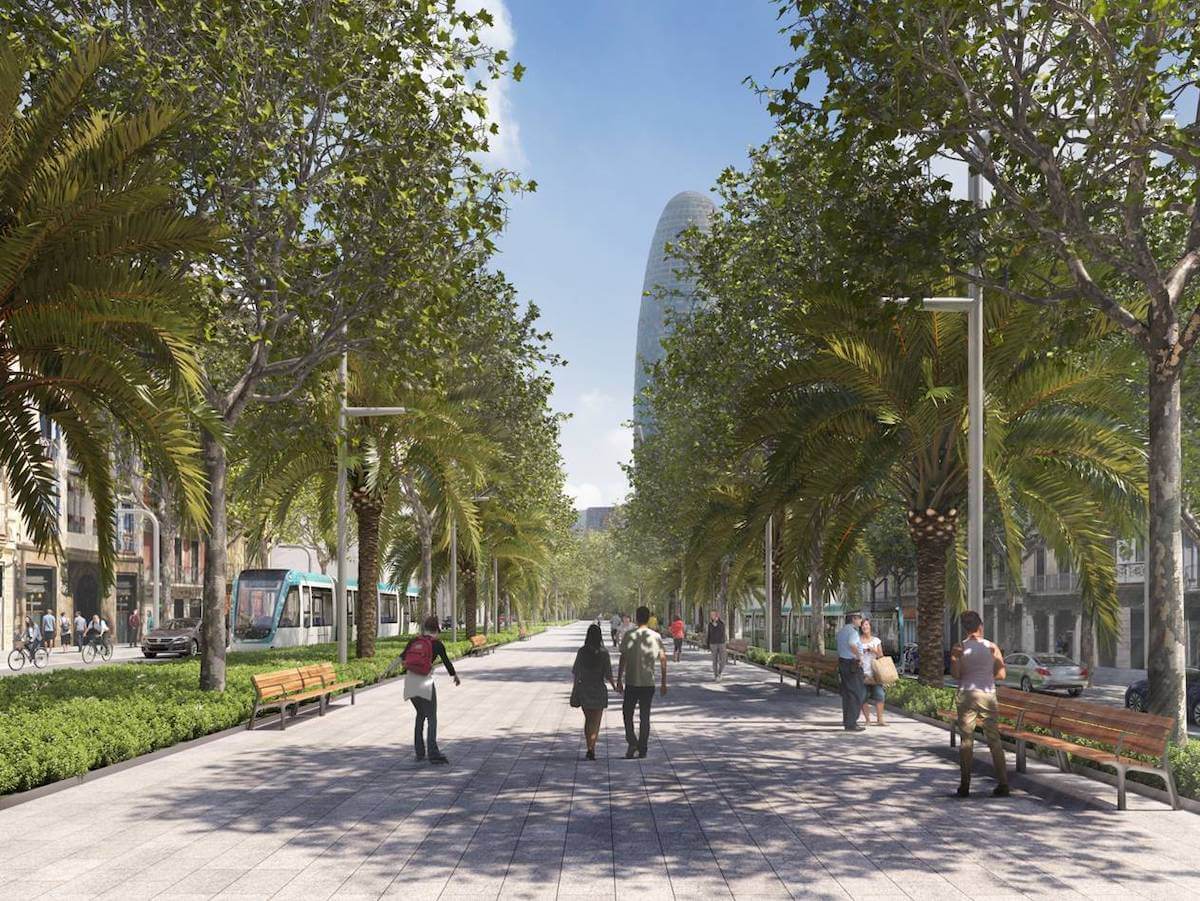
The union of Trambesòs and Trambaix, a project coordinated by former minister Pere Macias, will serve to connect nine metropolitan cities and the neighborhoods of Barcelona, especially those of Poblenou, Maresme and Besòs, in addition to revitalizing the lower part of Diagonal and benefiting commerce, as highlighted by the first deputy mayor of Barcelona, Jaume Collboni. The different universities and research centers located along the way, such as the University of Barcelona (UB), the Polytechnic University of Catalonia (UPC) and Pompeu Fabra University, will also find a new way of connection for their students. "The tram will change people's lives," summarizes the deputy mayor for Urban Planning and Mobility of Barcelona, Janet Sanz, who points out that only the first phase of the works will allow 4,000 cars to be removed from the street.
The agreement presented this Saturday, closed between the municipal Government and ERC, has allowed to set the collaboration agreement with the Autoritat del Transport Metropolità (ATM), dividing between both administrations what each one does. The Barcelona City Council will be in charge of the urbanization of the Verdaguer-Glòries section, with an investment of 56 million euros, and the ATM of the construction of the tram infrastructure and the purchase of the trains, with 61 million euros. In parallel to this first phase for the tram connection, the works of the Diagonal avenue collector will continue to be developed, a prior and necessary step to be able to join it, given that once the new infrastructure is implemented, sewerage works of such magnitude cannot be carried out.
But, to see this and for the works to begin next autumn, an obstacle must first be overcome. The agreement has determined what the City Council and the ATM do, but has not yet negotiated with the tram concessionaire company. This will be what will ultimately determine whether the works start next year or not. The council and the ATM have to define with the concessionaire who will keep the profits from the service that will connect the two current trams. The council's bet is that the administrations keep them, taking into account that they will be the ones who this time make the investment to develop the infrastructure. "Every negotiation is complex," Sanz remarks. Despite this, the City Council's intention is to start making the tenders now to arrive with everything prepared by autumn 2021, awaiting the agreement with the concessionaire.
Add The New Barcelona Post as your preferred Google source for free
Stay informed with the latest news.
