
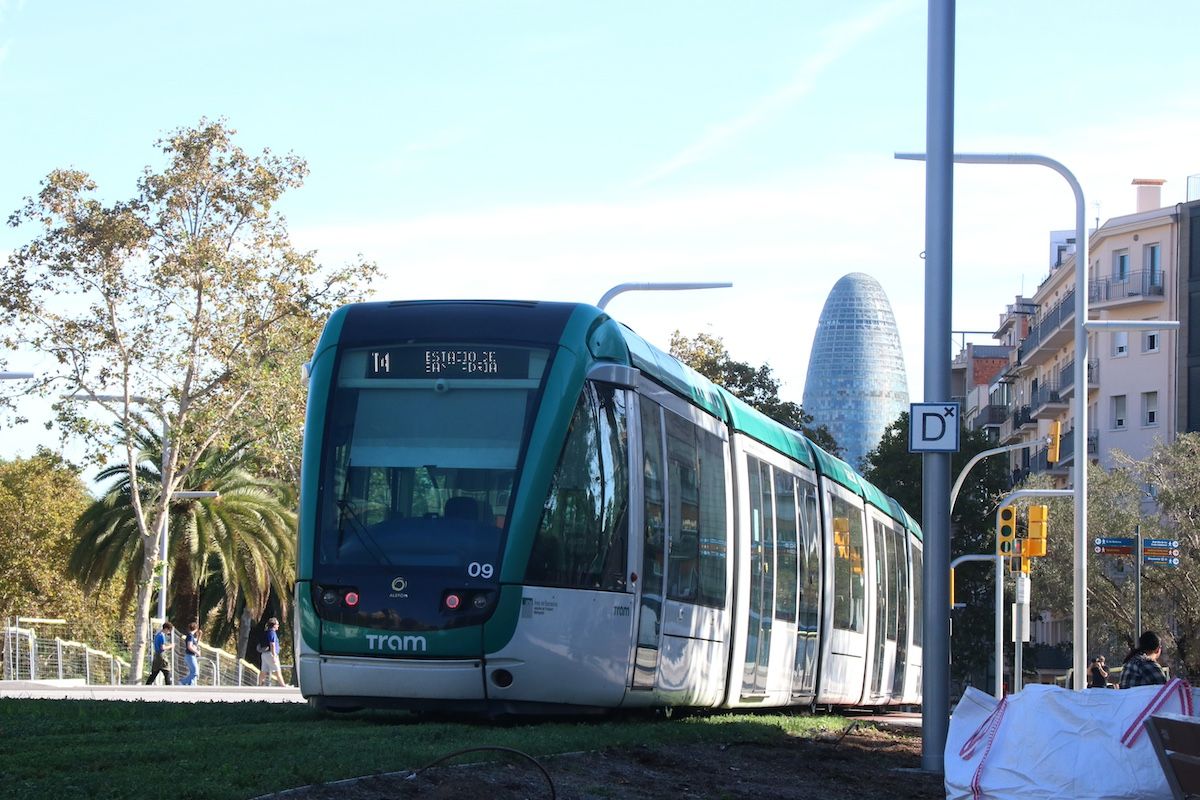
After years of debate, planning, and construction, the extension of the tram to Verdaguer has an opening date. Starting Saturday, November 9, passengers will be able to travel between Glòries and Verdaguer in seven minutes aboard the tram, which thus advances in its connection along Avenida Diagonal.
With the aim of ensuring the service starts with everything calculated to the millimeter, the convoys have already begun circulating on the new section, but without passengers. Except for this detail, the service operates as it will from November 9: it circulates at the speed it will when it comes into operation and stops at stops and traffic lights, like a dress rehearsal so that the opening proceeds without unforeseen events.
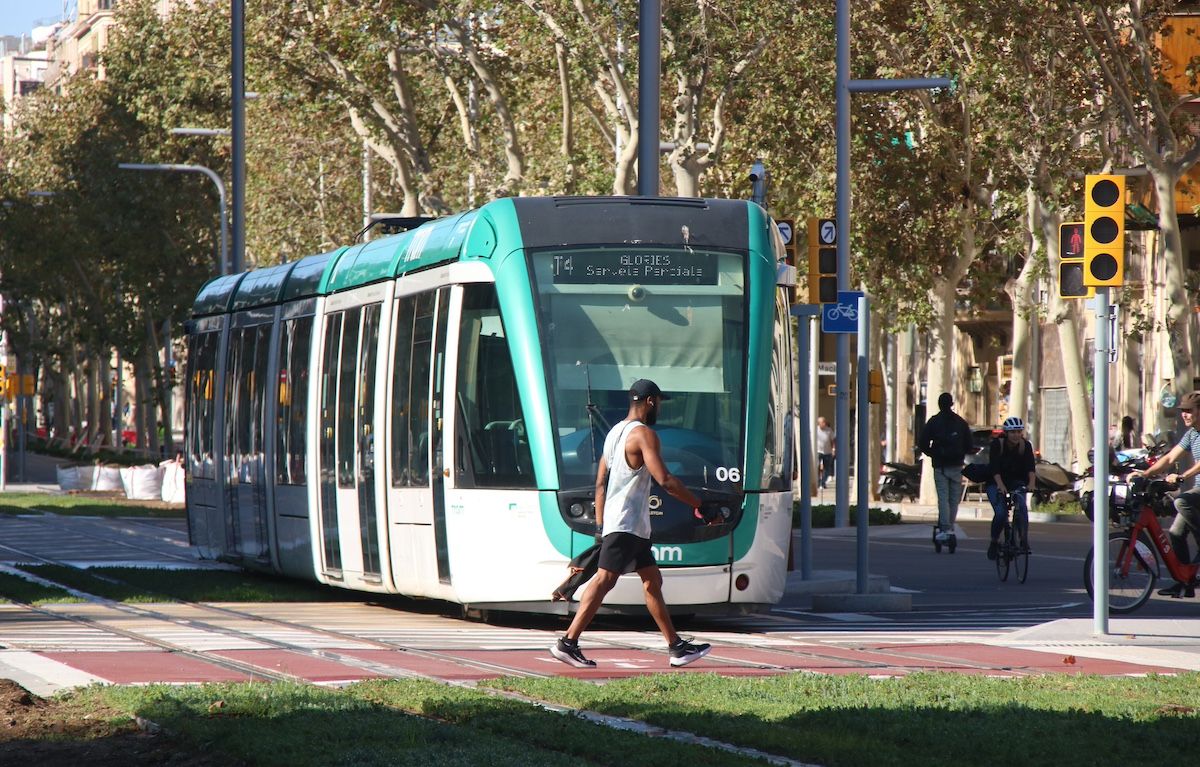
This circulation without passengers, called a white run, will allow all elements that must function in a coordinated manner to be adjusted to guarantee correct circulation of the tram, cars, and bicycles, without forgetting pedestrians, perhaps the most surprised to encounter trams on the Diagonal in this section. Accustomed to months of construction without circulation, not a few pedestrians cross the tracks without looking, which causes the tram horns to add to the already habitual traffic noise of the avenue.
The construction time to complete the missing section to connect the tram will be at least 40 monthsAnd it is that, with this extension of nearly two kilometers,the tram integrates into the urban fabric of the Eixample, and becomes another piece of mobility through its streets. Thus, the arrival of the tram to Verdaguer will not only affect the tram itself, but also the rest of the transport systems that will improve their interconnection, including four metro lines and 13 bus lines.
The link between Glòries and Verdaguer comes after an investment of 100 million euros, two years of construction work, and three months of testing, which began on the night of July 15 with a convoy circulating at five kilometers per hour. This new section will serve 24,000 users and will allow about 2,000 cars to stop circulating on Diagonal.
Connection as a goal
Its launch "defines very well how we like to transform the city and put it at the service of sustainable mobility," defended the first deputy mayor, Laia Bonet. With this extension, "we begin to move towards the new tram network," which when completed will connect the Besòs and the Llobregat crossing Barcelona, with the forecast of doubling daily users, reaching 220,000 travelers, and removing 12,000 vehicles from the street per day.
The arrival of the tram to Verdaguer has also involved the transformation of Diagonal in this section, with more green spaces, a bike lane, and wider sidewalks, with the aim of also benefiting pedestrians. "Walking mobility is the main mode of mobility in the city," Bonet recalled. The reform aims not only to improve mobility, but also to promote commerce and activity in this sector of Diagonal.
The entry into service of the new section represents "one more step for the construction of the tram to Francesc Macià" and to connect the Trambesòs and the Trambaix. However, she recalled that this will cannot be translated into a calendar if there are no budgets. "Without resources, we cannot talk about a calendar," Bonet remarked about the connection, which will require an investment of 200 million euros.
Despite not having a calendar, the general director of the Metropolitan Transport Authority (ATM), Manuel Valdés, gave some clues: the construction time once they start will be about 40 months. It will be more than three years that will have to be adjusted and will include the construction of a storm drain. "It is a very complex project, which also takes place in a denser area than the one now coming into operation," he highlighted.
The Generalitat is also in favor of this connection, as stated by the Secretary of Mobility and Infrastructures, Manel Nadal. "We hope to be able to continue soon and finish the tram along Diagonal," he added. Nadal recalled that the ATM's forecast is to have the construction project finalized by the end of the year, to then process and tender it. "The Government gives political importance to the tram," and wants to actively participate in this project even if it depends on the City Council, Nadal assured. Within the framework of this commitment to the tram, he recalled that the Government is also promoting the tram in Camp de Tarragona, which is expected to be tendered in early 2025.
The network also adapts
This general rehearsal of the new section also implies modifications to the entire Besòs network: lines T4, T5, and T6. Following the tram's white march, the T4 has begun to provide service between the Glòries and Sant Adrià station stops, awaiting the ability to transport passengers. For their part, the T5 and T6 extend their route along Meridiana, and will integrate the stops leading to Ciutadella as new stops in their route.
The new section has also required the adaptation of the convoys that will circulate on it, as it operates without an overhead catenary: the electrical power passes through the ground, in a system that is used at a national level for the first time and requires new equipment. In addition to the adaptation of trams, the network will integrate three new ones by the end of the year. The vehicles will become part of the Barcelona tram fleet, which is beginning to grow with the aim of joining its ends.
Add The New Barcelona Post as your preferred Google source for free
Stay informed with the latest news.
