
One already knows that when one goes up to Tibidabo, one will see Barcelona from very high up. It begins with its brand new funicular, the Cuca de Llum, on an ascent that starts from Doctor Andreu square and leaves the city behind. One is high up when one reaches the park, no less than 500 meters above sea level. Even so, some people get on the Ferris wheel or the watchtower to continue defying vertigo and get unbeatable views of all the neighborhoods, integrated into an urban continuum limited by Montjuïc and the sea. But, from this Saturday, the most daring will add a new way to rise above everything.
Tibidabo has just launched its free fall, a demand from visitors that the park's managers had been wanting to respond to for some time. Four years ago, in the midst of the pandemic, the project began. It was in the park's plans and the halt caused by covid did not hinder it. Two years ago, the order for its construction was placed. This is recalled by its director, Rosa Ortiz, who was very aware that those who now go to an amusement park always ask for essentials such as a carousel, a roller coaster and, without a doubt, a free fall. "They are the classics," she emphasizes. This addition also serves to satisfy a type of public for whom the offer might have been too small, families with older children, as well as groups of teenage friends.
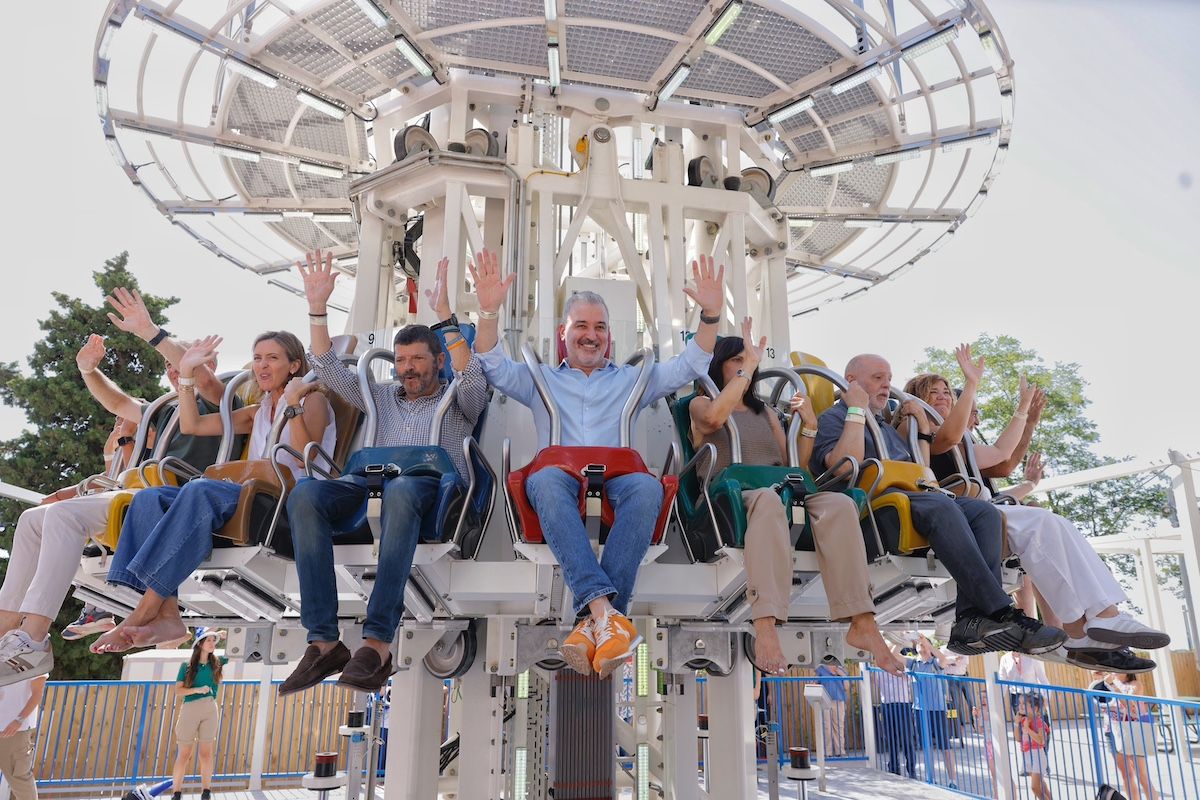
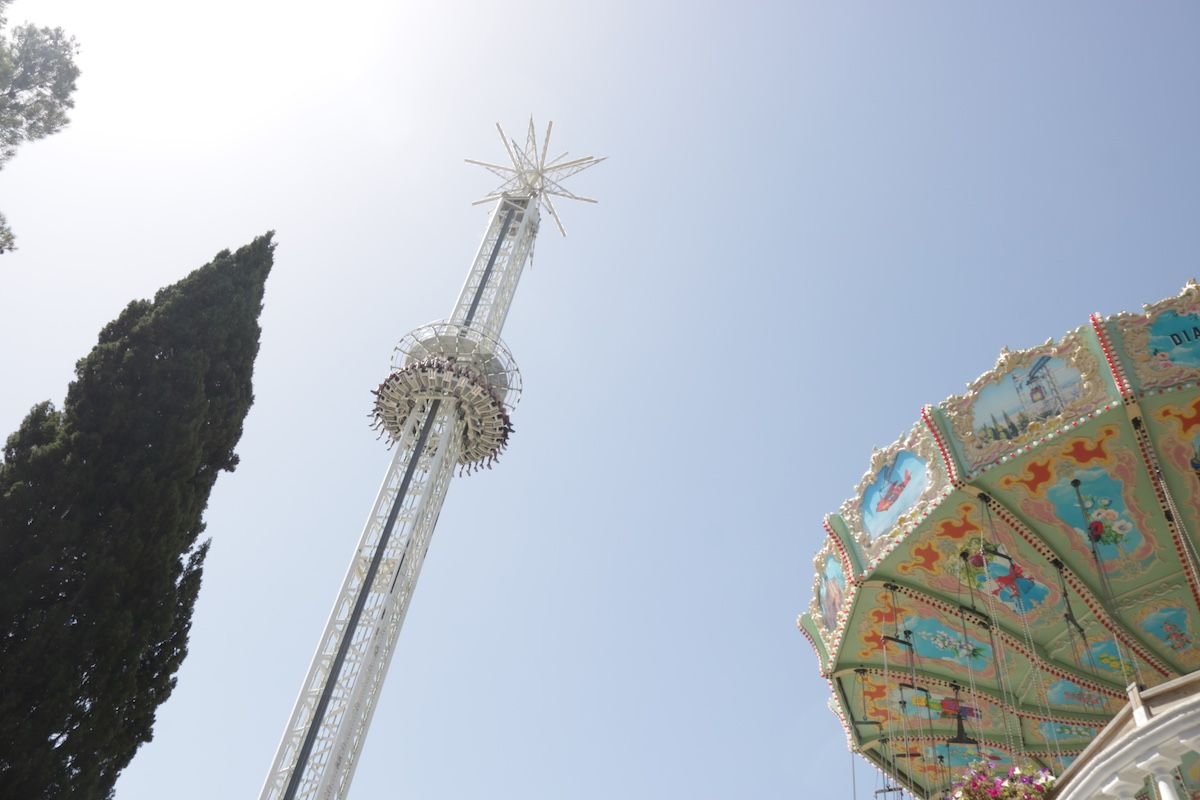
To the natural elevation of the amusement park, located at the highest point of Collserola, the free fall adds a 52-meter climb not suitable for those with a fear of heights. "It's like being an astronaut, you feel elevated with wonderful views," summarizes Ortiz. In addition, Tibidabo has opted for a free fall with a magnetic brake, instead of an articulated one with cables, which causes a sensation of a faster descent. During the 1.7 seconds that the fall lasts, a speed of 80 km/hour is reached, reaching ten seconds of descent with braking. With capacity for 25 people, the entire journey, ascent and descent, lasts a total of two minutes and ten seconds.
One of the singularities of the Tibidabo free fall is an intermediate stop before the rapid descent. At about 30 meters high, the attraction stops and makes a 360-degree turn so that its passengers can see everything around them, not just Barcelona, taking a look, amidst nerves, at Baix Llobregat, Vallès, and Maresme. With a design inspired by a magic wand, the new attraction has been named Merlí. Although it will be a nuance that those who go up will surely not notice, the free fall is slightly below the park's mythical Ferris wheel, renovated for the fourth time in history ten years ago.
All the work to launch Merlí has involved an investment of 2.4 million euros, including the purchase of the attraction and the adaptation works of the area where it has been installed. Its inauguration has been delayed, initially planned for spring. According to Ortiz, it has been due to the slowness of the procedures to register it as a new activity in the park because, by the end of May, it was already finished. Three operators have been hired to be in charge of its operation. The park's total staff is 250 employees in high season ---the summer months--- and 170 in low season.
The park expects to exceed 700,000 visitors again
The free fall has been the big novelty of this season at Tibidabo, which started in early March. However, it has not been the only one, and there have also been other recent novelties such as the change of name of the Hotel Krüeger to Hotel 666, after incorporating a meet and greet experience with its chilling tenants. It has also renovated its viewpoints and plans to open new dining areas in August. The amusement park, managed by the public company Barcelona de Serveis Municipals (B:SM), expects to reach 708,000 attendees this 2024, continuing the growth trend of previous years after overcoming the slump due to the pandemic. Last year, it closed with 681,000 visitors, in addition to revenues of more than 20.4 million euros and a result of 353,000 euros.
The free fall has not been the only novelty, and there have also been other recent ones such as the change of name of the Hotel Krüeger to Hotel 666, after incorporating a meet and greet experience with its chilling tenantsAround the figure of 700,000 attendees is what they feel comfortable with at Tibidabo, explains its director, as it translates into a manageable 4,500 daily users.Their record was achieved in 2018, with more than 732,000 visitors.Beyond crises like COVID, the figure varies according to the days and opening hours, conditioned by each year's calendar. The audience remains eminently local, with international tourists representing only 12%, slightly below pre-2020 figures, when they ranged between 15% and 17%.
After incorporating the free fall, Ortiz does not reveal clues about future attractions that the park may add. "We are always very attentive to trends and we are pioneers," she emphasizes, giving as an example that they tested technologies such as virtual reality before they were so in vogue, incorporating it into the Tibidabo Express train ride in 2017. She also does not forget its mythical airplane, a simulator launched in 1928, a year after the first flight between Barcelona and Madrid. For a long time, it was the first aerial experience for many Barcelonians and even today, as Ortiz points out, there are parents who come with their children to try it before putting them on a plane.
Add The New Barcelona Post as your preferred Google source for free
Stay informed with the latest news.
