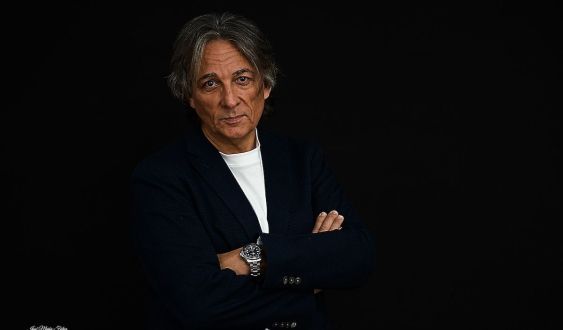
A master is someone who dominates a subject, a trade, a profession, and is capable of transmitting what has allowed them to achieve that mastery. Therefore, dedicating the last stretch of one's professional life to teaching what one has been learning and perfecting, while also maturing as a person, should be prescribed to everyone. Because the wisdom built over the years, the trial-and-error of life, is the best thing any student can receive. And, in turn, it is the best gift someone can give: the baggage of their vital learning, passed on in a classroom, in a conversation on a park bench, in an auditorium offering a conference, a public talk, a coffee, on a walk along the beach or contemplating the mountains.
Javi Giménez does this in classrooms, in the afternoons in subsidized courses at Foment Formació, and in the mornings, at the Davante/Master D academy. He teaches audiovisual workshops and classes on non-verbal communication and voice education, communication skills, and public speaking techniques, something that, at one time or another, we are likely to have to do.
A wedding, a neighbors' meeting, a thesis presentation, a conference, a family after-dinner conversation... life presents many occasions to speak aloud, in front of many or fewer people. And Javi's voice, who has worked and works on stage as a theater actor and monologist, and his more than thirty years speaking on the radio, but also imitating celebrities ---he was several characters on the Crackòvia program of Televisió de Catalunya---, has glided through so many different registers, tonalities, volumes, characterizations, that now so much experience is a generous spring of resources, strategies, a very consolidated practice in a rich professional career, full of substance to share.
The anecdotes, good and not so good ---apparently--- from the journey serve him to connect much more with his audience and students. "We have all been humiliated at some point. As children in school, we were given nicknames, and with everything that has happened to us, we practice empathy, we know that everyone has lived their difficulties," he explains. In fact, Javi explains that in class they talk a lot "about emotions, assertiveness, and the bonds that are created in the act of communication."
Since he doesn't like definitions at all, this professor plays with examples to explain things. And he has it easy, because he has many lived ones. This is how he teaches, for example, to project the voice well, relying on the diaphragm. With him, you discover that speech is much more than ordering words, that oral expression is also emotional expression, and that a certain intonation can achieve the unthinkable from our interlocutors.
In his courses, he also invites a psychologist, a speech therapist, a dubbing director, a vocal coach, and an improvisation actor, all specialists in the different facets of the voice, to be able to grant 360 degrees of attention to this powerful vocal resource that people have.
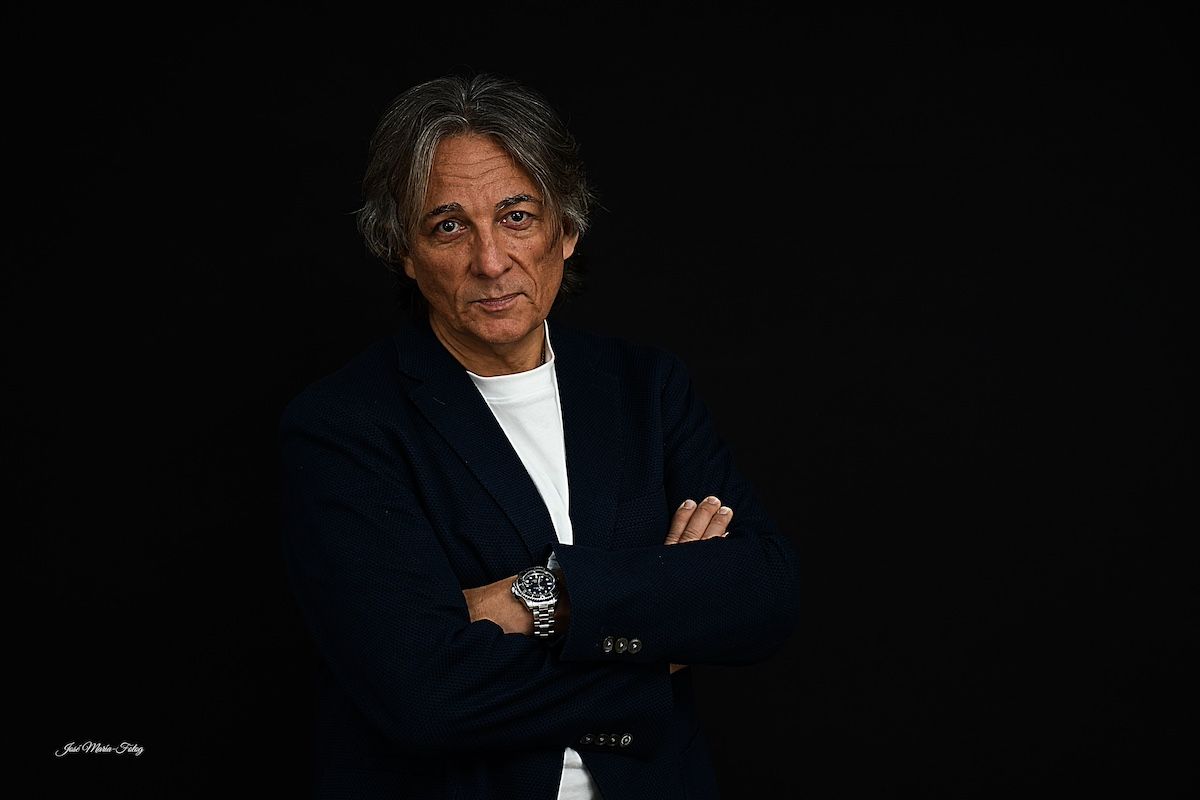
He never thought he would end up in front of students teaching classes, but the last ten years of waking up at 4:40 AM to go to work at the radio station ---where he was part of the team of the program La Ronda on Radio Marca for nine seasons--- had started to take its toll. The hours he wasn't sleeping were not doing his health any good. So he got his professional training teaching qualification, and now he enjoys ---during fully daytime hours--- guiding and accompanying students who are preparing to work, and also people who, whether they work or not, want to educate their voice and improve communication with others.
But, what is educating the voice? "It is speaking using the phonatory apparatus well, breathing, managing the air well, without relying on the vocal cords, articulating phonemes well through good vocalization, choosing the appropriate tone, volume, rhythm, and making pauses so that the discourse is capable of capturing interest," answers the teacher.
The fear of expressing oneself in public "comes from not loving oneself and from low self-esteem"And all this that he explains in his classes is learned to master in several ways."I make them read interpretive texts as if they were doing theater, and I make them have music in their voice", he comments. He says that "everyone usually has some deficiency."
And he gives us some examples: "There are people with very good diction and a wonderful voice, but who don't have a trained voice or don't know how to order their speech to communicate well." He had taught imitation classes, in which the key is to copy the way the character one intends to imitate speaks, but also the manner, the moment of breathing, and where that person breathes. The breathing has to be done the same, at the same time and in the same way. "In dubbing, we don't get into voice training, but dubbers are the best at teaching diction."
Self-esteem
Mastering one's own voice and knowing how to speak strengthens anyone's confidence, even if a crowd is listening to us. However, stage fright is very common: "There are people with great intellectual capacity, but with enormous stage fright." But this teacher tells his students: "When you go on stage, you are the sheriff, you act with authority and calm, you move with confidence, and you make your gesture accompany your word." And this is one of the things they practice by doing many exercises all together in class. "Theory can be done in an afternoon, but practicing takes many days," he states.
And where does this fear of speaking in public come from? "It comes from not loving oneself. Yes, from low self-esteem and from having been belittled," he declares. And he adds: "You must have love to share." This is how this teacher encourages his students: to fill themselves with love, to feel it and to make it felt when speaking, that is his philosophy. Part of what he himself has learned on stage, imitating, improvising, interviewing influential people... And now all that acquired confidence he spreads in class, like a fine rain that waters the self-esteem of those who listen to him. And he emphasizes the importance of "studying the audience we are addressing, to adapt the language, humor, communication to those who listen to us, or to those we want to listen to us."
In non-verbal communication classes, Javi also displays everything that is often exaggerated on the theatrical stage, but which is very present and can be very useful in every daily conversation. The accompaniment of the gesture, the movement of the hands and arms, the posture, all that which ends up being the icing on the cake in a magnificent way of connecting, of transmitting what is desired easily and pleasantly.
"There is no dictionary of non-verbal communication", he points out. "There is no exact science of what a specific gesture means, but there is a certain quorum that the origin of yes and no, moving the head up and down and from side to side respectively, is in babies and in their way of asking for and rejecting the breast ---seeking their food--- with head movements.
"Error must be added to everything we do, because we learn from it"Javi is very aware of the importance of making ourselves understood among human beings, family, partners, friends, neighbors, co-workers, and he contributes his grain of sand on how to do it better. Working as an actor,has received much applause throughout the years,and he has seen the audience laugh, stand up and congratulate him at the end of a show, but now he feels that he still had to experience something better than the satisfaction of having provided entertainment and that people had a good time watching him perform on stage, explaining jokes, imitating well-known people or playing a role.
Now, he expresses, "for me, the most rewarding thing in the world is for someone to take something from me". And he says it thinking of those teachers —few, but whom he still remembers— who also marked him, from whom he learned something that he has always carried with him.
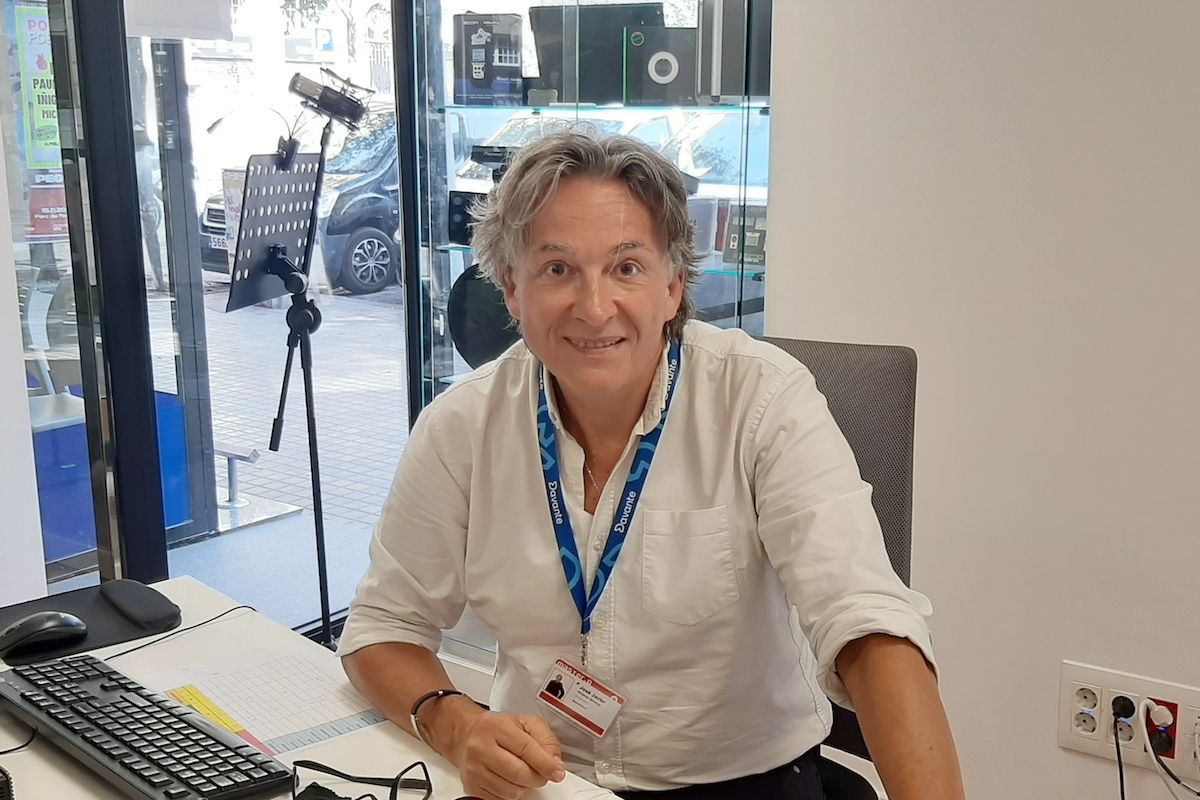
This mission is now his, to connect with students by teaching them to establish connections with any interlocutor. But, at the core of everything this teacher professes, there is a more powerful and valuable connector that we have within reach, which is the bond with oneself. Knowing how to find oneself, and locate desires, identify fears, determine goals, all this also requires communication, but with oneself.
Working on voice and communication, he takes the opportunity to convey messages that he does not want to skimp on in his classes, such as how enriching it is to pursue a dream, trying to have time to dedicate to a hobby and ensuring, in order to do so, if one cannot live from what one likes to do most, a job that guarantees economic tranquility and time to have what we want or what we want to do. "Look for a job that pays you for what you want to do when you are not working." These are the type of messages that hover in Javi Giménez's classes, from his experience and life trajectory.
"Yawning is the best massage for the vocal cords"It is not strange that at the end of the course hugs and thanks are also accompanied by a "we will miss you." Although if as students they have paid attention, in what they take with them, they will always have a little of it with them, turning the most bitter, uncomfortable or unfortunate experiences inside out, as he teaches them to do. "If we set up scenographies to disinhibit ourselves by acting,I incorporate any error to transform it into a learning experience. The error has to be added to everything we do, because we learn from it." And if I catch someone yawning, I tell them all: "Yawning is the best massage you can give your vocal cords."
And if he sees someone disconnects, humor ---which he considers one of the best antidotes against problems--- or a sudden change of voice to imitate someone, he easily re-engages his audience. He uses all the resources with which this teacher, a lover of the Beatles and music in general, has been making a living, who also DJs at parties and who for many years worked on the radio program Los 40 Principales.
The number of times he has recalled when he was little and his father told him: you have to be a doctor or a teacher. "And I told him I wanted to be a singer. And I've been an impersonator, scriptwriter, actor, radio announcer, and comedian. Since 1990 I haven't stopped working, and he was very proud. But he never got to see that in the end I ended up being a teacher as he wished. Now I feel that in this professional stage I am paying him tribute, and I also explain this, sometimes, in class, and we shed a tear or two."
In his farewell to his colleagues and radio listeners, on social media, Javi Giménez thanked them for all the years of loyalty and left this message: "I'm not going to another station, I want to dedicate myself to sharing my experience through teaching." And this, no more and no less, is what he does today.
Add The New Barcelona Post as your preferred Google source for free
Stay informed with the latest news.
