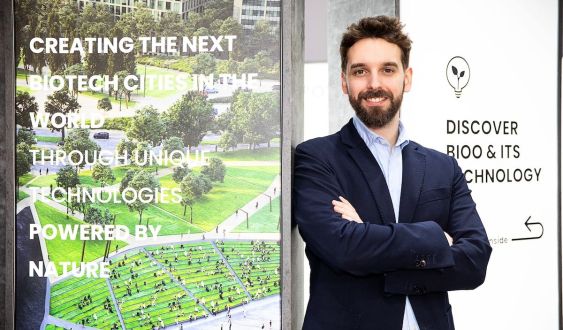
Generate energy from the earth; illuminate with light-emitting plants, turn on a switch by stroking a plant's leaves. The startup Bioo aims to lead an energy transformation based on pioneering proposals like these and others it already has in development, all with a common thread: aligning technology with nature to maximize its potential for new applications that can often seem like science fiction.
With these technologies, the Viladecans-based company closed last year with a turnover of 3.5 million euros. The company, which entered the market in 2022 after six years of R&D, already has committed projects through which it expects this turnover to multiply by five by the end of this year, reaching close to 20 million euros: "Once we've gained traction, it's a locomotive," assures Bioo founder, Pablo Vidarte.
"We are world leaders in biotechnology applied in urban environments, a field still very nascent," highlights the company's founder, who wants it to go further and "make this not just a company, but a movement" that hybridizes cities with energy solutions.
And Bioo does this through three main lines: its panels for generating energy through the earth; its bioluminescent plants; and switches activated by human touch on a plant. Vidarte, whose entrepreneurial and inventor side even led him to present a project to NASA at 16, was clear that "the next revolution will be biotechnological." Then, it all started with the panels.
The concept of generating energy from organic matter had been known since the 1960s, but it had to be located in isolated environments: "Otherwise, in a few hours the battery would be contaminated with other microorganisms, and it would stop working." Thus, for decades attempts were made to isolate the batteries, but Vidarte opted for the opposite: designing a battery that would work with the contamination of external microorganisms. "We created an ideal environment for them, so they would proliferate inside and, in three days, only those necessary for the battery's operation, which lasts decades, remain."
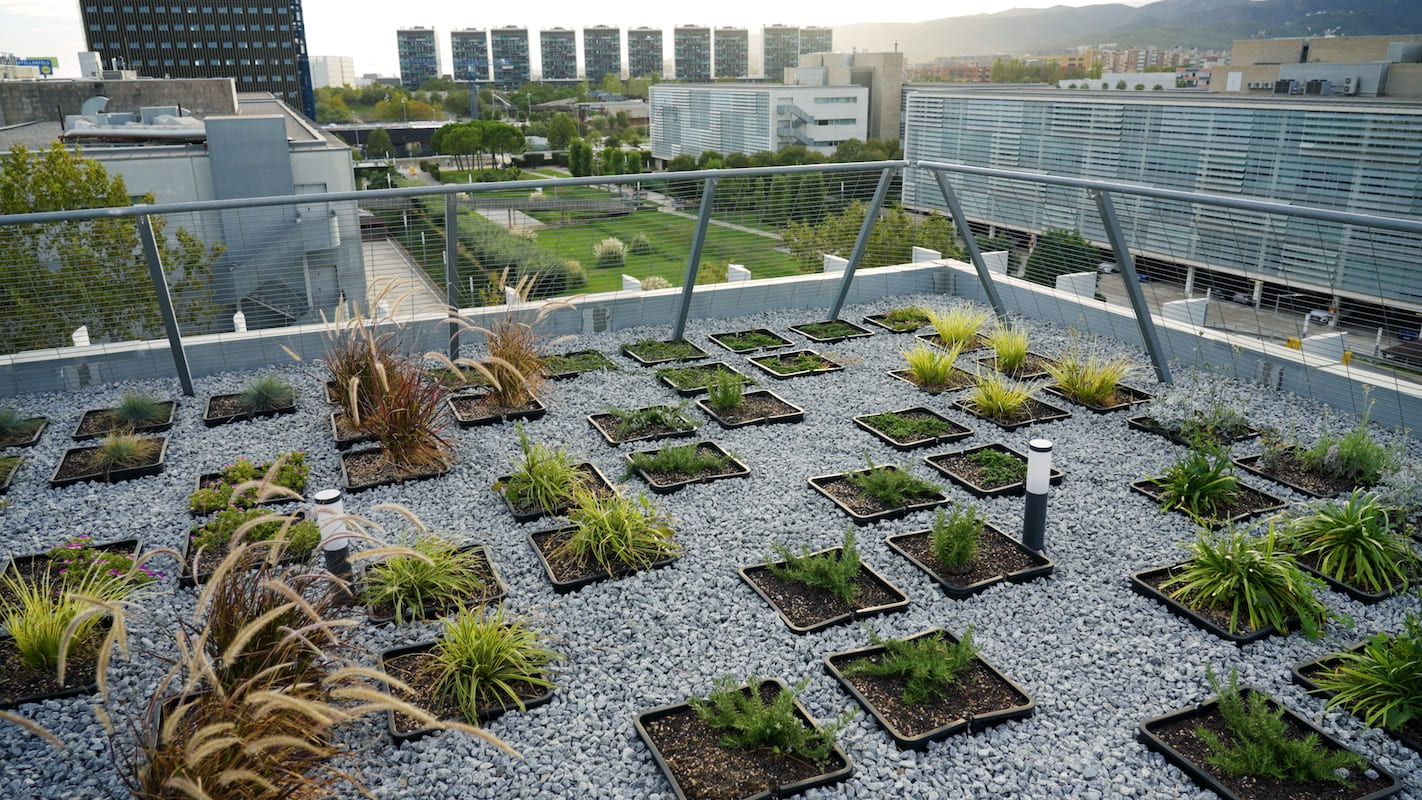
"We were the first to make biological batteries adapted to solid outdoor soil environments," Vidarte summarizes. Their panels are installed in projects all over the world, including Barcelona, where their flowerbeds cover part of the thousand-square-meter terrace of the now Aura building, until recently El Corte Inglés on Diagonal, in Francesc Macià. Now, the company is exploring "ongoing projects of much more integral transformation in Barcelona," as well as in cities around the world.
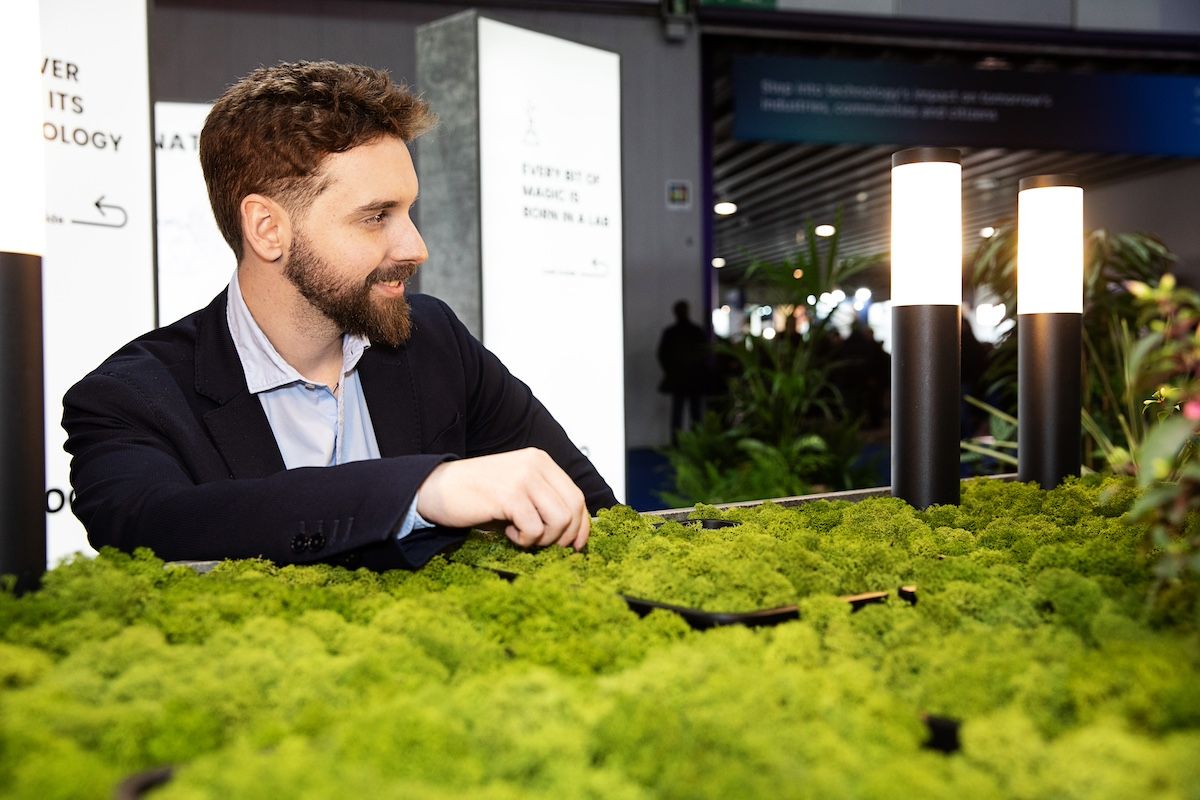
"From New York to Taiwan, we have architects and installers who know our technologies and locate projects in which we can participate," explains Vidarte, who assures that their prices adjust to the projects and are not more expensive than those that require other types of green areas: "We have done projects from 33 euros per square meter to 700 euros per square meter, although they normally range from 100 or 150 euros per square meter, a usual price in the market and which includes two or three batteries."
Bioo's projects also allow combining their different technologies, with panels with batteries and bioluminescent plants that operate as a switch at the same time. Bioluminescent plants glow in the dark through a biocompatible phosphorescent compound that remains and grows with the plant throughout its life cycle, and illuminate their surroundings, just as they illuminate various laboratory rooms in Bioo's facilities in Viladecans.
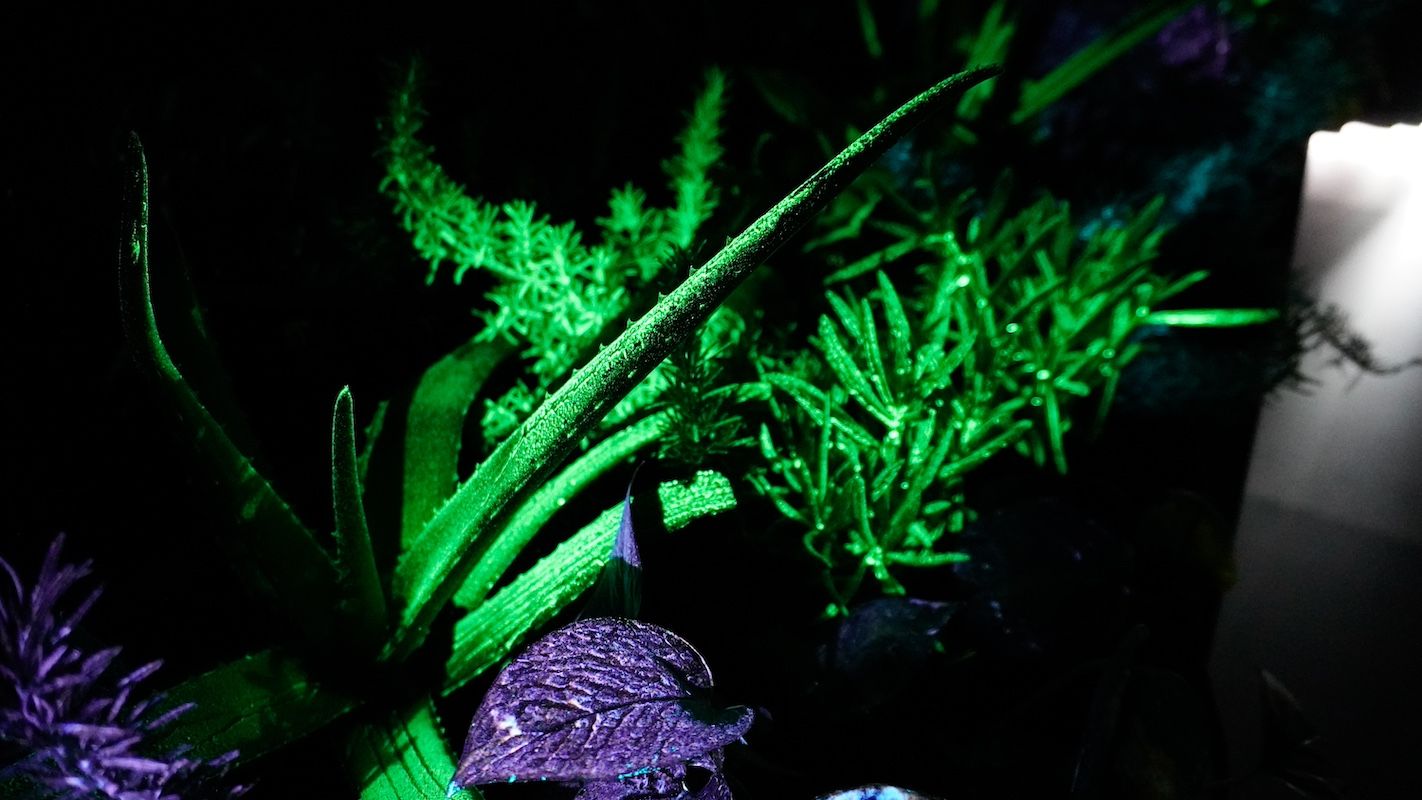
On various tables in the company's offices, anodyne plants rest on white pots, which unexpectedly light up when the leaves are touched. This is because plants perceive frequency changes, and Bioo has identified the frequency that humans transmit when touching them; the frequency changes translate into a voltage, which is conducted by the plant to the pot. Thus, what seemed like a common pot becomes a switch that is activated when the plant perceives that frequency change. Through this technology, the company not only turns lights on and off, but can activate any element, such as screens and sounds, which opens the door to possibilities such as playing music with a plant mixing table or a plant piano, as Bioo has done in Ibiza.
The company is immersed in its fifth investment round, with which it seeks to raise five millionTo boost its various energy solutions, the company has invested nine million euros so far, half of them from the EU and the rest from private funds. Now, the company is immersed in its fifth round of investment, with which it seeks to raise five million euros more to expand its commercial and operations department, with a planned staff increase of a dozen people for this year. However, the largest team is R&D, which has about twenty people. In total, the staff consists of about 40 employees, who are complemented by the installers and factories with which it works in each region.
In addition to expanding its structure in Viladecans, Bioo also plans to expand internationally. The company plans to open two more international delegations this year, which will join the subsidiary it launched in October in Saudi Arabia. The company is focused on Hong Kong and Central Europe; then, it will be the turn of the United States.
"They will be commercial subsidiaries, but the headquarters and R&D will remain centralized in Viladecans," Vidarte emphasizes from Bioo's headquarter, full of plants; luminous pots; benches that allow charging mobile phones with the energy generated by plants; laboratory and testing rooms for bioluminescent plants, and panels of biological batteries, which have also been installed in a building and an adjoining garden.
This expansion will also be accompanied by an expansion of its solutions, and Bioo is working on new projects ranging from self-regenerating cements through microorganisms to liquid trees, installations that use microalgae in large glass tubes to remove CO2 from city air and at the same time produce fertilizer: "They clean the air like four trees, although they are not made to replace them, but to incorporate them into cities and achieve both a cleaner environment and zero-kilometer fertilizer."
Bioo's proposals go further and also focus on areas such as wastewater regeneration, changing current industrial plants for artificial wetlands that can be located in the urban fabric, with the appearance of a park and without bad odors: dirty water is located in underground layers, and living beings filter it until it emerges clean on the surface: "These are processes that already occur in nature, but more efficiently and within the city." Bioo has been working on this project since 2023, and expects the first wetlands to be operational in 2027, thus advancing its urban revolution.
Add The New Barcelona Post as your preferred Google source for free
Stay informed with the latest news.
