
If Ildefons Cerdà were to rise from the dead and wanted to find the ideal spot to admire the neighborhood he gave birth to again, he would end up living in the Hotel Alma. Since its opening in late 2010, the Ausejo family has transformed the establishment at Mallorca Street 271, next to Passeig de Gràcia, into one of the oases of the Eixample, a perfect embodiment of the order and daring that inspired its illustrious creator. Elena Hachuel and Yoel Karaso, the souls of Habitan Architects, are the masterminds behind a design inspired by the tranquility of the grid, making every corner a small home to take refuge in. Nori Furlan and Paco Llonch have gifted it an interior design of mahogany skin, iron, and a brilliant use of leather that gives the hotel walls the seductive and attractive power of a panther gorged on wildebeest. Like the Eixample, the Alma is not a place; it is an idea that bases its magic on the virtue of embodying life in peace.
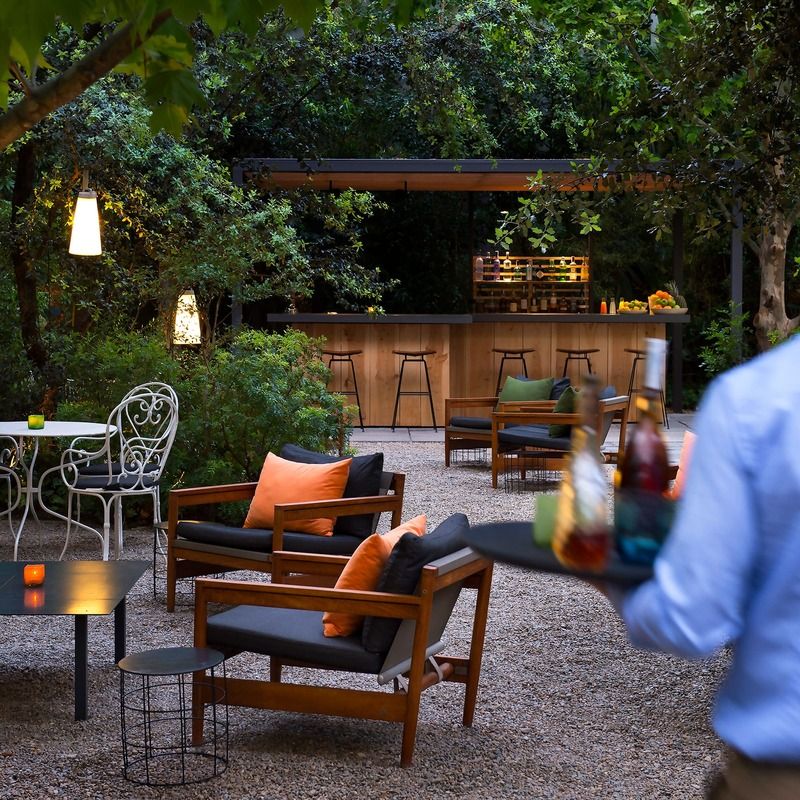
Since its opening in late 2010, the Ausejo family has transformed the establishment at Mallorca Street 271, next to Passeig de Gràcia, into one of the oases of the Eixample, a perfect embodiment of the order and daring that inspired its illustrious creatorApart from hosting foreigners from all over the world, the Alma must be praised because has wanted to be the image of a model Barcelona, the flagship of its urban center, a second home for Eixample residents eager for silence.This is the first thing that surprises you when you set foot in the place and immerse yourself in the practically sepulchral quietness of the interior garden that Albert Santamaria tends as if the fallen leaves mixed there were his own offspring. The oasis is a small tribute to the Mediterranean, and the four plane trees that crown it impose a Greek aura and wildness on the shyness of the Navarrese holm oaks and birches that recall the Pamplonan origin of the owners. You can go to Alma to eat with a friend to reconcile or have a furtive night of love, but above all it isideal for having a coffee reading peacefully in an interior block that is a small miracle in our Eixample burdened by noiseand the dirt of traffic.
I had eaten many times in its magnificent restaurant, but yesterday it was drizzling and I decided to travel two hundred and fifty meters from my house to sleep in the Alma and invent the privilege of having a second home. He who believes that luxury is found in baroque excess and the hysteria of kneeling attention is mistaken; inside each room of the Alma perfection does not lie in opulence or lavishness, but in the perfect click of things that have the benignity of working so that the first coffee of the day is a few meters from the bed and that the bath linen leaves the skin softer than the fleshy wounds of Saint Eulalia. If you stay overnight at the Alma, you will immediately be surprised by the insulting comfort of the oceanic mattresses designed in Carlos Yoar's atelier, a white tide where insomnia will drown among waves of cushions. When we swam there with my agora companion, we didn't quite know whether to love each other or abandon everything to sleep.
Joaquín Ausejo has been transforming his hotel into a perfect machine of quiet elegance and his son, Joaquín Ausejo Asiáin, has added the business coordination of a team that is on the verge of achieving the perfect sum of singularities that configures a total opera. In the hotel there are cold-souled soloists who would die before singing a single note out of tune; in the morning one can enjoy breakfast, not only to devour its magnificent truffled bikini, but above all to admire the mathematical gesture of Viera, one of the best waitresses in Barcelona. Later, in the restaurant, crowded for months, Eduard gives us his good work, who has understood the Cruyffist ethic according to which running is for cowards because a good maître must always be the center of his restaurant, with his eyes fixed on the tables as if they were artillery bullets, anticipating desires like a magician.
Barcelonans have always turned their backs on our hotels, establishments that in any of the cities we love form the backbone of their identity and a fundamental industry at an economic levelThe uniqueness of the Alma would not be the same without its first tenor, the French chef Gio Esteve. I have seen Gio cook for more than five years and I have been able to admire how he has gone from signing a simply correct menu, with classics such as Araiz pigeon rice, radicchio and broad beans or Llavaneres tear peas, to transmuting intoa chef who has understood that his first morning obligation (thank you, master Carles Gaig!) is to fly to the market and get excited about what he finds at the best stalls. This is how Gio travels in the morning to the Ninot market, with the mouth watering like a baby who sees the maternal breast, and returns to Mallorca street loaded with baby squid and turbot, happier than a clam, as if he were Neptune's twin brother. Currently,Alma's kitchen shines for its ordered fantasy, and the diners who flood the room adjacent to the garden have learned that the best way to enjoy is to let go of time by hurrying through the caverns of a scorpionfish.
The restaurant and its success among the Eixample parish has allowed the hotel to be open since May, and the Ausejos must be congratulated because they have shown that the ethics of triumph only have one password: while everyone complains and grumbles, you have to work and resist. During the toughest months of the pandemic, a good part of the family confined themselves to the hotel and took advantage of the planet's siesta to think about how they could perfect a team of workers who have already managed to work like a true dynasty where the clock rules but everyone exploits their uniqueness. From 72 workers, the number has dropped to 50 after the ERTEs without the machine suffering in service. But the Alma has endured, I insist, because its owners have wanted that, apart from visitors, their clients also be Barcelonans, and more specifically the inhabitants of the Eixample.
The best way to help Barcelona's hotel sector is to preach fewer psalms and thank the professionals who have poured their hearts out during months of icy complexity. Despite our cynical speeches towards the sector, we Barcelonans have always turned our backs on our hotels, establishments that in any of the cities we love form the backbone of their identity and a fundamental industry at an economic level. Alma has managed to bring us closer to the soul of the Eixample and our most basic duty is to return the gesture with generosity, living there for a night, or having a drink in its garden even if only for a few hours, also thanking the luck of being able to have a second home in the Eixample, feeling that tonight, when we return home, I cannot give you such a white sea for you to sleep by my side nor such a well-kept garden where we can get lost.
The hotel belongs to the Navarrese Ausejo family.
Add The New Barcelona Post as your preferred Google source for free
Stay informed with the latest news.