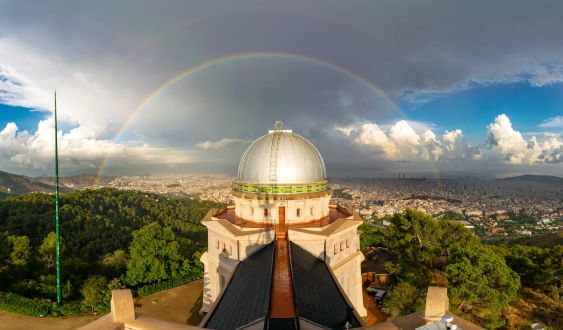
Since 1914, the temperature, wind, rain, clouds, lightning and thunder, haze, hours of sunshine or the tornadoes and waterspouts that have occurred in Barcelona have never gone unnoticed. Everything that has intervened in the state of the atmosphere in this corner of the Planet has been measured, recorded, photographed and personally noted by meteorologists from the summit of a hill neighboring Tibidabo mountain, where the Fabra Observatory is located. Inaugurated in 1904 by King Alfonso XIII, it is owned by the Royal Academy of Sciences and Arts of Barcelona (RACAB), which is headquartered in Las Ramblas, and has 250 years of history.
At 415 meters above sea level, meteorology specialists have collected, uninterruptedly for more than 100 years, data that serve to study the climate and evaluate whether it changes or not. These are very good data for the study of climate change because they have been taken daily, at three different times of each of the 365 days of the year: at 7, at 13 and at 18 hours. "Not even during the civil war did this activity stop," says Alfons Puertas, one of the meteorologists who currently works at the Fabra Observatory doing this meticulous task of data collection. "This, climatically speaking, is very interesting because from 1914 until today it represents a very long series of information that, in Catalonia, only the l'Ebre observatory has also gathered," says Puertas.
"In Spain, only three or four, among them one in Madrid and another in Cádiz and, in all of Europe, a dozen, are the observatories that have such long series of data; information that, for the study of the climate, is the most valued," adds the meteorologist. "And our singularity ---he points out--- is that these are not only instrumental data, but also personal, information resulting from individual observation carried out every day of the year."
Everything he and his colleagues see and measure from the Fabra Observatory is sent to the Servei Meteorològic de Catalunya, and to the Agencia Estatal de Meteorología, from where it is sent to the Organización Meteorológica Mundial.
In reality, data has been collected at the Fabra Observatory since 1904, when it was inaugurated, but the uninterrupted series dates back to 1914, which was when Eduard Fontseré, meteorologist, astronomer, and seismologist, founder and director of the Servei Meteorològic de Catalunya, moved measuring instruments ---which were previously located at a higher elevation--- down to the garden, in order to comply with international regulations.
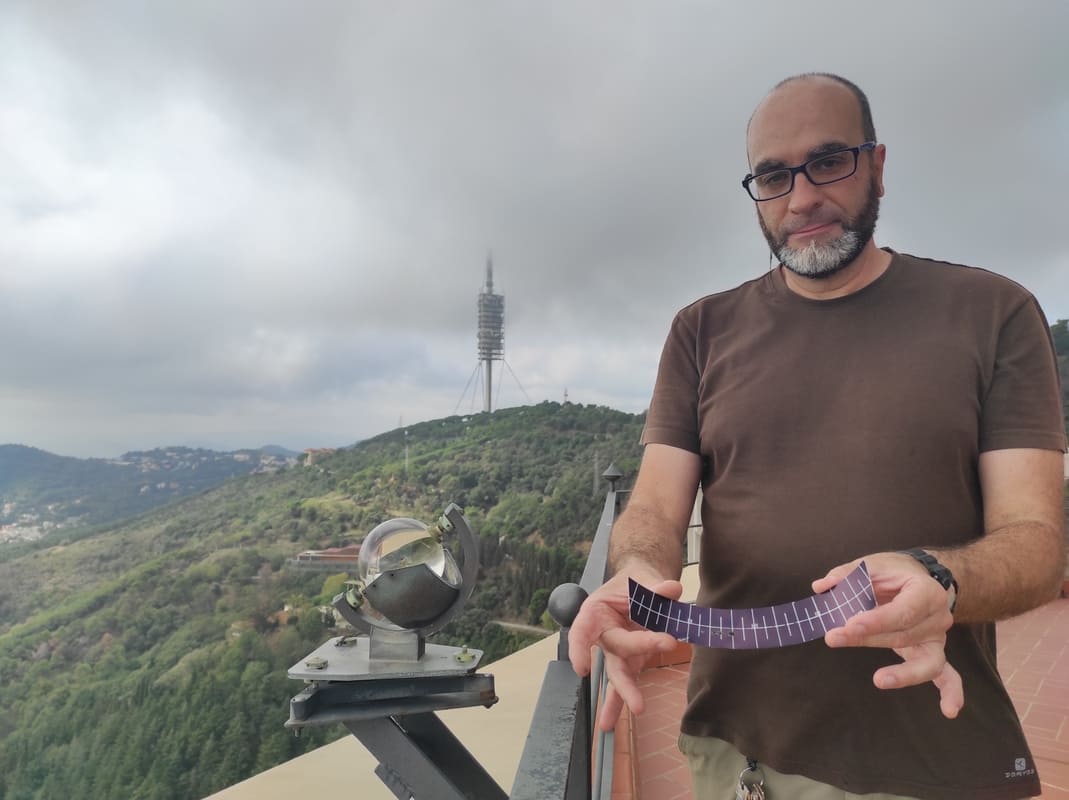
Among the different instruments, in addition to the rain gauge, thermometer, evaporimeter, and wind vane and anemometer (to measure wind direction and speed, respectively), there is a heliograph, a glass sphere that acts as a magnifying glass, in front of which a cardboard is placed daily, so that where the sun hits, the cardboard burns. And that is how the daily hours of sunshine are measured.
Four people make up the team of meteorologists who cover observations from the observatory every day of the year, without exception for any holiday. "Our purpose is not meteorological forecasting, but observation. We are the notaries who certify the weather that has occurred," clarifies Alfons Puertas.
With the records made in Barcelona, he explains, "the main conclusion of our series is that the temperature, very clearly, is rising. Since 2014, it has risen almost two degrees." Last Christmas Day, Puertas explained in a tweet that the Fabra Observatory had broken its maximum temperature record for December for the second consecutive day. The observer reported a value of 22.1 °C, surpassing the record that had been registered the previous day, of 21.7 °C. According to Puertas, it is the highest value since the beginning of the series, in 1914. The previous maximum in a December had been 20.6 °C, in 2015.
2022, a meteorological year of heat records
This same week, the Fabra Observatory has made an assessment of 2022 as a whole, a year in which the record for average annual temperature was broken. Never before had the temperature recorded throughout a year in Barcelona reached 18.1°C, above the 16.8°C of 2020. Last year was also extreme in the number of tropical nights, as 76 nights in which the temperature did not drop below 20°C had never been recorded. The year will also go down in meteorological history for the record number of hot days, with 73 days with maximum temperatures of over 30°C.
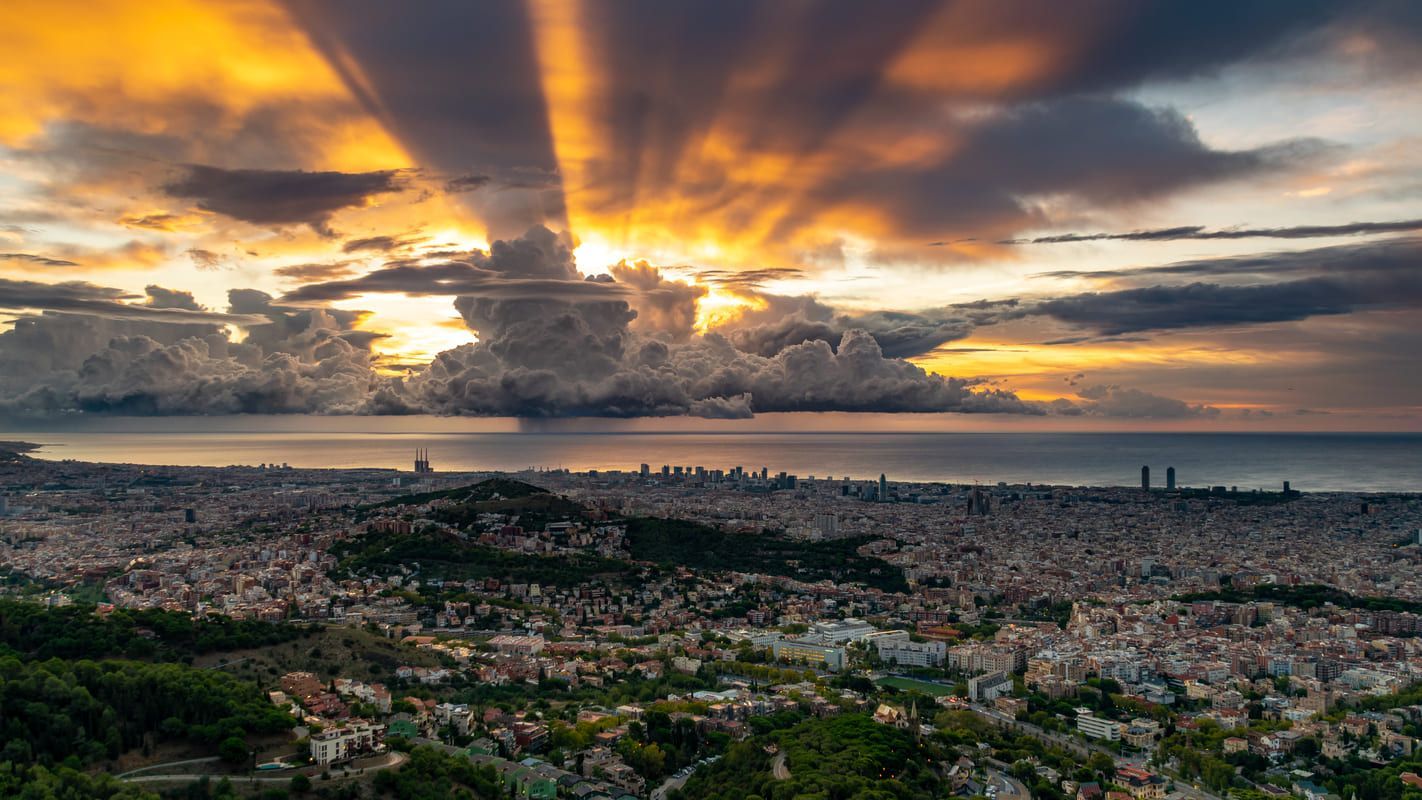
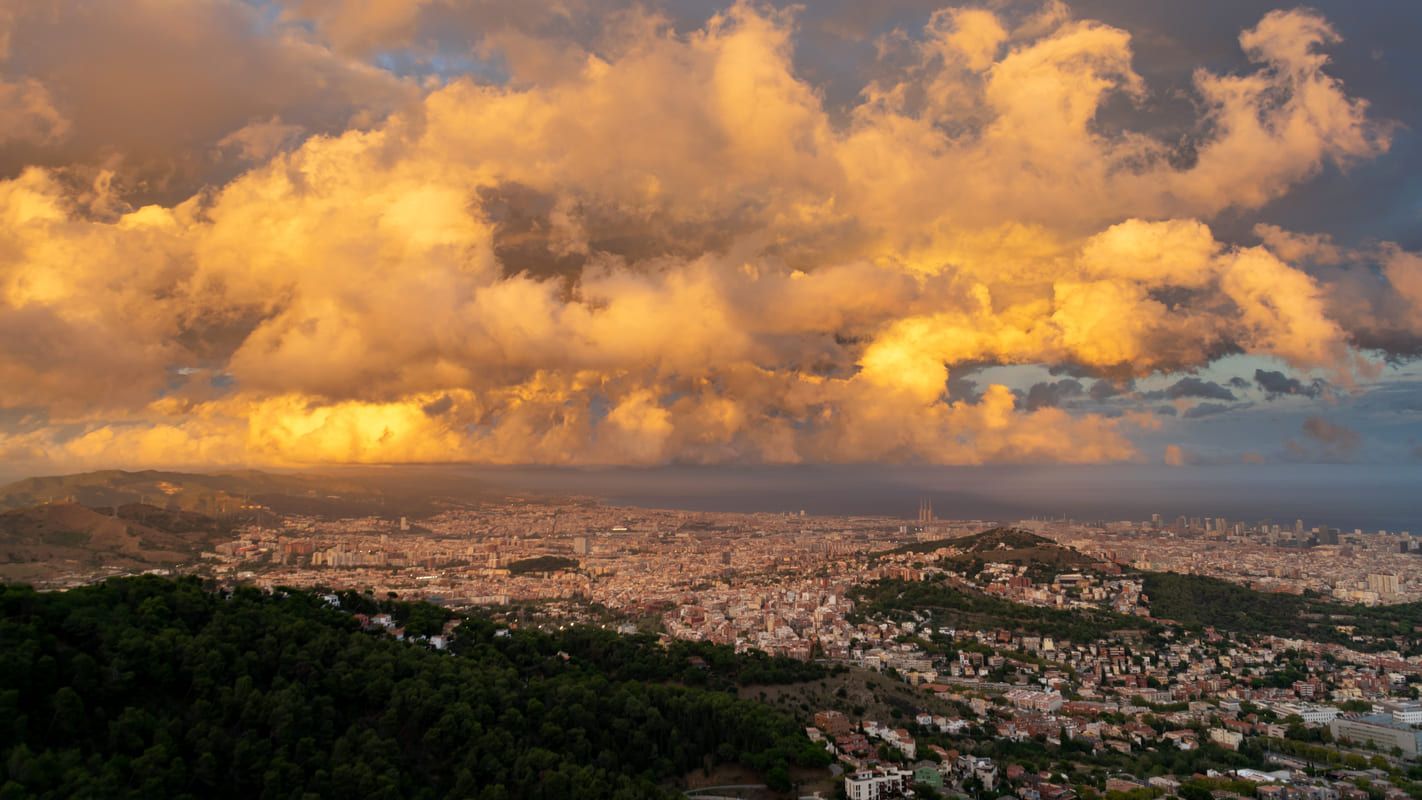
Alfons Puertas: "Our purpose is not meteorological forecasting, but observation. We are the notaries who certify the weather that has occurred"The work of meteorologists at the Barcelona summit is painstaking. They have many routines that keep them in outdoor spaces, on the terraces or in the gardens of the observatory. Mornings and afternoons observing the sky and the horizon lead them to notice many details. The presence of a rainbow, the eruption of thunder, whether there is a storm over the sea, and the type and quantity of clouds seen from the highest point of the observatory are observed and noted by each meteorologist. Alfons Puertas, along with Javier Martín-Vide, is the author of the Cloud Atlas of the Fabra Observatory, a fantastic collection of photographs showing the great spectacle that our sky is on certain days and times of the year. The one in Barcelona is the first observatory to publish such a photographic work, with all images taken from the same place. The work, which is a marvel for the eyes, deserved the Serra d'Or award.
Tornados and waterspouts
Another curiosity that Alfons tells us about the meteorological phenomena experienced from the Barcelona summit is that every year they see tornados and waterspouts (tornado over the sea). Sometimes the rain itself prevents them from being seen, but they can occur, because they always end up being seen.
Another thing they see from the observatory's terrace is the island of Mallorca. It is no myth –the meteorologist emphasizes–, "about 30 times a year, especially in autumn, winter and early spring, and at dawn, when the day begins to break, we see the Serra de Tramuntana, where the highest mountains on the island are located". Also the snowy Pyrenees, Puigmal and Montseny can be seen on clear days.
And, in parallel to the hours and hours of accumulated eye-level observation, at the Fabra Observatory, all the earthquakes felt in Barcelona are continuously recorded, 24 hours a day. "There are about 400 earthquakes a year in Barcelona, which is the seismic reality of many places. They are very small. These, specifically, come from the Pyrenees and radiate towards here".
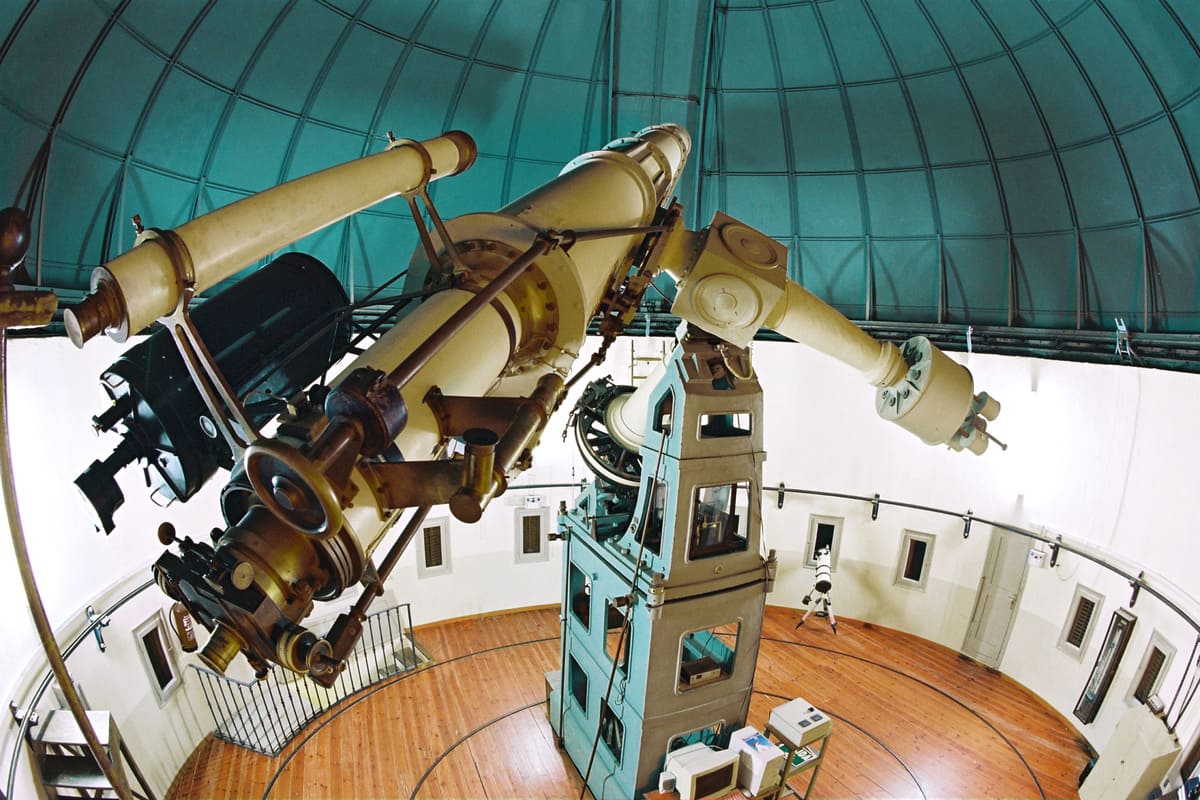
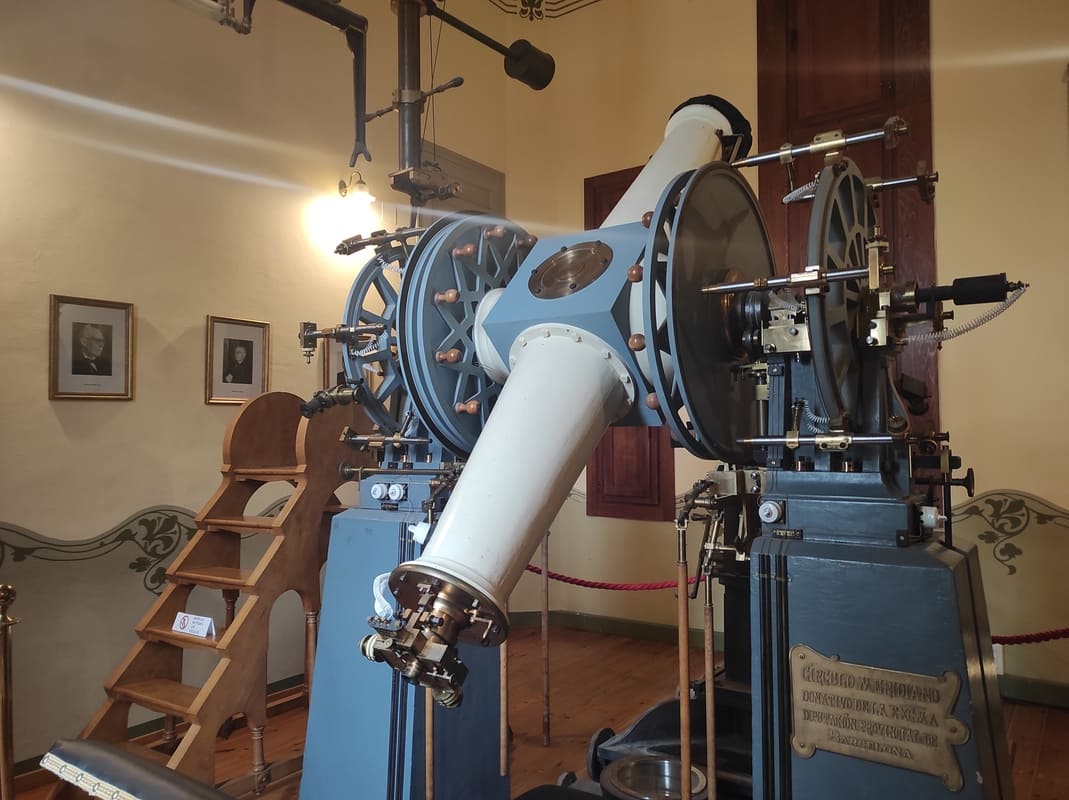
The meteorological and seismic activity of the observatory actually completes the task for which this building, where there are two telescopes, two perfectly preserved jewels, is best known and continues to be made known to the public. One larger, from 1903, with 19th-century technology, but built in the 20th century and still in operation today. "It is used to look at the moon and planets, but at a divulgative level," specifies Alfons Puertas. The other is a museum piece that is not used.
Through the cultural dynamizing company Sternalia, guided night visits can be booked and, from June to October, participate in the Dinners with stars, which combines scientific dissemination with a dinner outside the observatory, with privileged night views of the city of Barcelona. The guided visit to the observatory reviews its history and activities, and enters different rooms, such as the meeting room, which preserves the original furniture. Today it is still used for the meetings of the academy's board of directors.
With the increase in activity and life in the city of Barcelona, light pollution made the observation of stars at a professional level more difficult, which is why, 15 years ago, a new observatory was built in the Montsec mountain range, in the Lleida region of Noguera, in the pre-Pyrenees, which is managed from Barcelona and is also owned by the RACAB.
European program
The astronomical specialty of the Fabra Observatory is currently the monitoring and surveillance of asteroids and comets, and not the astrophysics of the universe. Rocks orbiting the sun are located, much more numerous and smaller than planets. The astronomy section, initially directed by the illustrious astronomer Josep Comas i Solà, has traditionally worked on small bodies in the solar system, such as asteroids and comets. In this time, 12 asteroids and 2 comets have been discovered, one of the latter being periodic.
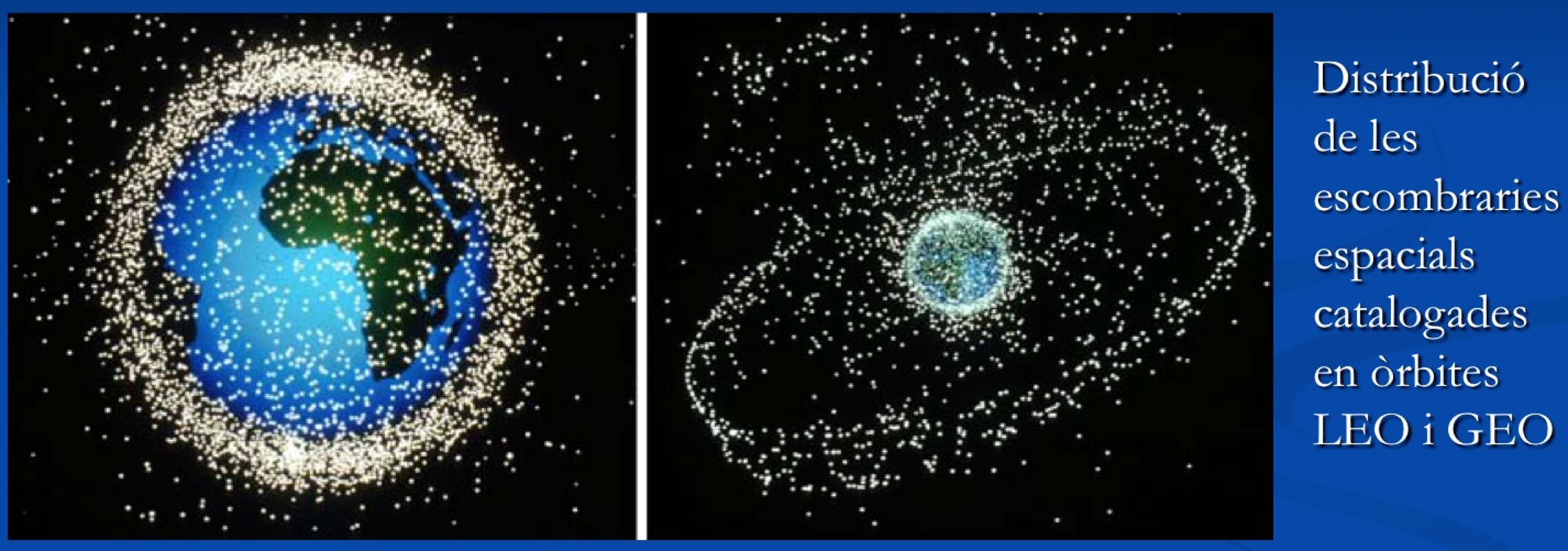
Since 2010, very intense work has been done in the field of space debris (debris in Earth orbit of human origin) with the Fabra-ROA Montsec Telescope (TFRM) located at the Montsec Observatory. Specifically, since 2016, they have been very actively participating in the European Union's space program called Space Surveillance and Tracking (SST-EU), established by decision of the European Parliament in 2014. The mission of the Fabra Observatory with the TFRM is the detection and cataloging of space debris, mainly in the Geostationary zone, obtaining precise astronomical positions to calculate the orbit of objects and prevent possible collisions.
All information on asteroid tracking is sent to the Minor Planet Center, which is the international body directed by the International Astronomical Union that centralizes all data. The astronomers themselves go to the observatory when they know that an asteroid may approach Earth more than usual, and from each center, they plan the tracking. But practically all the astronomical part is done from Montsec.
Humans are responsible for space debris, because they are remnants of old satellites that were launched into space many years ago. And, even though they are no longer used, they still orbit outside Earth.
Origin of the Fabra Observatory
Astronomical observation was the driving force behind the creation of the Observatory building by the RACAB. In the success of the project, a woman played a key role. Dolors Puig was the wife of Camil Fabra, the owner of the Fabra y Coats textile factory, which was in the Sant Andreu neighborhood of Barcelona. The children would give their name to the Fabra y Puig promenade. Dolors liked astronomy and it seems that it was she who suggested to her husband that he make the testamentary donation that allowed the RACAB's purpose of building on Tibidabo to be carried out. The project was commissioned to the architect José Domènech y Estapé, also the author of the UB Faculty of Medicine, the Hospital Clínic, the former headquarters of Gas Natural in Portal del Ángel, and the Modelo prison.
Advised by José Comas, the architect had to design a pillar with its own foundations located in the center of the building that supports the telescope, so that it does not touch the building and prevents anyone's footsteps from making it tremble. A dome protects the telescope from the wind and opens up to a meter to allow observation of the sky. The telescope also has a built-in camera.
Family life in a scientific environment
In 1903, when the observatory was inaugurated, a family was hired to be caretakers. They lived in the observatory and were in charge of the maintenance of the building and the surrounding fields, where they had orchards, chickens, rabbits, and goats. They were Gabriel Campo and Juliana Cunchillos, and their children, Gabriel and Santiago. The eldest son later became part of the meteorological section of the observatory, while the youngest would continue as a caretaker, as would his daughter, María. The fourth generation was no longer linked to the observatory's tasks. Since then, after about eighty years of having seen Campo family members born and die, no one lives in the building anymore, and the rooms that had been their home are now offices.
Add The New Barcelona Post as your preferred Google source for free
Stay informed with the latest news.
