
After months of preparation, dozens of hours training in a simulator, and finally training with the AC40 boats, the sailors of Sail Team BCN will launch into the sea this Sunday to compete in the women's category of the America's Cup, the first in the history of the competition.
The Barcelona team, composed of Neus Ballester, María Cantero, Paula Barceló, Silvia Mas, and Nicole Van der Velven, is preparing to make history in this first edition alongside the sailors from the twelve teams that will compete in this first women's edition, bringing together the best sailors worldwide. Sail Team BCN debuts this Sunday along with the other five invited teams to the competition, after the group of six America's Cup teams already competed this Saturday.
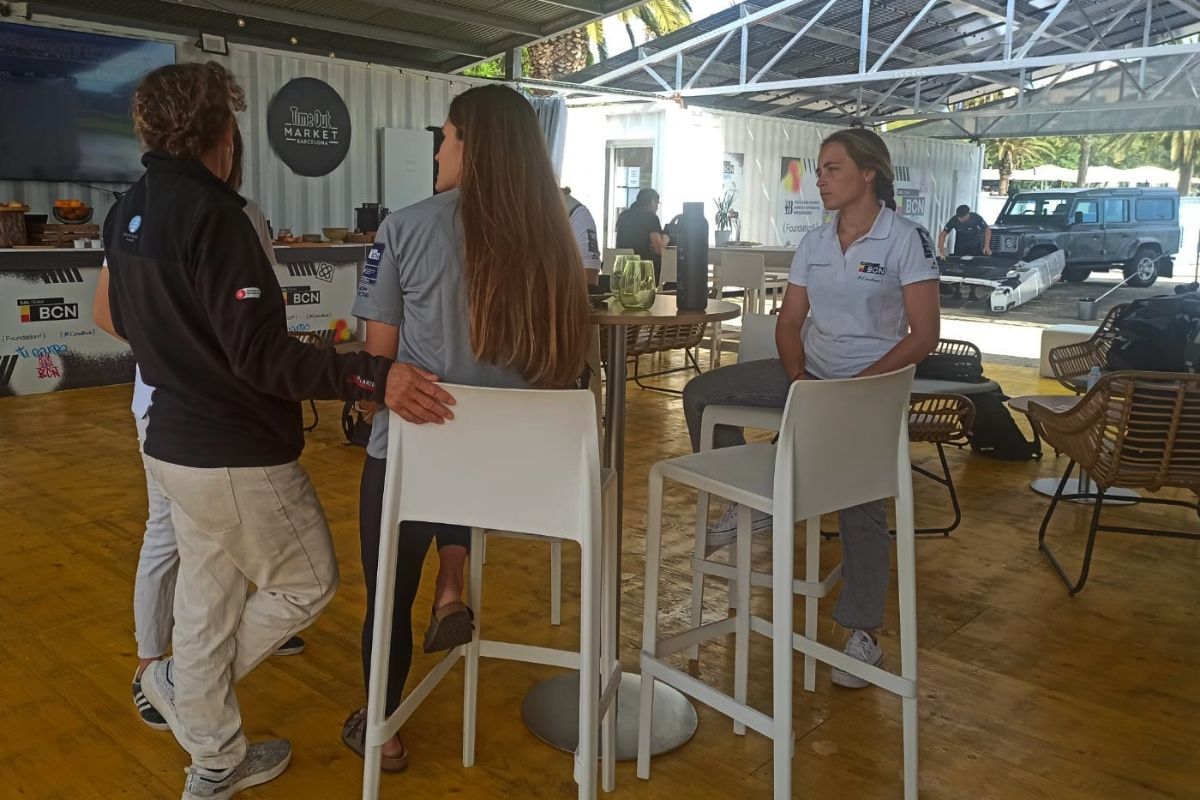
The sailors face the competition with enthusiasm and determination, as they explain while conversing with The New Barcelona Post at the team's base, located in Port Vell. "We are very eager to compete and to sail with the AC40; for us, it is a unique experience," highlights Ballester. And sailing with an AC40 is not common, not even for acclaimed sailors. Its characteristics allow it to reach speeds exceeding 80 kilometers per hour, while also placing its price between two and three million euros.
In this context, most of the AC40s with which the invited women's and youth teams compete and train belong to the America's Cup organization. For this reason, the athletes have had to adapt to the schedule of the organizers and the rest of the teams to train with these boats. To compensate for the lack of a proprietary AC40, they have spent countless hours in front of the simulator and have trained mainly with a GC32 catamaran, which also has the hydrofoils that allow these boats to lift and fly over the water.
Since last week, the sailors have been able to train in several sessions with an AC40, although weather conditions have not made it easy in recent days, with days of too much wind and others with too little. However, sessions like last Monday's, where they spent more than three consecutive hours training in the water, have allowed them to quickly acquire "flight hours and confidence; every minute that passes, we gain this confidence," highlights team coach Mónica Azón.
Flight hours: this is how the coach refers to the training sessions aboard the AC40, which flies more than it sails. And it does so at such speed that "concentration must be total, as any error could have serious consequences," highlights Azón. Concentration and speed "cause great tension, and without realizing it you are tense for hours," and each movement and turn of the boat shakes the sailors forcefully. "The force pushes you forward and sideways, and the water pulls you strongly backward," describes Ballester.
These are sensations that cannot be anticipated no matter how many hours are spent in the simulator. And there have been many. However, the simulator allows "automating movements and familiarizing oneself with the buttons, as well as competing with other teams," explains Cantero. The simulator accurately reproduces the boat's buttons, the displays with sail information, and even the seats and their inclination. In front of the boat, as helmswomen, will be Ballester and Mas; behind, controlling the position of the sails as trimmers, will be Cantero and Barceló, with Van der Velven as reserve sailor.
To master the buttons and interpret the numbers on the screens, all five have had to invest many hours of study. "It's complex, and we're not used to it: normally you sail at most with a compass and guided by sensations, and this is totally different," recounts Barceló while reviewing the simulator's buttons, located in one of the four reconditioned nautical containers that make up the team's base.
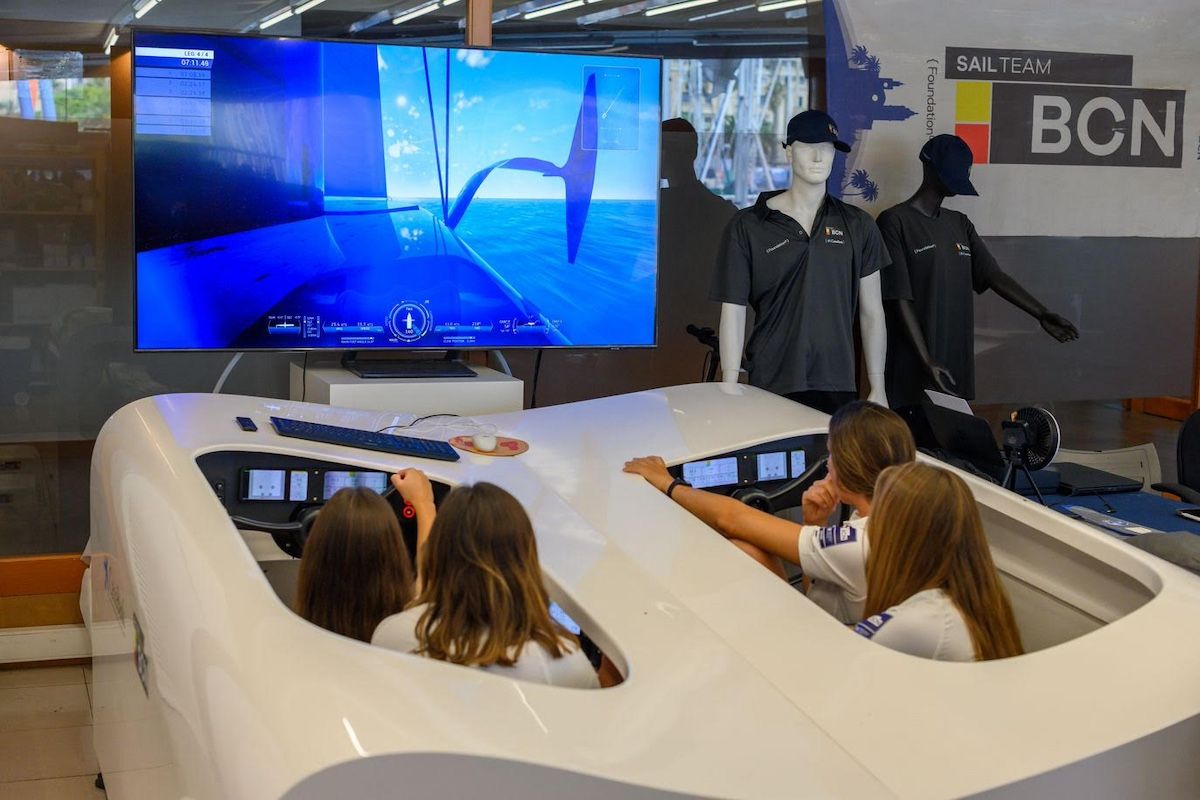
In addition to the sensations, there is something else that the simulator does not accurately reproduce: communication between the sailors. In the simulator, they are within touching distance of each other; at sea, they are at the same distance, but with the noise of the wind and waves, and with a sail that crosses the boat and completely covers them. To solve this, an intercom system allows them to communicate with each other and with the rest of the team when they are sailing. The simulator also works by programming the characteristics of the wind and waves, but there is no surprise factor: "Unexpected situations, sudden changes in wind or a boat appearing that you don't control, all that cannot be simulated," highlights Cantero.
The sailors have not spent the long sessions in the simulator alone: they have often done so competing with other teams in real time, with whom they meet through a group they share on Whatsapp. In fact, most of the sailors know each other from Olympic campaigns and other projects. "Practically all of us have competed against each other; many are good friends and competitors for years," according to Cantero, who highlights the good relationship between the rivals, despite the rivalry.
Among the members of Sail Team BCN, the relationship goes beyond being good: they are very close-knit, they assure. Three of them also share an apartment in the Antares tower, located in the Diagonal Mar area. There, they have woven joint routines: planning the day at the gym; having breakfast analyzing simulator data and setting the day's objectives; traveling to the base by Metro or bike, and training. Back home, they often end the day with a padel match, as Mas explains.
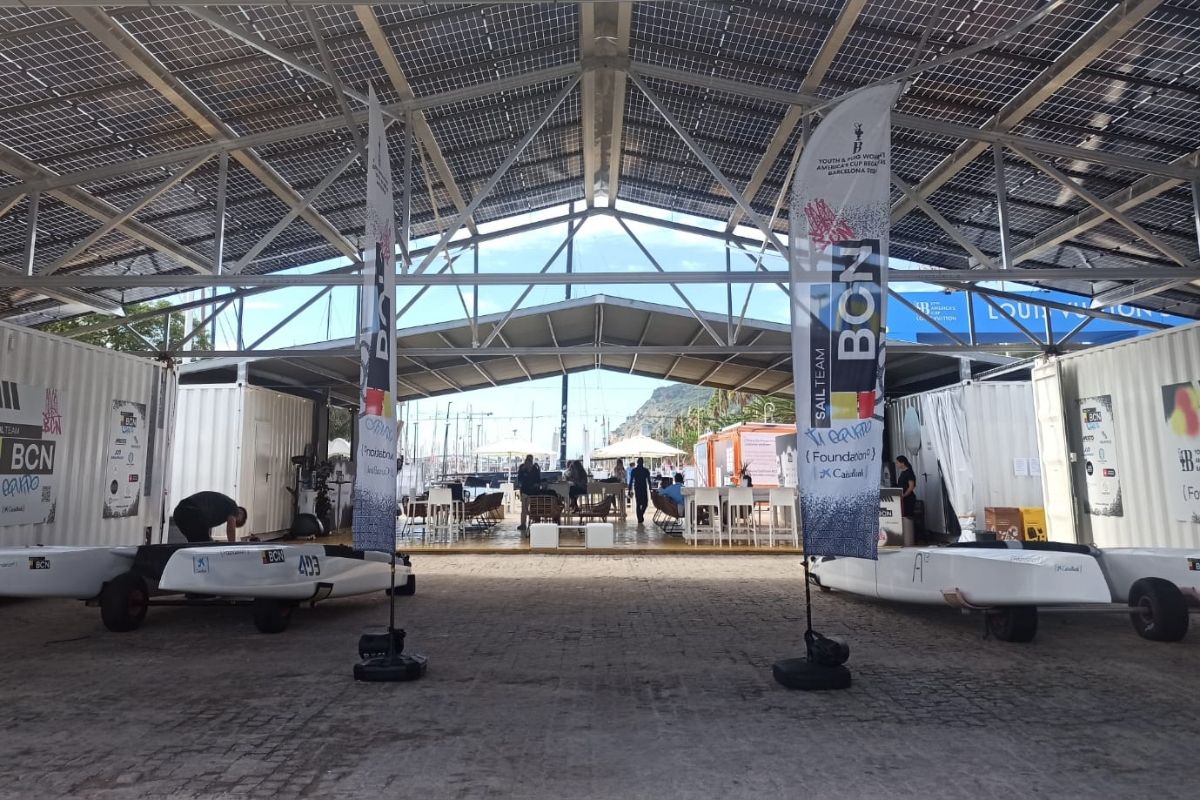
The routine, however, has changed since they were able to get on board the AC40 last week, with "very long days," sailing and also preparing the boat. And getting it ready is a long process that requires hours, but the five sailors want to be part of the preparation process: "Since we haven't had the boat until now, it even helps us to assemble and disassemble it repeatedly. The more we know the boat, the better."
And if the routine has changed since they were able to get on board the AC40, it will change even more now with the start of the competition. The days when Sail Team BCN has a regatta will be intense and, those when they don't, will be dedicated to analyzing those of other teams and their own, and also to recharging batteries. As Azón emphasizes. "It is as important to train and compete as it is to disconnect," in a competition as nautical as it is technological that, with this first women's edition, will mark a turning point in sailing and open the way for new generations of sailors.
Add The New Barcelona Post as your preferred Google source for free
Stay informed with the latest news.
