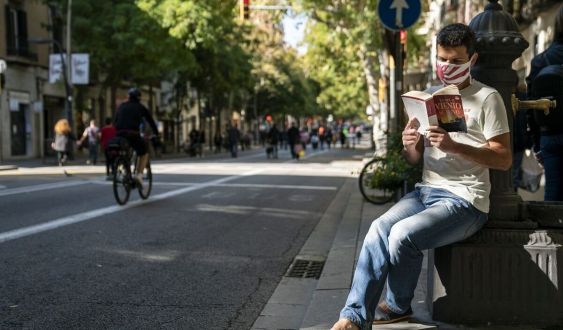
The year 2020 has been such a different year that any comparison falls short or is out of place. Confinement and successive de-escalations have imposed a completely new reality, making many previously daily habits impossible. Precisely for this reason, others that had not been so prioritized for a long time and could never be given enough time, such as reading, have been recovered. Many people have found reading a way to better pass the obligatory time at home. Despite being a very bad year for culture, the publishing sector has been able to recover sales in the last quarter and expects to end 2020 with a drop of around 5% in fiction, non-fiction, and children's and young adult literature books, areas that represent half of the sector's turnover. Even the Gremi d'Editors de Catalunya expects the impact of the coronavirus to be smaller if the Christmas campaign manages to encourage many books to be given as gifts. The entity celebrated its 35th Nit de l'Edició this Monday, in which the historic bookstores La 2 de Viladric (Tortosa, 1760), Fabre (Barcelona, 1860) and Geli (Girona, 1879) were awarded, with the aim of recognizing the establishments that have been associated with the Gremi for the longest time.
[subscribe_newsletter_esp]
After months with bookstores closed, books have relatively saved themselves from the crisis thanks to the improvement in the reading index recorded during confinement and maintained subsequently, and to the support for local establishments. Thus, the total number of frequent readers ---those who read at least once a week--- has grown by 15% during the pandemic, going from 50% of the reading population to 57%. For the president of the Gremi d'Editors de Catalunya, Patrici Tixis, books have shown during these months that they are an essential good of first necessity. "If food stores have to be open to feed the body, bookstores have to be open to feed the spirit," he defends. All this need for books that existed during confinement has also served to boost the digitalization of bookstores, with the acceleration of e-commerce for paper books, both individually and through platforms such as Todos tus libros.

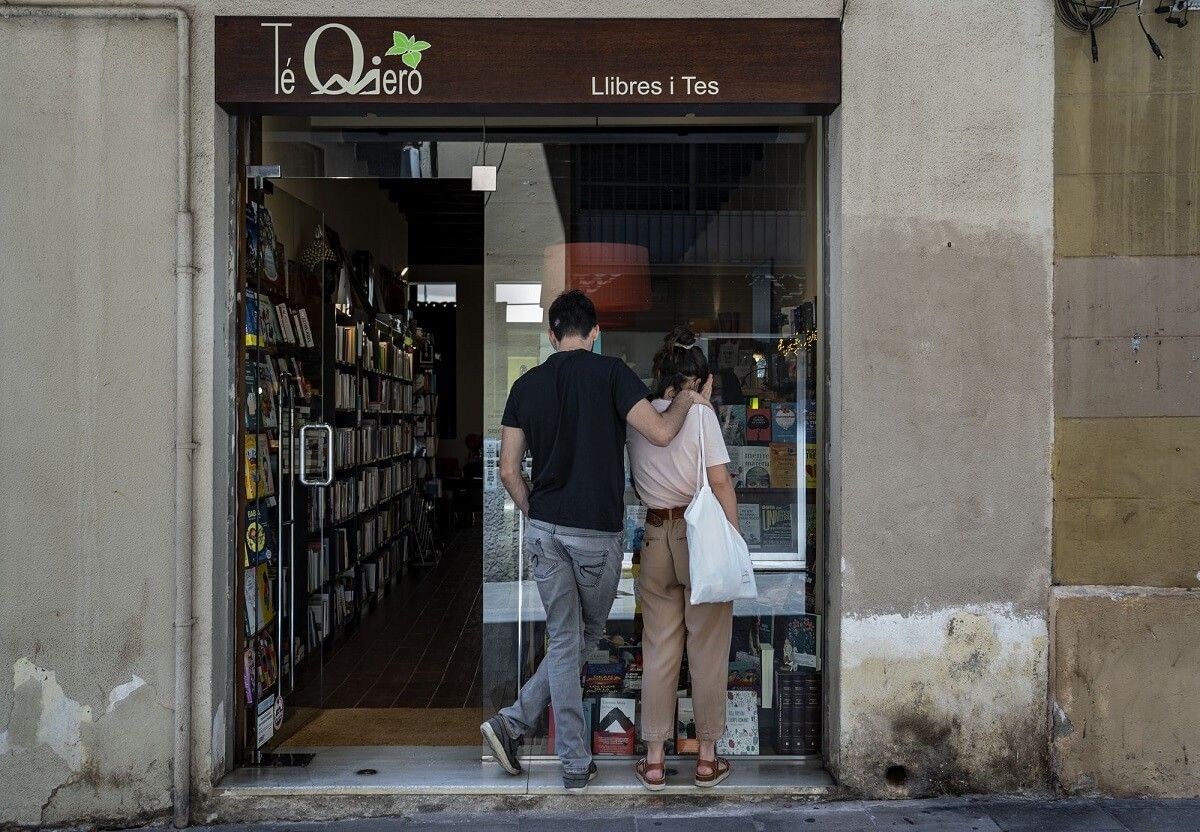
Public-private collaboration has also contributed to making the fall smaller, with the injection of more than six million euros through public purchases by libraries, aid to face the crisis, guarantees from the Govern and the Ministry of Culture to access liquidity, and campaigns in favor of books and reading. In this way, aid from administrations to the book world has increased by 40% compared to the previous year, and the Gremi d'Editors hopes that it will be consolidated for next year. All this, according to Tixis, has served so that not many bookstores have had to close and, in fact, new ones have emerged, such as Ona Llibres, Byron or Finestres.
"If food stores have to be open to feed the body, bookstores have to be open to feed the spirit," defends TixisHowever, the bookstore sector has also suffered. Exports to Latin America have fallen by 40% and have not yet recovered, and textbooks have fallen by more than 10%, taking into account the special impact that covid-19 has had on schools, especially, during the previous course. On the other hand, piracy has grown more than 30%, and has spread on social networks, with the illegal sending of books via WhatsApp as one of the most difficult cases to control. "The piracy of cultural content in general and of books in particular should be able to be prosecuted more effectively," Tixis remarks.
Looking ahead to 2021, the Gremi d'Editors believes that the first quarter will still be very complicated and hopes that the second will already be better. Key events for the world of books such as Sant Jordi or Comic Barcelona will try to be held, with the necessary security measures, but there is still a long way to go before they are like those of 2019, before everything. To be more prepared for next year, Tixis demands that bookstores be declared essential businesses and thus avoid the hunger for books that was experienced during confinement from happening again.
Add The New Barcelona Post as your preferred Google source for free
Stay informed with the latest news.
