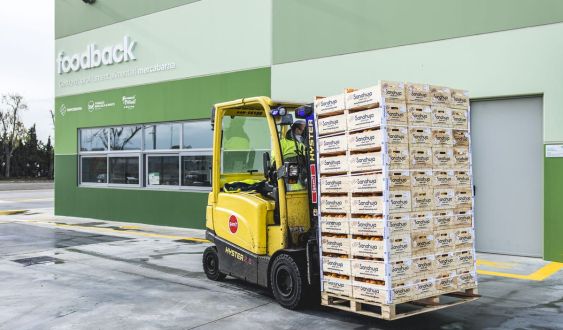
Last March, Mercabarna inaugurated Foodback, a pioneering center in circular bioeconomy that allows fighting against food waste and the climate emergency and increasing the volume of donations of products suitable for consumption to social entities. It was launched in February and in its first six months of operation, it has proven to be a very valid initiative that fills all the social entities and administrations involved with satisfaction.
"We are truly facing a project to imitate. Foodback should be a symbol for the city of Barcelona, it is an example of collaboration between entities, public and private sectors that combines job creation for people at risk of social exclusion, with the minimization of food waste, the reduction of environmental impact, and solidarity towards people in a vulnerable situation." This is how the president of Banc dels Aliments, Lluís Fatjó-Vilas, assesses this first half-year of Foodback's service, which allows distributing, every month, to about 50 social entities with 20,000 beneficiaries, fresh products that no longer have commercial value for wholesalers, but are totally suitable for consumption.
Without this center, the tons of fruits and vegetables that have been distributed to entities such as Gorg-Mar (Badalona), Cáritas, Creu Roja, or the Pare Manel Foundation would have ended up in the trash. "Initiatives like Foodback are more necessary than ever because the pandemic has significantly increased the demand from all social entities. The war in Ukraine and the current context of rising prices also affect. The prospects are not good and, therefore, we value this project very positively for its innovative component and for being the result of a sum of collaborations between entities and administrations," highlights Joana Prats, director of the Area of Relations with Social Entities of La Caixa Foundation.
Joana Prats: "We value this project very positively for its innovative component and because it is the result of a sum of collaborations between entities and administrations"According to Prats, Foodback complements La Caixa's labor insertion and poverty fighting programs and contributes to the mission of "working for a better, more just and equitable society." In this sense, to support the initiative, the foundation has committed to to financially fund Foodback with a contribution of 394,000 euros over two years. Approximately half of this budget will be allocated to provide financial support to the Fundació Formació i Treball, which is responsible for the people who work at the food recovery center. The other half is destined for the Banc dels Aliments, which is the coordinating entity of Foodback and is responsible for distributing fruits and vegetables to the beneficiary NGOs.
"We want a part of the budget to be allocated to R&D, that is, to optimize and streamline the collection system as much as possible, which must be very fast because these are perishable products. We need to fine-tune the procedure that allows matching the demand of the entities with the supply of Foodback," explains Prats.
The director of Fundación La Caixa assures that this Mercabarna facility "is a good example" of social collaboration with the Barcelona City Council and the Generalitat, and that it establishes a model "that can surely be transferable to other autonomous communities." "We are very happy to be part of Foodback, the assessment so far is very good," concludes Prats.
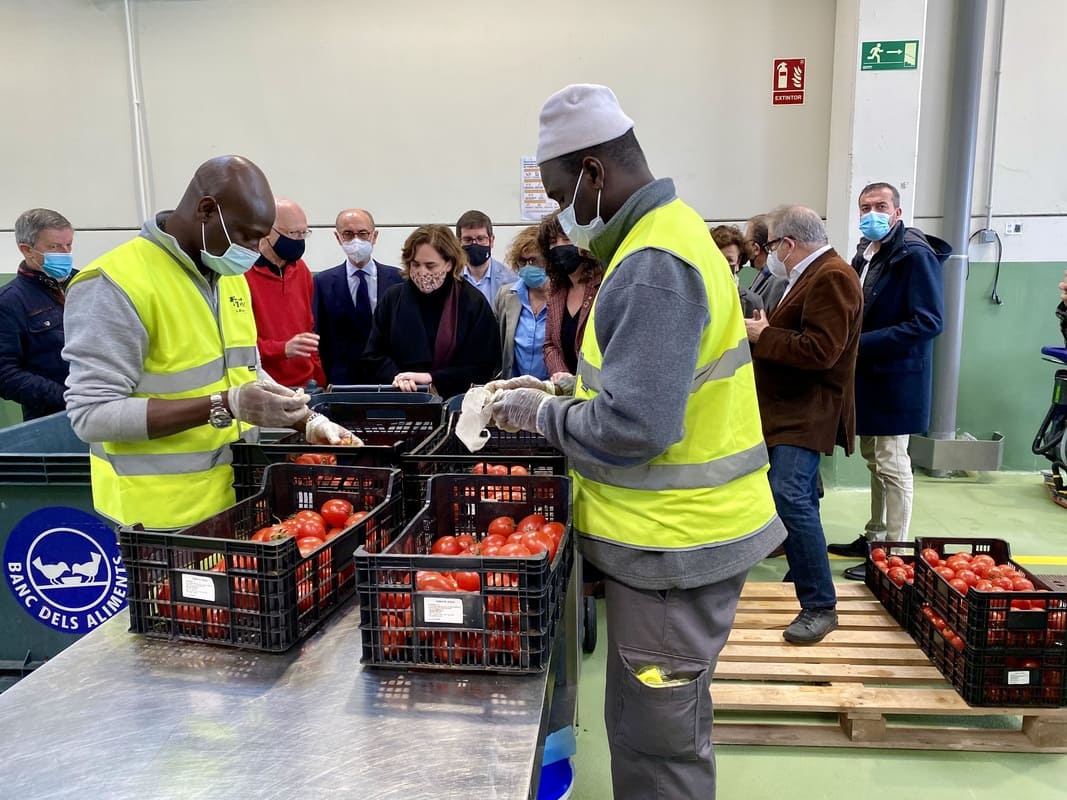
Laia Ferré, head of the Services Division of the Fundació Formació i Treball, expresses herself along the same lines. She is responsible for managing the people who carry out the selection process of the hundreds of kilos of fruits and vegetables that arrive daily at Foodback. Their mission is to decide, box by box, which products are valid for distribution to social entities and which should go to the Green Point for waste. A person from the foundation's structure is responsible for training and coordinating this team, currently made up of four people in a situation of social exclusion who, thanks to Foodback, have been able to find employment.
"These are people very far from the labor market to whom we have been able to give an opportunity. Our mission as an insertion company is to give them a job, but, above all, to improve their professional profile, their skills, and help them make the leap," explains Ferré. In fact, one of the four workers with whom Foodback started (there are two men and two women) has already found another job in the ordinary market, and now another person has been hired to replace him, meaning five employment opportunities have already been created for this vulnerable group.
Laia Ferré: "They are people very far from the labor market to whom we have been able to give an opportunity. Our mission as an insertion company is to give them a job, but, above all, to improve their professional profile, their skills and help them make the leap."Ferré confirms "the understanding and good coordination" existing among all the entities involved in Foodback. She states that, for now, it is not necessary to increase the staff, as it is adequate for the volume of fruits and vegetables they receive every day, but everything will depend on the evolution, since the objective is to significantly increase the tons.
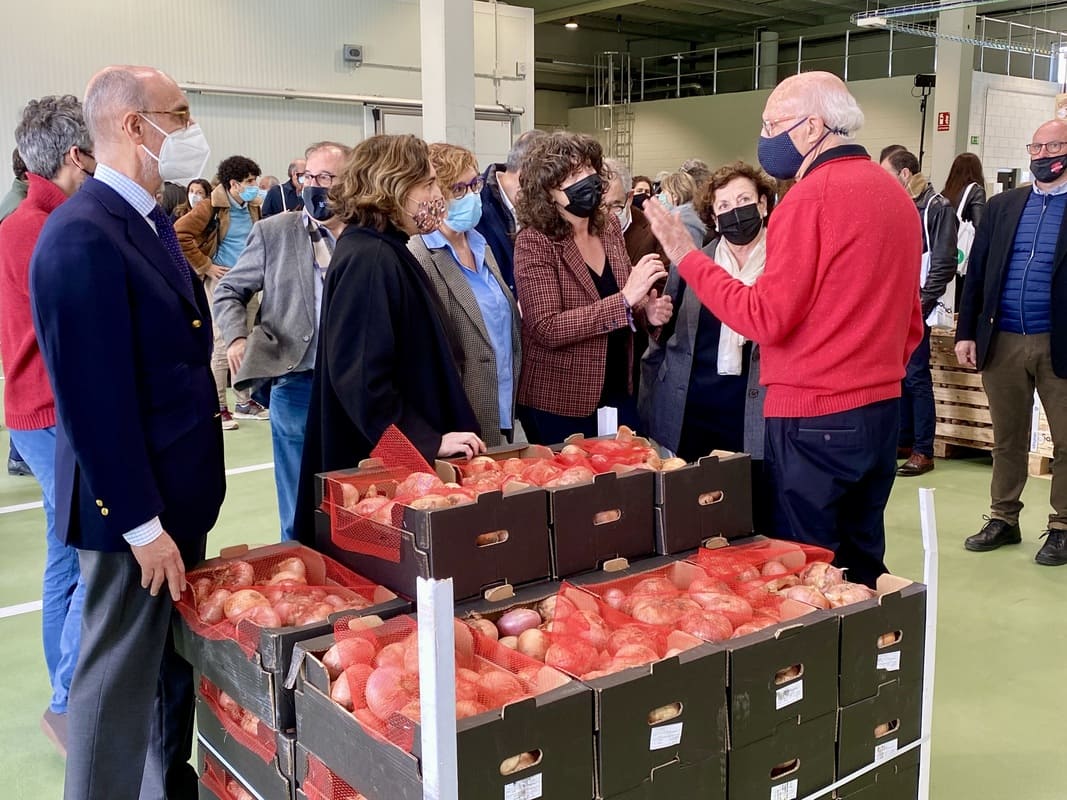
Between the months of February and May, coinciding with the start-up phase, Foodback distributed a total of 277.6 tons to social entities, 14% more than the quantities donated by Mercabarna operators to NGOs in 2019. These foods were provided by between 40 and 55 companies each month and were distributed to about fifty social entities, with a total of 84,625 final beneficiaries during these first four months. If the figure is extrapolated to July, the total number of beneficiaries during the first half year of Foodback amounts to 125,000.
"It must be said that in these first months of start-up there has been a shortage of product, because Mercabarna companies have had few surpluses due to very high commercial demand that has coincided with an agriculturally not very good year. But everything that has reached us we have channeled among the entities, even so, we are still very far from the capacity we can absorb," points out the president of Banc dels Aliments.
Lluís Fatjó-Vilas: "We are facing a very valid model that will allow us to minimize waste and meet the demand of social entities with much more effectiveness and speed."Lluís Fatjó-Vilas highlights "the great variety" of fresh products that Foodback allows to distribute, a variety that is very important to be able to face the unbalanced diets of vulnerable groups to whom the social entities they supply are directed."The beneficiaries are people who really need to ingest fresh products like the fruits and vegetables we select at Foodback", he assures. "We are facing a very valid model that will allow us to minimize waste and meet the demand of social entities with much more effectiveness and speed. When the agricultural and market situation normalizes, Foodback will gain the desired momentum and we will achieve the volume objectives we set for ourselves," concludes Fatjó-Vilas.
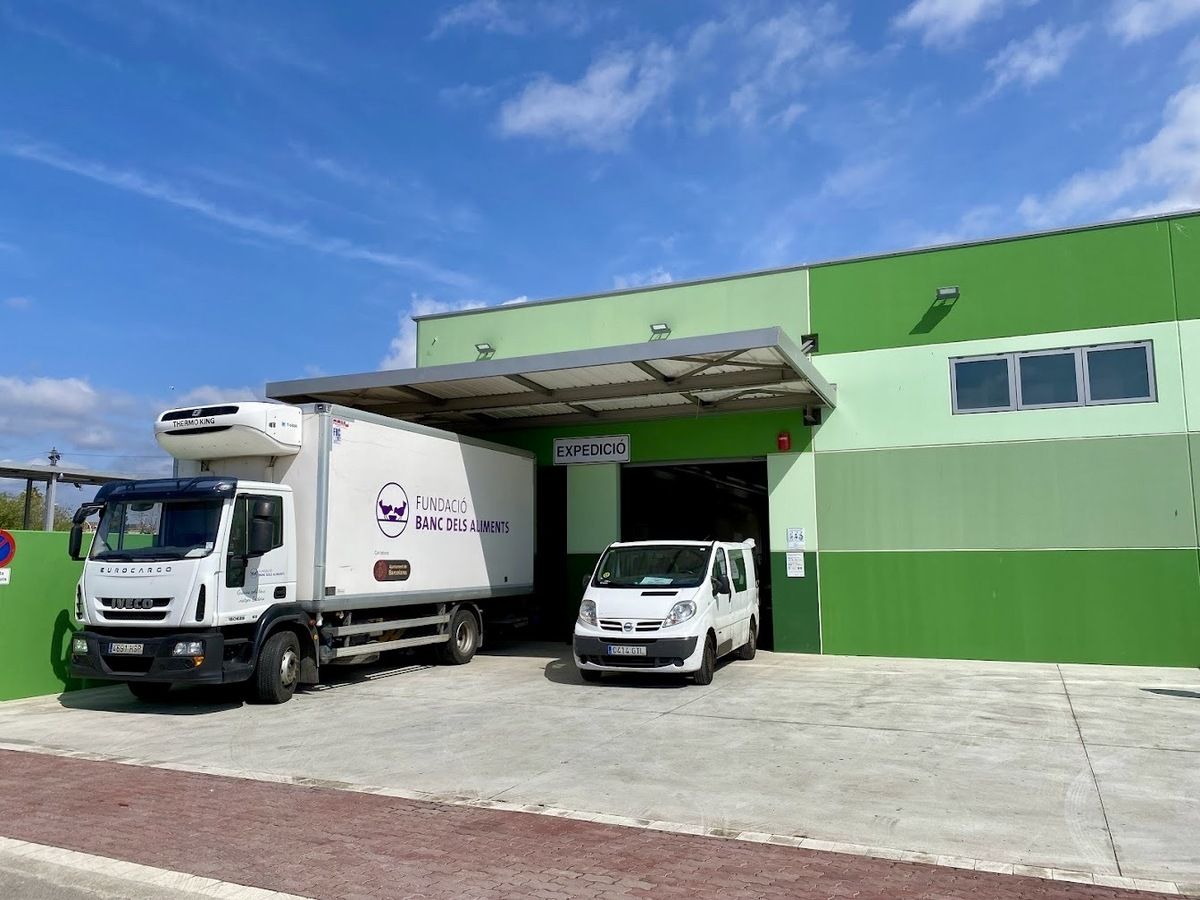
In 2015, Mercabarna reused about 1,000 tons of food per year, a figure that currently reaches about 1,500 tons. With Foodback, the purpose is to more than double this volume and reach between 3,000 and 4,000 tons by 2026, when it is expected that not a single ton of food suitable for consumption will be wasted.
Foodback occupies a 900 square meter warehouse in which Mercabarna has invested one million euros. To cover its operating expenses, budgeted at 400,000 euros annually, it has funding provided by the Fundación La Caixa, as well as resources that will be allocated by Mercabarna itself and the Departament d'Acció Climàtica, Alimentació i Agenda Rural of the Generalitat.
New organic matter management model
Until now, for a Mercabarna operator, the donation of their surpluses to social entities was a voluntary decision. Boxes with fruits and vegetables without commercial value, but suitable for consumption, could be delivered to the Banc dels Aliments, taken to the Punto Verde for destruction, or thrown directly into the compacting containers in the aisles of the central fruit market. With Foodback, this model is completely changed, and a new system for managing vegetable organic matter is implemented, aimed at achieving maximum utilization to reach zero waste.
To this end, Mercabarna has invested in the purchase of a new model of smart containers that record the volume of kilos that each stallholder pours into it. From now on, each company will be able to throw a maximum of 400 kilos per day into the trash container, that is, 2,000 kilos per week.
Thus, surpluses can no longer go directly to the Green Point, but the new circuit establishes a control and selection system to decide, pallet by pallet, which products are considered waste and which are not. Thus, specialized Mercabarna operators evaluate what goes to the waste treatment center or to the new Foodback Food Recovery Center. The requirement to decide that a pallet should go to Foodback is that more than 70% of it is suitable for human consumption.
Once these foods defined as suitable are received, workers from the Formació i Treball Foundation make the selection, box by box and practically kilo by kilo, to discard defective produce. Once this triage is carried out, the Banc dels Aliments ---through two hired people and a team of volunteers--- is responsible for the distribution, which is carried out on the same day. Depending on the volume and the food that has arrived at Foodback, more or fewer NGOs benefit.
"We carry out an equitable distribution. Some entities come directly to pick up the boxes we have assigned them, and we have to take them to others. Then, they distribute the food directly to the end users. We also supply four large soup kitchens that cook these products and have a great capacity to absorb what reaches us at Foodback," concludes Lluís Fatjó-Vilas.
Add The New Barcelona Post as your preferred Google source for free
Stay informed with the latest news.
