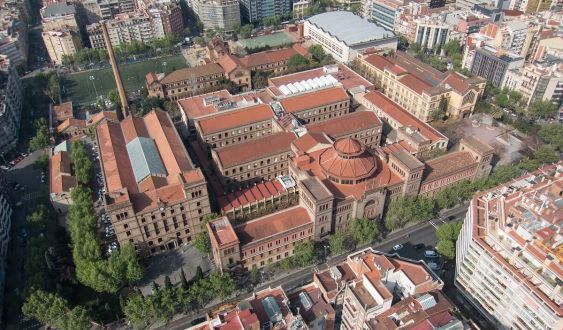
The Industrial School also wants to digitize and become greener. The old factory complex will be transformed to adapt to new times, without forgetting the past that can be read on its walls. It will pollute less and open up to the public, who will be able to cross the site from end to end through several axes.
After the option of expanding Hospital Clínic in this space was ruled out, the Diputación de Barcelona, the majority owner of the complex, has presented the main lines of action for this transformation project. The execution period is set at ten years and the budget will be 100 million euros, which will be covered with the supramunicipal administration's own resources, although the possibility of financing it with European funds is being considered.
The main pillar of the future Industrial School will be an international innovation center for public services, with construction expected to begin in late 2022. It will be located in the building of the former University School of Industrial Technical Engineering, which moved to the Besòs Campus of the Universitat Politècnica de Catalunya (UPC) in 2016.
The new center is expected to have a total area of 33,000 square meters and be comprised of 800 researchers, who will be dedicated to helping public administrations find new ways of making policy in a more digital and efficient manner. Startups and large companies operating in the provision of public services, research institutes, and institutional representatives will be installed.
The innovation center will include the paraninfo, recently inaugurated, although its construction began in 1926. This space, unfinished until recently, of the Industrial School consists of an auditorium with capacity for 600 people and is prepared to host congresses, conferences, or other types of events.
The center will also have a residence for future researchers and students from the different schools on the premises, the Escola d'Arts i Oficis, the Escola del Treball, the Institut d'Estudis Fotogràfics, and the Escola de Radiologia, which will continue in the new stage. The residence will be in the current Colegio Mayor Ramon Llull of the Universitat de Barcelona (UB), which will close at the end of this academic year and its building will have to undergo a comprehensive renovation.
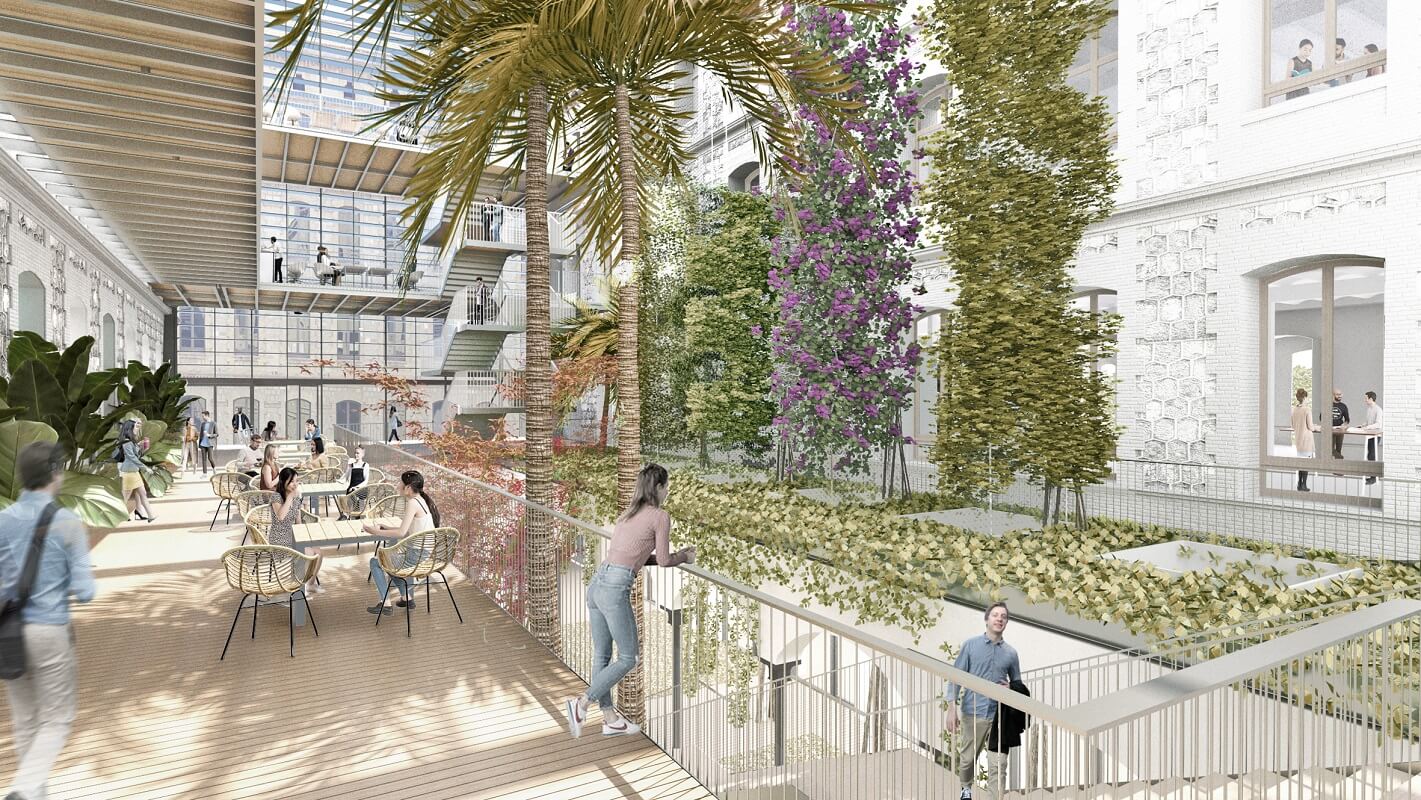
Creating a space for public innovation in the Industrial School reformulates the original will of the Barcelona Provincial Council for this space, which was to establish a university to train the technicians that Catalonia needed to industrialize, defended its president, Nuria Marín, accompanied by the first deputy mayor of the Barcelona City Council, Jaume Collboni. Now, it involves digitalization, but also making the economy less polluting. For this reason, the project plans to incorporate 16,000 square meters of urban green space in the Eixample, one of the densest and grayest areas of the city.
Eloi Juvillà, commissioner of Singular Projects in the supramunicipal institution, detailed that more trees will be planted and new shaded areas will be generated, with the aim of incorporating the enclosure into the city's network of climate shelters, as well as renovating existing buildings to ensure energy efficiency and installing photovoltaic panels. The presence of vehicles inside the space will also be eliminated, removing existing parking lots.
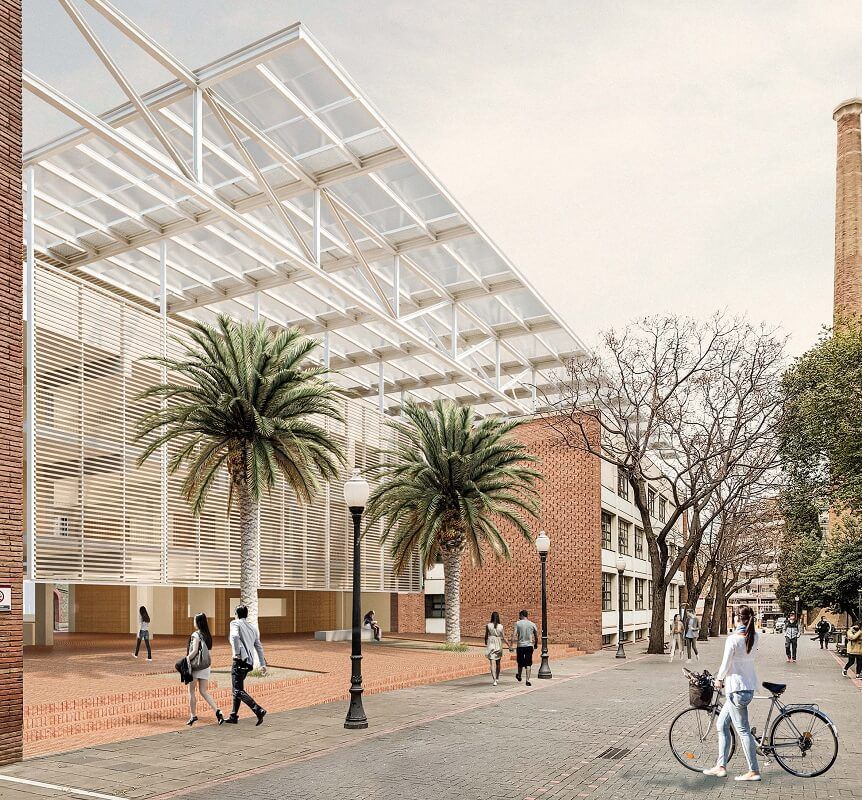
The incorporation of green areas will be accompanied by a better integration of the enclosure, which occupies four blocks of the Eixample, with its exterior. Although the walls that separate it from the surrounding streets, with a continuous flow of traffic, will be maintained, new pedestrian axes will be outlined that will allow crossing the Industrial School more easily than at present, characterized by the presence of areas more designed for vehicles than for people. One of these axes will take the form of a covered boulevard and will cross through the interior of the innovation center.
The incorporation of green areas will be accompanied by a better integration of the enclosure with its exteriorThe preservation of the heritage of the Industrial School is the third pillar of the transformation project planned by the Barcelona Provincial Council. The path started with the inauguration of the auditorium, which is open for visits, will continue with other spaces in the enclosure, such as the chimney that still remains from the old Can Batlló textile factory, conceived by the architect Rafael Guastavino, master of the Catalan vault and exporter of this technique to the United States, where he signed works such as Grand Central Station or the Queensboro Bridge in New York. Visiting this vestige will also allow discovering the network of underground tunnels that were designed to channel the steam from the machines and boilers distributed throughout the enclosure and make them exit only through the chimney.
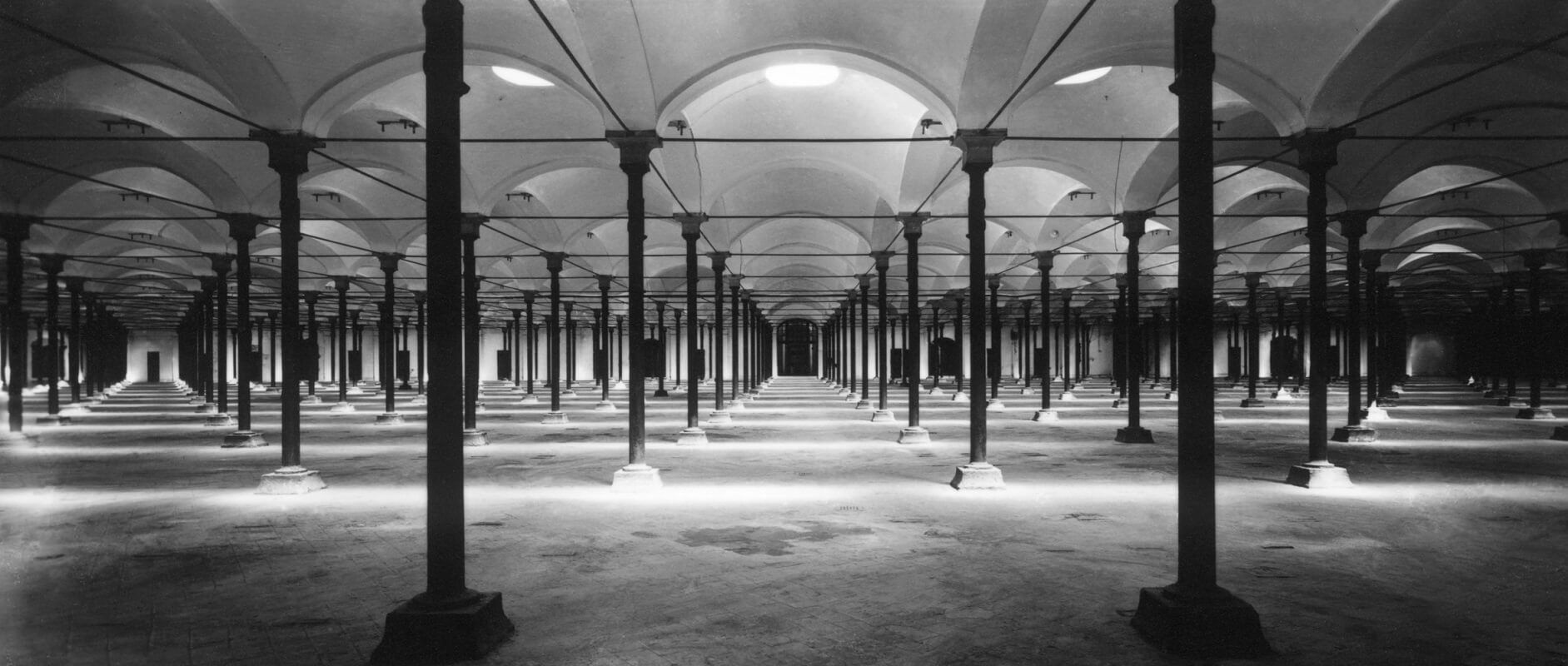
All this past will be highlighted from the Interpretation Center of the Industrial School, which will be located in the factory's machine building. The figures of the other architects who contributed to the definition of the enclosure in later stages, such as Joan Rubió i Bellver and Manuel Baldrich, will also be recognized. Other spaces that will be recovered will be the Weaving Room, with Guastavino's vaults, the Noble Room of the Clock building, the Chapel of the Ramon Llull Residence Hall and the lobby of the Escola del Treball.
Add The New Barcelona Post as your preferred Google source for free
Stay informed with the latest news.
