"I am a Catalan." Pau Casals was invited to the United Nations on three separate occasions, but it's undoubtedly the speech he gave on 24 October 1971 that's remembered most. That day he presented the Hymn of the United Nations, which he himself had composed, received the Medal of Peace, and delivered one of the most moving speeches he's remembered for, in defence of peace and of his native land.
I couldn't say how many times I've listened to this speech, nor how many times I've been moved by its boldness. One of the most universal musicians of the twentieth century — we mark the 150th anniversary of his birth this year, as it happens — standing before representatives of nearly every country in the world, chose to introduce himself, before anything else, as Catalan.
He didn't set aside his identity to speak to the world. He did exactly the opposite. It was precisely this deeply rooted identity that let him address it, and speak a universal language.
Perhaps great works, and people, and cities too, share this same virtue. When they don't try to resemble others, when they don't dilute their character to reach further, when they stay true to where they come from, that's when they manage to transcend it.
Great works don't lose their identity when they cross borders. Quite the opposite. It's precisely because they have such a clearly defined identity that they manage to connect genuinely with people who are entirely unfamiliar or distant.
"If Barcelona sparks interest around the world, it is not because it is a copy of other capitals, but because it is unequivocally Barcelona"
Let me explain: a work can be deeply rooted and, for that very reason, universal. And in fact, I've thought for some time that this is exactly what happens in Barcelona.
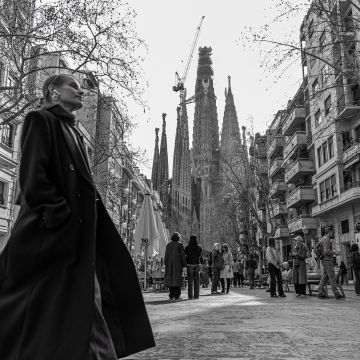
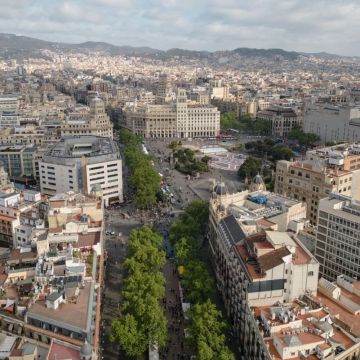
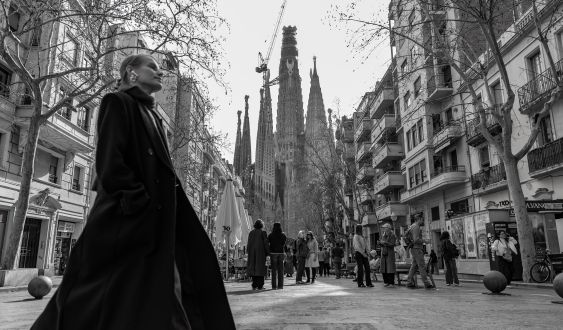
If Barcelona sparks interest around the world, it isn't because it's a copy of other capitals, but because it's unmistakably Barcelona. In its architecture, its way of doing business, its culture, its creativity, its research, its history, its way of understanding innovation. The stories born here matter well beyond our borders, precisely because they breathe Barcelona.
And when they don't breathe Barcelona, we do get annoyed — rightly so — when we see our city losing identity, losing authenticity or losing tradition.
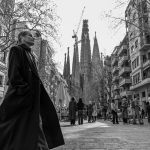
And it's with this same philosophy — of being deeply rooted while remaining aware of the universal reach of the place we live in and of who we are — that this week The New Barcelona Post adds a third language to the magazine, though not a third perspective.
From this week, all of The New Barcelona Post's content will also be available in English. The new edition joins the Catalan and Spanish versions and will share the same editorial outlook. It isn't a different magazine, nor a selection of content. It's the same journalism, the same stories and the same commitment to Barcelona, now also in the international lingua franca.
We're doing this because we believe that many of the stories we tell stopped being only ours a long time ago. The business ventures, research, major events, creativity, gastronomy, architecture and culture born here spark interest far beyond our borders. But it's also because Barcelona is home to an extraordinarily rich and diverse international community that lives, works, researches, builds businesses and creates from here, and which is also part of the city's present and future. We want The New Barcelona Post to be a way of understanding Barcelona too, of discovering it and feeling part of it.
Because Barcelona isn't a global city only for what it projects outward, but also for all the people and perspectives it welcomes. And we believe that explaining Barcelona also means explaining where we come from, what has brought us this far, and what it means to be the capital of Catalonia.
This new step is part of a growth phase that has been shaping our projects throughout 2026. In May, we launched a new digital platform, designed to make more room for unhurried reading and good stories. In June we announced the addition of Espectacles BCN reinforcing our commitment to culture and to the urban experience. And today we're extending the magazine's reach with a third language.
Perhaps this, too, is our own small "I am a Catalan." To keep explaining Barcelona from Barcelona. With the conviction that the most universal stories aren't the ones that hide where they come from, but the ones that dare to explain it with pride. I am Catalan. I am Barcelonian.
Add The New Barcelona Post as your preferred Google source for free
Stay informed with the latest news.