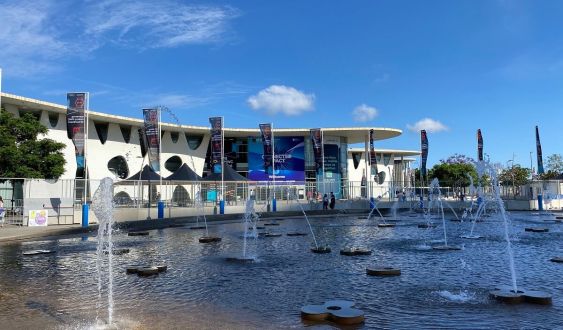
Connected impact. That is the motto of the Mobile World Congress (MWC) that will kick off this Monday at Fira Gran Via, in a transition edition between last year's cancellation and the unrestricted return of the next one. If the pandemic has taught us anything, it is precisely how connected everything is and how something that happens in places that seem remote to us can have a direct impact on our lives.
The MWC understands how these connections work. It knew it in February 2019, when the GSMA canceled the show a few weeks before, a decision that seemed exaggerated. And it turned out to be premonitory. Now, a year and a few months later, the mobile congress wants to establish a new connection. That of recovery and the return to what stopped a long time ago.
It will do so by reactivating the machinery of the most important technology show in the world. The more than 100,000 visitors who came every year to learn about the latest developments in telecommunications are not expected, and forecasts are more modest, ranging between 25,000 and 30,000 attendees. Whatever they are, they will be a success, as GSMA CEO John Hoffman never tires of repeating.
The more than 100,000 visitors who came to the MWC each year are not expected, and between 25,000 and 30,000 attendees are anticipated.Artificial intelligence (AI), 5G, big data, and the Internet of Things (IoT) will be the technologies through which it will be analyzed how connected we live and how this affects our daily lives. Some of the speakers who will try to explain it, both in person and telematically, will be the president of Telefónica, José María Álvarez Pallete; the CEO of Vodafone,Nick Read; the CEO and chairman of Orange, Stéphane Richard; or the CEO of ZTE,Xu Ziyang. The star will be the founder of Tesla,Elon Musk, although he will speak from California.
All this without forgetting the 4 Years From Now (4Y4N), the congress for startups, which this year will move from the Montjuïc venue to the Gran Via venue, sharing space with the MWC. The 4YFN will be in one of the three pavilions that the Mobile will have this year, far from the eight it usually occupies. The co-founder and executive president of Holaluz, Carlota Pi; the CEO of Wallbox, Enric Asunción; the co-founder and CEO of Ona Therapeutics, Valerie Vanhooren, or the co-founder and CEO of Heura, Marc Coloma, will be some of the Barcelona entrepreneurs who will take the stage to explain their success story to a global audience.
Both the proximity of startups to corporations and a reduced presence of large multinationals will give an opportunity to the local industry to gain prominence. Catalan companies such as Agile Content, Cellnex, Fibracat, Ficufy, Masvoz, PayXpert, Parlem Telecom, Sateliot, Teléfonica, Vintegris or Watchman Door will present their products at the Mobile, accompanied by the emerging companies participating in the stands of Acció, Barcelona Activa, Barcelona Health Hub, Biocat, the Universitat Politècnica de Catalunya (UPC), the Institut Químic de Sarrià (IQS) or Esade.
The Mobile Lunch, the first stop
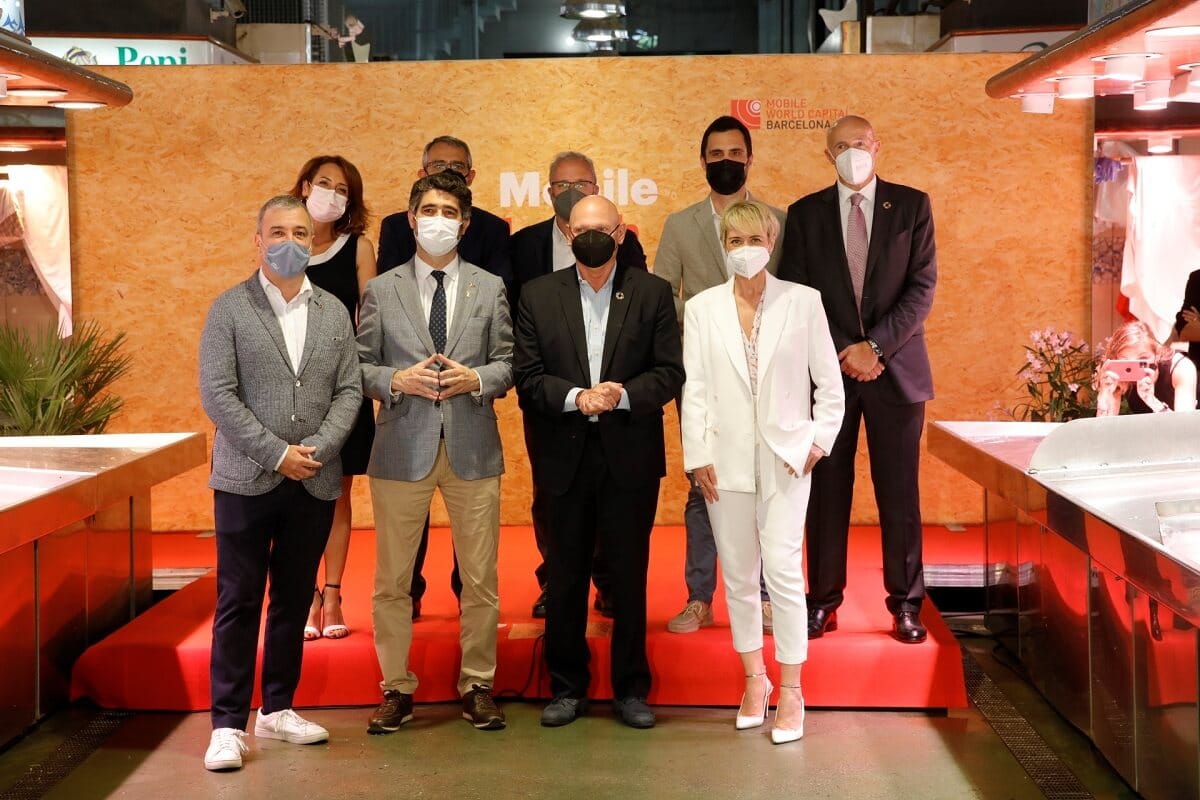
A first sample of the return of face-to-face meetings that take place at the MWC was seen this Sunday, at the traditional Mobile Lunch, a lunch that brings together the city's digital ecosystem one day before the fair begins. About 150 people met in a quite relaxed atmosphere in La Boqueria, which for the second consecutive year has been the chosen location for this Mobile preview.
About 150 people gathered in La Boqueria to welcome the MWCBetween tapas and beers, the faces of the city's main political and economic leaders have been seen, such as the Vice President of the Government, Jordi Puigneró; the first deputy mayor of Barcelona, Jaume Collboni; the Secretary of State for Digitalization and Artificial Intelligence, Carme Artigas; the Minister of Business and Labor, Roger Torrent; the CEO of Fira de Barcelona, Constantí Serrallonga; the president of the Cercle d'Economia, Javier Faus; the CEO of Tech City ---formerly Barcelona Tech City---, Miquel Martí; the territorial director of CaixaBank in Barcelona, María Alsina, and many others.
And, as it could not be otherwise, Hoffman was there, whom everyone expects to kick off the MWC. Relaxed and friendly, the top leader of the GSMA walked among the groups of attendees, stopping to answer their questions and even take selfies if asked.
5G connection between Plaza Espanya and Europa Fira
Many of those who attended the Mobile Lunch then went to the presentation of the 5G laboratory between the Ferrocarrils de la Generalitat de Catalunya (FGC) stations of Plaza Espanya and Europa Fira. A premiere that had been waiting for a year, but the cancellation of the 2020 edition forced it to be postponed until now.
Equipping this section with 5G will allow users to have a good internet connection even if there are many travelers on the train and not lose connection between tunnels ---provided they have a phone equipped with this technology---. It will also mean greater control of the infrastructure and being able to do it instantly, in addition to testing new technological solutions linked to mobility. The potential of this new functionality was visualized this afternoon with a virtual assistant from Ferrocarrils that appears on mobile phones giving instructions and information about the route to be taken.
The last stop of this Sunday before the Mobile has returned to Plaza Espanya, with the inaugural dinner of the congress at the Montjuïc venue, presided over by the King and with the presence of the President of the Government, Pedro Sánchez, and the President of the Generalitat, Pere Aragonès. The mayors of Barcelona and L'Hospitalet de Llobregat, Ada Colau and Núria Marín, and the Government delegate in Catalonia, Teresa Cunillera, among other authorities, also attended the dinner.
Add The New Barcelona Post as your preferred Google source for free
Stay informed with the latest news.
