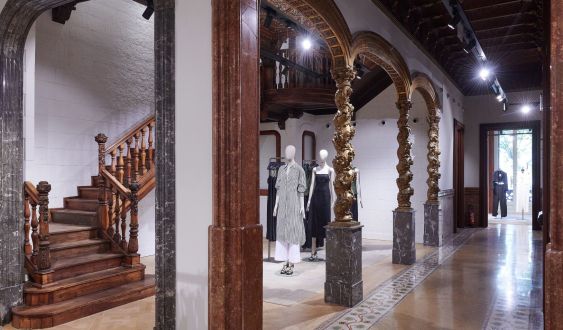
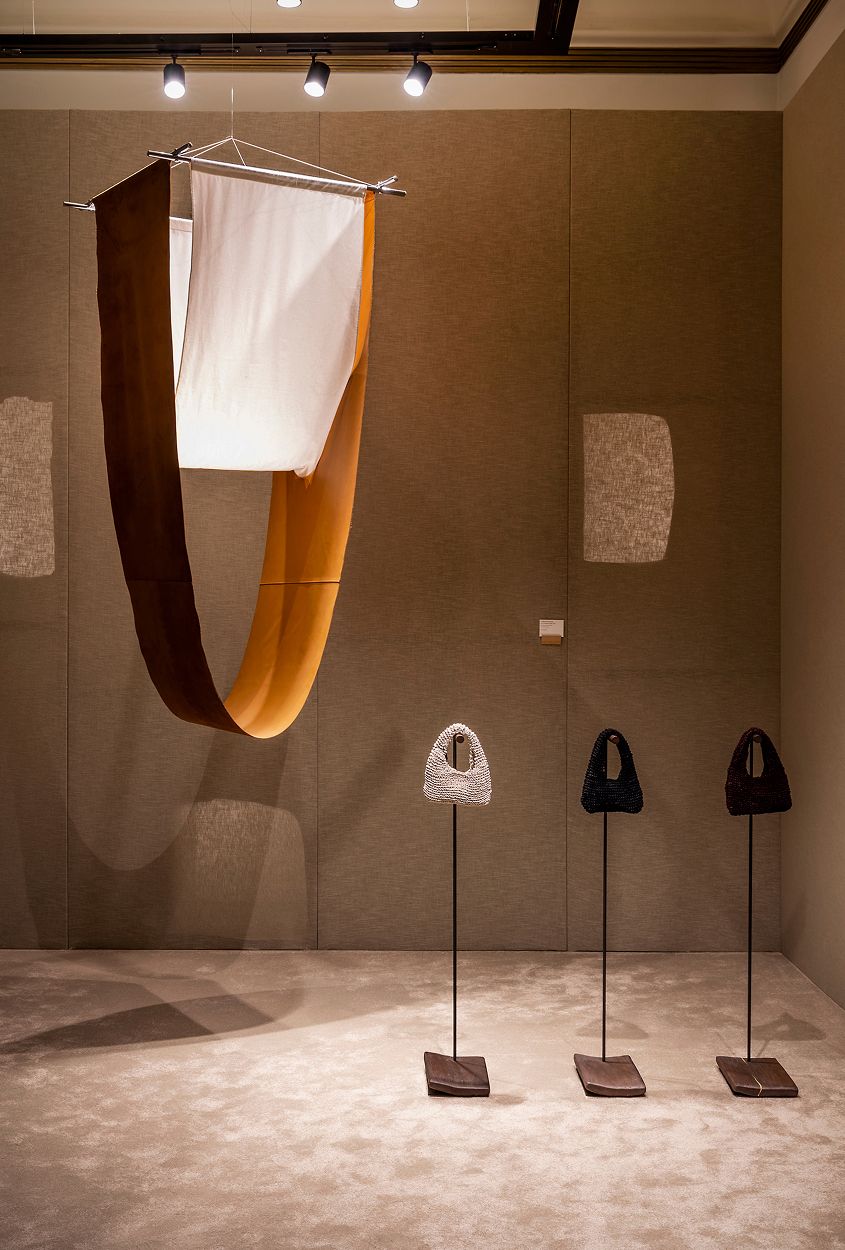
The Massimo Dutti store opened in 2016 and is the largest of the brand in Spain: it occupies nearly 2,000 square meters in the historic Casa Ramon Casas-Carbó, one of the most unique modernist buildings on Passeig de Gràcia. It was designed in 1898 by the architect Antoni Rovira i Rabassa at the request of the painter Ramon Casas, who moved there with his family. Years later, the same space housed the emblematic design store Vinçon.
Currently, a synergy between architecture, fashion, and contemporary art is produced through ArtInProgress, the project with which Massimo Dutti seeks to energize its stores with current creation, integrating works by artists into its most special spaces, a program also carried out in Copenhagen, Lisbon, and Saint-Tropez.
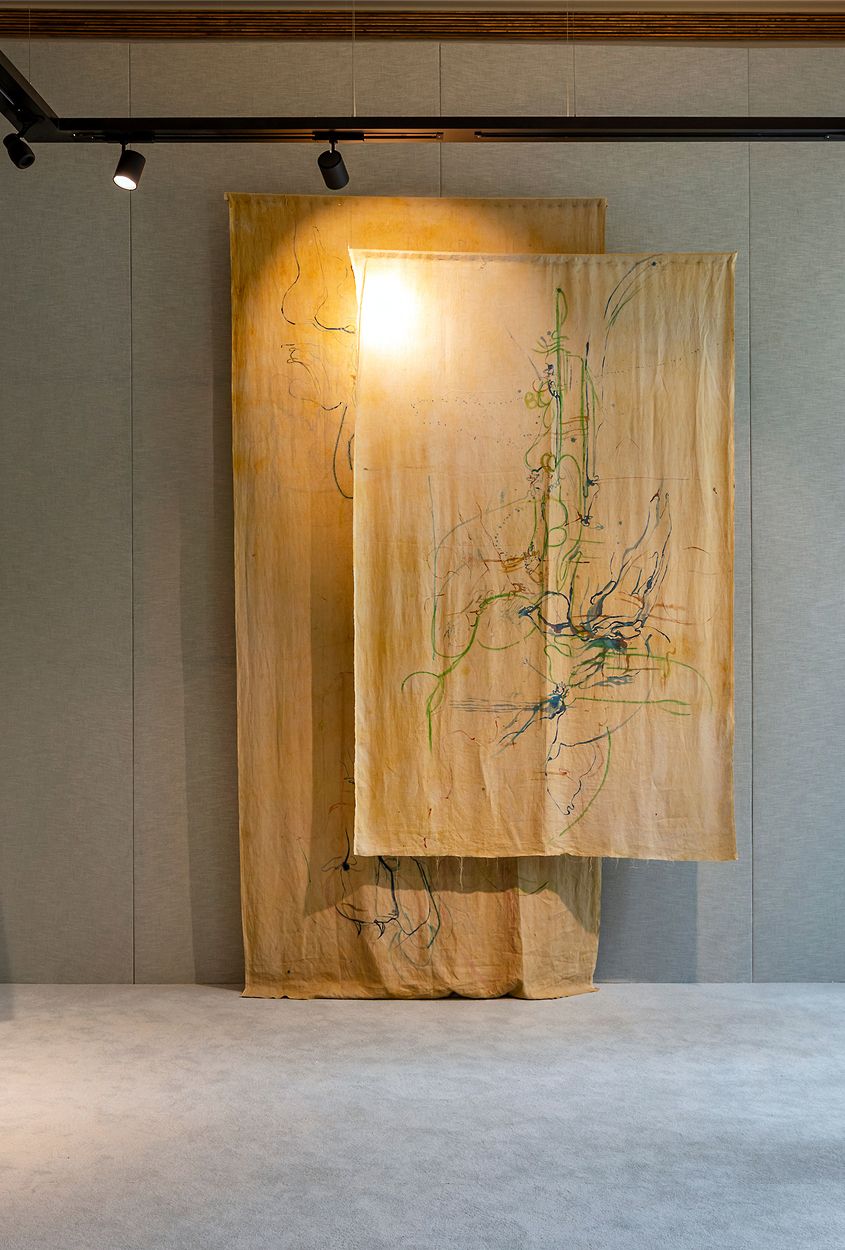
Hand in hand with the gallery F2 Galería de Madrid, the artist Álvaro Negro lands on Passeig de Gràcia 96 with a proposal that invites the viewer to a silent aesthetic experience, where matter, memory, and architectural light dialogue in a unique atmosphere.

Álvaro Negro (Lalín, 1973) holds a degree in Fine Arts from the University of Vigo and a Master of Arts from Central Saint Martins College of Art and Design in London. His career, which began in the second half of the nineties, was presented in the major retrospective "Y" at the Centro Galego de Arte Contemporánea (2017-2018). In addition, he completed a residency at the prestigious Real Academia de España in Rome (2017-2018) and has participated in the latest editions of ARCO in Madrid and Lisbon.
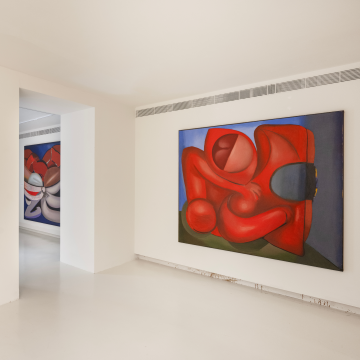
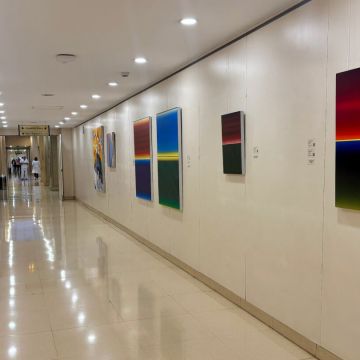
Pictorially, his work is characterized by a strong material research: textured surfaces that dialogue with the pictorial tradition of the Renaissance and the Baroque, and which in this selection for Massimo Dutti transforms the canvas into a rough skin. Negro thus subverts traditional painting by using textured elements on classical supports.
The fact that this collaboration comes through an art gallery is not a minor detail: it signifies direct support for the sector and the agents that sustain it. Often, brands, companies, or hotels that work with artists do so directly with them, which is not bad in itself, especially if the artist does not have gallery representation. However, choosing to do so through a gallery respects the work that these carry out in accompanying, promoting, and disseminating the artists with whom they collaborate.
Founded in Madrid in 2014 by Paloma González and Enrique Tejerizo, F2 Galería has consolidated itself as one of the reference galleries for Spanish contemporary art. Its program brings together national and international artists from different generations, fostering a constant dialogue between research, experimentation, and artistic practice. It has participated in ARCO since its opening and represents artists with very interesting trajectories such as Federico Miró or Julia Santa Olalla.
Furthermore, Massimo Dutti here opts for an artist with a solid and consolidated trajectory, moving away from the search for media impact that collaborating with emerging or trendy talents entails for other brands. For the artist and the gallery, working with such a respected, quality firm with a clear alignment with art and craftsmanship also represents a mutual benefit.
As Cecilia Bernal explains in the article “En busca de una sostenibilidad viable” (In search of viable sustainability), from A* Desk, brand art (or Branding Art), understood as the link between art and brands, transcends traditional sponsorship and becomes a platform for cultural dialogue and innovation with social impact.
The ArtInProgress project redefines the concept of modern patronage by taking artistic production out of conventional circuits.
These types of collaborations between brands and the art system are important because they sustain a fragile ecosystem. As Massimo Dutti indicates in Paper, its editorial magazine, the ArtInProgress project redefines the concept of modern patronage by taking artistic production out of conventional circuits, and makes artists' works reach a transversal public that thus rediscovers pictorial creation.
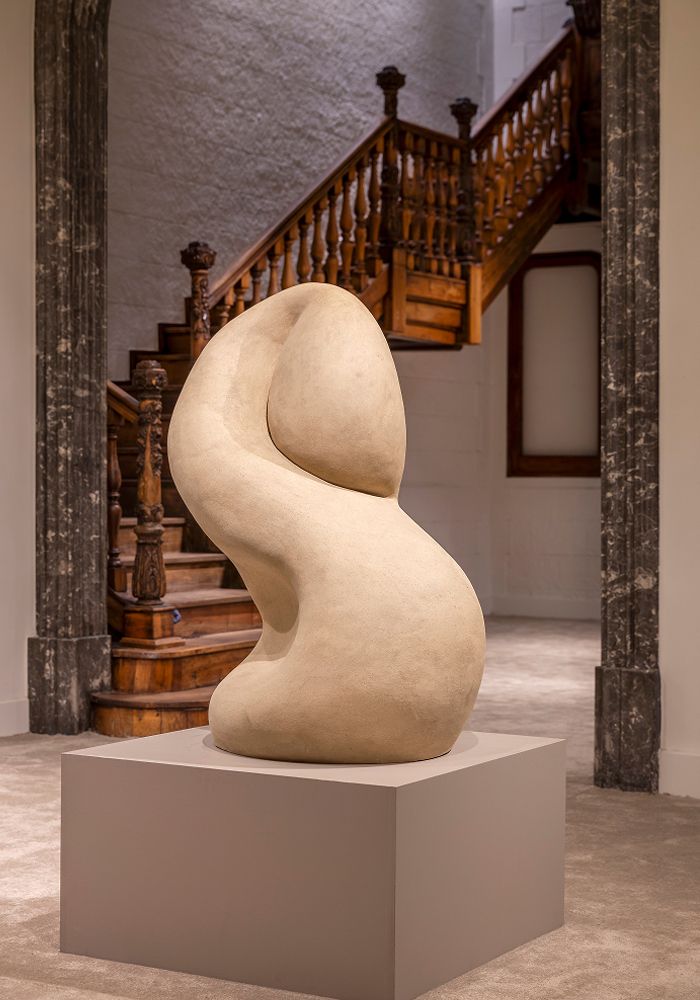
Massimo Dutti's store at Passeig de Gràcia 96 is a clear example of how a commercial space can become an additional platform to disseminate and highlight contemporary art.
Álvaro Negro's proposal in Barcelona demonstrates that stores can also be spaces to enjoy and contemplate the work of contemporary artists, and helps people who may not feel comfortable entering an art gallery discover Negro's work in another context, one that can encourage them to take the step and visit galleries more often.
Add The New Barcelona Post as your preferred Google source for free
Stay informed with the latest news.