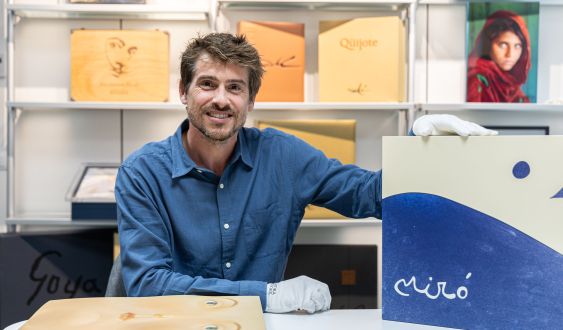
The director of Artika Books, Marc Buil, welcomes us into a room full of books. But the arrangement is not the usual one: they are not shelves with books showing their spines one next to the other, but rather they are placed displaying their covers (if that's what you can call it). They are large and uniquely designed, so much so that they could seem like collector's items and pieces of art, and not books. And in a way, they are. But, despite the singularity of the exterior, the value of Artika's books is hidden, above all, between their pages.
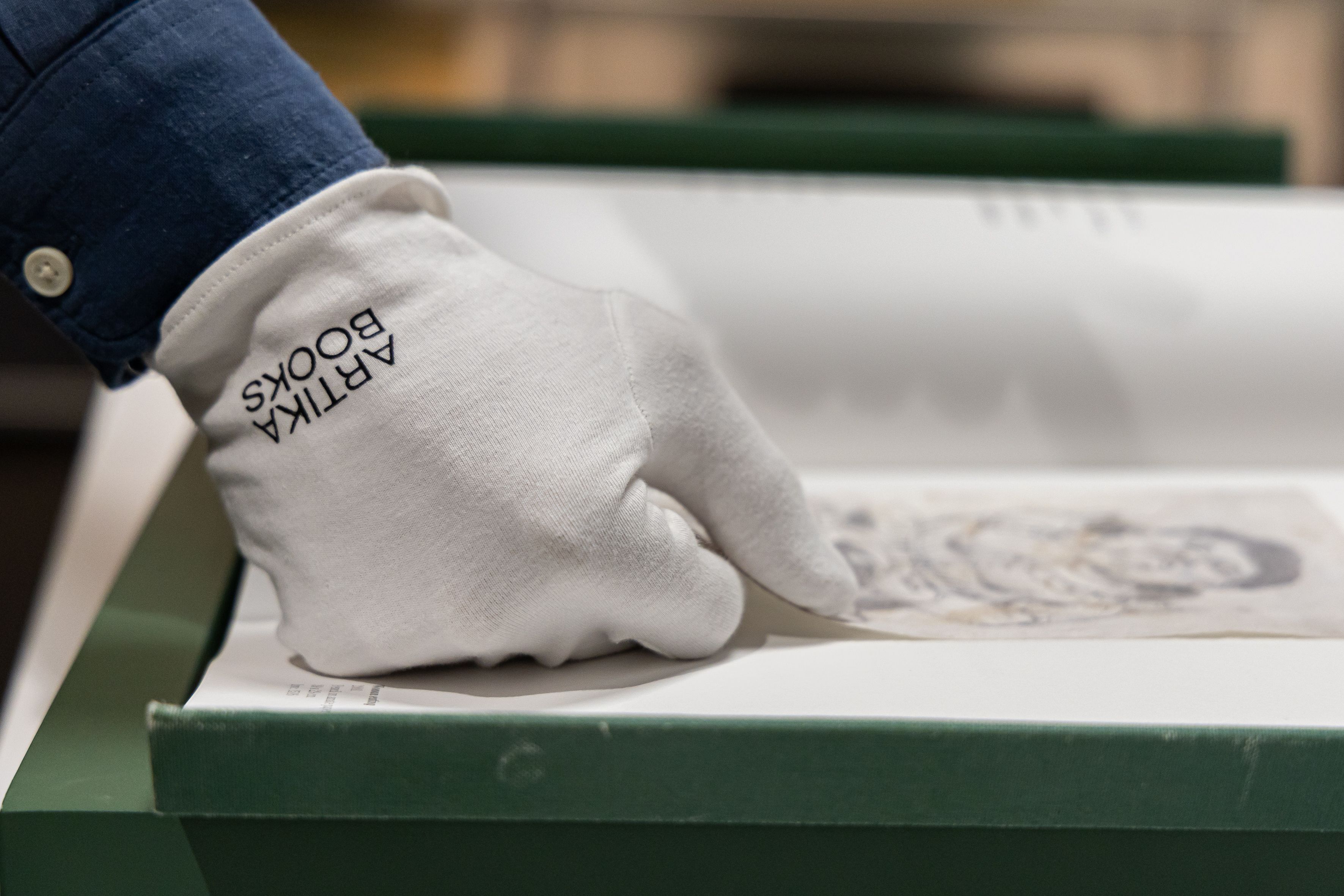
So much so, that Buil arrives with white gloves in hand. Artika's books must be treated as works of art, museum pieces, or jewels are treated; they cannot be touched with bare hands. "We have published more than 30 works by a wide variety of artists," he emphasizes, pointing to them around him. Plensa, Botero, Sabina, Toulouse-Lautrec, Frida Kahlo, Miró, Dalí, Miquel Barceló, Lita Cabellut… "Shall we sit down?". No, first we choose one.
It all started with Dalí, and the coincidence in 2003 of the artist's year and the IV centenary of Don Quixote. To commemorate the double anniversary, they published an edition of Cervantes' work with facsimile reproductions of Dalí's watercolors of the hidalgo. This is how Artika's first book was published, when it still didn't know it would be Artika. The launch of the imprint as such came in 2015, accompanied by a book-sculpture by Jaume Plensa. This one is also on the shelf in the room, occupied by a large central table, where Buil now places a book with a sculpture (or a sculpture with a book) by Manolo Valdés. A large, heavy, blue, and elegant 'menina' is in charge of holding the book, created in collaboration with the painter and sculptor. "We started the project with the intention of making a book of his engravings, and we wanted to make a slipcase for the book. Valdés said: 'Let me think about it.' And he appeared with the 'menina'."
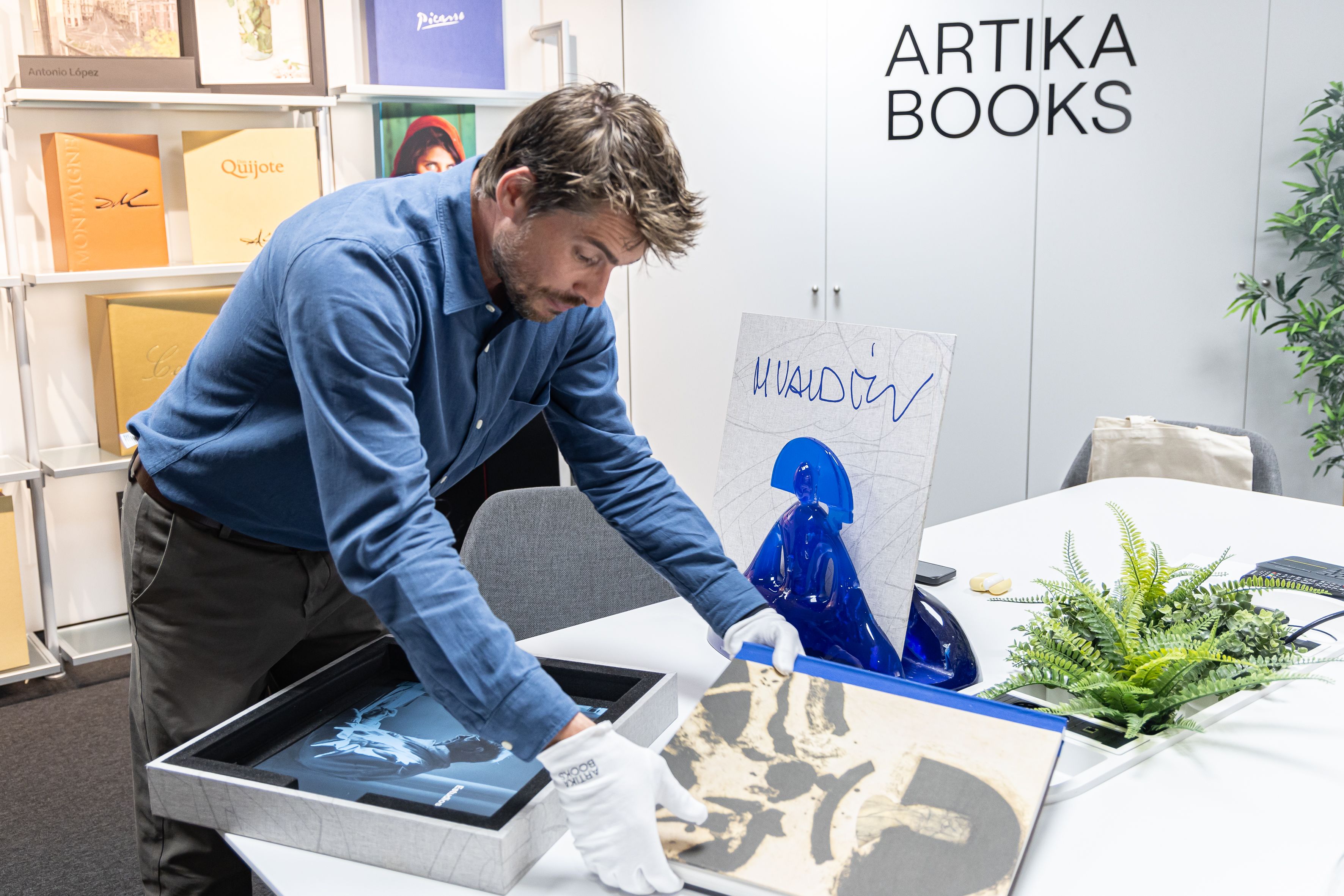
Inside the case, there is not just one book, but two: the art book, and the studies book. The latter, “is like the museum guide,” which reviews the artist's trajectory and context, and goes into detail about his work, generally and, especially, those published in the book. The works are in the other volume which, more than being an art book, is art in a book. And it is that Valdés's engravings, as with the rest of Artika's works, are not reproduced in images on the book. Instead of being printed directly on the pages, they are reproduced on paper, and not just any paper, but the one that best allows the reproduction of each work. “The book acts as a support. It is not a book of 50 engravings, but rather 50 engravings in a book.”
Buil turns pages, and engravings, while we remain standing: “Many people choose the ones they want, take them out of the book and frame them.” Without taking off his gloves at any time, he now takes out Càntic al sol by Miró, Artika's latest edition, with 33 engravings by the artist and a reproduction of the engraving plate. A limited run is made of each of the books, and practically all of them are sold out (some, with a waiting list, in case a client decides to return it for some unexpected reason). The price of Artika's artist books ranges between 5,000 and 7,000 euros, figures far from the usual in the publishing world, but nothing excessive when taking into account what each of the publications implies: “On average, we spend between four or five years per project, more than 100 people are involved in the creation of each one and they are produced by hand.” In addition, there is a significant investment behind it, with insurance included for handling originals, and product and design tests. For all these reasons, it is not easy for Artika to find competitors with a similar proposal. “The fact of being part of the Planeta Group is important. Within the group, Artika is a brand that gives prestige. Thus, the main objective is not profitability and growth, but to create a great publishing house that has the best artists in the world, and to make it grow, always in a sustainable way.”
“For all this, Artika is closer to the art world than to the book world”, and this is demonstrated by the fact that the imprint usually goes to art fairs more than to editorial world fairs. “We are halfway there, but we are more a satellite of the art world than of the book world”. In fact, artists with whom it works consider Artika's books an opportunity to reach more people: “How many people can afford a Plensa or an Antonio López? Although our books have this cost, they allow art to be democratized and made more accessible. For artists, it is a way to reach more people”.
To select artists, Artika prioritizes established names (although it also studies how to focus on emerging ones), and seeks a balance between more classical artists and active artists. In books about current artists, the works are signed by them, and they work side by side for as long as necessary for the edition to be representative of their work. While Buil explains it, he takes out the book that the imprint dedicated to Steve Mccurry last year, Artika's first volume on photography. Inside, just as with engravings, there are no photos printed on the pages, but 40 photographs. We still haven't sat down.
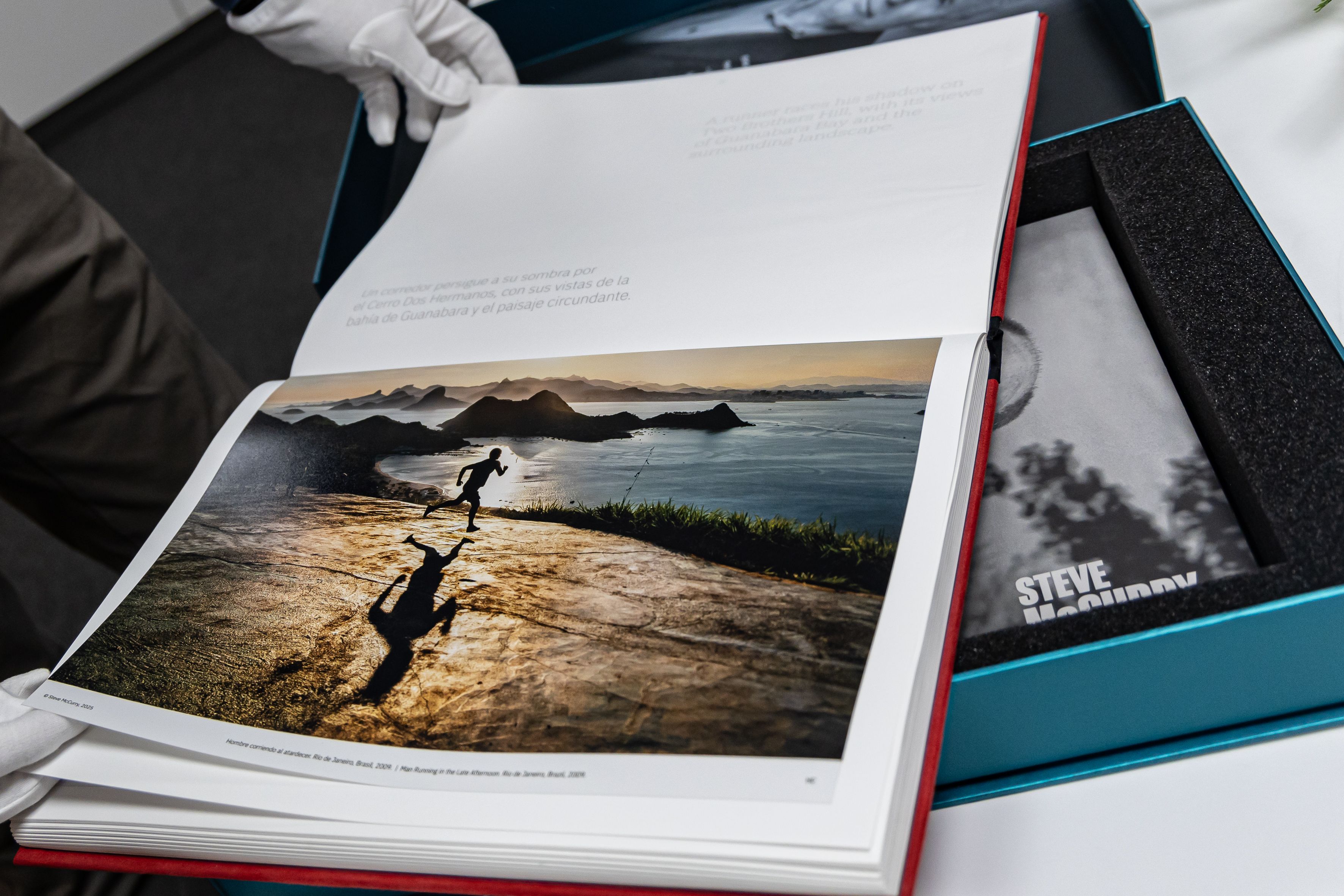
“Will there be more photography books?”. It is not ruled out, but nothing can be advanced: “We have about fifteen projects in different phases”. Artika usually publishes one a year, and many of its clients are already waiting for it. It has clients both nationally and internationally —in fact, all its editions are bilingual, in Spanish and English—, and many are awaiting its news. New clients also arrive online, in a process involving advisors and Fine Arts specialists to explain the singularities of each publication.
These singularities go beyond the obvious, and appear from the beginning of the process to the end. Internal and external teams, design studios, and artisans intervene, contributing to each of the steps. The printing of the paper, the binding (sometimes manual), the creation of the cases, specialists in each of the materials, even in the paper for the facsimiles: “Depending on what we need, the paper does not exist on the market, and they have made specific papers for us, for example, at the Molí Paperer de Capellades”.
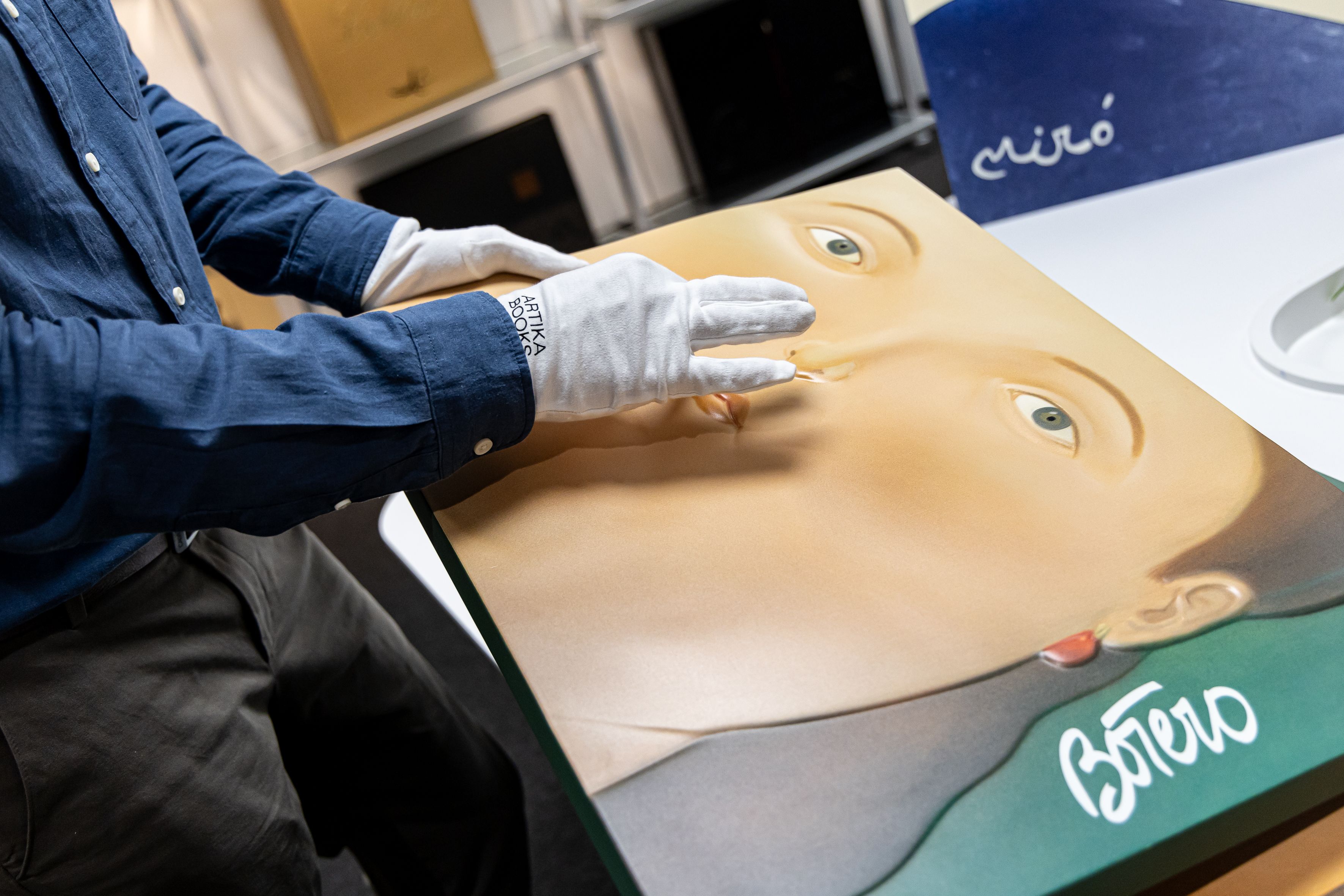
And all this singularity and art collected in a book has a limited print run, with a number that is also peculiar. "It's never a round number. It can be 1,998, 2,998...". Why? "In printing presses, at the beginning, the plates were made of wood. When many copies had to be printed, it was difficult to reach a thousand, because the wooden plates would get damaged when passing through the press." And here appeared a number specific to the sector: the almost thousand. "It was rarely possible to reach a thousand, and so the number almost thousand remained. That's why we took 998 and, when we started doing longer runs, we kept it, so as not to lose that magic." One more detail of these white-glove books that symbolizes everything they have behind them.
Finally, we have not sat down.
Add The New Barcelona Post as your preferred Google source for free
Stay informed with the latest news.