
The advertising billboards that have populated La Rambla for weeks, where we could see the portrait of Gustavo Dudamel with an optimistic and peaceful gaze towards the infinite (and Verdi's name in almost invisible letters), denoted that the Liceu entrusted this new Verdian production almost solely to the glamour of his baton. It is undeniable that Dudamel ---who has just signed with the Paris Opera--- has been the catalyst for an orchestra and a choir that we have too often heard floundering in interpretive sluggishness. No one, not even the most experienced musicians, is immune to the influence of musical marketing, and it is evident that in all performances of this Otello (this writer attended the one on April 9) the strength and energy of the maestro's baton achieved a power and a revitalization of the pit that is to be appreciated, and the musical result was world-class, something that, unfortunately, is not always the case in recent times.
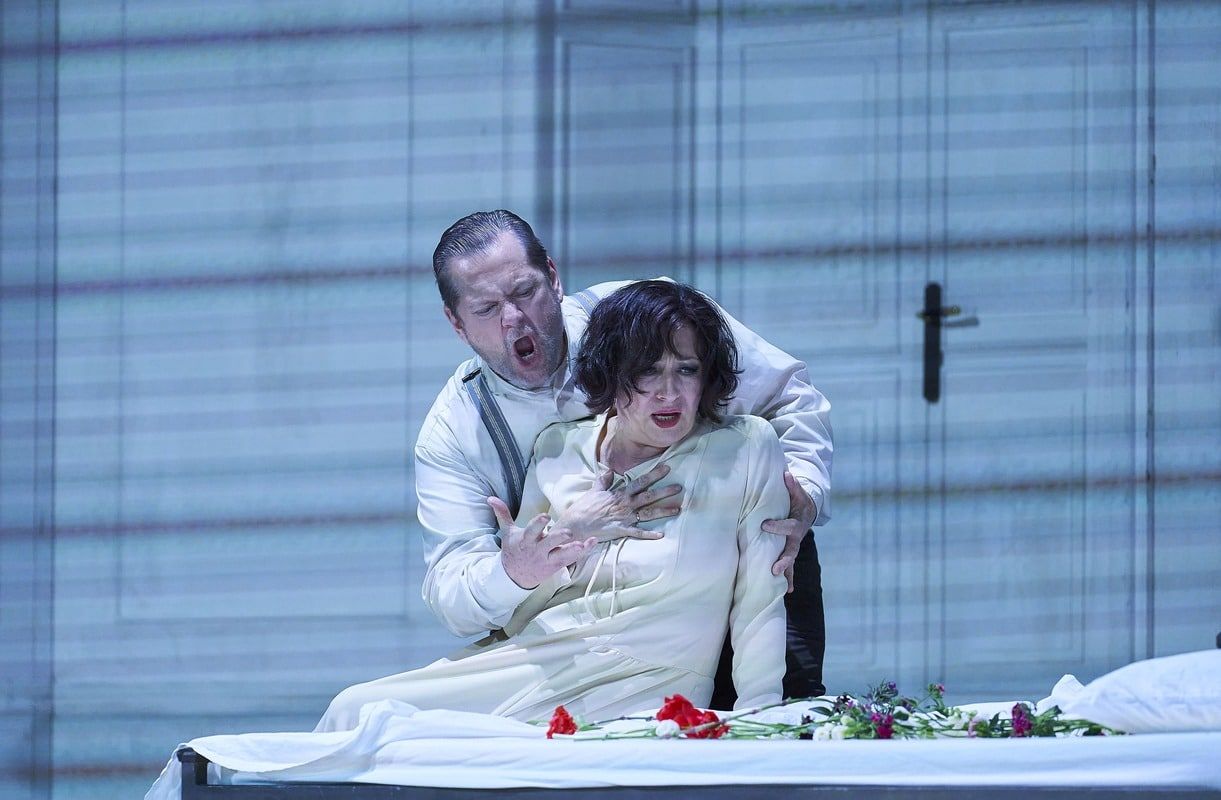
Dudamel's omnipresence hid other important factors, such as a truly outstanding vocal trio. Without being able to offer the strict vocality of a Verdian tenor and at an age when many tenors are already burdened by too many air miles, Gregory Kunde delivered a protagonist of chiseled stone. Kunde brings us closer to the decaying titan we had heard in Vickers' singers than to the psychedelically tormented lover of the Domingo school, but he has the vocal center and bulletproof pyrotechnics and gifted us moments of messa di voce of overflowing musicality. Krassimira Stoyanova does not have the delicate physical sculpture and the Ophelia-like air that Desdemona requires, but she overcame these trivialities by singing with a delicacy of brutal subtlety, with pianissimi that echoed Caballé and a prayer scene to take one's hat off to. So too Carlos Álvarez, a singer who vocally and dramatically does not interpret Iago: he is Iago.
In an opera that, at the narrative level, can give rise to many fruitful readings, director Amélie Niermeyer tried to move away from the sociopolitical magnificence woven by Boito in the libretto to bring the tragedy closer to everyday life and, more specifically, to the scourge of gender violence. Although risky (it was surprising to see the protagonist intoning the Esultate having just arrived at the bedroom at home like someone who appears there bustling from the office and only wants to down a whiskey and embrace the female), the stage proposal could have been successful; in fact, Verdi is always brilliant at translating the paths of high politics to the microcosm of human passions. But the stage director loses control of the initial metaphor and, in scenes like Desdemona's floral walk in the second act, and the final murder, she fails to avoid the cliché that we have already seen regurgitated a thousand times. In turn, focusing everything on the conjugal issue ends up leaving jealousy and Iago's essential role out of the dramatic equation.
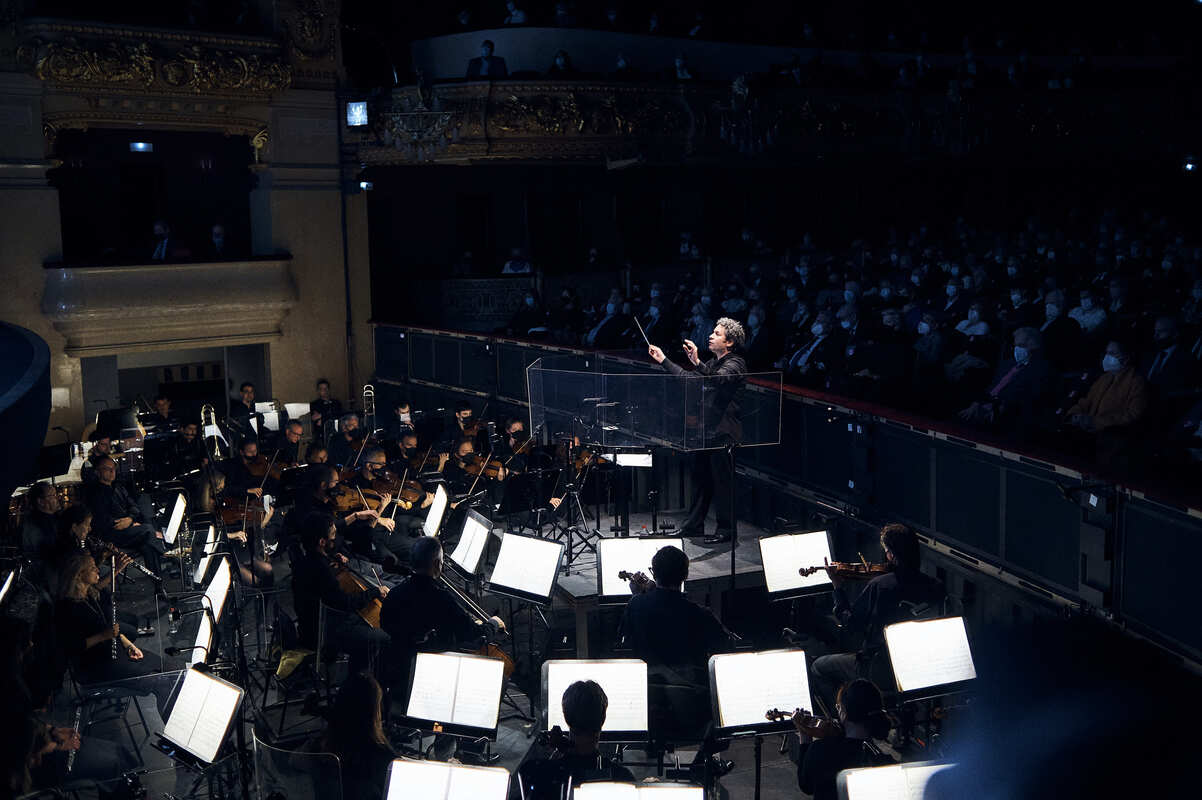
It is undeniable that Dudamel has been the catalyst for an orchestra and a choir that we have heard too many times floundering in interpretive parsimony.Since the production pivoted on the baton, we do not shy away from talking about it. Really, admiring Dudamel's work has been a privilege and a spectacle. First, because the Venezuelan demonstrated that, when directing a theatrical piece, his teacher must do it almost by heart (here thealmost; he knew the opera by heart) to focus on what happens on stage and guide his voices. Apart from the encephalic prodigy,Dudamel drew a thunderous sound from the Liceu teachers, with a rope that only denoted itssecond classin the most intimate moments of the score and a choir to which he demanded a power that, especially in the female voices, it can no longer give because it needs an urgent renovation.Be that as it may, watching Dudamel conduct was a pleasure, not because his reading of Otello is especially new (it rides between the Germanic and the Italian tradition), but above all to see how the conductor played with the pit to bring us the details of the score so vividly.
That in an opera heard ad nauseam we discover new details that we had missed is already magnificent news, but to see how the Liceu orchestra can function as it should only when excited by a first-rate operatic conductor is not so much. Fortunately, the mark of an opera house is its principal conductor and, currently, Josep Pons, who is an excellent musician, can offer very interesting readings of composers like Mozart or Janáček, but he is not an operatic conductor. In parallel, if the engine of an institution and the enthusiastic response of the public must depend on a star signing, then something is wrong with the Liceu's artistic policy, and this is where, behind the lights, it is necessary to comment on the shadows of the Dudamel effect. Because, whether its managers like it or not, a public theater must be governed by something more than the whiff of brilliantine and the opportunism (that is, the wallet) of fishing for media signings.
Let no one misunderstand me. This gazetteer is not saying that the Liceu, if it wants to be a first-rate theater, should not feature the great names that fill theaters around the world. The theater on La Rambla, in fact, has a tradition of posters with voices that make one salivate, from Tebaldi, Del Monaco and company, to the Catalan stars of the 70s, passing through the generation of Marton and then Flórez. Music lovers want to see the great voices and batons because they are the timbres and bodies that have made us acquire a fondness for opera. But a public theater, I insist, must not only consider being a link in an international market, but also ensure the musical health of the city and its professionals, above all by ensuring that this leads to a demanding public. And it is in this sense that the Liceu has lately accustomed us to copy-paste productions with little reflective zeal, to operas that pass without much fanfare, and to a program that cannot be saved with a summer flower like Dudamel.
If the engine of an institution and the enthusiastic response of the public must depend on a star signing, then something is wrong with the Liceu's artistic policyIn the same way that one must unreservedly praise the titanic effort of the theater to program a spectacle as complex as an opera with the safety required by the pandemic, one must also say that a public entity, and even more so in times of crisis, cannot present performances where the ticket price reaches numbers typical of the Salzburg Festival. A devil's advocate could tell me that the Liceu has had to increase prices because other theaters in Europe receive much more public subsidy, but this is not an excuse for citizens to feel unwelcome on important dates and with stellar casts because thetickethas the value of half his salary. And this, which is not at all demagogic,leads us to wonder if eleven performances of an opera with a stellar cast replace an artistic project with a public vocationThe answer, unfortunately, must end up being negative.
We already have clues as to where things should be headed at the Liceu itself. During the Matabosch era, the theater received a good number of celebrated singers and conductors who not only visited the Liceu for its stellar tradition (and to enjoy the Barcelona sun and its increasingly less delicious paellas), but because operatic versions were programmed that set an interesting theatrical standard without this enormous price increase at the box office. One does not have to be on par with the great opera houses of the world, in the league of Vienna or the New York Met, to follow this pattern. Operas like Lyon or La Monnaie have done it, and directors like Mortier at the Real or Pereira at La Scala with a comprehensive artistic program (which involves making various artistic disciplines interact in real imbrication, which is more than programming four exhibitions of art posters in the Foyer from time to time and putting poems by Joan Margarit in the hand programs).
Viewed from this perspective, the visit of an excellent conductor like Dudamel, no one denies it, ends up being an exception that muddies serious management deficiencies and artistic ambition at the Liceu. I repeat. We are in favor of big names, of having the most excellent conductors visit us, but if this serves to disguise the fact that today the first public facility in Catalonia does not have an artistic guide, the glamour smells like a scam. All this, not to mention the involvement that a Catalan public theater ends up having with local singers and composers (which is not saved, I anticipate the answers, with comprimario roles that poked their heads out among star casts) and, as a political derivative, the level with which citizens can scrutinize its management. May momentary enjoyment, therefore, not make us forget that all these issues produce more anguish than joy.
Add The New Barcelona Post as your preferred Google source for free
Stay informed with the latest news.