In the sequel to the famous series Sex and the City, a Carrie Bradshaw nearing sixty finds herself alone for the first time in a long time, dining at an Asian restaurant. To her surprise, when she says she needs a table for one, they point her to a space where there is a stuffed animal. When she asks about the strange table companion, the waitress states that "it's so she doesn't have to eat alone." Confused, she doesn't answer. Upon returning home, however, she reflects on the limits of independence and the difference between being alone and feeling alone. Far from being an isolated event, and although the situation is exaggerated for the sake of comedy, stuffed bears have colonized some restaurants around the world, including Barcelona.
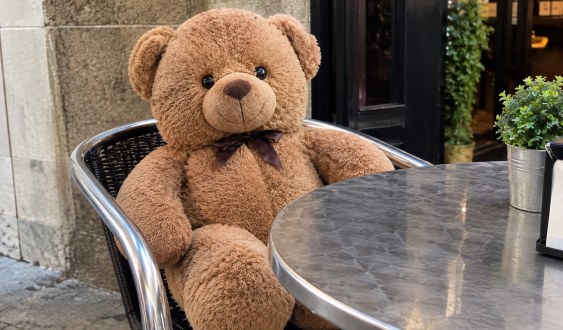
Lately, walking through the Catalan capital, there are some terraces that have stuffed bears displayed on the tables. If you go in the morning, you can still see them alone and unmoving, but when people start to arrive, these situations that are unthinkable for Bradshaw are created: people having breakfast, lunch, or dinner with a stuffed bear in front of them. From The New Barcelona Post we have asked some experts and psychologists about this trend and how an Asian fashion has ended up sneaking into Barcelona's restaurants. The reality, however, is that no one quite knows why this is happening or if new generations have more problems when it comes to making plans alone. Some experts point out that it is just a trend and others specify that they do not feel confident enough to analyze the trend. Be that as it may, stuffed bears have arrived to stay.
Looking back, the first time this kind of table companion was heard of was in Japan, in a bar called Moomin Café. It is a cafe designed for people to go alone, and in order not to "make them feel alone," there are all kinds of stuffed animals distributed around the tables. The first one opened in Japan in 2003, but since then they have continued to expand throughout the country, and there is even one in Helsinki, Finland. The dynamic is simple: you order what you want and eat or drink it next to a stuffed animal. For the Japanese, stuffed animals symbolize tenderness, and it is not strange to see adults with them on the street. Thus, for them it is not so much a fashion, but a way of living part of their culture.
The million-dollar question is: do they combat loneliness?
Although this cafeteria has existed in Japan for more than two decades, it did not arrive in Barcelona until the trend in 2020, that is, due to the pandemic. After all the bars slowly reopened their doors with many restrictions, there was a key to solve: safety distance. In spaces like public transport there were forbidden signs on seats that could not be occupied, but it was not very aesthetic in a restaurant. For this reason, some adopted this Japanese trend and placed stuffed animals on chairs that could not be used. After that, Covid-19 left and the bears stayed. While it is true that their presence does not bother the eye and some even find them endearing, the million-dollar question is: do they combat loneliness?
There is no clear answer to this question, but because there is no real evidence that the trend is being used to fight loneliness, that is, no one assures that sitting alone at a bar table with a stuffed animal makes one feel less alone; nor can it be known if everyone who sits there does so to avoid feeling alone. Nevertheless, the enormous stuffed bears sit on the terraces; and many times they can be seen accompanied by real customers having a coffee next to the doll, without flinching, perfectly accepting this strange fashion. However, the reasons for these bars in Barcelona have nothing to do with Catalan culture, in fact, they are more of a marketing ploy than anything else. Lilo Brunch, for example, with locations in Enrique Granados and Sagrada Família has become famous on social media for becoming "the tenderest brunch" in the city, with seats occupied by these bears as a photogenic attraction. It is true that they continue to meet the need of those who do not want to eat alone, but they have also become a great tourist attraction.
In short, a rather strange insignia of Japanese culture has been installed in Barcelona to combat —in its own way— loneliness or simply to bring a smile to diners. Carrie Bradshaw ended the chapter without getting a clear answer about why the stuffed animals, and perhaps the question that remains in her mind is the same one many Barcelonans ask themselves today: where is the line between enjoying one's own company and needing, even if symbolically, someone —or something— by your side.
Add The New Barcelona Post as your preferred Google source for free
Stay informed with the latest news.