
The long-demanded Casa de les Lletres finally has a definitive location. The Palau Requesens will host, starting in 2027, a space that is destined to be a reference in the field of literary creation, and which the sector has been demanding for years. The wait has been worth it. And not only for literary creators, but for citizens in general, as the future Casa de les Lletres will operate with a desire for openness to its surroundings. The 13th-century enclosure, hidden despite being in plain sight in the heart of the Gòtic quarter, will cease to be an inaccessible unknown for many, through this cultural space.
Proof of this openness to the public is the cafeteria open to the public that the old palace will house on its ground floor. It will do so in a large room crowned by medieval arches in the style of the renowned Saló del Tinell of the nearby Palau Reial. The space will also include a multipurpose room for events and acts that serve as a meeting point with the community of Catalan literary creators. The main activity of the various entities will mainly take place on the upper floors, now full of bibliographic collections, offices, and rooms that wind labyrinthine around an inner courtyard and walls that overlook the Gòtic from Sotstinent Navarro street.
This community will be the new protagonist of the palace, which throughout its centuries of history has had uses ranging from a residential palace to a tobacco warehouse, until in 1917 it became the headquarters of the Reial Acadèmia de Bones Lletres, as its president, Borja de Riquer, recalled. In the presentation of the future Casa de les Lletres in the entrance courtyard and in the shadow of its Roman wall, he recalled that the origins of the entity date back to 1700 and that "it was one of the fundamental pieces of the Renaixença catalana".
The facility will also have multipurpose spaces open to other literary actors linked to other aspects of the value chain, such as booksellers and literary agentsNow, the historic palace will become the headquarters of the Institució de les Lletres Catalanes and of entities dedicated to literary promotion, such as the Associació d'Escriptors en Llengua Catalana (AELC), the Associació Col·legial d'Escriptors de Catalunya (ACEC), PEN Català —these three now at the Ateneu Barcelonès—, Espais Escrits and the Consell Català del Llibre Infantil i Juvenil. They will share the facilities of the new equipment with the Reial Acadèmia de Bones Lletres, which already has the palace as its headquarters through a transfer of use of the property, which is owned by the Generalitat.
Works of 4.8 million
The launch of the Casa de les Lletres, planned in the Generalitat's National Book and Reading Plan, will require adapting the building, which now houses various collections that will have to be fitted into this project. The works will have a budget of 4.8 million euros and will be carried out in two phases, so that the Reial Acadèmia de Bones Lletres does not see its activity interrupted.
The works to reform the palace are expected to be awarded during the third quarter of this year, after an architectural project competition that will be proposed due to its classification as a Cultural Asset of Local Interest (BCIL). The forecast is that the works will finish in the last quarter of 2026, and that the Casa de les Lletres will be fully operational during the first quarter of 2027. The facility will also have multipurpose spaces open to other literary actors linked to other aspects of the value chain, such as booksellers and literary agents. The specific uses of each space will be detailed in a functional plan for the building that the Generalitat is preparing in collaboration with the entities.
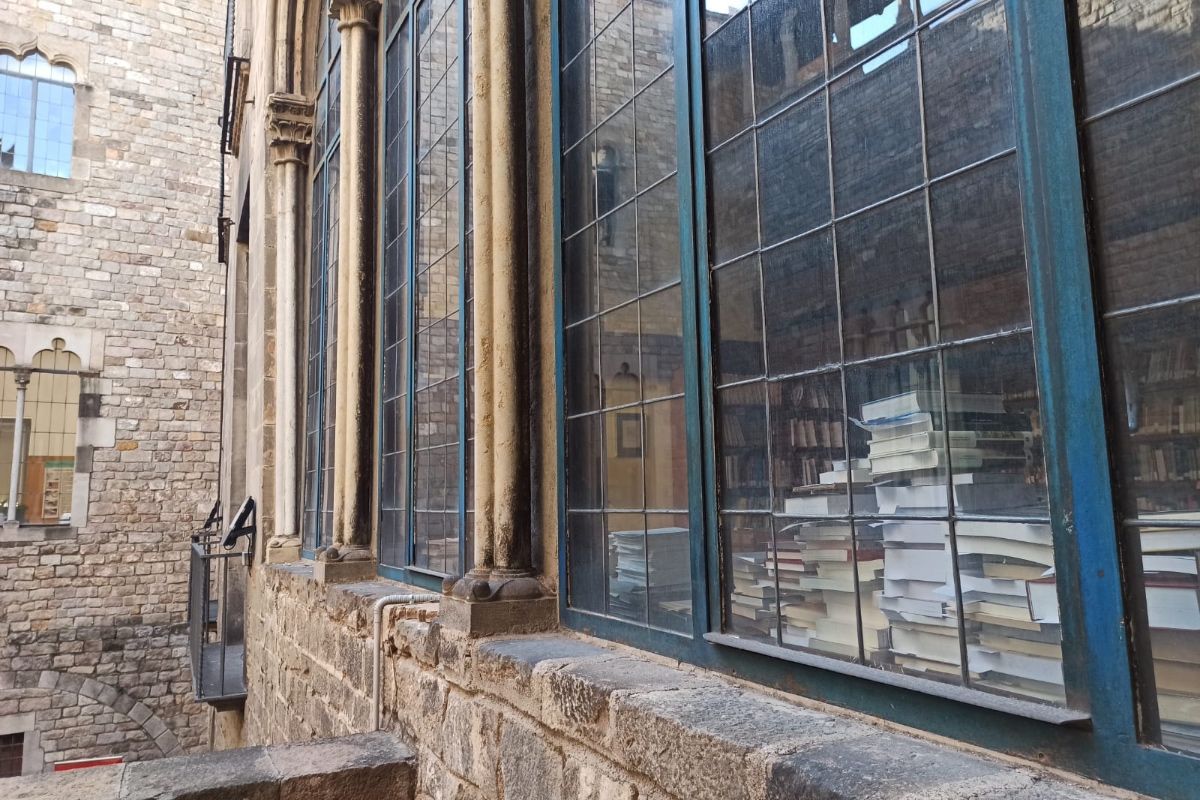
The future Casa de les Lletres will be designed with the aim of boosting literary creation. "It is a very important sector for our literature, and it is the most fragile in our value chain," highlighted the Minister of Culture, Natàlia Garriga. With this cultural facility, literary creation groups will be able to expand synergies and collaborations. This is what the director of the AELC, Sebastià Portell, believes, who recalled that over two decades various administrations of different political colors have proposed promoting the project without it ever materializing.
The minister highlighted that the project also aims to "dynamize this part of Barcelona from a local perspective". Its location, a few meters from Plaza Sant Jaume and hidden behind a facade with windows at the end of the small Bisbe Caçador street, will not only connect the Casa de les Lletres with the historic heart of Barcelona, but will also facilitate its exchange with another relevant facility: the future Central Library, which will be located next to Estación de França. The mere ten minutes that will separate both cultural spaces will allow for the generation of synergies between the future grand library and what will be a reference hub for literary creation in Catalonia.
Add The New Barcelona Post as your preferred Google source for free
Stay informed with the latest news.
