
In the previous entry, I commented that the great challenge for global cities in the 21st century was not to become alienated from their countries. As I said, this is a general trend. The critical mass (demography, economy, etc.…) of large cities is so high that what happens within them has more to do with what happens in other global cities than with what happens in their own countries. In this entry, I would like to delve a bit more into that idea, although now, properly applied to the context of Barcelona.
Broadly speaking (and generalizing a lot), we will say that the center/periphery tensions of the system are accentuated at three levels: first, a booming and prosperous center to which capital (financial and human) arrives, generating value within an economy with a strong presence of platforms. That is, it can easily leave. Second, an urban periphery that becomes systemic, that is decapitalized and functions as a set of dormitory districts for increasingly precarious workers, with a low rate of unionization and of referents that cohere its population. Places where uprooting abounds and where common identity is scarce. Finally, a world of intermediate and small cities, with towns and countryside, connected to global markets through the infrastructures of the big city.
In these places, the roots to local culture are maintained, but the perception of precariousness also increases, because they receive many externalities from the big city. On the one hand, uprooted immigration arrives that had no place in the urban peripheries. And a few tens of thousands of people can represent enormous changes in the social mix of these places. On the other hand, now only some inhabitants of the city have their cousins or the family home in the town, therefore, the links are blurred. The global city needs suppliers, but if there are no strong links with the interior, the city will disengage from its responsibilities towards its "ex-own". The open city does not hesitate to bypass the local supplier in order to get a lower price or a better product. And the rural world suffers.
In the end, the agglomeration economy that accumulates in the center of the system causes a generalized feeling of scarcity at the margins. And this is where the seams burst: when political proposals appear to organize the scarcity line. The result is that northern England voted against London in Brexit. That Macron's urban government barely controls the banlieues 8km from the Élysée and has the rest of France voting against the global city, or that the interior of the United States has voted against the urban, accumulating, and progressive coasts. The pattern is common in all cases: Get out, outsiders! The strangers, those who have changed our world and do everything possible to annoy us. Only then will our glorious country be rich and full again. "Make … great again".
Barcelona needs to have a realistic plan supported by a valid narrative to avoid this scenario that is already beginning to emerge. It never did well by closing in on itself. To do this, it needs to start from a positive and exciting proposal for locals and for outsiders. Because whether we like it or not, we live in a connected world. Because whether we like it or not, we share rights and obligations, and because whether we like it or not, what Barcelona does, just like what Madrid or Paris or Milan does, affects us all. I believe that the first step to thinking about oneself should be done positively and not against anyone. And precisely this is what I would like to do in the coming articles.
I have the feeling that in Barcelona, thinking about the city's projection beyond 100 km has something revolutionary about it. It is a city with a mountain behind it (or perhaps in front and the sea is behind it?). In any case, a city self-absorbed and delighted to know itself and to be unaware of those around it. It may be annoying, but perhaps this is an interesting point to start rethinking certain things.
Paraphrasing Francesc Canosa, author of Catalunya no acaba a la Panadella, since the rural exodus, to what surrounds the city, we have gone from calling it "the country" to calling it "the territory." The big city is strange. It doesn't understand its countryside and the countryside is increasingly considered a peripheral hinterland. A farm of resources and people at the service of the city. In fact, this is what Maragall criticized about Madrid in his famous article "Madrid is leaving," although at the same time he was weaving the framework for Barcelona's escape. He wasn't doing it on purpose, it was the sign of the times, but thinking of Barcelona from the sea towards the mountain is in itself a political declaration of intent: Bringing the peripheries closer, but looking at the system from the center and understanding others as its peripheries.
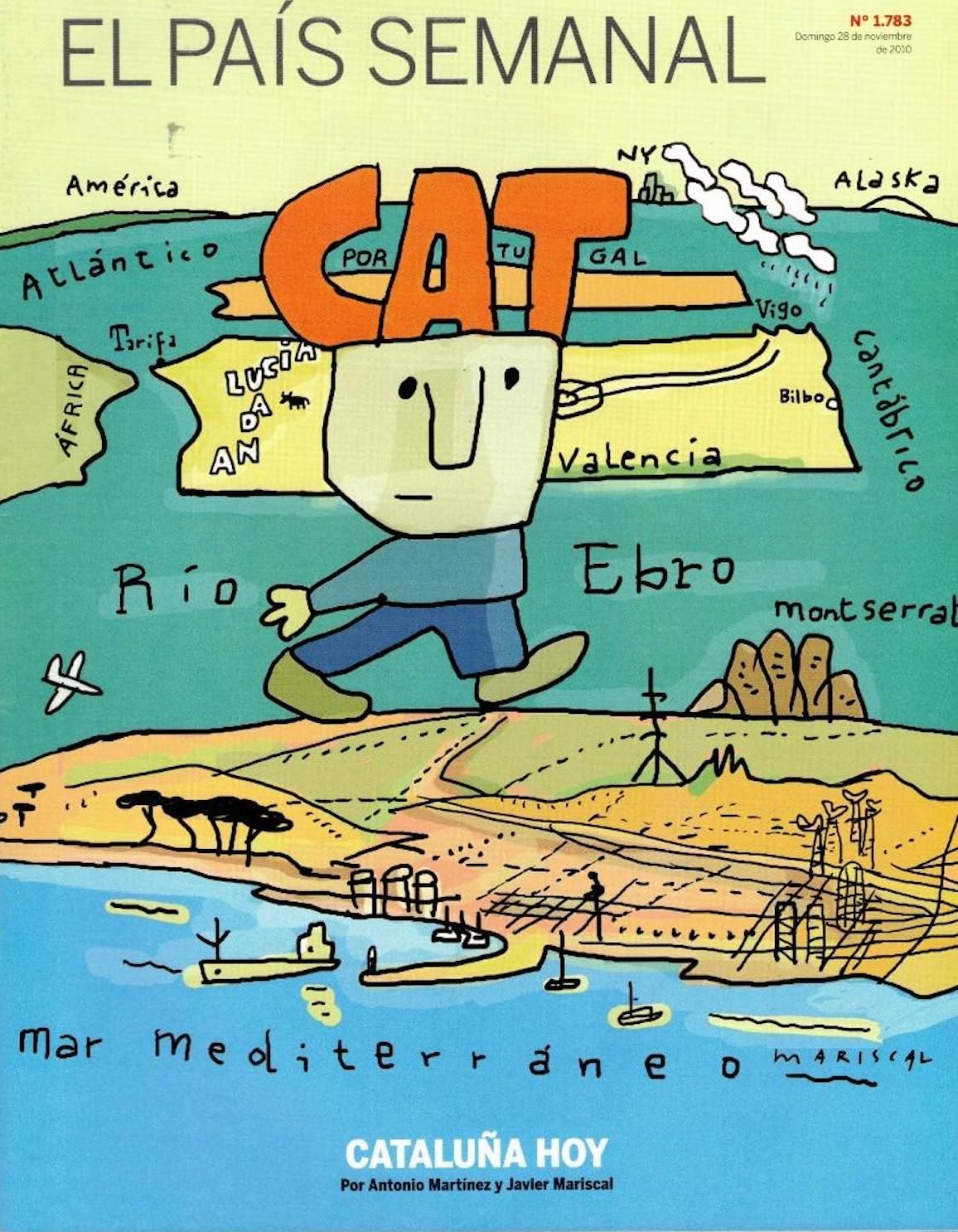
Perhaps Pujol was also in this the perfect counterpoint to the socialist. He looked at Barcelona from Montserrat. He always saw the coast as a final limit and not the beginning of anything. For him, Barcelona should not exist without Catalonia, because he knew that the danger is that there will always be a third party who benefits from internal divisions. In fact, that was always the liberal Madrid project: to divide Catalan strength. Against Carlism and the great bourgeoisie, there had to be an autonomous and socially progressive Barcelona.
"The Cerdá Plan is the great historical work of Spanish centralism"Whoever seeks to understand why O'Donnell's moderate government imposed from Madrid the defeated project of the progressive Cerdá, at the same time that in the capital it approved a conservative expansion plan, should not dwell on the technical issues of urban planning (the sun exposure and the aeration of the city) but on the geography and sociology they created. A mental grid tending towards egalitarianism, cultural uprooting, and cosmopolitanism. Take a look.If we were to ask ourselves, what has Madrid contributed to Barcelona? The answer is that Madrid (capital), among many other things, has contributed to Barcelona nothing more and nothing less than its Eixample.
The Cerdá Plan is the great historical work of Spanish centralism, and not because it centralized anything, but because it created blocking minorities. It was more than just a standard hardware. It created a physical board to balance the game with a small professional bourgeoisie, in constant contact with the proletariat. That is, a new, large social group whose interests did not necessarily have to converge with those of the high bourgeoisie or with the countrymen from the interior. The serpent's egg of the eternal national misfire, inoculated just in time from the plateau, at the moment when Catalonia began to take off in the modern industrial world. The Eixample configured a mental software in the people of Barcelona. It is a buffer between Catalonia and money.
Maragall's project, born from that software, was to create a truly just, balanced, and functional city. A city that would mitigate the lacerating social segregation of its peripheries. That would bring them closer to the center, thus integrating the entire metropolitan area. And all this while being consistent with the sign of the times: entry into the Common Market, gradual deindustrialization, and economic tertiarization.
The mayor had to be a super-mayor. And that broke the fragile balances that overlapped beyond Collserola between the "country" and the city in favor of the latter. Jordi Pujol perfectly understood the danger that this software update posed. Greater Barcelona, however multi-level and polycentric it might be, would tend to become an even more self-absorbed world that, in the medium term, would turn the rest of the "country" into an extractive "territory." Into a periphery. That is why, when he ended the CMB (Corporació Metropolitana de Barcelona), his explanation was anything but empty: "By the Hanseatic concept of Catalonia, we understand that idea, formulated or unformulated, conscious or unconscious, that Catalonia is Barcelona and little else. Hanseatic cities were powerful cities and practically nothing more. They have no country. They are not a country. We want Catalonia to be a country."
"The multi-level system of Greater Barcelona of 5 million needs a new understanding of its position in the world as a global city"Maragall had his reasons, but Pujol was always right in his intuitions regarding Barcelona. As you will understand, my opinion on the nationalism of the "molt honorable" is not exactly good. As a child of his time and a former student of the German School during the 30s... he thought within the rigid parameters of the modern nation-state. I don't believe that replacing one nation-state with another solves any problem because perhaps the problem is precisely the French concept of the nation-state.But if I were Catalan and in 1987, in the midst of the Olympic high, I had seen the convergent laminated as the Metropolitan Corporation did, it would have earned my vote regardless of any other issue, to the point that I myself would have "transferred the missals" to the Andorran bank that "the mother superior" liked best.
Beyond the joke, I say this because his decision was, like it or not, one of the most transcendental and profound of his reign. A structuring decision that sought to create anchor points and roots between the city and the country. To make the metropolitan area and the Catalan interior inseparable. Before being the capital of the Mediterranean, Barcelona was the capital of Catalonia. Intuitively, he was trying to avoid the process of territorial secession in which global cities are immersed today.
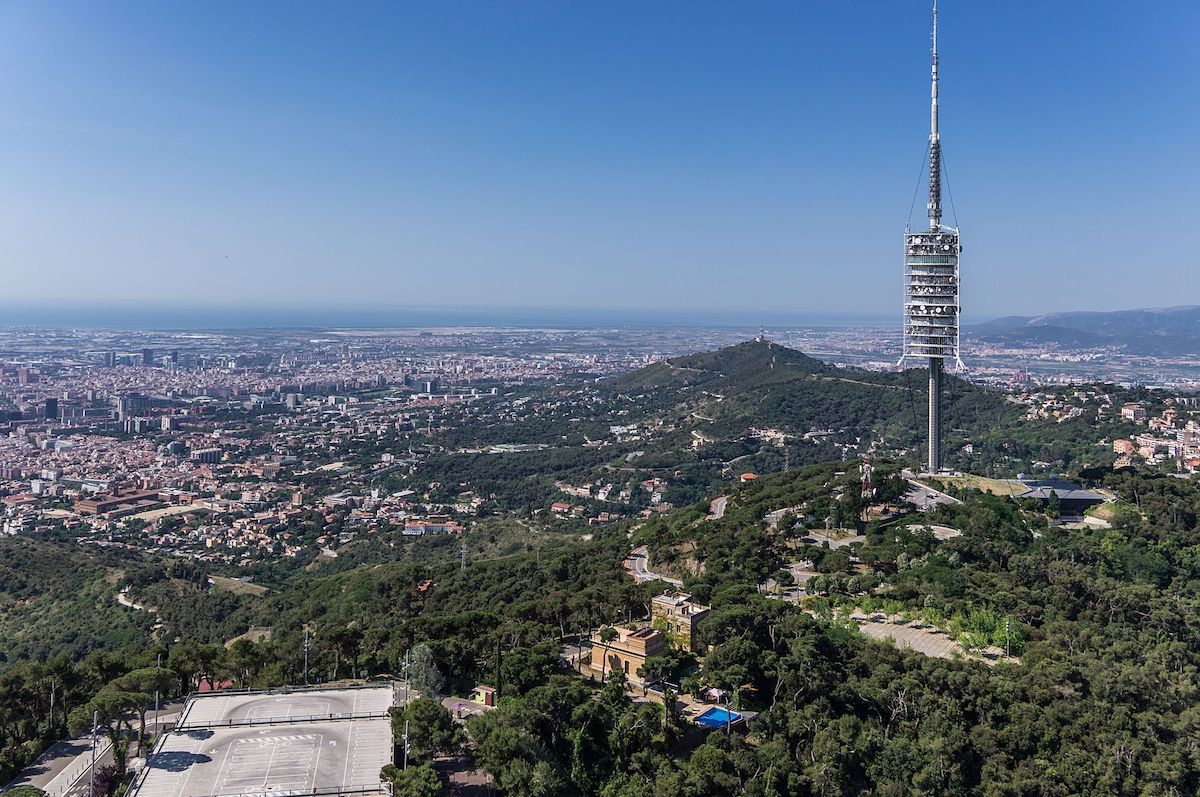
Pujol had a narrative and, in the long term, a national objective that failed when he took the detour of that Trumpist movement that was the procés. In "the country" they forgot the complexity of the Barcelona ecosystem. But at the same time, the Olympic narrative of Maragall's Barcelona is also exhausted, and the attempt to retreat to the degrowth acupuncture proposed by Colau threatened to decapitalize not only the periphery but also the very center of the system. That seems to be changing.
However, although the ducks of Remolar and La Ricarda have returned to their rightful position in the food chain, on the other side of Collserola, metropolitan centralization strategies are still viewed with suspicion, because the shadow of the great global center is very powerful. Because the attempt to bypass local suppliers is high if they become too expensive. And because the social externalities caused by the global system ---where there are still roots and the homeland is still more than just heritage--- have profound cultural consequences. To the point that today many in "the country" see their language threatened and with it their own identity in what they consider their home. Let's remember, Le Penism and Trumpism are movements of resentful peripheries against the centers.
"What does Barcelona have to offer Barcelonans? And L'Hospitalet, Sabadell or Manresa? And Lleida? Is the Barcelona brand going to replace the Catalonia brand?"The multi-level system of the Great Barcelona of 5 million needs a new understanding of its position in the world as a global city. Without it, realistic objectives cannot be set, and therefore neither a narrative nor the goals to be achieved can be defined. And for it to work, that narrative must set a course thinking of those inside and those outside.Without it, there is no plan or strategy that is not condemned to stumble around.
I said at the beginning that this narrative must be positive and inspiring. A narrative of transformation for the better. Towards abundance. In my next installment (and by allusion) I want to take advantage of the articles written in The New Barcelona Post by Oriol Estela ---Make Madrid Great Again--- and Pau Solanilla ---Barcelona Republic: facing Madrid DF, the Singapore of the Mediterranean---. I will not do it with any intention of proudly responding to their criticisms (completely legitimate); but because they illustrate that way of understanding the great Barcelona as a Hanseatic city, and which only reinforces what, in my opinion, is the genesis of its problems: an involuntarily self-absorbed vision, which has been reached by ignoring the blind spots created by Maragall's project and Colau's experiments. A vision of the city that should in no case be reduced to being conceived as the negation or alternative to others. Barcelona does not exist to respond to others, to be an alternative to no one. Barcelona exists to propose and contribute. Inward and outward.
What does Barcelona have to propose to Barcelonans? And to L'Hospitalet, Sabadell or Manresa? And to Lleida? Will the Barcelona brand replace the Catalonia brand? And what does Barcelona have to propose and contribute to Zaragoza, Valencia or Palma? And to Malaga, Bilbao or… Madrid? These are the questions hidden behind the big question to be resolved: What are we and what do we want to be. Answering these questions is not easy, but it is necessary. And no narrative or future plan will be valid without answering them in depth and not with slogans, cheap aestheticisms and pretty and empty words, as politicians do today.
Add The New Barcelona Post as your preferred Google source for free
Stay informed with the latest news.