The future of Catalan gastronomy: five voices and a revolution in the kitchens

Paolo Casagrande - Lasarte

From the kitchens of Barcelona to Japan or Mexico, five leading chefs reflect on the gastronomic revolution brewing in Catalonia, with Barcelona at the forefront, where 'xup-xup' coexists with spherifications

(Writer at The New Barcelona Post)
november 08, 2025 - 01:47

Catalan cuisine is experiencing a moment of effervescence and revolution. In a year in which Catalonia asserts itself as a World Region of Gastronomy, Catalan kitchens are boiling with tradition, flavor, and innovation. So much so that at this year's Gastronomic Forum Barcelona, the benchmark event for the hospitality, gastronomy, and foodservice sector —which this week has set up shop at Fira de Barcelona—, a powerful concept has marked all debates: the New Catalan Cuisine. A label that, in the style of the French Nouvelle Cuisine of the seventies or the New Basque Cuisine of the eighties, marks the beginning of a revolution in the kitchens.

A gastronomic revolution in which foams, spherifications, and reinventions coexist with the xup-xup and traditional recipes.After a few decades strongly marked by the creative revolution of El Bulli,a new generation of chefs and restaurateursbet to find their own voice: without giving up technique or experimentation, but defending traditional recipes around the world. From the heart of the Gothic Quarter to Japan, five reference chefs, who have been seen these days at the Gastronomic Forum Barcelona, —Paolo Casagrande (Lasarte), Marc Pérez (La Sosenga), Mateu Villaret (Masia, Japan), Xano Saguer (Çuina, Mexico City) and José Roldán— reflect on this moment of gastronomic effervescence. An effervescence that has turnedBarcelona as world capital of gastronomy,with prestigious restaurants like Lasarte —Three Michelin Stars, directed by Martín Berasategui and executed by an impeccable Paolo Casagrande—, but also new establishments that are revolutionizing the way of understanding cuisine, like La Sosenga, a declaration of intentions from its name, taken from the title of a medieval sofrito from theLlibre de Sent Soví, the oldest Catalan cookbook. But the gastronomic revolution is not only perceived in the heart of Barcelona, but also outside: with Catalan chefs who are committed to taking a piece of their origins to distant corners, such as Japan —with Mateu Villaret, from the heart of Tokyo, combining Catalan recipes with Japanese products— or Mexico —with an unstoppable Xano Saguer offering author's pastries and training courses from Çuina—. In addition to professionals who see in the Catalan capitalthe benchmark city for gastronomic avant-garde,as José Roldán, a Cordovan awarded as World's Best Baker. — How would you define "New Catalan Cuisine"?— Marc Pérez (La Sosenga, Barcelona): For me, this concept describes a whole generation of chefs who are committed to Catalan cuisine, make it grow and, furthermore, take it around the world, defending it with pride. — Paolo Casagrande (Lasarte, Barcelona): New Catalan Cuisine is innovation and renovation, renewing itself to continue surprising diners and offering them a different gastronomic experience, but one that makes them want to return. Marc Pérez i Tania Doblas, al capdavant del restaurant La Sosenga, a El Gòtic.
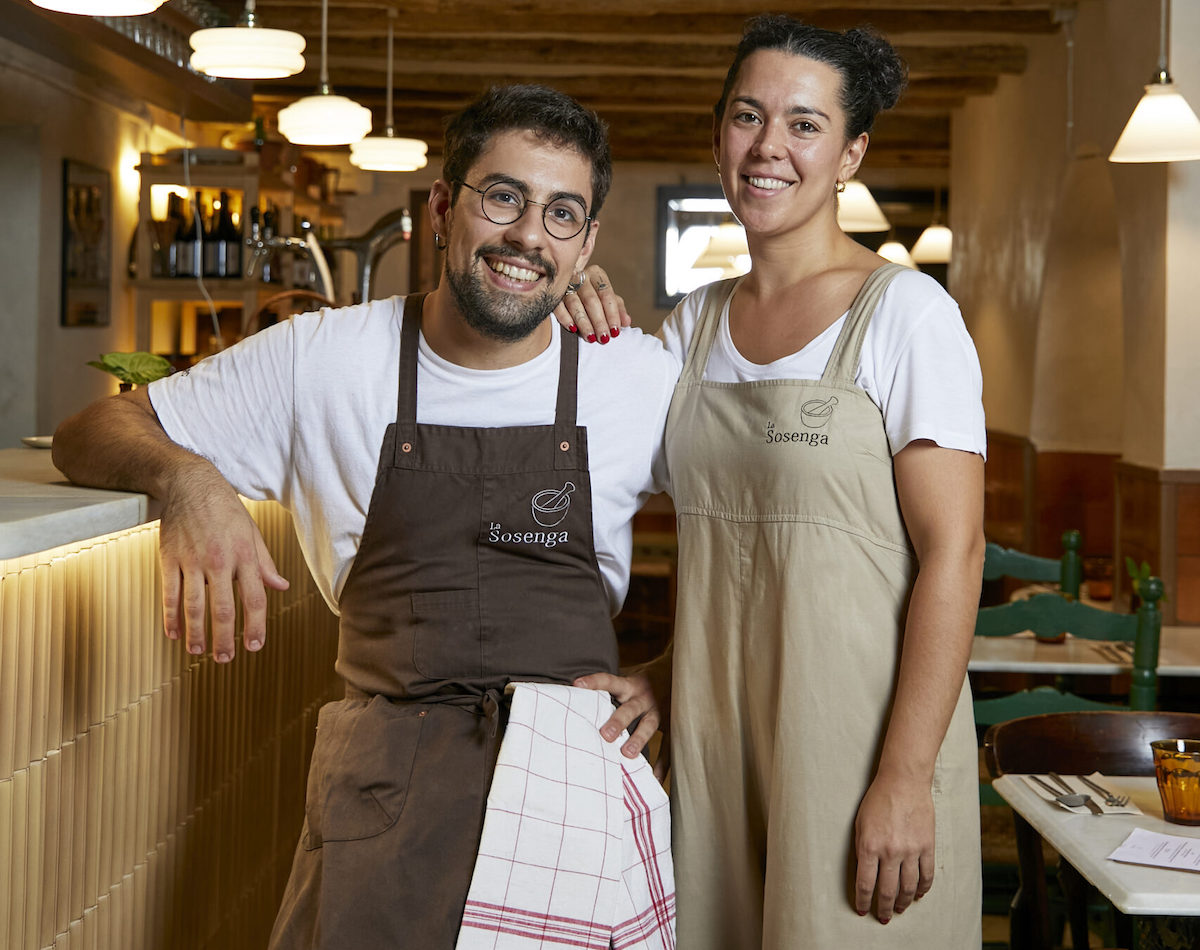
Marc Pérez and Tania Doblas, at the helm of La Sosenga restaurant, in the El Gòtic neighborhood.
— Mateu Villaret (Masia, Tokyo): It's a label I wasn't familiar with, because I've been out of Catalonia for almost two decades and cooking all over the world. But every time I come back, I'm truly amazed by the effervescence and the large number of chefs who are revolutionizing the way gastronomy is understood and worked. It's a label that, for me, advocates for a broad and uninhibited gastronomic conception, defining a way of understanding cuisine that is neither too elitist nor too traditional. — Xano Saguer (Çuina, Mexico City): I believe that cuisine, like fashion, is cyclical. Everything comes back: and now we see that, after a period of spherifications and foams, chefs are opting to return to their origins, to tradition and product.— Innovation and tradition. How do these two concepts, which at first glance seem antagonistic, combine?— José Roldán (Córdoba): Personally, I am a strong advocate for a solid foundation, a foundation that catapults you to do things better and with more creativity. Without a good foundation, it is impossible to innovate. — Marc Pérez (La Sosenga, Barcelona): With coherence. Time. And trial-and-error. If you have a good foundation, that is, you know how to make africandófollowing the traditional recipe, then you will be able to reinterpret it with coherence and meaning. It's not about making dishes different or subverting the recipe just because: you have to understand each step and ingredient, and from there, without undoing tradition, integrate it and make it evolve. — Xano Saguer (Çuina, Mexico City): I don't do filigrees. No airs or foams. I believe in a good atmosphere, where people eat well and enjoy themselves. And I believe there is a whole new generation of chefs who are defending the same thing: going back to the origins, doing simple but differential things, with identity.

"Barcelona is a gastronomic capital where product, talent, and international projection converge"
— What role do new generations play in this gastronomic revolution?— Mateu Villaret (Masia, Tokyo): We were coming from a few years in which Catalan cuisine seemed to follow the same line: the influence of El Bulli was very present and it seemed that there was only one way to succeed. Now each restaurateur has their own voice, and this is very positive. In addition, now there are increasingly younger restaurateurs who become references, and seeing that there is a new generation of young people who, at 20 years old, are already opening restaurants, makes me very excited. — Marc Pérez (La Sosenga): There is a very clear generational change in the kitchens. A new generation that is not afraid to proudly defend Catalan cuisine all over the world. — José Roldán (Córdoba): I see a whole new generation of young professionals who are eager and enthusiastic, a fever to do new things and do them well. Professionals with fresh ideas who will lift the sector. Xano Saguer, català enamorat de Mèxic, que des d'allà dirigeix Çuina, un espai de pastisseria d'autor però també de cursos formatius.
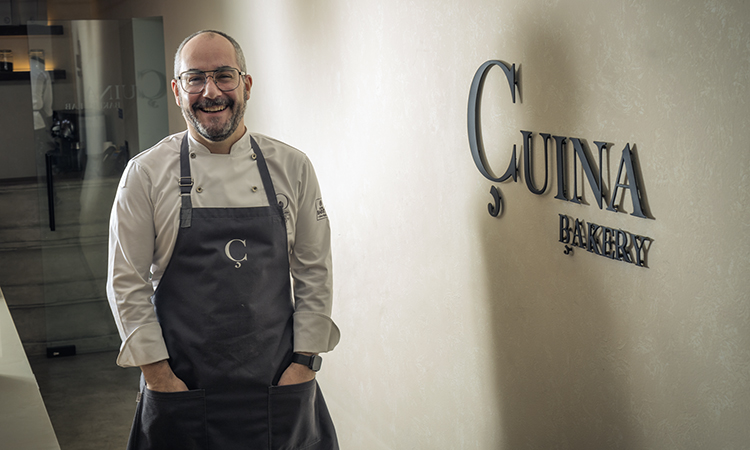
Xano Saguer, a Catalan in love with Mexico, from where he directs Çuina, a space for author's pastry but also for training courses.
— Has Barcelona become a benchmark city in world gastronomy?— Marc Pérez (La Sosenga): Barcelona is a window to the world, a gastronomic capital where product converges, thanks to small suppliers, talent, and international projection. Cooking from Barcelona, and doing it from El Gòtic like us, gives us a unique opportunity. — Paolo Casagrande (Lasarte, Barcelona): As an Italian living in Barcelona for years, I see that the Catalan capital has become a gastronomic reference city internationally thanks to the revolutions of great Catalan chefs, but also to a new generation of chefs who continue to innovate and surprise diners. Barcelona concentrates the best restaurants in the world, but also top-quality produce. — Mateu Villaret (Masia, Tokyo): After traveling for years through different countries, I can confirm that the Barcelona brand, and Catalonia, is a great calling card wherever you go. Everyone understands and admires it.
"Barcelona is always synonymous with avant-garde and revolution"
— How is Catalan cuisine seen and understood from different parts of the world?— Mateu Villaret (Masia, Tokyo): Despite the strength of the Barcelona brand, Catalan cuisine, unfortunately, is still largely unknown. Catalan and Spanish cuisine are mixed and always go in the same bag. Furthermore, until now, the vision projected to the world of Catalan cuisine was that of a refined gastronomy, inaccessible to most people from other countries. From Masia, we try to do a lot of pedagogy: for many Japanese, it is the first time they eat afideuà—and they are surprised: they think, what is this paella with noodles?— or a surf and turf. — Xano Saguer (Çuina, Mexico City): Although there is more and more promotion —and in Mexican supermarkets I can even find fuet—, it is true that Catalan cuisine is still confused with Spanish cuisine. Whenever I can, I say: "I am not Spanish, I am Catalan. And, consequently, my cuisine is too." And I explain to them what good bread with tomato is, good olive oil… — José Roldán (Córdoba): Barcelona is always synonymous with avant-garde and revolution. Every time we have to come up with a new idea, we come here.
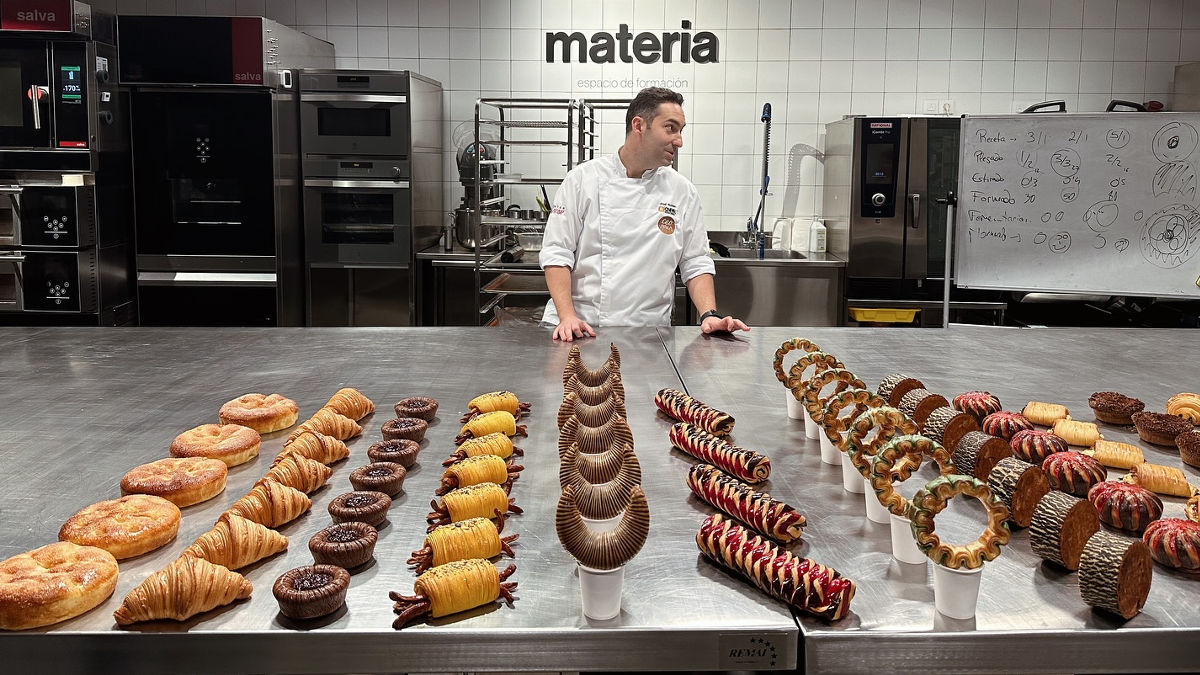
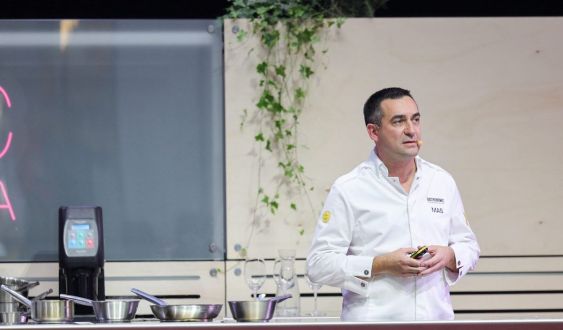
José Roldán from Cordoba, one of the 180 speakers invited to Gastronomic Forum Barcelona, has been recognized as the best baker in the world.
— If you had to keep only one Catalan recipe, which one would it be?— Paolo Casagrande (Lasarte, Barcelona): The Catalan chicken. — Mateu Villaret (Masia, Tokyo): There are many, but a good surf and turf rice with meatballs will always call to me. — Marc Pérez (La Sosenga, Barcelona): The pig's trotters with shrimp from La Cort del Mos (managed by Jeffry Ruiz and Helena Termes, winners of the Cuiners 2025 award during the Gastronomic Forum Barcelona). — José Roldán (Córdoba): The Catalan cream. — Xano Saguer (Çuina, Mexico City): I am happy with simple things: bread with tomato, an omelet and a little ham or sausage. I cook a lot at home, from rice dishes to fricandó, but in simplicity we sometimes also find happiness. Food is, in fact, one of the few things I miss from Catalonia and whenever I come back I return with a suitcase full of cured meats and good oil, because I don't find them of the same quality there. For example, in Mexico there is no red shrimp, there they call it "deep-sea shrimp", but it is not, by far, as good as a Palamós shrimp.
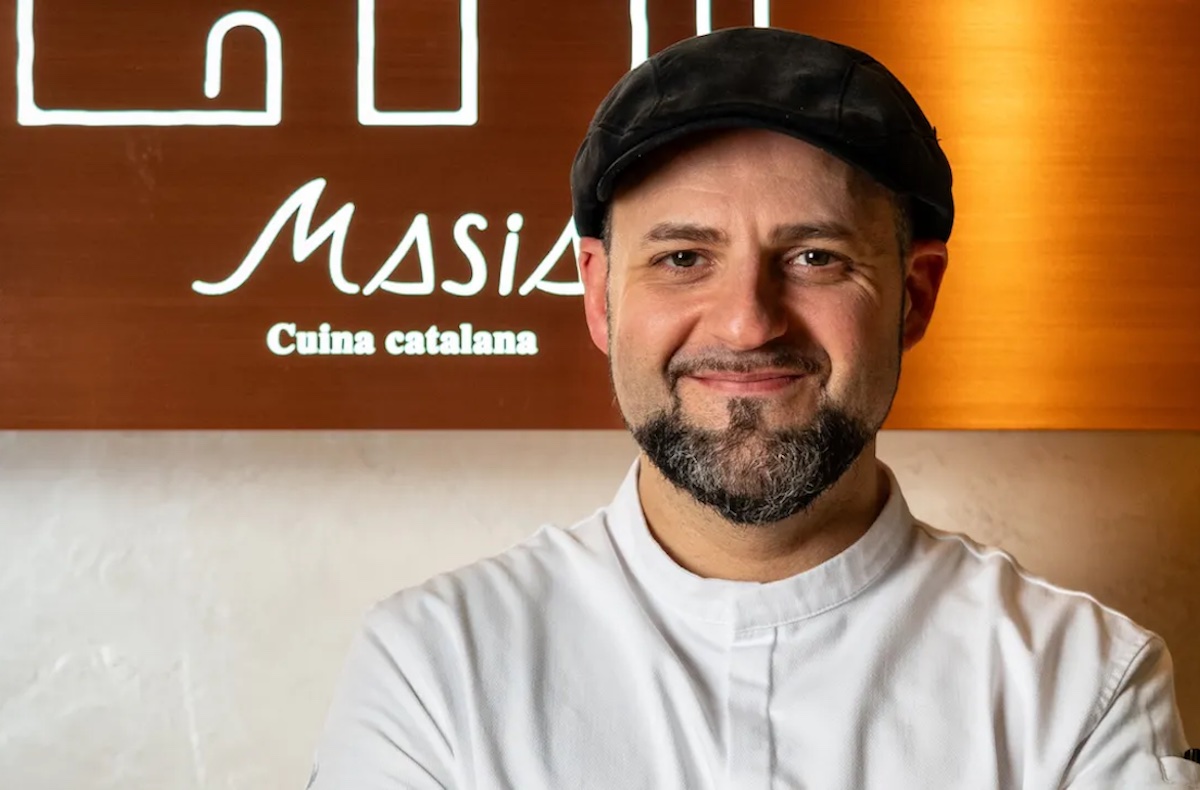
After years traveling and cooking around the world, from Holland to Singapore, Villaret runs Masia in Tokyo.
— And a reference restaurant or chef for Catalan cuisine?— Marc Pérez (La Sosenga, Barcelona): La Cort del Mos. — Mateu Villaret (Masia, Tokyo): From Japan I am a bit disconnected from Barcelona restaurants, but there are three places where I have eaten very well lately: Al Kostat, El Tòpik, and Granja Elena. — Xano Saguer (Çuina, Mexico City): My favorite restaurant, one of the lifelong ones, is El Racó del Pernil, in Girona. A very simple cuisine but of exquisite quality: top quality ham, roasted chicken, ham croquettes… I don't need anything else! — Paolo Casagrande (Lasarte, Barcelona): It's impossible to stick with just one Catalan restaurant: there is so much variety and such quality… Not only because of the big names, but also because of a whole series of small restaurateurs, as well as producers, suppliers, markets… A combination that makes Barcelona, and its gastronomy, a unique city.

Add The New Barcelona Post as your preferred Google source for free

Stay informed with the latest news.

Activate now

About the author

Ainara Valadez
Ainara Valadez Medina

Writer at The New Barcelona Post

View biography
Tags