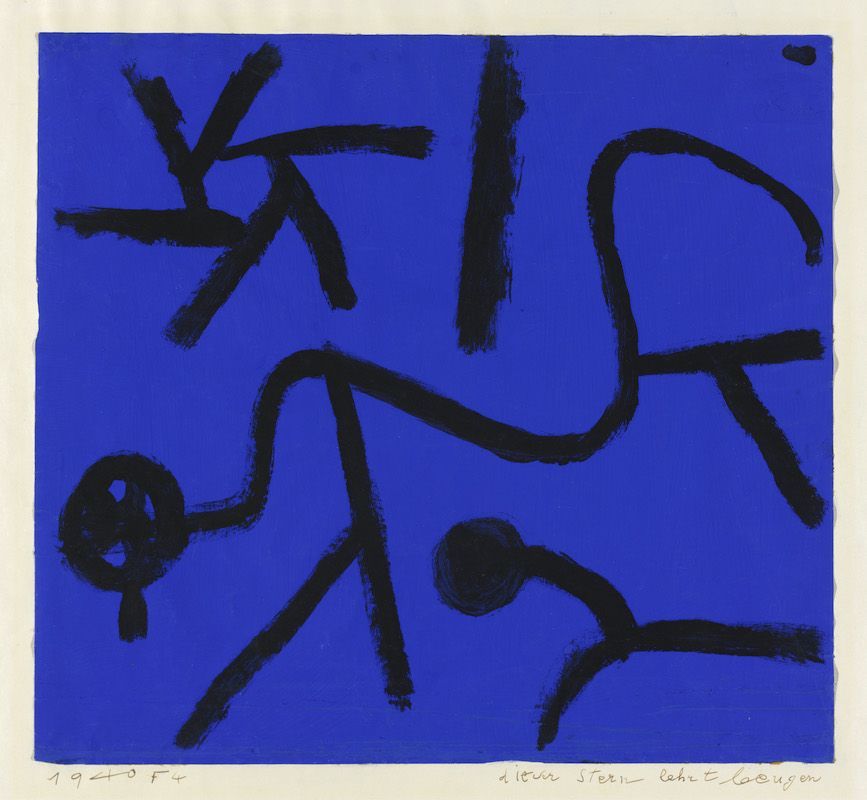
Joan Miró and Paul Klee never met in person, but they influenced each other. The Catalan painter even said that his German-Swiss counterpart had been a fundamental encounter in his life. Consequently, when the Fundació Miró was born, one of the first exhibitions it organized was dedicated to his figure. It was the year 1999 and the museum presented the artist's work for the first time in Barcelona. More than 20 years later, Klee (1879-1940) returns to the Catalan capital, demonstrating that he also drank from Miró's influence. This can be seen in This Star Teaches to Bow (1940), where the painter presents a very Mironian star that folds in on itself.
This is one of more than 200 works exhibited from this Friday until February 12 at the Fundació Joan Miró, including paintings, drawings, books, and natural objects, mainly from the Zentrum Paul Klee in Bern. "It's an exhibition that is between the forest and the cabinet of curiosities," says its curator, Martina Millà. The exhibition Paul Klee and the Secrets of Nature, with a title "a bit like Harry Potter," according to Millà, serves to present "a continuous fascination" with the observation of landscapes, plants, animals, and natural phenomena in the work of the painter who navigated between surrealism, expressionism, and abstraction.
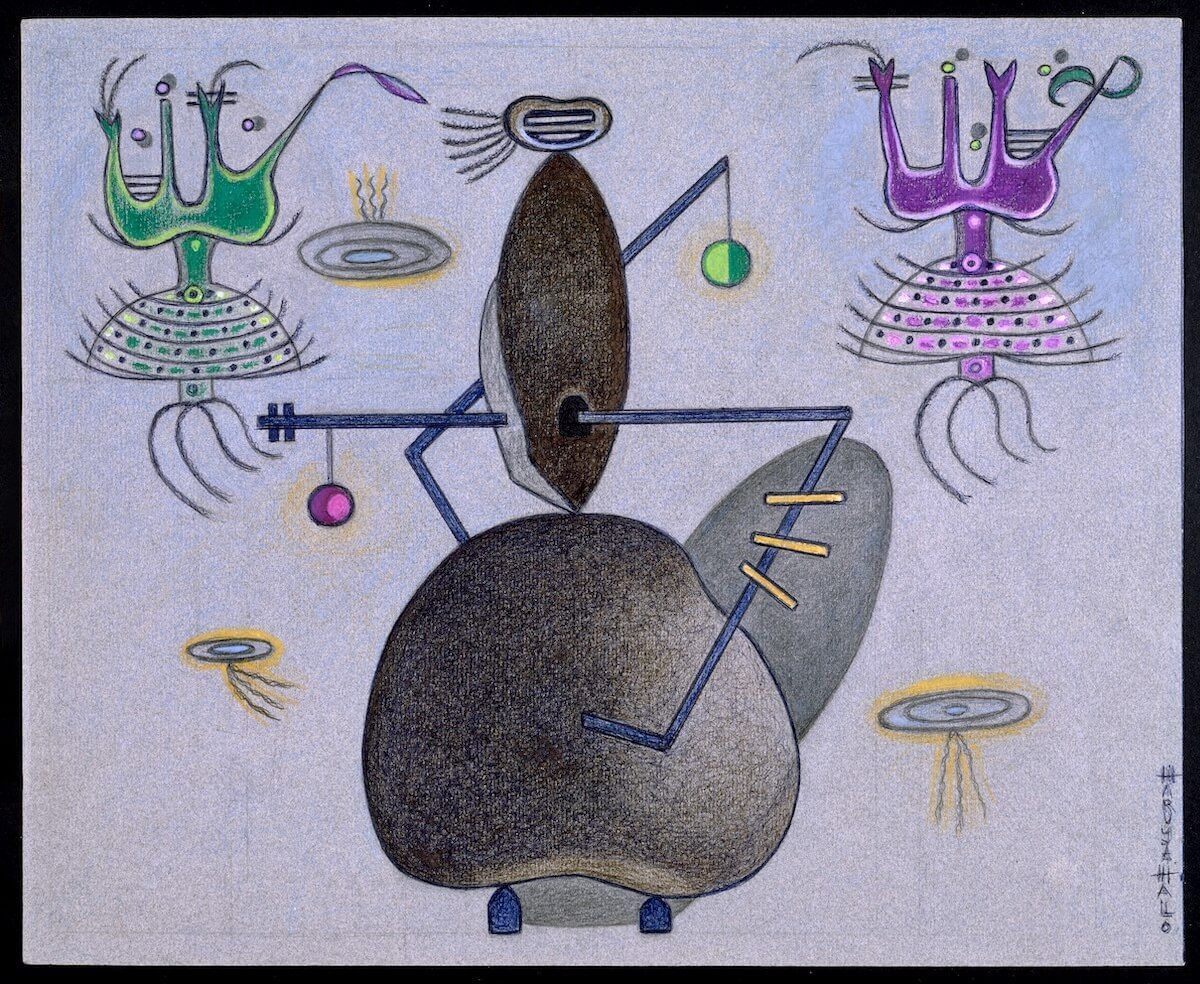
The second exhibition that the Fundació Miró dedicates to Klee, sponsored by the BBVA Foundation, is also an exercise in cultural activism, defends its curator, breaking the monographic narrative of great male names and including artists that patriarchy made disappear from Art History. Among them is the Galician surrealist painter Maruja Mallo with Protozoarios (1981), rescuing from oblivion her interest in natural and organic forms, as the Madrid artist Carmen Alvar also did this summer in Sala Parés.
Paul Klee and the Secrets of Nature follows a chronological narrative, divided into four stages. In the first, a four-year-old, left-handed Klee is seen already defying the tradition of scientific drawing by making a snail appear in his first documented drawing. The exhibition collects his learning of normative drawing, portraying dissected animals, flowers, and body parts in early drawings (1883-1911), accompanied by his student sketches and notes. Also included are his first landscapes, captured when he went for walks and outlining the atmosphere of each place.
The exhibition progresses with oils, watercolors, and drawings from his mythical trip to Tunisia and his participation in World War I, bearing in mind that he continued his training in Munich and, having German nationality, was recruited. The Fundació Miró has conceived this space as a color wheel, in homage to one of Klee's main influences, Goethe and his Theory of Colors. Likewise, objects from Klee's studio are included, physical evidence of his obsession with knowing and deciphering nature, such as dissected butterflies, stones, or fossils. All of this, as the exhibition constantly reiterates, highlighting the value of drawing in the trajectory of the avant-garde artist.
The third part of the exhibition projected by Millà focuses on his years as a teacher at the Bauhaus, showing another of his facets, just as he was a cook or musician. The latter is palpable in the oil on canvas that portrays a landscape of the Aare River, divided into five vertical parts, giving it rhythm. According to Millà, Klee had to make a great effort to translate his practices into knowledge, arming himself with notes and more notes, some of which are on display. His admiration for nature is better understood with the replica of an aquarium that the museum has created, similar to the one the artist used in his classes, when he made his students observe fish, learning from their movements and seeing how water influences pictorial representation.
Klee never felt comfortable at the Bauhaus, so in 1931 he left for the Düsseldorf Academy. He ended up being fired due to Nazi harassment of representatives of avant-garde art and had to go into exile in his native Switzerland, despite his clear contribution to German culture. Back home, he was diagnosed with a degenerative disease that gradually took away his dexterity and eventually caused his death at the age of sixty.
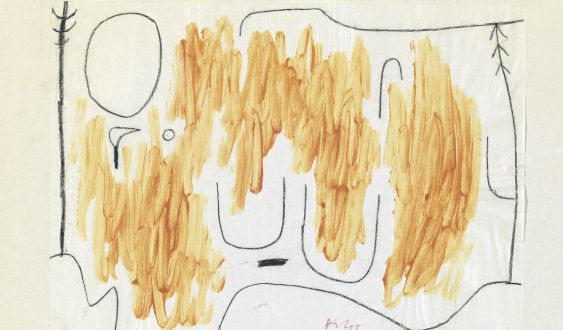
Paul Klee was also a teacher at the Bauhaus, as well as a cook and musicianIn this last area of the exhibition,one sees how his stroke loses precision, which, in turn, allows him to be freer and connect even more with nature, his main field of study, pedagogical model, and source of inspiration throughout his life. It ends up transforming into a vital refuge when he abandons the brush and begins to paint with his fingers, intimately and resoundingly identifying with the forms and atmospheres he had so admired, finally breaking with the separation between object and subject. That liberation can be seen, almost touched, inWinter is coming (1939).
The epilogue also features photographs that Francesc Català-Roca took of Miró's studio, adding to the feeling of being in the middle of a cabinet of curiosities. Also recalling once again the latent links between both artists, seeing how the Catalan treasured natural samples. A relationship that will be deepened in the exhibition that the Bern museum will organize for 2023, focused on the large-format works that Miró made in his studio in Palma de Mallorca.
Add The New Barcelona Post as your preferred Google source for free
Stay informed with the latest news.
