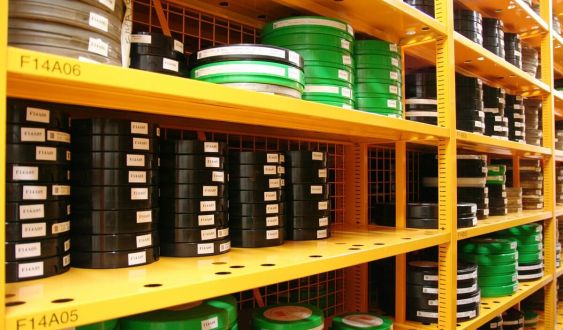
Now it is no longer enough to preserve the celluloid rolls containing film frames at very low temperature and without humidity, as the Filmoteca de Catalunya does in its Conservation and Restoration Center in Terrassa. Although this traditional, even rudimentary, system can preserve the material for tens and hundreds of years, the world has changed so much that there are fewer and fewer theaters that can project analog cinema, the medium in which the 40,000 titles ---and their respective 200,000 reels--- that make up the Filmoteca's collection are preserved. The theaters have turned to digital reproduction, as evidenced by the fact that, in Barcelona, analog cinema can only be seen at the Phenomena and at the Filmoteca itself.
Given this scenario, the cultural institution led by Esteve Riambau has decided to promote a systematic plan for digitizing its collections, being aware that a necessary way to preserve cultural heritage is to be able to disseminate it, and now it is time to do so in digital format so that it can be easily seen, both in commercial theaters and on platforms. "The films we have are well preserved, now it's about making them visible," says the director of the Filmoteca.
Under this premise, 16 feature films and short films have begun to be digitized this year, increasing to 20 titles that will be preserved in this format each year starting in 2023. Their digital maintenance will be complemented by becoming part of a long-term cycle that will be included in the programming of the Filmoteca del Raval, allowing enjoyment of gems such as La ciutat cremada, Tren de sombras or Los felices 60, three of the titles that have already been digitized this year. Until now, the Catalan film archive had done so on an ad hoc basis, adding 25 features and 40 shorts in digital format.
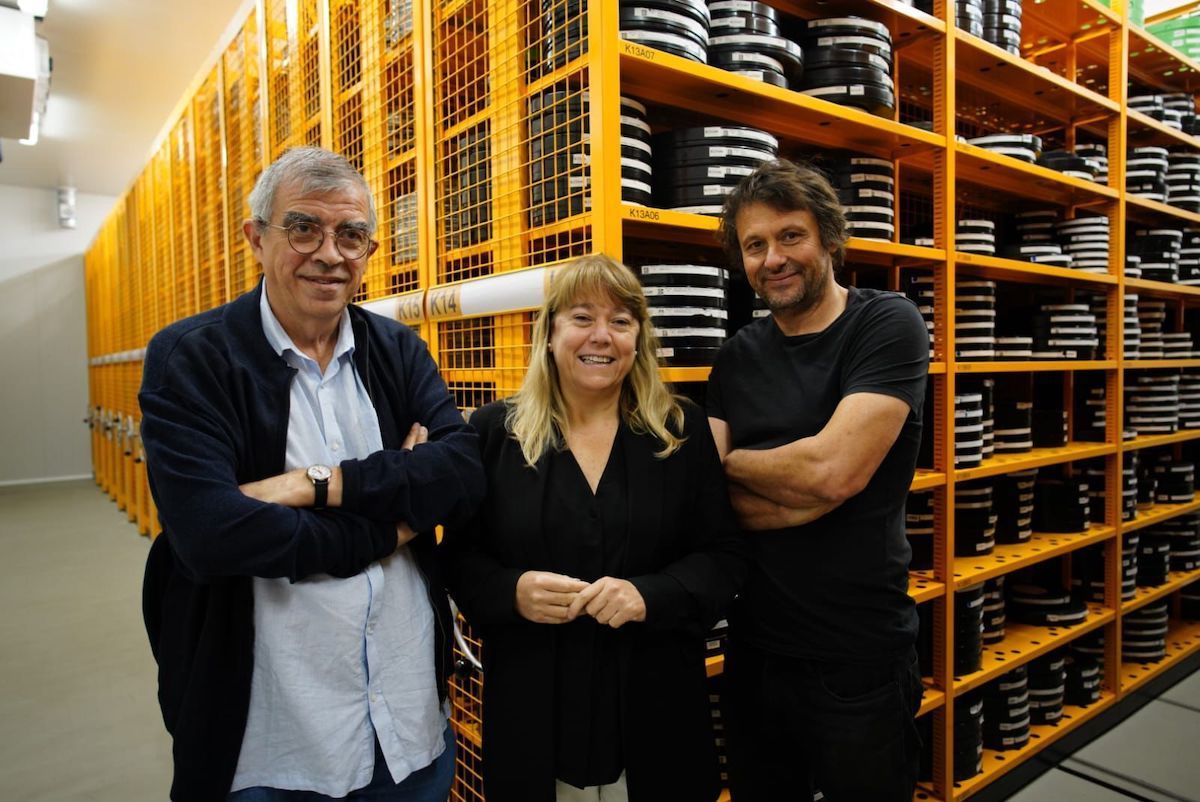
With the impetus of the new plan, some 1.1 million euros have been disbursed to provide the necessary infrastructure to start a larger project. The Filmoteca has allocated 600,000 euros to acquire two scanners that will be dedicated to the digital capture of films. They will be located at the Escola Superior de Cinema i Audiovisual de Catalunya (Escac), also in Terrassa. There, digitalization will be improved from the projection room with a color station available at the training center, an essential step to complete the process, correcting the image and improving quality. Escac has mobilized some 500,000 euros to adapt its facilities for this purpose. The plan has also involved the hiring of two workers at the Filmoteca and two others at Escac.
The films to be included in the plan will maintain the "eclectic spirit" of the Filmoteca, its director points out, but they will also have to have historical relevance and good quality of the available preservation materials. The requirements they will have to meet are: having been produced or co-produced in Catalonia between 1940 and 2014, always on photochemical support; not having high-resolution digital copies; having the prior consent of the holders of the exploitation rights; and contemplating the diversity of genres, styles, and periods of Catalan cinema. As Riambau emphasizes, the goal is not to digitize everything, since it would not only be very costly but would also occupy 40% of the Generalitat's IT volume.
This first year of the plan, the digitized feature films have been: Un vaso de whisky (Julio Coll, 1958), A tiro limpio (Paco Pérez Dolz, 1963), Los felices 60 (Jaime Camino, 1963), Vida de família (Josep Lluis Font, 1964), Furia española (Francesc Betriu, 1974), La ciutat cremada (Antoni Ribas, 1975), Boom Boom (Rosa Vergés, 1990) and Tren de sombras (José Luis Guerin, 1997). For short films, special attention has been paid to Picasso, considering the imminent 50th anniversary of his death, and the chosen titles have been: Lecciones de cinematografía (Paco Pérez Dolz, 1956), Circles (Ricard Bofill, 1966), Oda a Gaudí (Jordi Vall Escriu, 1967), Picasso-136 (Jordi Vall Escriu, 1969), Picasso a Catalunya (Josep Palau i Fabre, 1979), Picasso l'alegria de viure (Jordi Artigas, 1981), El museu dels tres palaus (Josep Maria Forn, 1982) and Picasso nostre (Maria Lluïsa Borràs González, 1982). Starting in 2023, an external commission representative of the cinematographic sector will determine the titles to be digitized, at the proposal of the Filmoteca, following the model of other European film archives.
Add The New Barcelona Post as your preferred Google source for free
Stay informed with the latest news.
