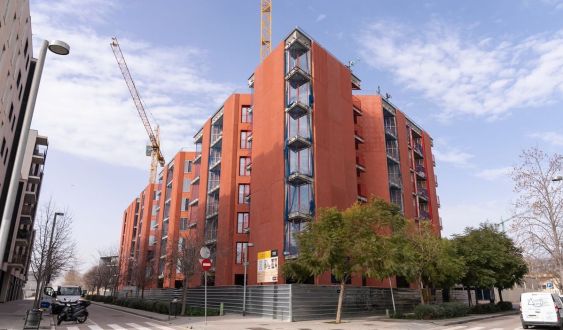
At a time when housing stands as one of Barcelona's great challenges, the city has once again been the setting for The District, the main real estate congress in Southern Europe, with the aim of maintaining the growth of the event's first three years. In the first two days of the congress, beyond trends and investment opportunities, there was a question floating in the air, and that is none other than what are the best solutions to resolve the housing crisis suffered by large cities like Barcelona. Faced with a sector often demonized and stereotyped as real estate, its agents agree that more housing is needed and prices must be lowered because otherwise it will be impossible for this crisis to disappear.
Statistics say that in Catalonia there is currently a shortage of about 125,000 homes, and to achieve this, the aspirations of builders, investors, and public institutions must be aligned, a fact that is by no means simple, especially considering the experience of recent years. This was pointed out by the managing director of CBRE in Barcelona, Xavier Güell, during the first session of the new Eixample Talks cycle organized by The New Barcelona Post together with Pimec, lamenting that legislation has been enacted ignoring the private sector and without seeking an understanding among all involved parties.
Güell's call seems to have been heard by all the protagonists of The District, who assure that formulas must be found to grease this mechanism and solve the housing crisis affecting Barcelona and the rest of the country. A good basis for starting to look for this solution is the 70,000 homes promised by Mayor Jaume Collboni. Along these lines, the congress director, Juan Velayos, assures that these 70,000 flats will not end the crisis, but they will represent a very good start and would begin to address this problem. However, he also pressures the City Council so that "they don't remain just a headline" and demands to get to the point on this matter. Even so, the sector knows that this is a medium-term solution and that perhaps we won't see even a small part of these flats completed for another three or four years, as reminded by the CEO of Amat Inmobiliaris, Guifré Homedes.
Along the same lines, they assure that the main way out of the current crisis is to initiate a public-private collaboration process to carry out these projects. To achieve this symbiosis, Velayos asks, on the one hand, that administrations try to understand how investors and capital behave and start giving them incentives and, on the other hand, that the latter leave skepticism behind, remembering that in a market like real estate, regulation is indeed necessary, although he points out that it should not be excessive. In short, he reminds that a climate of mutual trust must be generated between these two sides of the coin to start working. On the other hand, Homedes demands from the administrations "clear and stable rules of the game" to avoid generating confusion and uncertainty in capital, and to encourage investment in Barcelona and Catalonia.
On the part of the administrations, the head of the commercial area of INCASÒL, Sílvia López, assures that they are present in places like The District to show potential investors everything that is being done in Catalonia —with Barcelona and the metropolitan area at the forefront— in real estate matters and to attract them. Regarding potential investments, López assures that, indeed, there is interest in investing in Catalonia, but accepts that the main problem they encounter is how they can work jointly with private investment so that everyone is satisfied. In addition, she admits that they would like to be much more agile as an administration, but reminds that they normally have to evaluate many factors, in areas such as, for example, Gavà and Viladecans, where all the protected spaces of the Llobregat delta and how possible new constructions would affect the area must be taken into account.
We must look beyond Barcelona city
On the other hand, one of the conflicts in the sector, especially in Barcelona, is the lack of space. Geographically, Barcelona cannot grow more and is very limited in space.This problem causes that, especially the most central neighborhoods receive a lot of demand, but, on the contrary, generate very little supply and that prices rise exorbitantly, as has been seen in recent years.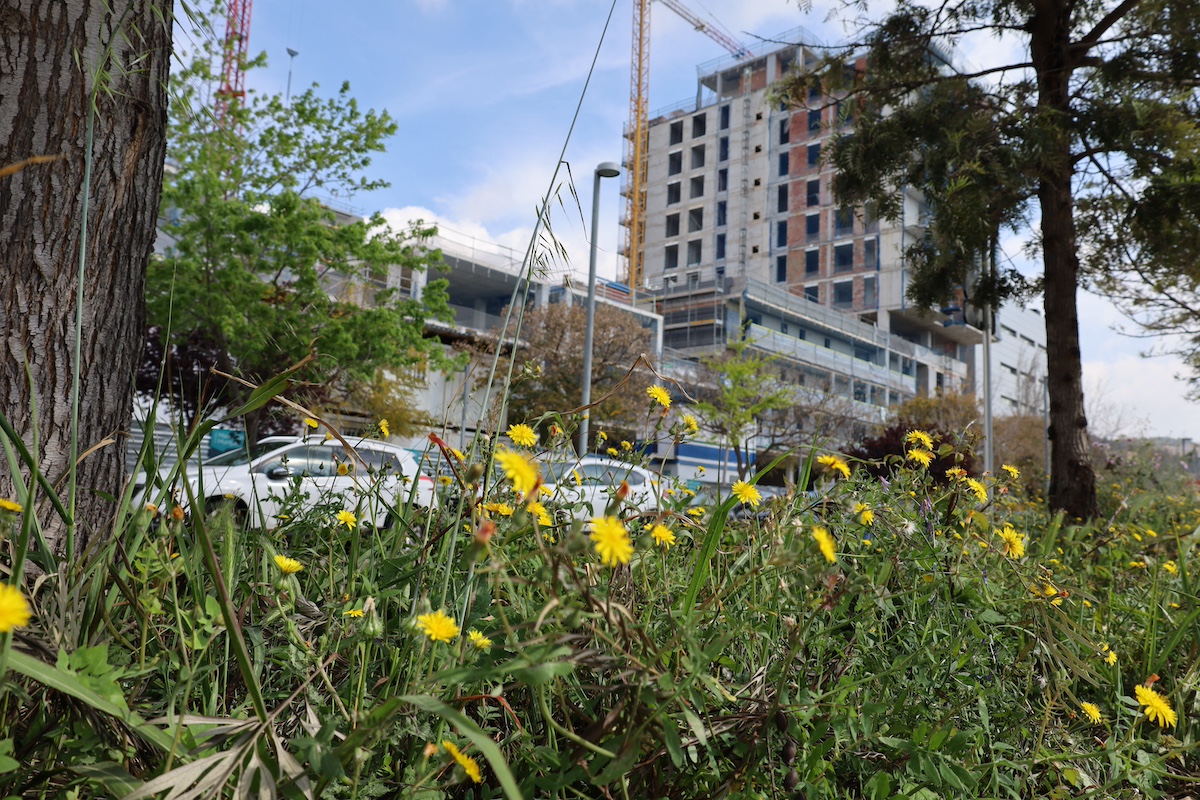
Currently, La Marina del Prat Vermell has emerged as a space for construction, but this area is not infinite, and, for this reason, all actors in the sectors ensure that it is necessary to look beyond Barcelona city and extend this view to the metropolitan area, where there is a possibility of constructing affordable housing to accommodate the population increase that the city has experienced, and still experiences, in recent years. Even so, it is true that currently there are still a lack of agile mobility infrastructures to attract residential housing seekers to the outskirts of the city and start living in this "great Barcelona" to which the city is destined.
The office market continues to grow in Barcelona
Beyond the residential market, The District also features speakers and attendees from other areas, such as the office market, which seems to will close a very good year 2025 again with nearly 300,000 square meters leasedthanks, mainly, to the revitalization of 22@, according to the director of Forcadell's office department, Manel de Bes.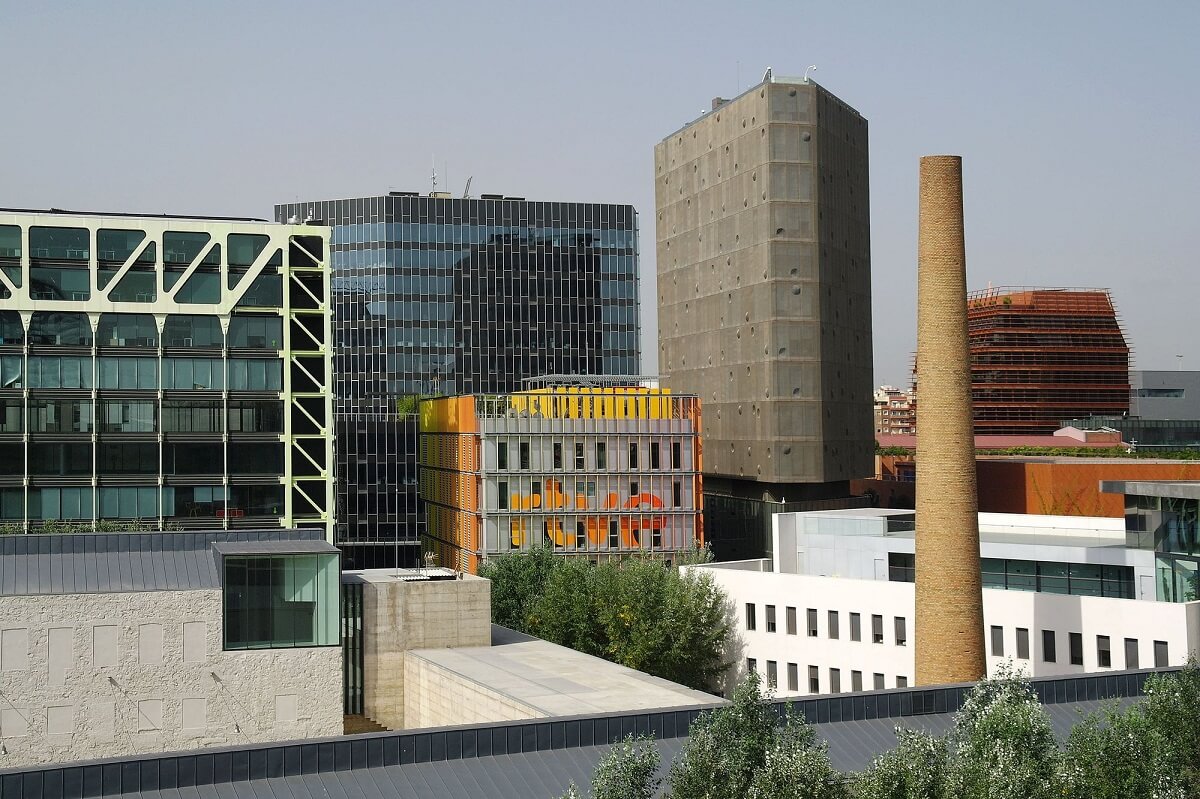
This year, the city continues to see capital interested in investing, especially in the city center, but in recent years large tech companies and international schools have once again shown interest in Poblenou and 22@, especially in state-of-the-art buildings. At the same time, de Bes comments that there are other areas of the city, such as the pole near the Llobregat, that are starting to gain momentum thanks to sectors like pharmaceuticals, causing the interest of companies and investors to move beyond what is strictly the center of Barcelona. He does point out that it is increasingly common for companies to look for large spaces and more modern buildings, a fact that makes it difficult to find small spaces for rent and older buildings located in the city center.
Another trend at this The District is the desire to invest in logistics centers and data centers, two types of infrastructure that are increasingly necessary and require not only a high investment but also the adequate infrastructure to ensure the electrical power they demand, especially data centers. The administrations welcome this interest and assure that some units are already being put into operation, but they warn that in most spaces the infrastructure of the plots still needs to be adapted. As for logistics, it has been a subsector that has occupied a large part of the available industrial land, although in this case new spaces large enough to house these centers must be found. In this case, INCASÒL's projection is to direct this demand to the metropolitan area, since, as with housing, the available space in Barcelona is already very limited.
Positive sensations
All in all, in the atmosphere of The District at the Gran Via venue of Fira Barcelona, a certain spirit of satisfaction and hope for the future of the real estate market was noticeable. In Hall 4, which was filled for three days, the congress attendees also admitted that they arrived in Barcelona with high expectations for The District, expectations that, in some cases, were not fully met. Even so, the organization considers that this year's editionwill manage to gather close to 15,000 people in Barcelona, tripling the figures of the first edition,ensuring that the congress "is going as well as we expected, or even better," recalling that until the congress ends they will not have definitive figures. "The first day was better than last year, we have very positive feelings," assures Velayos, who also perceives a "very optimistic and grateful" feeling on the part of the congress participants, assuring that they are taking advantage of the event.Add The New Barcelona Post as your preferred Google source for free
Stay informed with the latest news.