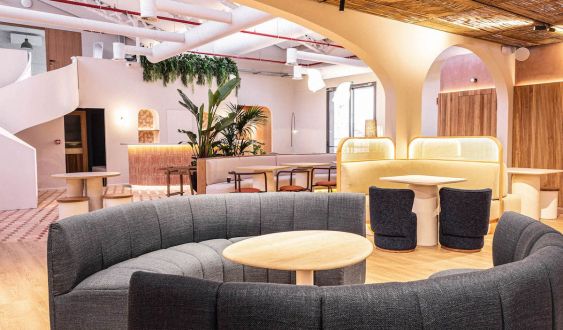
Living up to expectations is never easy, but everything indicates that Juno House is on its way to exceeding them. Since the end of April, Barcelona's first club conceived by and for women has captivated some 400 members who, in their daily lives, make this pioneering project in the city one of their areas of action, both professionally, socially, and for well-being.
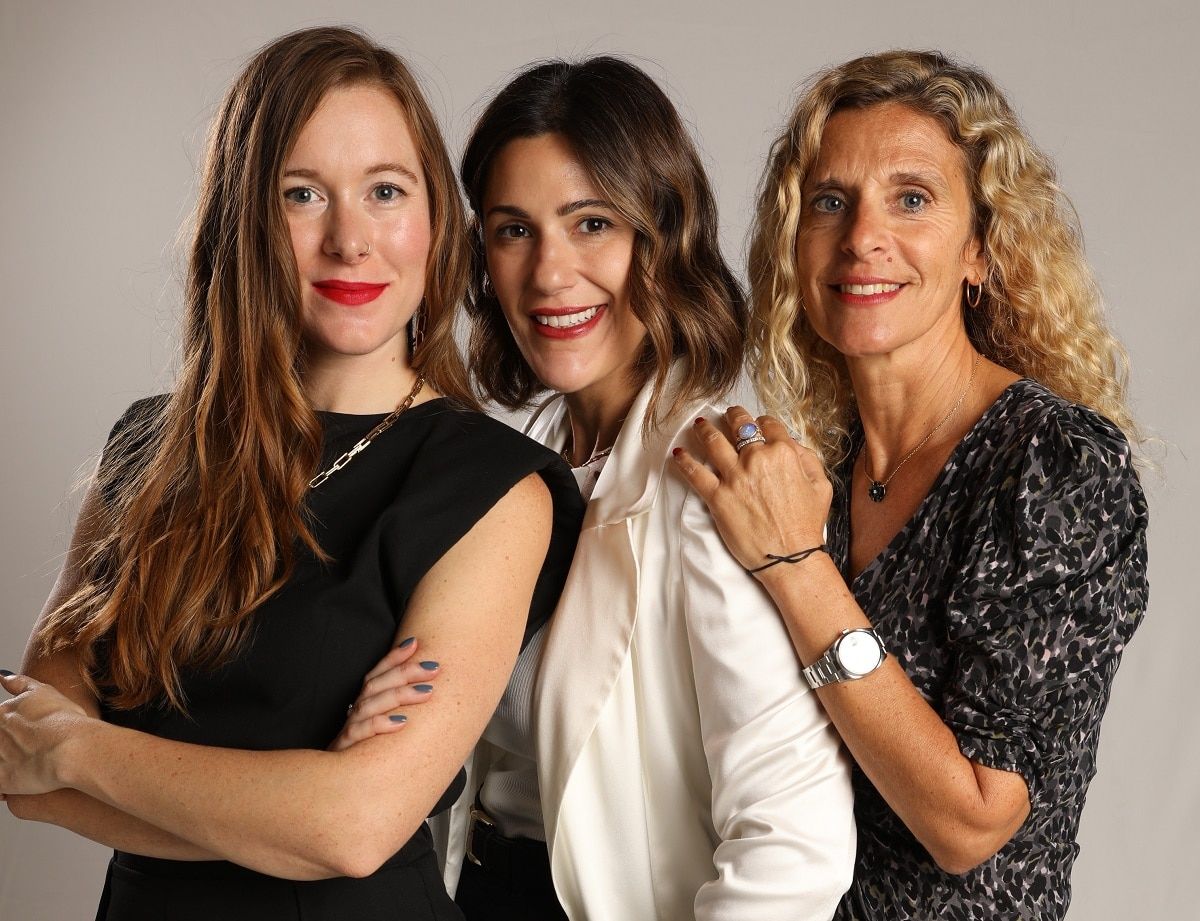
What was barely a project idea just a year ago is now a reality, whose reception has surprised the founding members themselves, Natalie Batlle, Liana K. Grieg, and Eva Vila-Massanas. "We are delighted and very excited by the reception Juno House has had since its opening. Seeing so many women passionate about being part of the project and coming in their daily lives makes us very happy. Our mission has always been to create a living brand that evokes collaboration and inspiration," comment its founders.
And so it has been. This female meeting point has quickly become a space for reconciliation between personal and professional life, a pleasant and comfortable environment where personal relationships can be fostered, as well as female talent itself. "We have a collaborative, intergenerational, and diverse community of women, all from different sectors, with a lot of talent, so it is very easy for synergies and opportunities to be created here. In fact, in the few weeks we have had the club open, we have already seen how some synergies have been created between members and their clients. Our role is to create an environment that inspires the creation and development of opportunities for our members," point out its founders.
The motivation that each of the members finds in Juno House is as diverse as there are profiles. In the case of member Pepa Morillas, the workspace becomes one of her greatest incentives. Originally from the south, she has lived for many years between Barcelona, Madrid, and abroad, and since the opening of Juno House, she has made its facilities her office: "Coming to Juno is very comfortable, on the days I come I arrive at 8:30 in the morning. I start with a coffee and calls abroad. Then, I continue with daily tasks on the computer and, when I have Zoom meetings, so as not to disturb the other members, I go into the Phone Booth. And for more relaxed moments, when I need more silence, I go to the library."
A native of Valencia, member Estefanía Sánchez-Gómez finds the club a good place to work as a freelance, in addition to allowing her to spend good times with her three-year-old son in spaces designed for the little ones like Little Juno. "I wanted to find a space where I could work comfortably and, sometimes, take a class in the middle of my workday. I did it today and it felt wonderful. It's something I never achieve when I have to travel for meetings. I have also tried Juno Café and used Little Juno with my son, enjoying playtime. One of the things I value most about Juno House is the fact that work-life balance is at the core of the project. I am new to the city, a first-time mother, and being able to combine my professional development with motherhood is top," she explains.
"I wanted to find a space where I could work comfortably and, sometimes, take a class in the middle of my workday. I did it today and it felt wonderful," says one of the members.English photographer and member Liz Baggaley, for her part, goes to the club one or two days a week, but whenever she does, she has the feeling of having had "a little break from real life." Liz emphasizes the ease of meeting new people, entrepreneurial women in the city."All the members are very open and interesting and it is a space that invites the creation of synergies between members. In fact, I have already secured my first photography commission thanks to one of the members," says Baggaley.
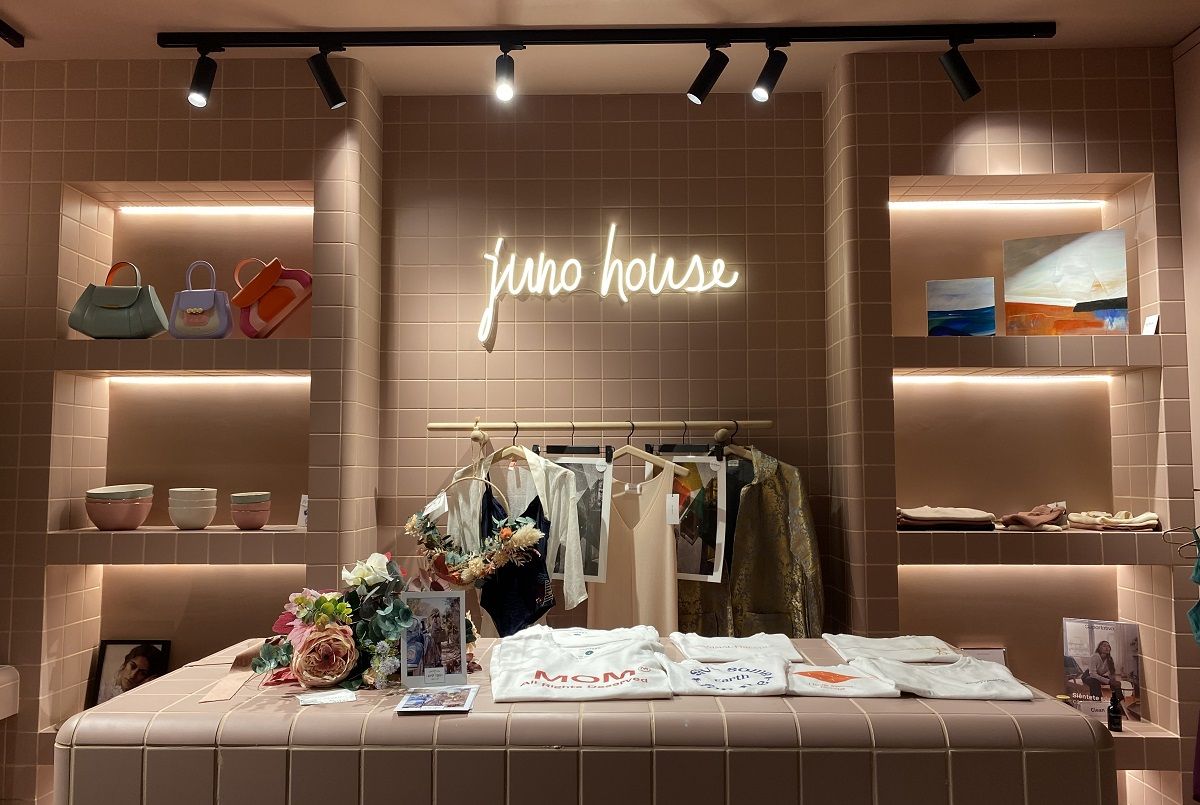
The full agenda of activities organized at the club is another of the attractions that draws dozens of members weekly. This is the case of Vanessa Alves, founder of Ours: "For the moment, I am attending all the activities being organized for members: workshops and talks mainly, but my intention is to establish a routine for coworking and classes. I have high expectations for Juno House, but, above all, I hope it will be a meeting space for women who want to share, support each other, and learn together." Alves has also used the Juno Shop store space as a showcase to display her proposals, in a clear commitment by the club to give visibility to the entrepreneurial projects of its members, which periodically rotates and changes.
The feminine essence of interior design
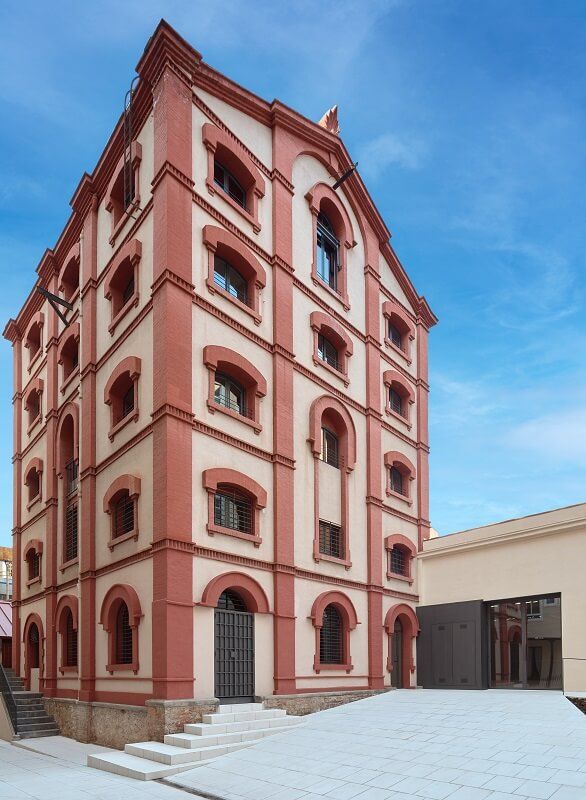
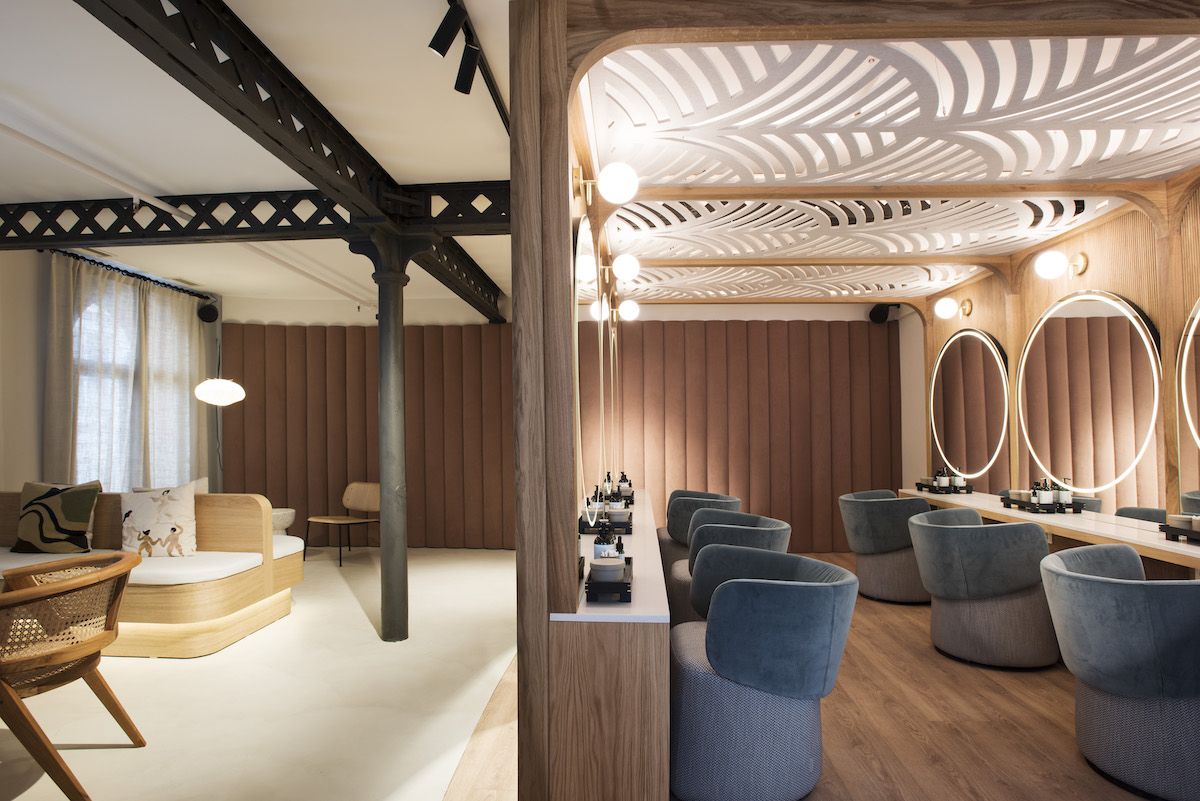
One of the great attractions of the club is the space itself, based on a fresh, cosmopolitan yet very Mediterranean interior design, where the most refined aesthetic is combined with sophisticated furniture, rich in textures, yet functional. Its location in La Farinera d'Aribau, a historic building from 1915, surprises and attracts from its street-level access. Its interior passage acts as a transit point between urban hustle and the serenity of Juno House. Once inside the building, one has the sensation of entering that social "home" where one can work, enjoy, and relax.
The renovation involved the work of architect Merche Conca from BCA Arquitectura studio and the interior design by Meritxell Ribé from The Room Studio, both also members of the club. The aesthetic of the place has been key to the project's identity. "We were clear that Juno House had to breathe the cosmopolitan world of New York City and the Mediterranean lifestyle of Barcelona. Together we wanted a unique space designed for the modern woman who seeks a community, as well as a balance between her professional and personal life," says one of the founding members, Natalie Batlle.
Along these lines, interior designer Meritxell Ribé delves into a sophisticated proposal based on a successful play of textures and enveloping, sinuous forms. "We were inspired by women themselves, by their sensuality and delicacy. It was a space for them, and that's why we made an introspection into femininity itself, as a woman and as a mother, to understand what the space should be like. We also wanted to give it a Mediterranean touch, which goes so hand in hand with that mellowness of women. We were inspired by light, warmth, and natural materials, whose use is very characteristic of our DNA as a studio," points out the interior designer herself, Meritxell Ribé.
Since the program of uses is very extensive, with different needs, the aim was for each space to breathe its own essence but, at the same time, for all of them to maintain the same aesthetic language. "The key was to define very clear guiding axes that would harmonize all the spaces with each other. These consist of the use of the same chromatic palette, in different tones and textures, that of natural materials (clay mortar, natural woods, ceramics, natural stones, linens, wicker, etc.), that of rounded shapes that would appeal to that feminine sensuality at all times and, finally, in recovering craftsmanship and natural trades, far from industrialization."
A vibrant and dynamic gastronomy
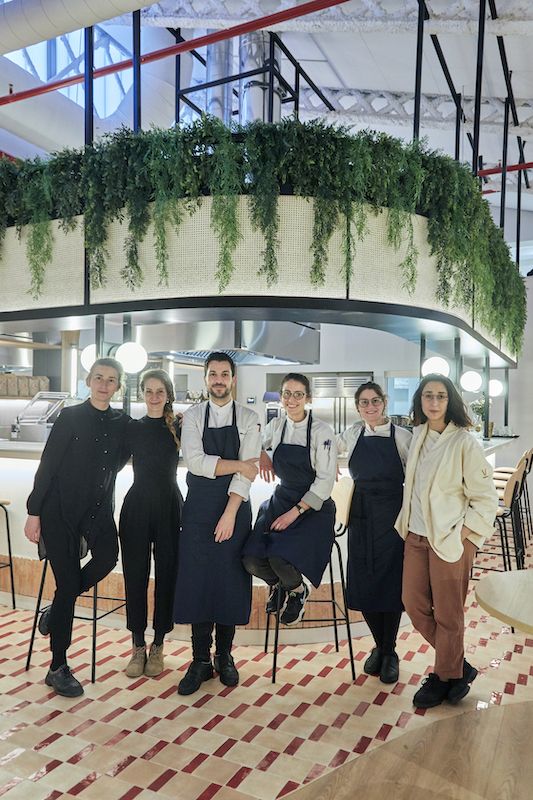
The annex building to La Farinera is perhaps the most frequented space by Juno House members, and it is here that another of the project's strong pillars, its gastronomy, is cooked up. The catering at Juno Café, as well as the rest of the activities and services organized, are exclusive to members ---with the exception of some companions and where men are also welcome as guests---. Life, movement, and evolution are the three basic concepts around which chef Laura Veraguas revolves her gastronomic proposal within the Juno House universe.
Her passion for a cuisine without artifice, where the essence of the product and its flavor prevail, translates into a constantly evolving menu dominated by ingredients from local, organic, and seasonal producers. These are responsible for giving meaning to healthy dishes designed to purify and nourish the body consciously.
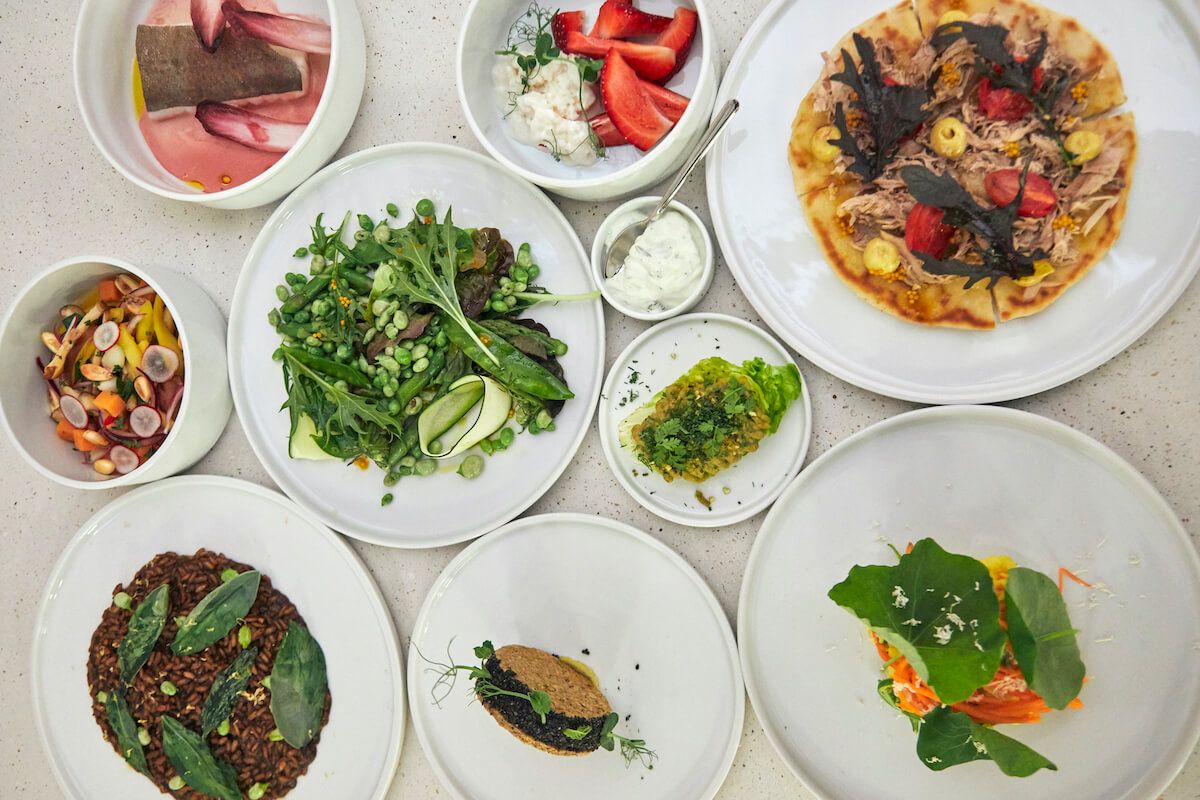
That pure and transformative vision that the chef imprints on her gastronomic proposal is also projected in her words, through which she delves into the human and intangible factor of what is served at the table. "We try to filter the entire philosophy of Ver Aguas, based on giving space and value to the product and producers, using as much vegetable as possible with an 80% proportion compared to 20% animal protein, and all of this we accommodate in three restaurant proposals such as breakfasts, lunches, and after-works. We make homemade drinks and products, we have organic products and a good selection of people who work the land very well and give us the best of it," explains chef Laura Veraguas. A carefully curated list of natural wines and cocktails complete a proposal created by and for women, inviting them to take care of themselves and socialize around a table and, by extension, a club full of passion, creativity, and dynamism.
Add The New Barcelona Post as your preferred Google source for free
Stay informed with the latest news.