If there is one thing that will be talked about this year, it will be the America's Cup, the oldest sports competition in the world and one of those with the greatest economic and media impact, only behind the Olympic Games and soccer World Cups. Many economic agents will participate in its development starting in August, with an eye on ensuring that the international event leaves a legacy beyond the months of the regatta and trying to get it to repeat in the Catalan capital for a few more years. "The America's Cup is a great opportunity to attract investments and develop tourism segments that we have underdeveloped, such as nautical tourism," said the Secretary of Business and Competitiveness and CEO of ACCIÓ, Albert Castellanos, in a new session of the cycle The New Barcelona – Moments Estel·lars, organized by The New Barcelona Post with the collaboration of CASA SEAT, Must Media Group and Barcelona Global.
With an estimated economic impact of 1.2 billion euros, Castellanos called for "not settling for this figure and making it as high as possible." "To achieve this, we have to take advantage of all the opportunities that this great showcase gives us," he remarked, without forgetting the city's main asset, "the ease with which companies can attract the best global talent."
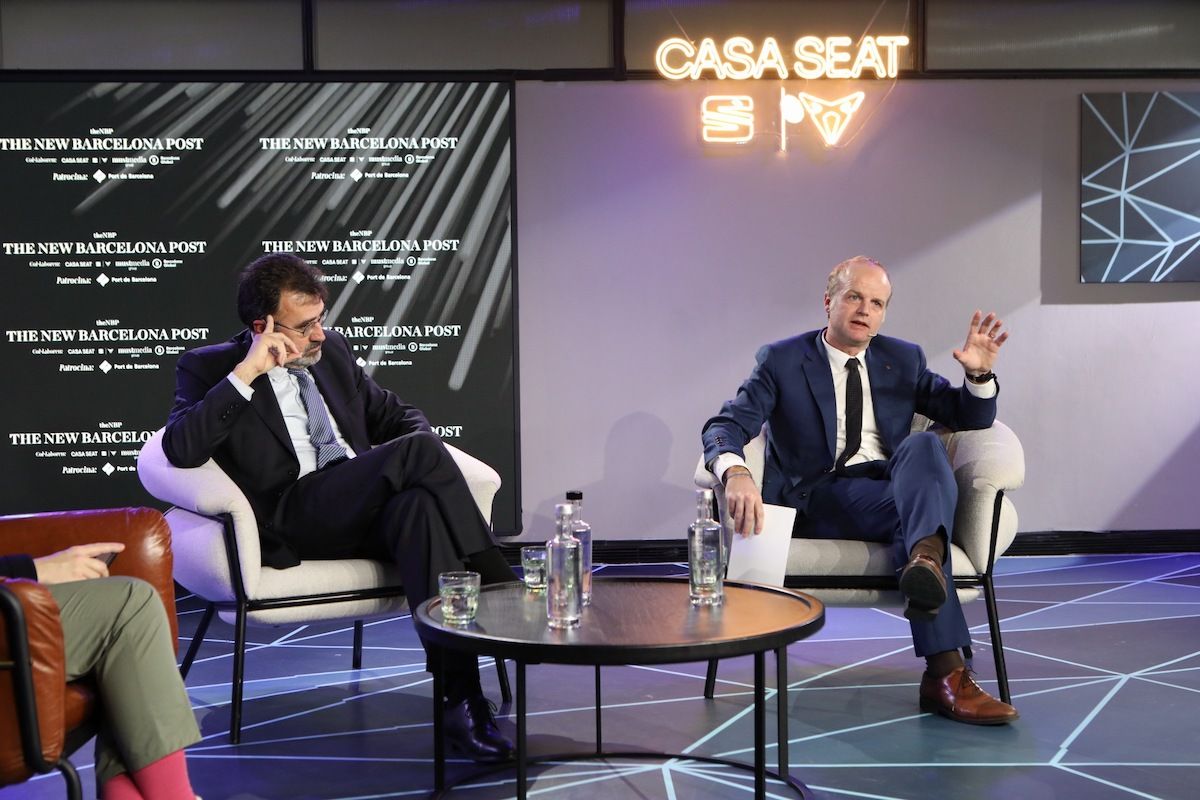
To this end, all the technological innovations adopted by its participants will play an important role, opening windows of collaboration with Barcelona companies. "It is a competition not only sporting but also has a very high technological component and we want to link this technology with our local ecosystem," Castellanos said. "The America's Cup will not be won by whoever has the best athletes but by whoever has the best engineers in technological development," added Salvadó, recalling that the budgets of the participants can reach 100 million euros to make their boats fly over the sea.
"Don't be surprised that at the Mobile World Congress (MWC) and Integrated Systems Europe (ISE) we give space to the America's Cup," Castellanos advanced without going into much detail. The Secretary of Business and Competitiveness indicated that issues such as precision in weather forecasts, a key factor in the victory of the teams, are expected to be addressed.
Positioning itself as a city with an innovative port
In the session moderated by journalist and UPF-BSM professor Toni Aira, the president of the port highlighted that the regatta represents an opportunity to position the Catalan capital, not only as a good manager, but also as an innovative city open to the world, with its port as a central element, which must serve to address future challenges in the maritime sector. "We are aware that a port like ours cannot compete with the port of Tangier, today the first in the Mediterranean, neither in costs nor in volumes, but it can do so by providing innovation, service and management," he defended. As an example, he indicated the growth that the infrastructure has registered in the mobility sector after closing 2023 moving 800,000 electric cars. "We are attracting traffic that comes from the added value provided by our concessionaires," he stressed.
According to the president of the Port, the America's Cup fits perfectly with three of the axes pursued by the logistics infrastructure: "internationalization, technological innovation, and valuing the Barcelona brand." "It has an incredible return that the Port of Barcelona is visualized as a port where important things happen. For example, our future challenge is to be in thegreen corridors, routes from Southeast Asia to the United States that will pass through the most innovative ports capable of supplying non-fossil fuels. In this, being in or out, many times, is the consequence of brand intangibles," Salvadó explained.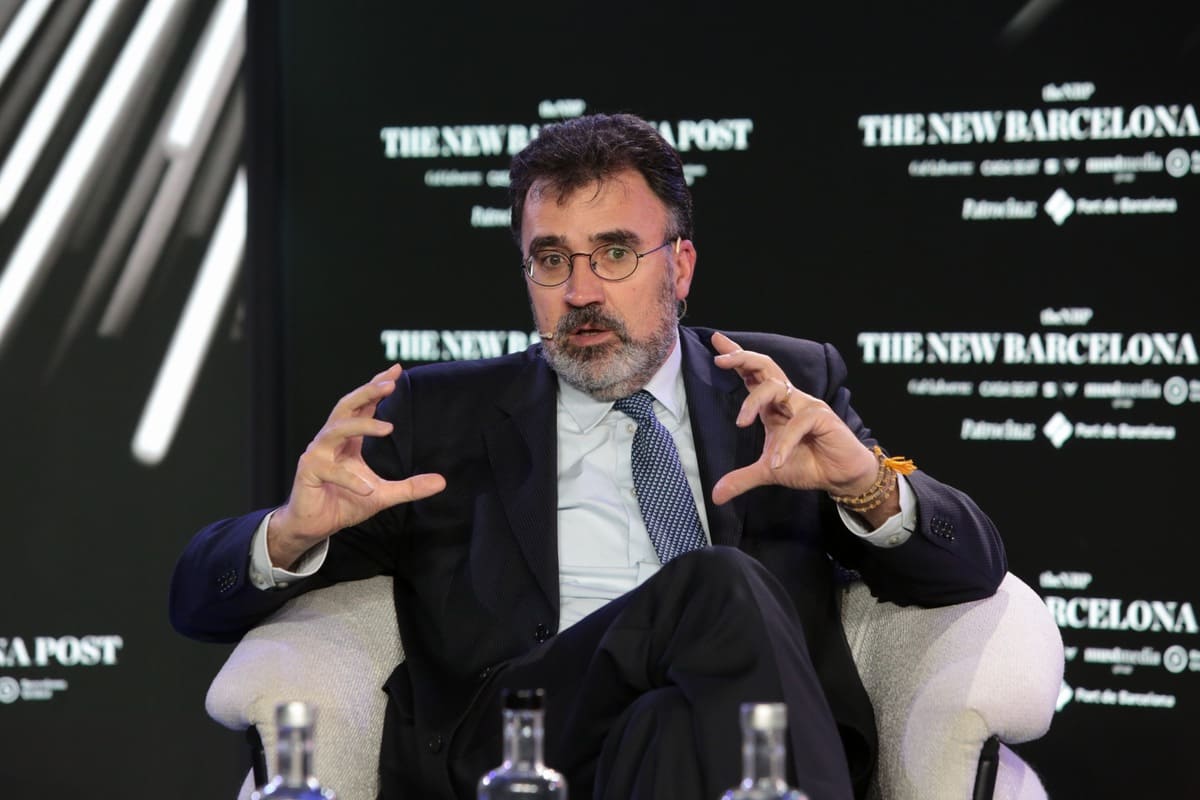
Castellanos explained the commitment of the Government of the Generalitat, through ACCIÓ, to support exporting companies and announced that in this last year, foreign sales have exceeded 100,000 million euros. In parallel, he indicated the need to also accompany Catalan companies in the current process of "multilocalization," a concept that no longer has to do with the delocalizations that occurred at the beginning of the century, but with the need to be able to produce as close as possible to large consumption areas such as China and the United States.
The Secretary of Business also recalled that in seven years Catalonia has doubled the number of startups, which have gone from 1,000 to 2,000 thanks to the consolidated innovative ecosystem, the quality of life offered to foreign talent, and the powerful university system. According to Castellanos, the big bet now is to promote deeptech startups, as they are "those that take advantage of Catalonia's great capital: a research system that is one of the most competitive in Europe."

Add The New Barcelona Post as your preferred Google source for free
Stay informed with the latest news.