
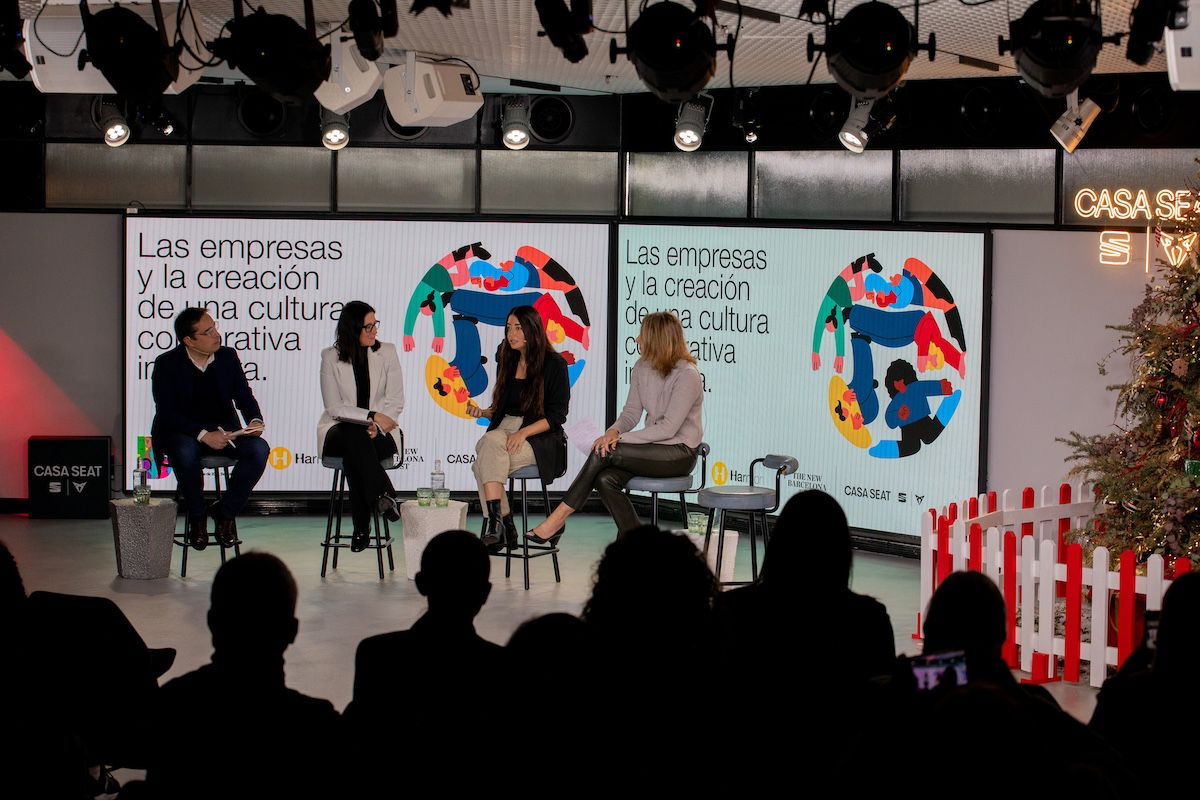
Companies play a decisive role in the fight against discrimination and in favor of inclusion and diversity. This has been confirmed by experts and managers in this field from various companies at the conference Companies and the creation of an inclusive corporate culture, organized by Harmon and The New Barcelona Post at Casa Seat, which was closed by the Assistant Director-General for Social and Human Sciences of Unesco, Gabriela Ramos.
Organized in parallel to the Unesco Global Forum against Racism and Discrimination hosted by Barcelona, the meeting highlighted the responsibility of companies to promote diversity and inclusion to eradicate any type of discrimination. "Beyond the leadership of institutions, the role of companies must be valued: we spend a large part of our daily lives in the work environment, and in it, the elements to build a more just and egalitarian society must converge," defended Pau Solanilla, Public Sector Partner at Harmon.
"In addition to being a matter of ethical responsibility, discrimination and racism are bad economic business," remarked Solanilla, who recalled that the Ministry of Equality has quantified this reality: the economic impact of labor and educational discrimination against the foreign population in Spain is 1.3% of GDP, a figure that translates into 17,000 million euros.
These data conclude that "we are not talking about theories or intentions, but about the fact that racism, discrimination, and prejudice continue to limit people's opportunities," as criticized by the Commissioner for Citizen Relations and Religious Diversity of the City Council, Sara Belbeida. Thus, "fighting against discrimination is not only the task of institutions, but it is a shared responsibility: each person, each organization, each company has its role."
And this has been defended at the conference by representatives of companies such as Seat, MSD Spain, Boehringer Ingelheim, GBSB Global Business School and IDG Barcelona Business Hub. "Diversity implies richness, and allows for the adaptation and survival of companies," stressed the Executive Director of Policy at MSD in Spain, Cristina Nadal. "The business world is an agent of social change," and diversity is making its way into all its dimensions in companies, according to her. The 62,000 employees of the American multinational give a lot of room for diversity, which is managed and promoted with initiatives such as proposals linked to mental health, volunteering and the LGTBI collective.
Also from Boehringer Ingelheim, they deploy LGTBI projects and also empower female talent, with the Mar: Mujeres Alcanzando Retos (Women Reaching Challenges) initiative. "We have 41 nationalities in the workforce in Spain, 51% of workers are women, we have 14 colleagues with functional diversity and we are four generations, from baby boomers to generation Z," detailed Montse Tomillero, Public & Government Affairs Head of the pharmaceutical company. Tomillero sees it clearly: the promotion and management of diversity "is the best long-term sustainability strategy for any organization."
In a round table moderated by Harmon's Public Affairs partner Manuel de la Fuente, the Head of Studies and Academic Operations at GBSB Global Business School, Hind Naaman, assured that diversity has been a fundamental value of her institution from the beginning: "Plurality is part of our daily lives," and it occurs among students, as well as among faculty and management. In such diverse environments, accepting diversity is no longer just a matter of rights and respect, "but it also acquires a more practical dimension: one must be able to work with someone who thinks completely differently from oneself, in pursuit of a common goal," as happens to her, especially with the war in Lebanon, from which she originates.

Embracing this diversity in a broad sense requires considering it transversally and not only in isolation from a specific department, as highlighted by the Culture, Change, Diversity & People Growth of Cupra and Seat, Benjamin Ramirez Heller: "It is important that inclusion is addressed from all areas and processes". In a second round table moderated by Solanilla, he reviewed initiatives promoted by Seat and Cupra in favor of diversity, such as a specific survey on inclusion; the creation of mechanisms for reporting inappropriate behavior, and the creation of a guide on how to address others respectfully and inclusively.
"A correct management of diversity directly influences the companies' bottom line," said the Talent and Diversity consultant at Harmon, Cristina Moreno, although she stressed that "it is not an economic issue, but a basic human rights issue." Moreno, who highlighted that 70% of Harmon's 150-person team are women, emphasized that diversity is interrelated and that different factors can converge in a single person: Thus, "it must be approached with a transversal, broad, and disruptive perspective," taking into account one of its premises: "What happens inside a company, transcends outside."
The Deputy Director of UNESCO asks companies to continue advancing on this pathThe founder of Nordics in Barcelona and co-founder of IDG Barcelona Business Hub, Jessika Klingspor, also advocated for promoting measures in favor of diversity. In companies, "it is necessary to generate safe spaces as leaders, and this generates trust", Klingspor has defended. Of Swedish origin, she has opted for listening to oneself, to then address the environment: "We are our relationships."
Barcelona, the place to be
The Assistant Director-General for Social and Human Sciences of Unesco has called on companies to continue advancing in this regard, because "laws, measures, and public and private leaderships are there, but racism and discrimination continue," and their eradication must be accelerated.
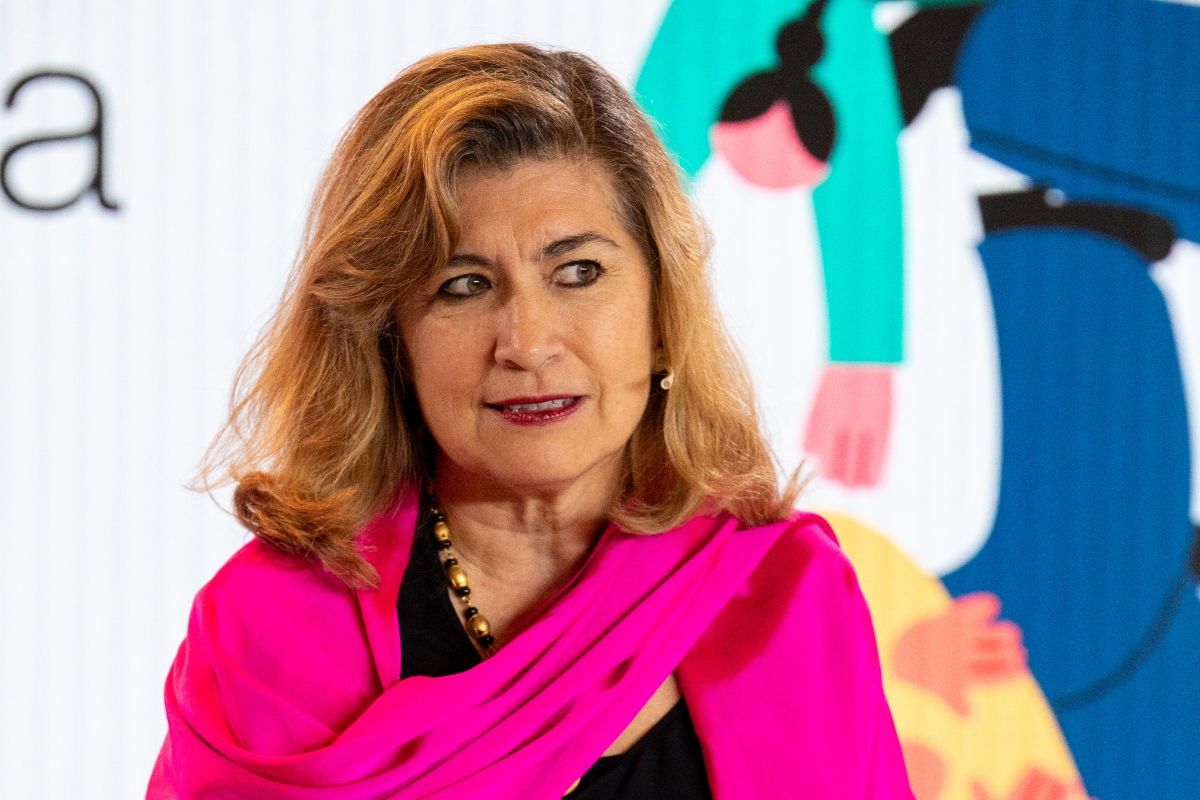
In fact, one in five people in the world has been discriminated against in the last year, in 38% of cases, due to race, and in 40% it was institutional and systemic discrimination and racism, as Ramos highlighted: "We have a problem, and hence the importance of companies continuing on this path."
Ramos closed the event alongside the editor of The New Barcelona Post, Guillem Carol, in an event that coincided with the last day of the Global Forum against Racism and Discrimination. The international meeting arrived in Barcelona for its fourth edition, after having passed through Paris, Mexico City, and São Paulo. The reception of the event and its development, according to Ramos, have shown that the city was the right place to organize this fourth edition: "Barcelona has been the place to be."
Add The New Barcelona Post as your preferred Google source for free
Stay informed with the latest news.
